
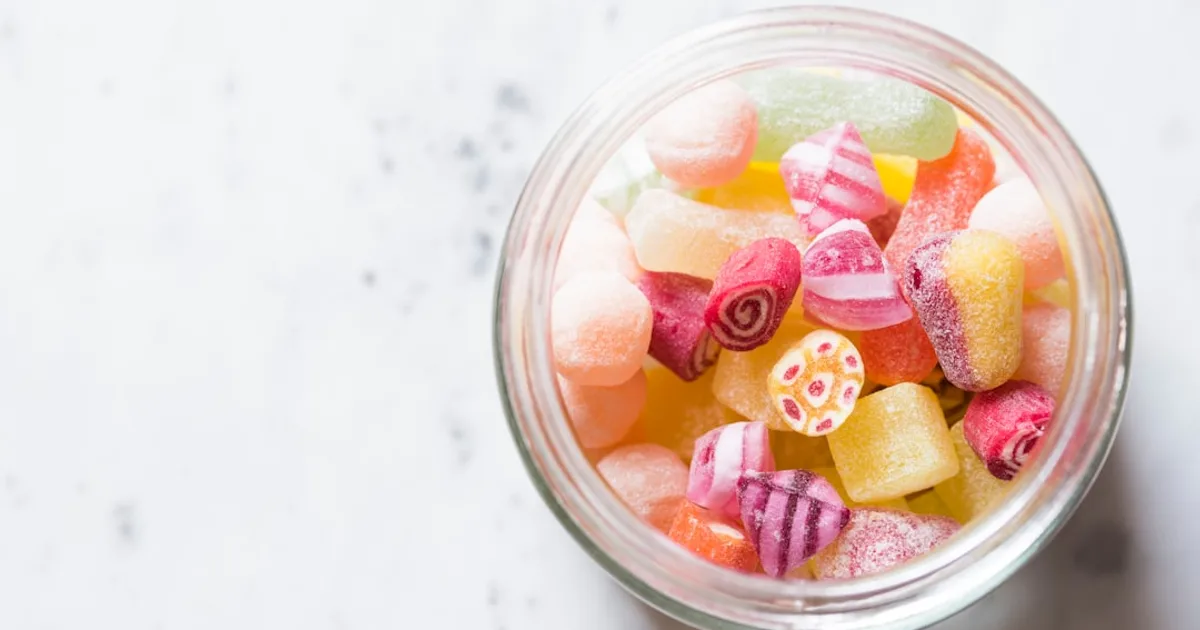
The list of E numbers children should avoid spans two different concerns: those that are haram (forbidden in Islam) and those that have documented health effects in children regardless of religion. Both lists matter, and they are not the same list.
This guide keeps them separate because conflating them causes confusion. A parent checking for halal compliance needs to know about E120 and E441. A parent worried about their child’s behaviour needs to know about E102 and E110. A Muslim parent needs to know about both — and needs to understand why these are different types of concern.
E Numbers That Are Haram: Avoid Entirely
These E numbers are considered haram under mainstream Islamic rulings and should not be present in children’s food at all.
E120 — Carmine (Cochineal)
E120 is a red colouring extracted from the dried bodies of cochineal insects (Dactylopius coccus). It takes roughly 70,000 insects to produce one kilogram of carmine dye. The majority of Islamic scholars — across Hanafi, Maliki, Shafi’i, and Hanbali schools — consider insects haram, making E120 impermissible.
Where you find it in children’s food:
- Strawberry and raspberry flavoured fruit yogurts (particularly cheaper branded options)
- Red fruit drinks and cordials
- Some gummy sweets
- Certain ice lollies and ice cream products
- Some fruit-flavoured breakfast cereals
The difficulty with E120 is that it often appears in foods marketed specifically at children, because it produces a vivid red or pink colour without the artificial colouring associations of E122 or E129. Check red and pink coloured products carefully.
E441 — Gelatine
Gelatine is extracted by boiling animal bones, skin, and connective tissue. Unless a product is halal certified or states “bovine gelatine” from a halal source, gelatine in children’s food should be assumed to be porcine (pig-derived), which is haram.
Where you find it in children’s food:
- Gummy sweets (Haribo, Bassetts unless marked halal)
- Marshmallows
- Some jelly-based products
- Some yogurt products
- Certain capsule-form children’s vitamins and supplements
M&S Percy Pigs are a notable exception: M&S reformulated the range in 2020 to remove pork gelatine, replacing it with a plant-based alternative, so current Percy Pigs are vegan and gelatine-free (no halal certifier is named, so always check the label on new variants — see our M&S shopping guide for the full story).
Always look for “suitable for vegetarians” as a minimum proxy for gelatine-free — but note this is not the same as halal certification.
E904 — Shellac
Shellac is a resin secreted by the lac insect (Laccifer lacca). It is used as a glazing agent — the shiny coating on some sweets, chocolates, and pharmaceutical capsules. Like E120, it is insect-derived and considered haram by the majority of scholars.
Where you find it in children’s food:
- Shiny-coated sweets (some jelly beans, certain boiled sweets)
- Chocolate-covered sweets with a glossy shell
- Some children’s vitamin tablets
- Certain confectionery marketed as “natural” products
E904 is less common than E120 or E441, but worth checking when a sweet has that characteristic hard, shiny finish.
E Numbers That Are Mushbooh: Check the Source
These E numbers may or may not be haram depending on their specific origin — and UK labelling does not require the source to be disclosed.
E471 — Mono- and Diglycerides of Fatty Acids
The most ubiquitous questionable E number in children’s food. E471 appears in bread, biscuits, cereal, baby rusks, formula, and dozens of other everyday products. It is an emulsifier that stabilises fat and water in processed foods.
The source can be entirely plant-based (palm, sunflower, soy) — which is halal — or animal-based (including pork fat) — which is haram. UK manufacturers are not required to specify which.
The practical approach: choose products that don’t contain E471. When a product with E471 is unavoidable (formula, for example), contact the manufacturer to confirm the source.
E472e — DATEM
Diacetyl tartaric acid ester of mono/diglycerides — essentially E471 with an added tartaric acid modification. Used in bread and baked goods to improve texture and volume. The same sourcing concern applies as with E471: it can be plant or animal-derived without disclosure.
E470 — Fatty Acid Salts
Salts of fatty acids derived from sodium, potassium, calcium, or magnesium. The fatty acids can be plant or animal-derived. Less commonly found in children’s food than E471, but present in some baked goods and snacks.
E627 and E631 — Disodium Guanylate and Disodium Inosinate
These flavour enhancers amplify the savoury taste of food and are commonly used alongside MSG (E621). Both can be derived from:
- Yeast extract: Halal
- Fish: Halal
- Pork or other meat: Haram
They appear in crisps, savoury snacks, and some flavoured crackers. Walkers, Pringles, and many other crisp brands use one or both. Without halal certification, they are mushbooh.
E Numbers Linked to Hyperactivity: A Health Concern (Not Halal)
These E numbers are halal — they are synthetic dyes derived from petroleum chemistry, not from animals. However, they have documented effects on children’s behaviour and the EU has required warning labels on products containing them since 2010.
The warning reads: “May have an adverse effect on activity and attention in children.”
The Southampton Six
A 2007 University of Southampton study — commissioned and accepted by the European Food Safety Authority — found that six specific artificial colourings caused measurable increases in hyperactivity in children. These are:
| E Number | Name | Common Colour | Typical Use in Children’s Food |
|---|---|---|---|
| E102 | Tartrazine | Yellow/orange | Sweets, drinks, crisps |
| E104 | Quinoline yellow | Yellow | Squash, sweets |
| E110 | Sunset yellow FCF | Yellow/orange | Sweets, drinks, ice lollies |
| E122 | Carmoisine (Azorubine) | Red | Sweets, drinks |
| E124 | Ponceau 4R | Red | Sweets, drinks, sauces |
| E129 | Allura red AC | Red | Sweets, drinks, ice cream |
Many UK manufacturers voluntarily reformulated products after the 2010 EU ruling. However, these colourings still appear in some sweets, crisps, fruit drinks, and snacks — particularly cheaper or imported products. They are most likely to appear in brightly coloured children’s products: orange and red drinks, colourful sweets, and flavoured snacks.
These are halal — but worth avoiding for the health of your children.
E211 — Sodium Benzoate
A preservative commonly used in drinks and condiments. When combined with vitamin C (ascorbic acid, E300), sodium benzoate can form benzene — a known carcinogen. The quantities involved are small, but the combination is best avoided. The same Southampton study found that E211 in combination with the Southampton Six colourings amplified the hyperactivity effect.
E211 is halal but worth avoiding in children’s products.
Where These E Numbers Hide: A Reference Table
| E Number | Halal Status | Most Likely Found In |
|---|---|---|
| E120 | Haram | Fruit yogurts, pink/red drinks, gummy sweets, ice lollies |
| E441 | Haram (porcine if uncertified) | Gummy sweets, marshmallows, jelly products, vitamin capsules |
| E904 | Haram | Shiny-coated sweets, jelly beans, some vitamin tablets |
| E471 | Mushbooh | Baby rusks, bread, biscuits, formula, breakfast cereal |
| E472e | Mushbooh | Bread, baked goods, crackers |
| E627/E631 | Mushbooh | Crisps, savoury snacks, flavoured crackers |
| E102 | Halal (health concern) | Yellow/orange drinks, sweets, crisps |
| E104 | Halal (health concern) | Yellow squash, some sweets |
| E110 | Halal (health concern) | Orange drinks, ice lollies, sweets |
| E122 | Halal (health concern) | Red drinks, sweets |
| E124 | Halal (health concern) | Red drinks, sweets, sauces |
| E129 | Halal (health concern) | Red sweets, drinks, ice cream |
| E211 | Halal (health concern) | Fruit drinks, squash, some sauces |
Practical Guide for Parents
Checking every ingredient list manually takes time. Here is how to make it manageable:
Step 1 — Memorise the immediate avoids. E120 and E441 should be second nature. These are haram and there are no exceptions. If you see either on a label, put the product back.
Step 2 — Treat E471 as a signal. When a product contains E471, it is not automatically haram — but it is a prompt to look for an alternative first. If an E471-free alternative exists at a similar price, choose it.
Step 3 — Check the Southampton Six on kids’ snacks. When you are buying something brightly coloured — orange juice, red sweets, flavoured crisps — scan for E102, E110, E122, E124, E129. If any are present and a clean alternative exists, choose the clean one.
Step 4 — Use HalalCodeCheck. The E-codes database gives you instant status on any E number — halal, haram, mushbooh, or health concern. The ingredient scanner lets you photograph a product label and get a full breakdown without typing anything.
How We Reached This Verdict
The halal classifications in this guide reflect the scholarly consensus across mainstream Sunni schools — specifically on insects (E120, E904), gelatine (E441), and undisclosed animal derivatives (E471, E627/E631). The haram classifications for E120 and E441 are not disputed positions; they reflect the rulings of IFANCA, HFA, HMC, and JAKIM consistently.
The health concern classifications for the Southampton Six and E211 are based on the 2007 McCann et al. study in The Lancet, the subsequent EFSA opinion, and the EU labelling requirement introduced in 2010. These are evidence-based health positions, separate from and independent of halal considerations.
Use the E-codes database to check any specific E number immediately. To analyse an ingredient list from a product you have at home, use the ingredient scanner.
Related guides:
Ingredients change. Be first to know.
Brands reformulate without warning. We track every E-code update and halal certification — one short weekly email.
Related Articles
 E-Code Guides
 Is Propylene Glycol (E1520) Halal? The Flavour Solvent Explained
Propylene glycol (E1520) is halal. It is a synthetic diol made from petroleum-derived propylene oxide, contains nothing animal-derived and does not intoxicate. The word 'glycol' is not 'alcohol' in the fiqh sense. Where it does matter: as the carrier in flavourings that may also contain ethanol.
 E-Code Guides
 Is E471 in Baby Food Safe? What Muslim Parents Need to Know (2026)
E471 (mono- and diglycerides) appears in baby rusks, formula, and cereals. Source is rarely disclosed. This guide explains the halal status and which UK brands contain it.
 E-Code Guides
 E500 (Sodium Bicarbonate): Is Baking Soda Halal? Yes — Here's Why (2026)
E500 (sodium bicarbonate / baking soda) is Halal. It's an inorganic mineral compound with no animal origin. E503 (ammonium carbonate) and E541 are also halal.