
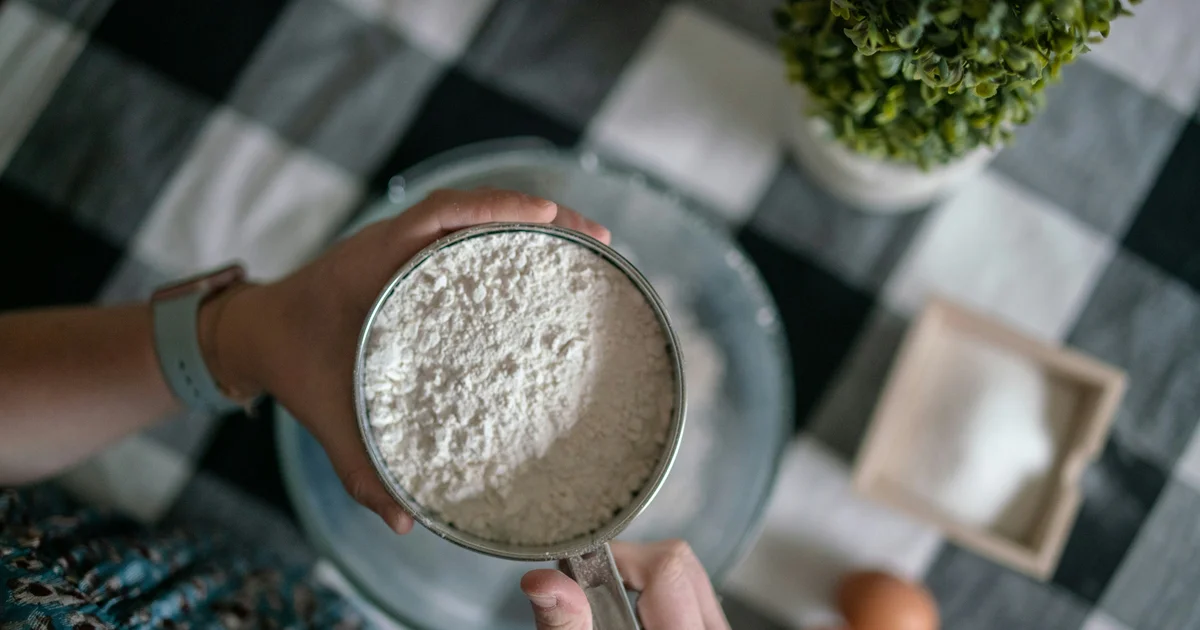
E500 (sodium bicarbonate) is Halal. Baking soda is an inorganic compound — a mineral, not a biological product. There is no animal involvement, no fermentation with animal substrates, and no haram concern of any kind.
This is one of the easiest halal questions. If you see E500 on a label, you can move on and check the next ingredient.
What is E500?
E500 is the food additive code for sodium bicarbonate, commonly known as baking soda or bicarbonate of soda. It is a white crystalline powder used as a raising agent (leavening agent) in baked goods.
When sodium bicarbonate comes into contact with an acidic ingredient (vinegar, buttermilk, yoghurt, cream of tartar) or when heated, it releases carbon dioxide gas. Those gas bubbles expand in the dough or batter, making the product rise and giving cakes, biscuits, and bread their light, airy texture.
You will find E500 in: cakes, biscuits, scones, soda bread, pancakes, muffins, self-raising flour, baking powder blends, and many packaged baked goods.
Why E500 is Halal
Sodium bicarbonate is produced by the Solvay process — a purely industrial chemical reaction between salt (sodium chloride), ammonia, and carbon dioxide. The source materials are:
- Salt — mined from rock salt or produced from seawater (mineral, halal)
- Ammonia — synthesised industrially from nitrogen and hydrogen (not animal-derived)
- Carbon dioxide — from industrial or natural sources (inorganic, halal)
No biological organism is involved. No animal fat, no pork enzyme, no fermentation with animal substrates. E500 is as straightforwardly halal as table salt.
Common baking agents and their halal status
| E-Code | Name | Status | Notes |
|---|---|---|---|
| E500 | Sodium bicarbonate (baking soda) | ✅ Halal | Inorganic mineral compound |
| E503 | Ammonium carbonate | ✅ Halal | Inorganic, used as leavening agent in some biscuits |
| E450 | Diphosphates | ✅ Halal | Used in baking powder; mineral-derived |
| E341 | Calcium phosphates | ✅ Halal | Used in baking powder; mineral-derived |
| E541 | Sodium aluminium phosphate | ✅ Halal | Acid component in baking powder; inorganic |
| E920 | L-Cysteine | ⚠️ Mushbooh / ❌ Haram | Dough conditioner — may be from pig bristles or human hair; check separately |
Note: E920 is the problematic baking additive, not E500. If you are checking bread and baked goods, scan for E920, not E500.
Baking powder vs baking soda
Baking powder is a blend of:
- Sodium bicarbonate (E500) — the raising agent
- An acid (usually cream of tartar, sodium aluminium phosphate E541, or diphosphates E450) — reacts with the bicarbonate
- A starch (usually corn starch) — prevents clumping
All standard baking powder formulations are halal. The components are mineral-derived or plant-derived (corn starch). Baking powder does not contain any animal-derived ingredients in standard commercial formulations.
Summary
| Question | Answer |
|---|---|
| Is E500 halal? | ✅ Yes — Halal |
| Is baking soda halal? | ✅ Yes — Halal |
| Source of E500 | Mineral/inorganic (Solvay process) |
| Animal inputs? | None |
| Verification needed? | No — safe to consume without checking |
| The actual concern in baked goods | E920 (L-cysteine) — check for this instead |
Look up any E-code from a baked product label in the E-codes database.
To scan a full ingredient list for halal status, use the ingredient scanner.
How we reached this verdict
We checked the following Tier-1 sources before publishing this verdict:
- Halal certification bodies (HMC, HFA, JAKIM, MUI, IFANCA): E500 is universally classified as Halal by all certification bodies.
- Manufacturer statements: Sodium bicarbonate specifications confirm inorganic production via the Solvay process with no animal-derived inputs.
- Sunni fatwa scholarship across the four madhabs: No madhab has raised any objection to sodium bicarbonate. Inorganic compounds are halal across all schools.
Madhab note
All four Sunni madhabs are fully aligned: inorganic mineral compounds with no animal origin are halal. E500 falls squarely within this category. No madhab-specific consideration applies to sodium bicarbonate.
Ingredients change. Be first to know.
Brands reformulate without warning. We track every E-code update and halal certification — one short weekly email.
Related Articles
 E-Code Guides
 Is Propylene Glycol (E1520) Halal? The Flavour Solvent Explained
Propylene glycol (E1520) is halal. It is a synthetic diol made from petroleum-derived propylene oxide, contains nothing animal-derived and does not intoxicate. The word 'glycol' is not 'alcohol' in the fiqh sense. Where it does matter: as the carrier in flavourings that may also contain ethanol.
 E-Code Guides
 E Numbers to Avoid for Children: Haram, Harmful and Questionable Additives (2026)
The E numbers children should avoid span two concerns: those that are haram and those with documented health effects. This guide covers both with a full list for parents.
 E-Code Guides
 E330 (Citric Acid): Halal, Haram or Mushbooh? The Clear Answer (2026)
E330 (citric acid) is Halal — produced by fermenting glucose or sucrose. No animal involvement. E300 (Vitamin C / Ascorbic Acid) is also Halal. Clear answer for both.