
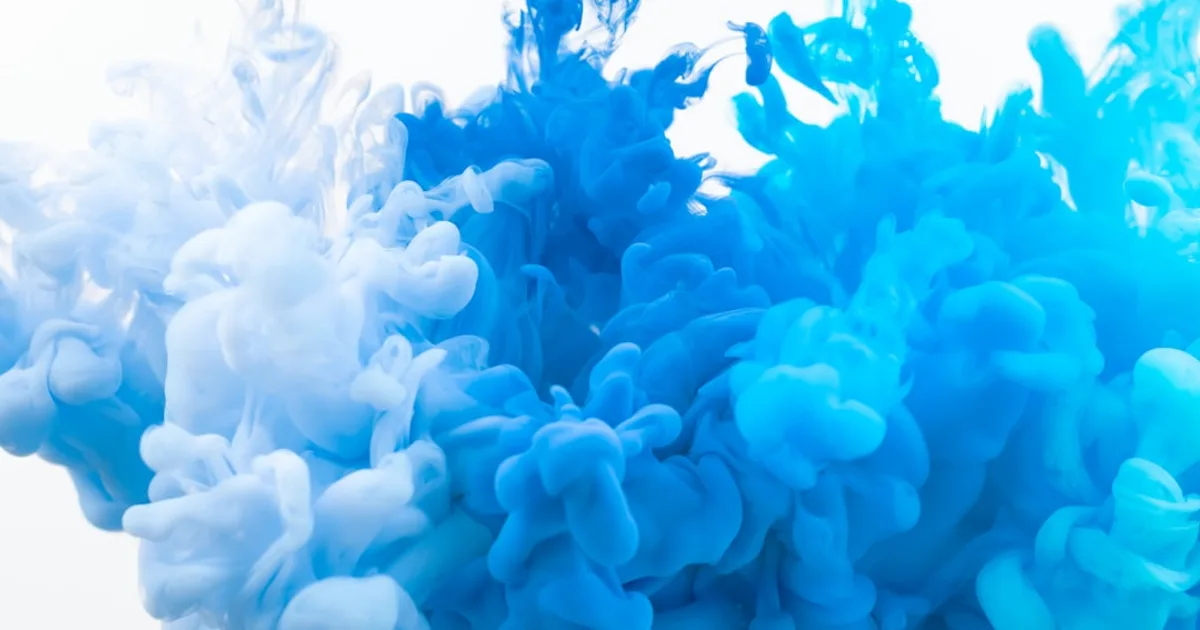
Blue food is inherently eye-catching, and E133 Brilliant Blue FCF is responsible for much of the vivid blue in modern confectionery, sports drinks, and ice cream. The halal analysis is quick: E133 is synthetic, petroleum-derived, and completely halal. The interesting questions are around how the dye works, where it appears, and what else to check in the products that carry it.
What E133 Brilliant Blue FCF Is
Brilliant Blue FCF (E133, FD&C Blue No. 1) is a triphenylmethane synthetic food dye. “FCF” stands for “for certification food” — a designation used in the USA to indicate food-grade quality. The dye was developed in the early 20th century from coal tar chemistry and is now produced from petroleum-derived organic chemistry.
The chemical name is disodium 2-[4-[ethyl-[4-[4-[ethyl-[(3-sulfonatophenyl)methyl]amino]phenyl]-(2-sulfonatophenyl)methylene]cyclohexa-2,5-dien-1-ylidene]-3-sulfonatophenyl)-methylamino]benzenesulfonate. The “brilliant” in the name is a technical descriptor indicating high colour intensity.
Production: Why It Is Halal
E133 is manufactured through a multi-step organic synthesis from petroleum-derived starting materials:
- Benzaldehyde and aniline derivatives (both petroleum chemistry) are the primary raw materials
- These undergo condensation and oxidation reactions to form the central triphenylmethane chromophore structure
- Sulfonation introduces the sulfonate groups that make the molecule water-soluble
- The sodium salt form is isolated and purified
At no stage of this synthesis are animal-derived materials, fermentation processes, or alcohol used as reaction inputs. E133 is as purely synthetic as a mineral salt or a synthetic vitamin.
| Production Factor | Detail | Halal Impact |
|---|---|---|
| Starting materials | Petroleum chemistry (benzaldehyde, anilines) | Halal |
| Reaction steps | Organic synthesis | Halal |
| Animal inputs | None | No concern |
| Solvent use | Water-based processing | Halal |
| Final form | Sodium salt powder | Halal |
Where You Will Find E133
Sports and energy drinks — Lucozade Sport, Powerade, Gatorade, and many own-brand sports drinks use blue and blue-green colours that include E133. The blue-green “aqua” colour used in many sports drink formulations is E133 combined with E102 (tartrazine yellow).
Confectionery — Blue Slush Puppie, blue Refreshers, blue Smarties, Fruit Salad sweets, and many pick-and-mix sweets use E133. Blue jelly sweets and gummy confectionery commonly contain it.
Ice cream and frozen desserts — Blueberry, “blue raspberry,” and mint chocolate chip ice creams that have vibrant blue or teal tones typically use E133. Natural blueberry colour would produce a more muted purple; the vivid blue requires E133.
Slush drinks — The blue slush flavours (typically labelled “blue raspberry” as a flavour name rather than a real fruit) almost universally use E133.
Cake decoration — Blue icing, blue edible glitter, and blue food colouring kits for home baking contain E133.
Medications — E133 is used as a colourant in some medication coatings and capsules. The halal status of the dye in medications is not the concern; the capsule gelatine and active ingredients are.
What to Actually Check in Blue-Coloured Products
E133 being halal does not mean every product containing it is halal. The colour is fine; the product needs separate evaluation:
Confectionery with gelatine — Many blue sweets, jelly products, and gummies use E133 for colour and animal gelatine as a setting agent. The E133 is halal; the gelatine may not be. Check for “suitable for vegetarians” (which guarantees no porcine gelatine) or look for halal certification.
Dairy-based products — Blue ice cream is typically halal (dairy products are generally permissible), but ultra-processed ice cream products with complex ingredient lists may contain other additives worth checking.
Sports drinks with alcohol flavourings — Standard sports drinks contain no alcohol. However, some premium sports drink variants marketed as “adults” or “recovery” formulations occasionally contain trace alcohol from natural flavouring processes. This is worth checking on specific products.
Comparison: E133 vs Other Blue Food Colours
| Colour | E-Code | Source | Halal Status |
|---|---|---|---|
| Brilliant Blue FCF | E133 | Synthetic (petroleum) | Halal |
| Indigo Carmine | E132 | Synthetic (petroleum) | Halal |
| Spirulina blue | — | Natural (cyanobacteria) | Halal |
| Butterfly pea flower | — | Natural (plant) | Halal |
| Phycocyanin | E6 | Natural (algae) | Halal |
All commonly available blue food colours in EU/UK food production are halal. Blue is one of the colour families without the animal-derivation concern that affects red (E120 carmine from insects) or yellow/orange (E160a beta-carotene with gelatine carrier).
How We Reached This Verdict: Halal
- E133 is produced entirely from petrochemical synthesis
- No animal-derived materials, fermentation, or biological processes involved
- Widely used in halal-certified products globally
- IFANCA, JAKIM, HMC, and MUI all classify E133 as halal
- No scholarly opinion contests this classification
- Decades of regulatory approval with transparent manufacturing process
Madhab Note
Synthetic food dyes from inorganic/petroleum chemistry raise no concerns under any madhab. The relevant question in Islamic jurisprudence is always the origin — and a petroleum-derived synthetic molecule has no connection to any prohibited substance. The only food colour with significant halal debate is E120 (carmine, from insects), where scholarly opinion varies. E133 is not in that category.
Check any E-code instantly — our E-codes database covers 370+ food additives with clear halal rulings.
Scan a sweets label — use our ingredient scanner to photograph the back of any confectionery packet and get an instant additive check.
Related reading — Are Gummy Bears Halal? — because the colour is fine, but the gelatine question is where the real work is.
Ingredients change. Be first to know.
Brands reformulate without warning. We track every E-code update and halal certification — one short weekly email.
Related Articles
 E-Code Guides
 E951 Aspartame: Is It Halal? Diet Coke, Sugar-Free & More (2026)
E951 aspartame is halal — it's a synthetic amino acid sweetener with no animal derivatives. But check the capsule carrier in supplement form.
 E-Code Guides
 E450 Diphosphates: The Processed Food Additive Most People Miss
E450 diphosphates are halal — they're mineral-derived phosphate salts with no animal components. Found widely in processed meats and baking powder.
 E-Code Guides
 E339 Sodium Phosphates: Halal Guide for Processed Cheese & Meats
E339 sodium phosphates are halal — mineral salts with no animal derivatives. The concern is what they're found IN, not what they're made from.