
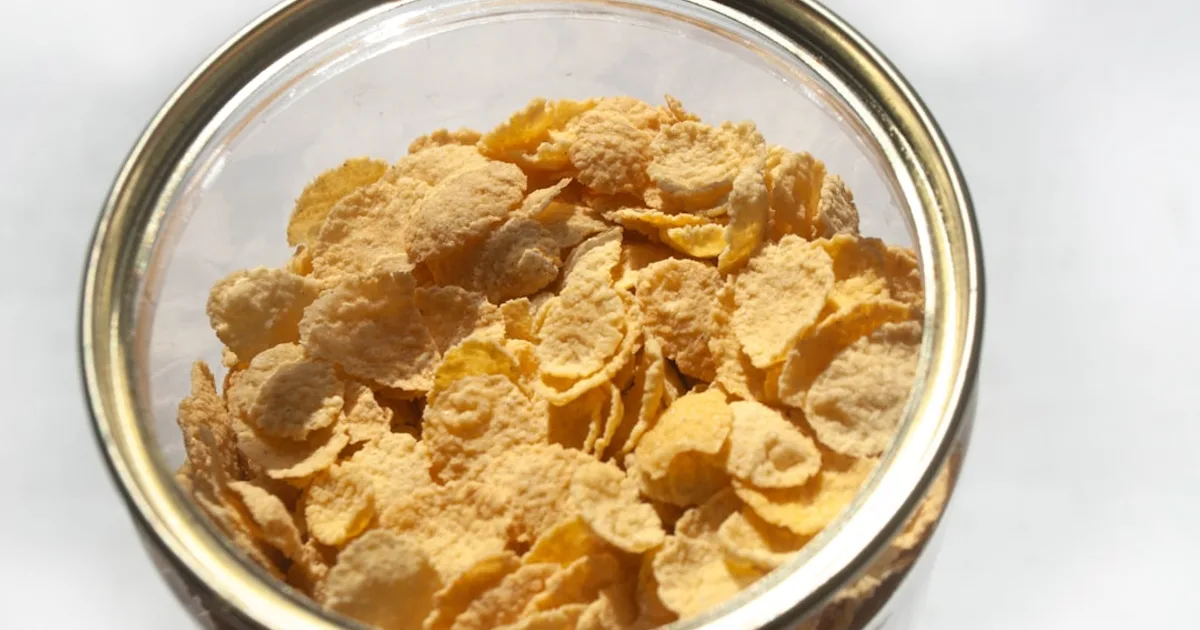
You’ve just picked up a pack of baby rusks. The ingredient list includes E471. No source. No “suitable for vegetarians” mark. No halal logo. Your baby needs something to chew on. Here is what that E471 actually means — and what to do about it.
What Is E471 and Why Is It in Baby Food?
E471 is the E number for mono- and diglycerides of fatty acids. It is an emulsifier — a substance that keeps fat and water mixed together rather than separating. In baby rusks, it stops the fat content from pooling or going rancid. In formula, it helps keep the oil and water components blended. In baby cereals, it helps create a consistent texture when water or milk is added.
It is one of the most widely used food additives in processed foods, and baby food is no exception.
The Source Problem
E471 can be manufactured from two fundamentally different raw materials:
Plant-derived E471: Made from plant oils such as palm oil, sunflower oil, or soya oil. This is halal. It is the most common industrial source because plant oil is cheap and widely available.
Animal-derived E471: Made by chemically processing animal fats. Depending on the animal and slaughter method, this can be:
- Bovine tallow from halal-slaughtered cattle: Halal
- Bovine tallow from non-halal-slaughtered cattle: Haram
- Porcine fat (lard): Haram — without any qualification
Both sources produce the same molecule. The two are chemically identical on the finished product. A chemist testing a rusk could not tell you which source was used just by testing the E471 in it.
UK food labelling law requires manufacturers to list E471 on the ingredients list. It does not require them to state whether that E471 came from a plant or an animal. “E471” is all that appears — and that is legal.
The Core Problem for Muslim Parents
The ambiguity in E471’s source creates a structural problem that labelling law does not resolve.
“Suitable for vegetarians” does not help you. Vegetarian labelling in the UK is based on the Vegetarian Society’s definition, which does not classify E471 as an animal derivative. A product can be marked “suitable for vegetarians” and still contain E471 derived from animal fat — because the vegetarian classification looks at whether an animal was slaughtered for the ingredient, not whether the ingredient can come from an animal. Mono- and diglycerides are classified as processing derivatives, not as meat products.
This is a known gap in the labelling system. It affects halal consumers more than it affects vegetarians, because vegetarians would also need to avoid it if they knew — but most vegetarians are unaware of this gap.
Halal certification closes this gap. A product with HMC, HFA, IFANCA, or JAKIM certification has been assessed including the source of its E471. Without certification, the source is unknown.
Which UK Baby Foods Contain E471?
| Brand / Product | E471 Present | Source Disclosed? | Halal Status | Alternative |
|---|---|---|---|---|
| Farley’s Original Rusks | Yes | No | Mushbooh | Organix rusks or rice cakes |
| Heinz Baby Rusks | Yes (some variants) | No | Mushbooh | Organix or Ella’s snacks |
| Aptamil Follow-On Stage 2 | Yes (some variants) | No | Mushbooh | Kendamil Follow-On |
| Aptamil Growing Up Stage 3 | Yes (some variants) | No | Mushbooh | Kendamil Stage 3 |
| Cow & Gate Follow-On | Yes (some variants) | No | Mushbooh | Kendamil Follow-On |
| Heinz baby cereals (some) | Yes (some variants) | No | Mushbooh | Plain oat porridge or HiPP Organic |
| SMA Pro Follow-On | Yes (some variants) | No | Mushbooh | Kendamil or HiPP Organic |
| Kendamil (all stages) | No | N/A | Halal-friendly | — |
| HiPP Organic Stage 1 & 2 | No in most | N/A | Generally clean | — |
| Ella’s Kitchen pouches | No in most | N/A | Generally clean | — |
| Organix snacks | No in most | N/A | Generally clean | — |
Always verify the current label. Manufacturers update formulations. An E471-free product in 2024 may have been reformulated by 2026, and vice versa. The table above reflects the most recently available UK formulations as of May 2026.
What to Do When a Product Contains E471
This does not have to be a dead end. Here is a practical sequence:
Step 1 — Check for halal certification on the packaging. Look for HMC, HFA, or IFANCA logos. If present, the E471 source has been verified and the product is halal.
Step 2 — Check the “suitable for vegetarians” marker as a secondary signal. This does not confirm halal status, but it rules out the most obvious animal ingredients (meat, fish, gelatine). It does not rule out E471 from animal fat — but it narrows the concern.
Step 3 — Contact the manufacturer directly. This is more effective than most parents expect. Use this specific wording:
“The ingredient list for [product name and barcode] includes E471 (mono- and diglycerides of fatty acids). Can you confirm whether the E471 in this product is derived from animal or plant sources? Specifically, is it sourced from any pork-derived ingredients?”
Keep the email confirmation. If they say it is plant-derived, that answer is sufficient for most purposes. If they say they cannot confirm or decline to answer, treat the product as mushbooh.
Step 4 — Look for an alternative without E471. In most product categories, an E471-free alternative exists. For rusks: Organix offers finger foods without E471. For formula: Kendamil contains no E471. For cereals: plain oat porridge or HiPP Organic.
The Fiqh Ruling on Unknown-Source E471
Under mainstream Sunni Hanafi fiqh — the dominant school of Islamic jurisprudence among Muslims in the UK — an ingredient of unknown origin where that origin could be haram is treated as mushbooh (doubtful).
The Prophet Muhammad (peace be upon him) said: “Leave that which makes you doubt for that which does not make you doubt.” (Tirmidhi, graded sahih)
Applying this principle:
- E471 confirmed as plant-derived: Halal
- E471 confirmed as halal animal-derived: Halal
- E471 of unknown source: Mushbooh — avoid when a confirmed alternative exists
- E471 confirmed as porcine: Haram
The mushbooh ruling does not mean E471 baby food is forbidden. It means that when a confirmed alternative exists — and for most UK baby food categories, one does — the confirmed option is preferable.
When no alternative exists and the parent is unable to obtain manufacturer confirmation, the mushbooh ruling means the decision is at the parent’s discretion, weighing necessity against uncertainty. This is a personal fiqh decision and parents should consult a trusted scholar if they have doubts.
How We Reached This Verdict
This assessment is based on:
- Current UK label review of baby food products in major UK supermarkets (Tesco, ASDA, Sainsbury’s, Boots) in May 2026.
- UK food labelling regulations — specifically the absence of any requirement to disclose animal or plant sourcing for E-number derivatives including E471.
- Consumer law and vegetarian labelling standards — which confirm that E471 is not classified as an animal derivative under current UK vegetarian labelling.
- Sunni Hanafi fiqh principles on mushbooh ingredients, consistent with published positions from IFANCA, HFA, and UK-based Islamic scholars.
- Published manufacturer ingredient information where available.
Use the E-codes database to look up E471 and other E numbers instantly. To scan a baby food label and get a complete halal breakdown, use the ingredient scanner.
Related guides:
- Halal Baby & Kids Food: Complete Guide
- Halal Baby Formula UK: Which Brands Are Safe?
- E Numbers to Avoid for Children
- E471 in Bread: Complete Guide
Ingredients change. Be first to know.
Brands reformulate without warning. We track every E-code update and halal certification — one short weekly email.
Related Articles
 E-Code Guides
 Is Propylene Glycol (E1520) Halal? The Flavour Solvent Explained
Propylene glycol (E1520) is halal. It is a synthetic diol made from petroleum-derived propylene oxide, contains nothing animal-derived and does not intoxicate. The word 'glycol' is not 'alcohol' in the fiqh sense. Where it does matter: as the carrier in flavourings that may also contain ethanol.
 E-Code Guides
 E Numbers to Avoid for Children: Haram, Harmful and Questionable Additives (2026)
The E numbers children should avoid span two concerns: those that are haram and those with documented health effects. This guide covers both with a full list for parents.
 E-Code Guides
 E Numbers in Vitamins and Supplements: What Every Muslim Shopper Needs to Check (2026)
You check E numbers in food. Most Muslims never check their vitamins. This guide covers E470b, E471, E904, E120, and E441 as they appear in tablets and capsules.