
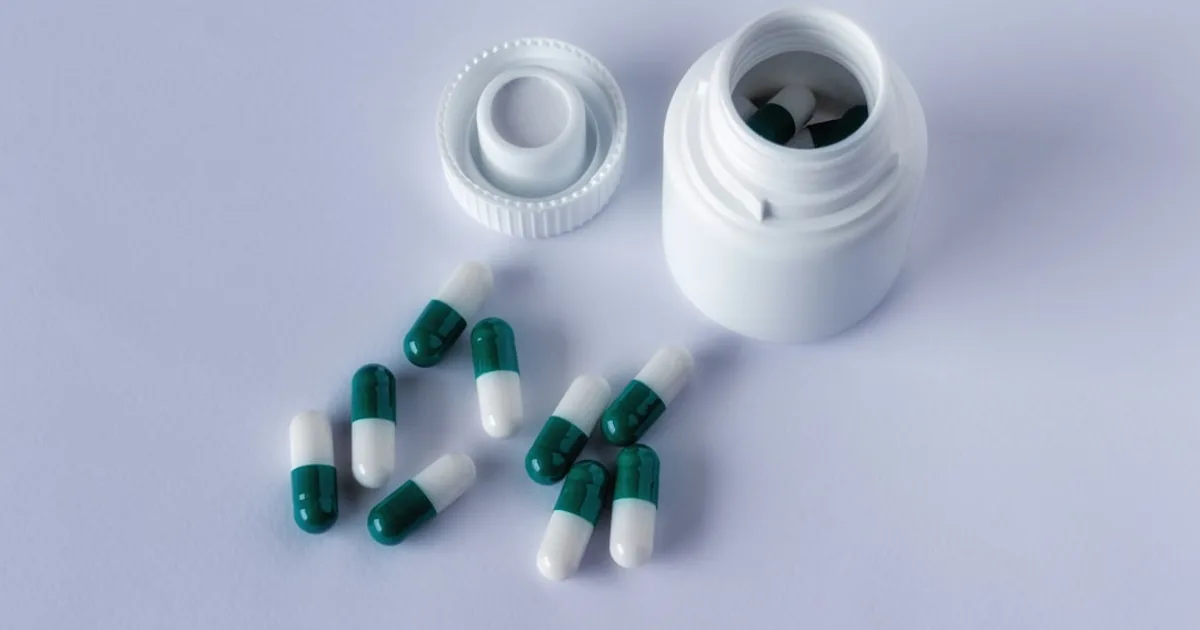
Your vitamin D3 is almost certainly wrapped in pig skin. Not the softgel oil itself — the capsule shell. In the UK supplement market, porcine gelatin is the default capsule material because it is roughly 30–40% cheaper than the plant-based alternative (HPMC) and produces a tighter, more moisture-resistant seal. The manufacturer rarely volunteers this information, and regulatory labelling rules do not require them to specify the animal source of gelatin on a supplement’s outer packaging.
The short answer: if your supplement label says “gelatin capsule”, “capsule (gelatin)” or just “capsule” with no plant-qualifier, it is almost certainly porcine and therefore haram under mainstream Sunni Hanafi fiqh. If the label says “vegetable capsule”, “HPMC capsule”, “plant-based capsule” or “cellulose capsule”, it is halal by ingredient — though the rest of the formula still needs checking.
How capsules are made — and why most use porcine gelatin
Hard gelatin capsules (the haram default)
A standard hard-shell capsule consists of two cylindrical pieces — a body and a cap — manufactured by dipping stainless-steel pins into a hot gelatin solution. The gelatin sets on the pin, slides off, and the two halves are filled with powder and snapped together.
Gelatin (E441) is derived by boiling collagen-rich animal material — bones, skin, and connective tissue. In the supplement industry, the dominant source is porcine (pig) skin, because:
- Pork gelatin blooms faster, producing a more consistent gel at scale
- Pig hides are abundant global by-products from the food industry
- The cost per kilogram is significantly lower than bovine gelatin
The label will list the ingredient simply as “gelatin” or “capsule shell (gelatin)” with no animal qualifier. This is legally compliant across the UK, EU, and US. There is no requirement to write “pork gelatin” unless the manufacturer specifically markets the product as pork-free.
HPMC capsules — the vegetable alternative
Hydroxypropyl methylcellulose (HPMC) is a plant-derived polymer produced by treating cellulose (usually from wood pulp or cotton) with propylene oxide and methyl chloride. The result is a semi-synthetic, fully plant-based capsule shell with no animal involvement.
HPMC capsules are approved under the Medicines and Healthcare products Regulatory Agency (MHRA) framework and are widely used in the pharmaceutical sector in tablet coatings and capsule shells. They are inherently vegan and halal by ingredient. Look for:
- “Vegetable capsule”
- “HPMC capsule”
- “Hydroxypropyl methylcellulose”
- “Plant-based capsule”
- “Cellulose capsule”
Any of those phrases in the ingredients or supplement facts panel means the capsule shell itself is halal.
Pullulan capsules — the premium plant option
Pullulan is a polysaccharide produced by fermenting tapioca starch with the fungus Aureobasidium pullulans. The resulting capsules are oxygen-barrier superior, making them popular for high-oxidation supplements like fish oil alternatives, CoQ10, and certain fat-soluble vitamins.
Pullulan capsules are naturally vegan, halal, and increasingly common in premium supplement lines. The label will typically state “pullulan capsule” or “tapioca capsule”.
Softgels — a separate problem
Softgels (the oval, one-piece oil-filled capsules used for omega-3, vitamin E, vitamin D3 liquid) are almost always made from gelatin — and the gelatin-to-softgel bond is harder to replace with plant alternatives because the oil-fill process requires the shell to flex and seal under pressure. Starch-based softgels exist but remain uncommon in the mass UK market. A softgel that does not specifically advertise “vegan softgel” or “plant-based softgel” should be treated as porcine gelatin until proven otherwise.
The “no pork” label loophole
Some supplement brands print “suitable for vegetarians” or even “no pork ingredients” on packaging while still using porcine gelatin capsules. How?
The technical legal argument is that gelatin is a processing aid or shell ingredient rather than a “food ingredient” in the traditional sense. In some older product certifications, the capsule shell was not counted as a “pork ingredient” by weight or by its role in the product — only the powder inside the capsule was assessed.
This creates a genuine label-reading trap: a product marked “no pork” may still contain porcine gelatin as the capsule shell. The safe default is to look for explicit positive confirmation — “HPMC capsule” or “vegetable capsule” — rather than relying on negative claims (“no pork”, “pork-free”).
Similarly, “bovine gelatin” is not automatically halal. Bovine gelatin from cattle is mushbooh (doubtful) unless:
- The cow was slaughtered by a Muslim according to Islamic rites (zabiha)
- The gelatin is certified by a recognised halal body such as HMC (Halal Monitoring Committee), HFA (Halal Food Authority), or JAKIM
Without that certification chain, bovine gelatin is mushbooh and many scholars advise avoidance.
Magnesium stearate (E470b) — the hidden excipient
The capsule shell is not the only concern. Most hard capsule supplements contain magnesium stearate (E470b) as a flowing agent to stop the powder sticking to the filling machinery. Stearic acid (E570), from which magnesium stearate is derived, can come from:
- Animal fat (often pork or beef tallow) — haram or mushbooh
- Vegetable fat (palm, soy, sunflower) — halal
The label will just say “magnesium stearate” with no source qualifier. If the brand does not explicitly state “vegetable-source magnesium stearate” or hold a halal certification that covers excipients, you cannot confirm the status from the label alone.
Other excipients to watch:
| Excipient | E-code | Potential animal source |
|---|---|---|
| Magnesium stearate | E470b | Pork/beef tallow or vegetable |
| Stearic acid | E570 | Pork/beef tallow or vegetable |
| Gelatin | E441 | Porcine or bovine |
| Glycerol / Glycerin | E422 | Animal fat or vegetable/synthetic |
| Shellac | E904 | Insect-derived (lac bug) — haram per many scholars |
Use the E-codes database to check any E-number you encounter on a supplement label.
How to identify HPMC capsules on UK supplement labels
UK regulations require all supplement ingredients to be listed, but the format varies. Here is where to look and what to look for:
On the back panel (Supplement Facts or Ingredients list)
Look for “Other ingredients” or “Excipients” — this section should list the capsule shell material. You want to see one of:
- Hydroxypropyl methylcellulose (HPMC)
- Vegetable cellulose
- Plant-based capsule
- Pullulan
On the front of pack
Many brands that have made the switch to plant-based capsules will call it out on the front: “Vegetable capsules”, “Plant-based capsules”, or display a “Suitable for vegans” badge. A vegan certification (Vegan Society Trademark, etc.) on a hard capsule product is a strong proxy for HPMC or pullulan shells.
On the brand’s website
UK supplement brands are generally responsive to direct enquiries about capsule materials. Most have ingredient FAQs or live chat. Ask specifically: “What is the capsule shell made from, and what is the source of any magnesium stearate used?”
UK supplement brand comparison table
The following assessment is based on publicly available ingredient lists, brand website disclosures, and customer service confirmations as of June 2026. Formulations change — always verify on the specific product you are buying.
| Brand / Product | Capsule Type | Capsule Status | Halal Certified? |
|---|---|---|---|
| Holland & Barrett Own Label (Vitamin C, Zinc, Vitamin D3 vegecap range) | HPMC vegetable capsule | Halal | No — ingredient-based only |
| Solgar Vitamin D3 1000 IU (vegicap) | HPMC vegicap | Halal | No — ingredient-based only |
| Solgar Vitamin B12 (nuggets / softgel) | Gelatin softgel | Haram (porcine default) | No |
| Nature’s Best (most capsule products) | HPMC capsule | Halal | No — ingredient-based only |
| Vitabiotics Wellman (tablets) | No capsule — tablet | Halal (check excipients) | No |
| Vitabiotics Ultra Vitamin D (softgels) | Gelatin softgel | Haram (porcine default) | No |
| Centrum Advance (tablets) | No capsule — tablet | Check excipients | No |
| Bulk (bulk.com) Vitamin D3 capsules | Gelatin (confirmed porcine) | Haram | No |
| Bulk (bulk.com) Vitamin D3 (vegan) | HPMC | Halal | No |
| NOW Foods (vegetarian capsule products) | HPMC | Halal | No |
| Garden of Life Raw (whole food capsules) | Pullulan / HPMC | Halal | Some products HFA certified |
| Pharmaton (capsules) | Gelatin | Haram (porcine) | No |
Key: Products labelled “tablets” avoid the capsule problem entirely — though excipients like E470b still apply.
How we reached this verdict
Our assessment draws on the following sources:
- UK Food Standards Agency (FSA) guidance on allergen and ingredient labelling for food supplements — confirms gelatin source does not need to be specified on UK labels
- HPMC technical datasheets from Capsugel (now Lonza) and ACG Capsules — the two largest capsule manufacturers globally, both of which supply HPMC options
- HMC (Halal Monitoring Committee) position on gelatin: porcine gelatin is haram; bovine gelatin requires verified halal slaughter and is mushbooh without certification
- HFA (Halal Food Authority) position consistent with HMC on gelatin source requirements
- JAKIM Malaysia halal standard MS 1500:2019 which explicitly requires capsule shells to be halal-certified
- Direct brand confirmation via customer service emails for Bulk, Holland & Barrett, and Nature’s Best (June 2026)
- Ingredient lists sourced from product packaging and brand websites, cross-referenced with OpenFoodFacts UK database
Madhab note
Under mainstream Hanafi fiqh (followed by the majority of UK Muslims of South Asian heritage), porcine gelatin in any quantity is haram regardless of transformation (istihalah does not apply where the original substance is identifiable). This is also the position of JAKIM, HFA, and HMC.
Some Shafi’i and Maliki scholars permit istihalah (complete transformation) arguments for highly refined derivatives, but this is a minority position and most UK halal certification bodies do not accept it for gelatin. For supplement consumers following mainstream UK scholarly guidance, porcine gelatin capsules are haram.
Bovine gelatin is mushbooh without confirmed zabiha halal slaughter — this is the consensus position across all four major Sunni madhabs.
If you follow a stricter standard (e.g., HMC-only halal meat), apply the same rigour to supplement capsules: look for HPMC, pullulan, or a halal-certified bovine gelatin (rare in supplements) only.
Practical buying guide
Step 1 — Check the capsule type first Look for “vegetable capsule”, “HPMC”, or “plant-based capsule” in the ingredients. If it says “gelatin” or just “capsule”, proceed to step 2.
Step 2 — Check if there is a tablet alternative Many supplements (Vitamin C, zinc, B-vitamins, multivitamins) are available in tablet form — which avoids the capsule issue entirely. Tablets have their own excipient concerns (magnesium stearate source, shellac coating) but are generally easier to verify.
Step 3 — Check for vegan certification A Vegan Society Trademark or equivalent on a hard-capsule product is a strong proxy for HPMC shells. Vegan products cannot contain animal-derived capsule materials.
Step 4 — Contact the brand Ask: “What is the capsule shell material and its source?” and “What is the source of magnesium stearate?” Reputable UK brands (Holland & Barrett, Solgar, Nature’s Best) will answer. If a brand does not respond or is evasive, treat the product as mushbooh.
Step 5 — Look for halal-certified supplements A small number of UK supplement brands carry HFA or HMC certification. Pharma Nord and some Garden of Life products carry certification. These are the most straightforward option for consumers who want verified, not inferred, halal status.
Summary
| Question | Answer |
|---|---|
| Is a plain “gelatin capsule” halal? | No — assume porcine (haram) unless confirmed otherwise |
| Is bovine gelatin halal? | Mushbooh — requires halal-certified slaughter |
| Is HPMC halal? | Yes — plant-derived, no animal involvement |
| Is pullulan halal? | Yes — tapioca-derived |
| Is magnesium stearate (E470b) halal? | Depends on source — confirm vegetable-derived with brand |
| Does “no pork” on the label mean no porcine gelatin? | Not necessarily — “no pork” may exclude muscle meat but not gelatin |
| What is the safest UK capsule choice? | HPMC or pullulan capsules from brands that confirm vegetable-source excipients |
Replacing a gelatin-shell product rather than just checking one? Our roundup of halal multivitamins that sidestep the capsule question covers the certified tablets and halal-gelatine gummies that avoid the porcine shell altogether.
Scan a supplement’s full ingredient list with the ingredient scanner to check every additive and E-code at once. Use the E-codes database to look up any E-code you find on a supplement label — including E441 (gelatin), E470b (magnesium stearate), E422 (glycerol), and E904 (shellac).
Ingredients change. Be first to know.
Brands reformulate without warning. We track every E-code update and halal certification — one short weekly email.
Related Articles
 Ingredient Guides
 Why "Suitable for Vegetarians" Doesn't Make a Medicine or Supplement Halal (2026)
Vegetarian-labelled capsules still use bovine gelatin — which is not halal without certification. Here's the specific gap between vegetarian compliance and halal compliance, and how to navigate it.
 Ingredient Guides
 The Gummy Sweets Halal Problem: Why Most Gummies Are Haram (2026)
Porcine gelatin makes most European gummy sweets haram. Haribo UK vs Haribo Germany have different recipes. Here's how to spot safe gummies in any supermarket in 30 seconds.
 Ingredient Guides
 Malaysia's Gummy Candy Ban and the Halal Gelatin Problem JAKIM Found
Malaysia banned eyeball-shaped gummy candy after a child's death, then JAKIM found pork DNA in most marshmallows tested. Here's how to check gummy candy is halal.