
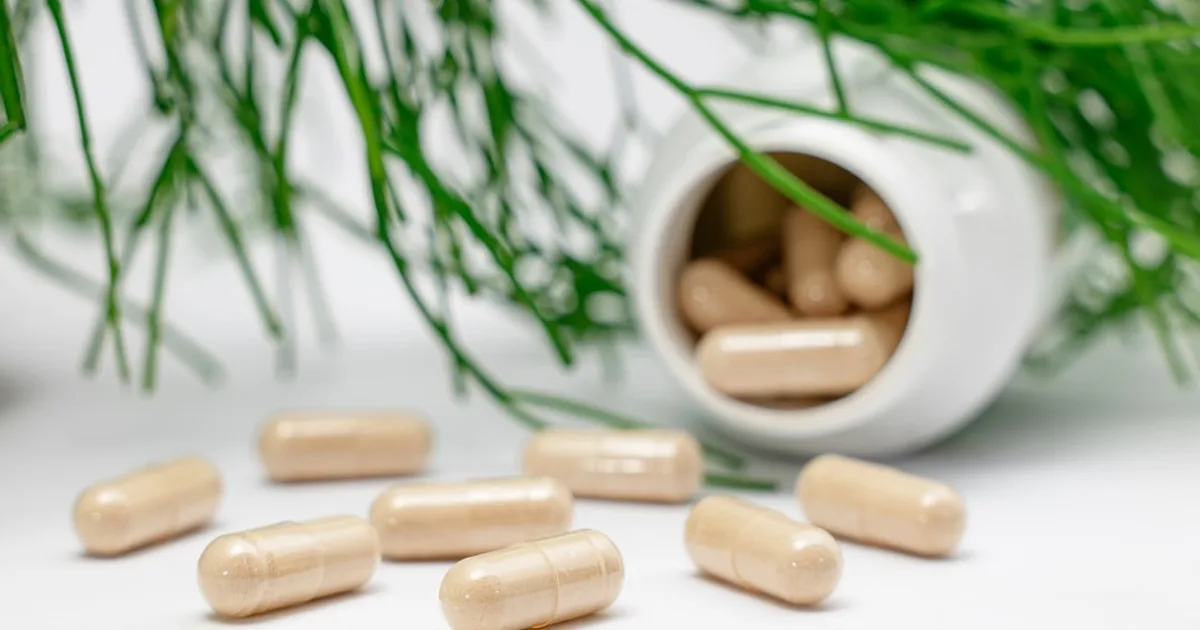
A supplement sitting in front of you carries the green “Suitable for Vegetarians” logo. You assume it is halal. It might not be.
Vegetarian compliance and halal compliance are related but distinct standards. “Suitable for Vegetarians” means a product contains no porcine (pig-derived) ingredients — but it says nothing about whether bovine (cow-derived) gelatin has been used, nothing about how any animal-derived ingredient was sourced, and nothing about whether an Islamic certification body has reviewed the formula. For millions of Muslim consumers in the UK who rely on supplement brands like Solgar, Vitabiotics, Holland & Barrett own-brand, and Nature’s Best, this gap is not theoretical. It is a daily purchasing decision that the label actively misleads.
The core misconception — and why it exists
The “Suitable for Vegetarians” claim was designed to distinguish products from those containing flesh, slaughter by-products, or animal-rearing exploitation. Depending on the scheme — the Vegetarian Society’s logo, a brand’s own declaration, or a retailer’s own-brand policy — the threshold differs. Several vegetarian schemes permit bovine gelatin on the grounds that cattle are not considered sentient in the same way as pigs by some vegetarian frameworks, or because some vegetarians accept by-products that do not require slaughter (though gelatin does). The result: a capsule filled with bovine gelatin can, in some certification schemes, carry a vegetarian-friendly label.
For a Muslim consumer, this creates a specific problem. Porcine gelatin is haram — categorically prohibited. Bovine gelatin from cattle not slaughtered according to Islamic rites is mushbooh (doubtful) at minimum, and many scholars treat it as haram in practice when there is no halal certification. The vegetarian label resolves the porcine question. It does not resolve the bovine question.
Why supplement manufacturers use bovine gelatin
Capsule manufacturers — principally Capsugel (now Lonza), ACG, and Qualicaps — offer three main shell types at commercial scale:
- Gelatin capsules (porcine or bovine): dominant in the industry, cheaper to produce, faster dissolution across a wide pH range, well-established pharmacopoeial standards
- HPMC capsules (hydroxypropyl methylcellulose): plant-derived cellulose, higher production cost, slightly slower dissolution in some formulations, moisture-sensitive
- Pullulan capsules: fermented tapioca starch, plant-derived, premium cost tier, excellent oxygen barrier, used in high-value antioxidant supplements
Bovine gelatin capsules cost roughly 20–30% less than HPMC equivalents at scale. For a supplement brand manufacturing tens of thousands of units per SKU, that margin difference compounds significantly. Bovine gelatin also has superior mechanical strength and is easier to fill on high-speed automated lines without adjustment. Regulatory dossiers for gelatin capsules are decades old and well-understood by contract manufacturers globally.
HPMC capsules have improved dramatically since the 1990s and are now suitable for most formulations — but some oil-based fill materials (omega-3s, vitamin D in oil) perform better in gelatin. This is the technical reason some brands continue using bovine gelatin even when they could switch.
Which “vegetarian” supplement brands use bovine gelatin
This is where the practical impact lands. Several mainstream UK brands have, at various points, used bovine gelatin capsules alongside a vegetarian-friendly claim on certain lines.
Solgar: Solgar’s most prominent vegetable capsule products explicitly state “vegetable capsule” on the label. However, not every Solgar product uses HPMC. Their softgel range (Omega-3 products, vitamin E softgels, CoQ10 in oil) uses gelatin — Solgar lists this as bovine gelatin. The “suitable for vegetarians” claim does not appear on their softgel range, but some consumers conflate Solgar’s reputation with the assumption that all their products are plant-capsule. Solgar do not hold a halal certification for their gelatin-based products in the UK.
Vitabiotics: Vitabiotics produce Wellwoman, Wellman, Pregnacare, and Ultra product lines — all mainstream UK pharmacy staples. The capsule shell across many of their products is listed as “gelatin” in the product information; Vitabiotics confirm in their FAQ that this gelatin is bovine-derived. Some Vitabiotics products carry a “suitable for vegetarians” statement on pack, but this reflects the formula content rather than the capsule type on certain product variants. Vitabiotics hold no UK halal certification across their supplement lines as of 2026.
Holland & Barrett own-brand: H&B’s own-brand supplement range is mixed. Many capsule products explicitly state “vegetable capsule” — particularly within their “Vegan” certified range. Their standard gelatin capsule products do not carry the “suitable for vegetarians” logo. However, their Vegan range (HPMC capsules) is effectively a halal-safe capsule shell choice, though the brand does not hold halal certification.
Nature’s Best: This UK direct-to-consumer supplement brand uses bovine gelatin for their softgels and some hard-shell capsules. Their vegetarian-labelled products do use HPMC. Nature’s Best publish their capsule type transparently in product descriptions.
Comparison table: vegetarian label vs halal certification
| Feature | ”Suitable for Vegetarians” | Halal Certification (HMC/HFA/JAKIM) |
|---|---|---|
| No porcine gelatin | Yes | Yes |
| No bovine gelatin (unslaughtered) | Not guaranteed | Yes |
| Slaughter method verified | No | Yes |
| Cross-contamination audit | No | Yes |
| Alcohol in manufacturing assessed | No | Yes |
| E-code additives reviewed | No | Yes |
| Annual or biennial audit | No (brand self-declaration) | Yes |
| Covers capsule shell specifically | Varies by scheme | Yes |
Brand and product status table
| Brand / Product | Capsule Type | Vegetarian Label | Halal Status |
|---|---|---|---|
| Solgar VM-75 (capsules) | HPMC | Yes | Halal (capsule shell) — no cert |
| Solgar Omega-3 (softgels) | Bovine gelatin | No | Mushbooh |
| Vitabiotics Wellwoman (capsules) | Bovine gelatin | Some variants | Mushbooh |
| Vitabiotics Pregnacare (tablets) | No capsule shell | Yes | Halal (tablets; check E-codes) |
| Holland & Barrett Vegan range | HPMC | Yes (Vegan) | Halal (capsule shell) — no cert |
| H&B standard gelatin range | Bovine gelatin | No | Mushbooh |
| Nature’s Best HPMC products | HPMC | Yes | Halal (capsule shell) — no cert |
| Nature’s Best softgels | Bovine gelatin | No | Mushbooh |
| Seven Seas Jointcare (capsules) | Gelatin | No | Mushbooh |
| BetterYou (oral sprays/patches) | No capsule | Yes | Halal (delivery method) |
Note: “Halal (capsule shell)” means the shell material is plant-derived and therefore halal — but the brand does not hold a third-party halal certification for the full formula. Always verify with the brand directly for complete assurance.
OTC alternatives with HPMC or plant-based capsules
These brands are known to use HPMC or pullulan capsules as standard or across most of their range:
- Garden of Life — certified organic, many products carry halal or kosher certification; HPMC capsules throughout
- Thorne — premium US brand available in UK; uses primarily HPMC, some liquid capsule formats; no halal cert but capsule shell is plant-derived
- Cytoplan — UK brand with strong vegetarian/vegan focus; HPMC across their capsule range; used by some NHS nutritional therapists
- BioCare — UK brand; plant-based capsules throughout; no halal cert but transparent about shell type
- Pure Encapsulations — available in UK via practitioner channels; HPMC capsules; no animal derivatives in formulas
For consumers who want a formal halal certification on supplements rather than just a plant-based capsule, options are narrower. Myriad Nutraceuticals and some Islamic Medical Association (IMA) recommended brands carry HMC or equivalent certification. Pharmacy4u and independent halal supplement retailers stock certified lines.
What Islamic scholars say: necessity versus consumer choice
The fiqh (Islamic jurisprudence) distinction here matters practically.
For medications — prescribed pharmaceuticals where there is no halal alternative and the condition requires treatment — the majority of Sunni scholarly opinion holds that darura (necessity) permits the use of otherwise impermissible substances. The Hanafi, Shafi’i, Maliki, and Hanbali madhabs all have provisions for this. If your prescribed capsule medication uses bovine gelatin and no halal alternative is available, most scholars permit its use with the intention of necessity, not choice.
For supplements — vitamins, minerals, herbal products that are taken for wellness rather than medical necessity — darura generally does not apply. A mushbooh or doubtful supplement can simply be replaced with an HPMC alternative. There is no necessity that compels consumption of a doubtful product when a clearly permissible alternative exists at a similar price point.
The practical implication: if your GP prescribes a medication in gelatin capsules and there is no available alternative, take it with the intention of necessity and consult your local scholar if uncertain. If you are choosing between a multivitamin in bovine gelatin and one in HPMC, choose the HPMC — there is no necessity defence for the doubtful option when the permissible one is readily available.
How to request HPMC alternatives from your pharmacist
For prescribed medications, a pharmacist can often source the same active ingredient in a different formulation — tablet, liquid, or HPMC capsule — from a different manufacturer. Here is the direct approach:
-
Ask by name: “I have a religious requirement to avoid gelatin capsules. Is this medication available in tablet form, liquid form, or in a vegetable/HPMC capsule from another manufacturer?”
-
Check the BNF: The British National Formulary lists available formulations for most drugs. Your GP or pharmacist can cross-reference whether a tablet or liquid formulation exists for your medication.
-
For controlled or specialist drugs: If the only available formulation is a gelatin capsule and no alternative exists, document this conversation and speak to a scholar about necessity provisions.
-
For over-the-counter supplements: Simply search for the same active ingredient from a brand that explicitly states “vegetable capsule” or “HPMC capsule” on the label. The supplement market is large enough that HPMC alternatives exist for virtually every common supplement category.
How to read a supplement label for capsule type
When you pick up a supplement, check these locations in this order:
- Front of pack: Look for “Vegetable Capsule”, “Plant Capsule”, or a Vegan certification logo — these indicate HPMC
- Supplement facts panel: Listed ingredients often include “capsule shell: hydroxypropyl methylcellulose” or “capsule shell: gelatin”
- Allergen declarations: Gelatin is not a standard allergen, so it may not be called out separately — this is why you must check the ingredients list specifically
- Brand website product page: Most reputable supplement brands list capsule type in the product specifications online
- Brand customer service: If unclear, email asking specifically: “What is the capsule shell made from in this product?”
How we reached this verdict
This article is based on:
- Review of published vegetarian certification scheme criteria (Vegetarian Society, Vegan Society) to establish what “suitable for vegetarians” actually certifies
- Direct review of label and product information for Solgar, Vitabiotics, Holland & Barrett, and Nature’s Best products available in the UK market as of 2026
- Review of Capsugel/Lonza, ACG Capsules, and Qualicaps published technical specifications on gelatin and HPMC capsule materials
- Islamic scholarly opinion on darura (necessity) in medication from Darul Ifta Birmingham, IslamQA (Sheikh Assim Al-Hakeem), and published Fiqh Council positions
- BNF formulation reference for capsule vs tablet availability
We do not claim that every product from the brands mentioned is mushbooh — specific SKUs vary and formulations change. Always verify the current formulation directly with the brand before purchasing.
Madhab note
The ruling on bovine gelatin without halal certification varies across madhabs and scholarly bodies:
- Hanafi (dominant in UK South Asian communities): Many Hanafi scholars hold that gelatin derived from a non-zabihah source is haram, because the original substance (animal) was haram at the point of transformation. Some contemporary Hanafi scholars accept istihalah (transformation argument), but the majority position in UK-based Darul Ifta institutions treats bovine gelatin without halal slaughter certification as haram.
- Maliki: Generally treats bovine gelatin from non-zabihah cattle as impermissible.
- Shafi’i: Similar to Maliki — non-zabihah bovine gelatin is impermissible without halal certification.
- Hanbali: Non-zabihah bovine gelatin is impermissible.
The istihalah (complete transformation) argument — that gelatin is so chemically transformed from its source that it is a new substance — is a minority scholarly position not adopted by the major UK halal certification bodies (HMC, HFA). For consumer purposes in the UK, bovine gelatin without halal certification should be treated as mushbooh at minimum.
Summary Q&A
| Question | Answer |
|---|---|
| Does “suitable for vegetarians” mean halal? | No — it means no porcine ingredients, but not that bovine gelatin has halal certification |
| Is bovine gelatin in supplements haram? | Mushbooh to haram depending on your madhab; treat as doubtful and seek alternatives |
| Which capsule types are halal? | HPMC (hydroxypropyl methylcellulose), pullulan, and other plant-derived shells |
| Can I take gelatin capsule medicine if prescribed? | Yes, under darura (necessity) if no alternative is available — consult your scholar |
| Should I take gelatin capsule supplements when HPMC alternatives exist? | No — darura does not apply when a permissible alternative is readily available |
| How do I identify HPMC capsules on the label? | Look for “vegetable capsule”, “plant capsule”, “HPMC”, or a Vegan logo |
Use the E-codes database to look up any E-code found in your supplement formula — many tablets contain E-codes from animal or synthetic sources that need separate checking.
Scan a full ingredient list with the ingredient scanner to verify every ingredient in your medication or supplement in one step.
Ingredients change. Be first to know.
Brands reformulate without warning. We track every E-code update and halal certification — one short weekly email.
Related Articles
 Ingredient Guides
 The Supplement Capsule Halal Problem: Gelatin vs HPMC vs Pullulan (2026)
Most vitamin capsules use porcine gelatin — the cheapest shell material. Here's how to identify HPMC (vegetable) capsules on any label and which UK supplement brands use halal-safe capsules.
 Ingredient Guides
 "No Pork" Doesn't Mean Halal: 8 Other Ingredients to Check (2026)
Gelatin, carmine, shellac, L-cysteine, isinglass, natural flavours, vanilla extract and animal rennet are all haram or mushbooh — and none come from pork. The complete guide to what else to check.
 Ingredient Guides
 Why Halal-Certified Doesn't Always Mean You're Safe (2026)
Certification covers the product at the point of audit — not every ingredient, every batch, or every recipe change. Here's the specific gaps certification misses and what to do about them.