
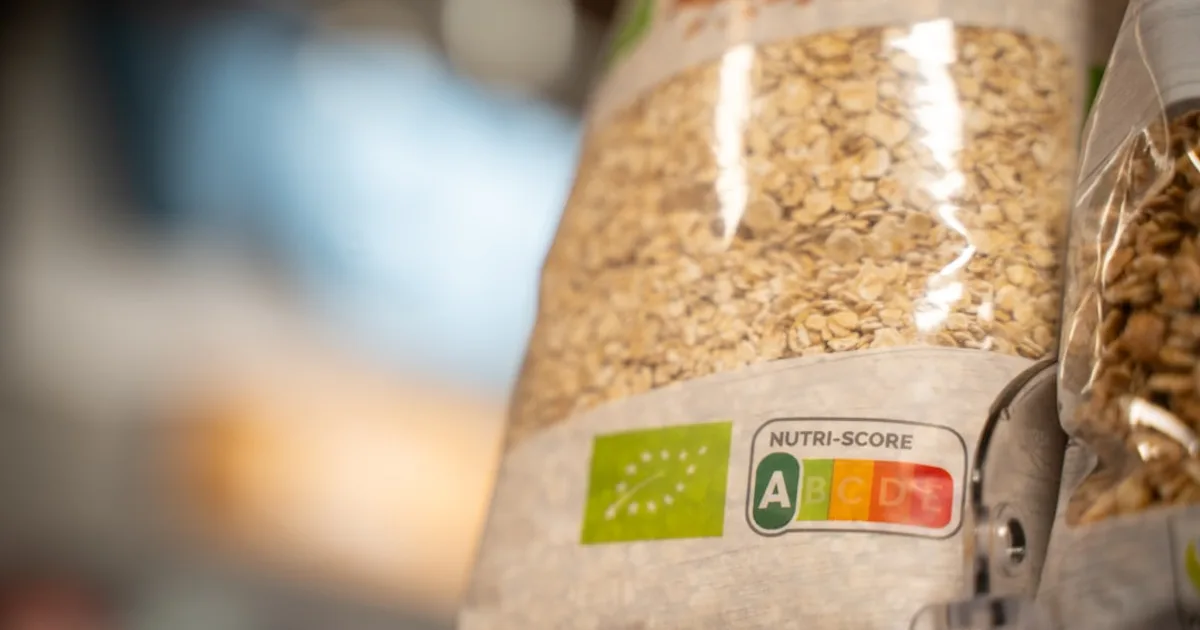
In 2023, a well-known UK snack brand quietly switched its flavouring supplier — same product, same packaging, same HFA logo on the back. The reformulated version contained an E-number derived from a new source that had not yet been re-audited. The halal logo was still technically valid from the previous audit cycle. The ingredients list had changed; the logo had not.
This is the structural gap at the heart of halal certification: the logo reflects the product at the moment of audit, not necessarily the product in your hands today. That does not make certification worthless — far from it. But it does mean that treating any logo as a permanent, unconditional guarantee is a mistake that even careful shoppers make. This post covers the six specific gaps that exist even when a certification is genuine, not fake.
Note: This post is specifically about the gaps in real, legitimate certifications. If you want to identify fake or unrecognised logos, see our post on Is Halal Certification Trustworthy?
Gap 1 — The Supply Chain Stops at the Factory Gate
When an auditor from HMC, HFA, or IFANCA visits a facility, they inspect the manufacturing process, the equipment, the cleaning protocols, and the ingredients on-site at that time. What they cannot do — within a standard audit — is independently verify every sub-supplier’s process for every ingredient used.
Consider gelatine (E441). A certified ready-meal manufacturer might purchase gelatine from a certified halal gelatine producer in Turkey. That producer has their own halal certificate. But if the ready-meal manufacturer switches to a different gelatine supplier mid-year — perhaps due to cost or availability — the new supplier’s gelatin may not yet have been verified under the same audit scheme. The change can happen between audit cycles, which are often annual.
The same risk applies to:
- E471 (mono- and diglycerides of fatty acids) — can be derived from animal fat or vegetable oils; source varies by batch and supplier
- E120 (cochineal/carmine) — insect-derived, but some manufacturers use an alternative colouring mid-run when supply is constrained
- Flavourings — compound flavour mixes from third-party flavour houses that may change composition without triggering a label update
What this means in practice: The halal logo covers the formulation that was audited. Ingredient source changes do not automatically invalidate a certificate, but they may not be caught until the next audit.
Gap 2 — Recipe Changes After Certification
Food manufacturers reformulate constantly. Reasons include: commodity price changes, raw material shortages, nutritional targets, and consumer preference data. A biscuit brand that earned HFA certification in January 2025 may have quietly swapped its vegetable shortening to a blend containing animal-derived E471 by August 2025 — still within the same certification period.
UK food law requires ingredient list updates when formulations change, but it does not require a brand to inform their certifying body immediately. Some certification agreements contractually require notification of material changes; others are less stringent. Enforcement depends on the certification body’s follow-up processes and the brand’s compliance culture.
Practical indicators to watch:
- “New recipe” or “improved taste” flash banners on packaging
- A change in the ingredient list order (ingredients are listed by weight — order shifts indicate quantity changes)
- A new “may contain” statement that was not previously present
Gap 3 — Cross-Contamination and Shared Facilities
Many products are manufactured in facilities that also handle pork, shellfish, or alcohol-based ingredients. Halal certification schemes handle this in different ways:
- HMC requires dedicated halal-only production lines for meat products and has strict equipment-sharing rules
- HFA permits shared facilities with cleaning-in-place (CIP) protocols, subject to audit
- IFANCA (US) and MUI (Indonesia) also permit shared facilities under documented cleaning procedures
The gap: “May contain pork” or “Made in a factory that also processes pork” statements are often not considered disqualifying by some certifying bodies for non-meat products. From a fiqh perspective, whether cross-contamination at trace levels constitutes an issue depends on the school of thought (see Madhab note below). The certification logo alone does not tell you whether shared equipment was used.
Gap 4 — Certification Schemes Are Not Equivalent
This is perhaps the least understood gap. Muslim consumers in the UK often see a halal logo and assume it means the same thing regardless of which body issued it. It does not.
| Certifying Body | Country / Region | Stunning Allowed (Meat)? | Supply Chain Depth | Audit Frequency |
|---|---|---|---|---|
| HMC | UK | No (stunning-free only) | High | Annual + spot checks |
| HFA | UK | Yes (controlled) | Medium | Annual |
| JAKIM | Malaysia | No (for poultry and cattle) | High | Annual + surveillance |
| MUI | Indonesia | No (for halal meat) | Medium-High | Annual |
| IFANCA | USA | Yes (in some cases) | Medium | Annual |
| Self-certified | Varies | Unknown | None | None |
An HMC-certified chicken product and an HFA-certified chicken product are not interchangeable for a consumer who requires stunning-free slaughter. Both logos are legitimate; they certify to different standards.
Similarly, a JAKIM-certified product imported to the UK was certified against Malaysian halal standards — which are stringent — but not independently verified by a UK body. The product may be entirely sound; the point is that the logo does not automatically translate across jurisdictions.
Gap 5 — The Self-Certification Loophole
In the UK, there is no legal restriction on printing the word “halal” on food packaging without any certifying body’s involvement. A manufacturer can self-declare a product halal, print “halal” on the label, and face no regulatory penalty — provided the product does not contain false or misleading claims under the Food Safety Act.
This creates a significant consumer information gap. When you see:
- “Halal certified” with no named certifying body
- A generic crescent-and-star logo with no organisation name or certificate number
- “Prepared to halal standards” with no further detail
…you are looking at self-certification. It may be entirely accurate — some small producers genuinely source halal-compliant ingredients and have sound processes. But there is no independent verification.
How to distinguish genuine from self-certified:
- Look for the full name of the certifying body (e.g. “Certified by HMC” or “JAKIM Certified”)
- Search the certifying body’s official website for the brand’s licence number
- Check if the logo matches the official logo design from the certifying body’s website
Gap 6 — Country-Specific Differences Create Hidden Mismatches
A product manufactured in Europe for export to Muslim-majority markets may carry JAKIM or MUI certification on that export version — but the version sold in UK supermarkets may not. Some brands maintain separate formulations for different markets.
Additionally, ingredients that are permissible under one standard may not be under another. Alcohol-derived flavourings (such as vanilla extract at trace levels) are treated differently across certification bodies. E120 (carmine) is accepted by some bodies as it comes from an insect rather than a prohibited animal, but is rejected by others. These nuances are embedded in each body’s standard — not visible from the logo alone.
Certification Comparison: What Different Logos Actually Guarantee
| Scenario | Logo Present | What It Covers | Gap |
|---|---|---|---|
| UK HMC-certified chicken | Yes — HMC | Stunning-free slaughter, audited supply chain | Recipe changes between audits |
| UK HFA-certified biscuits | Yes — HFA | Ingredients at time of audit, shared-facility protocols | Sub-supplier ingredient source |
| US product with IFANCA logo | Yes — IFANCA | US halal standard compliance | Not verified by UK body; stunned slaughter may apply |
| Generic “halal” stamp | No named body | Nothing independently verified | No audit, no recourse |
| No logo, halal ingredient list | N/A | Consumer’s own ingredient check | Requires knowledge of each ingredient |
How we reached this verdict
Our assessment draws on the published standards of HMC, HFA, JAKIM, MUI, and IFANCA — all of which are publicly available on their respective websites. We reviewed the audit scope described in each body’s certification framework, focusing specifically on what is and is not covered within a standard certification cycle.
The supply chain gap is documented in academic literature on halal supply chain management (notably in the International Journal of Halal Research and studies published by the International Halal Integrity Alliance). The recipe-change gap is a structural feature of how food safety certification works globally — not unique to halal certification; it applies equally to organic and kosher certification.
No specific brand has been identified as having committed a violation. The examples used illustrate structural gaps in how certification systems operate, not allegations against any manufacturer.
Madhab note
The question of cross-contamination at trace levels is a nuanced fiqh matter. Under the Hanafi madhab (the most widely followed in the UK Muslim community), transformation (istihalah) of a haram substance into a categorically different substance can affect permissibility — but simple dilution does not. Trace contamination from shared equipment, where the haram substance remains chemically unchanged, is treated differently by different scholars.
HMC’s strict stance (dedicated lines for meat) aligns with the more cautious Hanafi position. HFA’s shared-facility approach with documented CIP cleaning is accepted by many scholars within the HFA’s advisory structure.
For meat products specifically, the question of electrical stunning before slaughter is a significant difference of scholarly opinion. HMC’s no-stunning position is the more conservative ruling; HFA’s acceptance of controlled stunning (where the animal recovers and is then slaughtered while alive) is a position held by a number of contemporary scholars but not accepted by all.
Consumers should be aware that the choice between HMC and HFA for meat is a matter of which scholarly position they follow — both bodies are operating in good faith within their respective fiqh frameworks.
What To Do When Certification Isn’t Enough
Halal certification is still the most reliable starting point. But here is a layered approach for higher confidence:
- Prefer HMC for meat — the strictest UK standard, especially for slaughter method
- Cross-check the logo — verify on the certifying body’s official website that the brand is a current licensee
- Read the ingredient list every time — look for E-numbers with ambiguous sourcing (E471, E441, E120, E542)
- Check for “may contain” statements — these indicate shared-facility production
- Re-check after any recipe change banner — treat “new recipe” as a trigger to re-verify
- Use the ingredient scanner for products with long ingredient lists
Summary
| Question | Answer |
|---|---|
| Does a halal logo mean the product is always halal? | Not unconditionally — it means the product passed audit at a specific point in time |
| Which UK body is strictest for meat? | HMC — no stunning, audited supply chain |
| Is a self-certified “halal” stamp trustworthy? | No independent verification — treat with caution |
| What should I check if an ingredient list changes? | Re-verify using HalalCodeCheck’s E-codes database and ingredient scanner |
| Are all halal logos equivalent? | No — HMC, HFA, JAKIM, MUI, and IFANCA certify to different standards |
| What E-numbers most often have ambiguous sourcing? | E471, E441, E120, E542, E631, E635 |
Use the E-codes database to look up any E-code and see its halal status, common sources, and which certifying bodies accept or reject it.
Scan a full ingredient list with the ingredient scanner to cross-check every ingredient in one go — especially useful after a “new recipe” label change.
Ingredients change. Be first to know.
Brands reformulate without warning. We track every E-code update and halal certification — one short weekly email.
Related Articles
 Ingredient Guides
 Why "Suitable for Vegetarians" Doesn't Make a Medicine or Supplement Halal (2026)
Vegetarian-labelled capsules still use bovine gelatin — which is not halal without certification. Here's the specific gap between vegetarian compliance and halal compliance, and how to navigate it.
 Ingredient Guides
 "No Pork" Doesn't Mean Halal: 8 Other Ingredients to Check (2026)
Gelatin, carmine, shellac, L-cysteine, isinglass, natural flavours, vanilla extract and animal rennet are all haram or mushbooh — and none come from pork. The complete guide to what else to check.
 Ingredient Guides
 The "Natural Flavours" Halal Problem: What the Label Hides (2026)
"Natural flavours" is the most misleading phrase in food labelling. It can hide castoreum, carmine, isinglass, and alcohol carriers. Here's the systemic problem — and how to navigate it.