
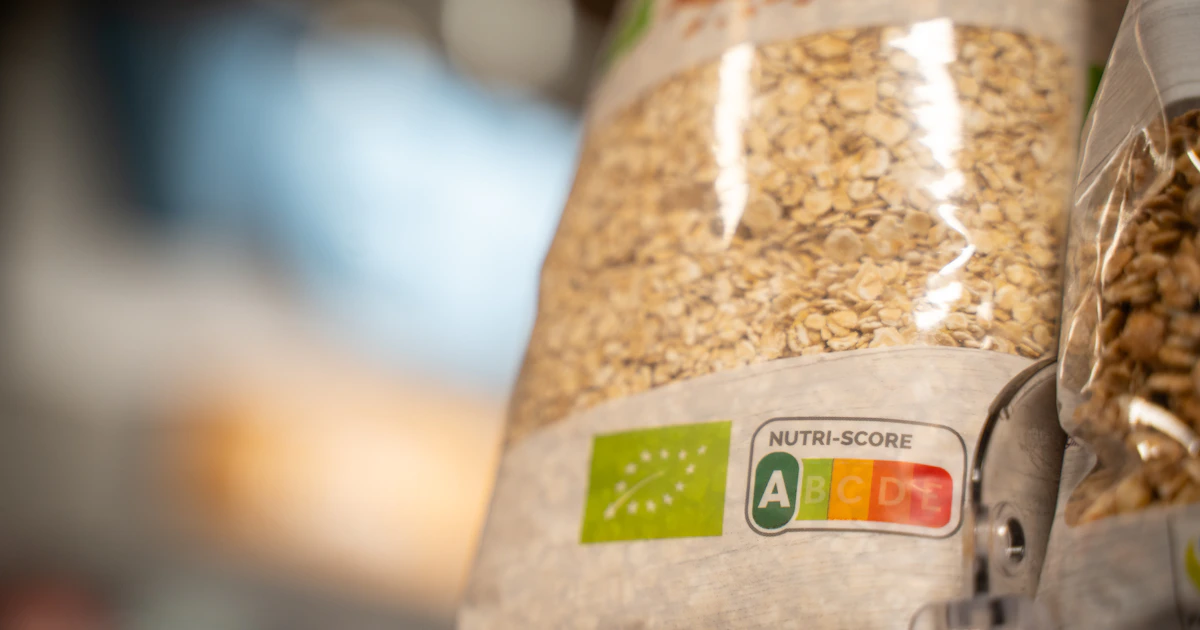
Walk through any supermarket and you’ll encounter dozens of different halal logos — crescents, stars, Arabic text, acronyms. Some represent internationally respected third-party certification bodies with regular facility inspections and public databases. Others are self-applied by the brand with no external audit whatsoever.
Knowing the difference is one of the most practical skills a halal-conscious shopper can develop.
The Halal Certification Tier System
Not all certification is created equal. Here is a practical tier system based on auditing rigour, international recognition, and database transparency:
Tier 1 — Gold Standard (Internationally Recognised, Audited)
| Body | Country | Meat Slaughter | Database | Notes |
|---|---|---|---|---|
| HMC (Halal Monitoring Committee) | UK | Manual only | Yes — halalmc.co.uk | Strictest UK standard |
| HFA (Halal Food Authority) | UK | Manual + machine (conditions) | Yes | Long-established, widely used |
| JAKIM | Malaysia | Per MS 1500:2019 | Yes — halal.gov.my | Global gold standard |
| IFANCA | USA | Per IFANCA standard | Yes — ifanca.org | Widely accepted in US/Canada |
| MUI (Majelis Ulama Indonesia) | Indonesia | Per Indonesian standard | Yes — halalmui.org | World’s largest Muslim body |
| ESMA | UAE | UAE Food Safety Law | Regulatory | Government-backed |
Tier 2 — Respected Regional Bodies
| Body | Country | Notes |
|---|---|---|
| SANHA | South Africa | Well-established, African market |
| FIANZ | New Zealand | New Zealand Islamic organisations |
| MUIS | Singapore | Singapore government-linked Islamic body |
| ISWA | Western Australia | Respected Australian regional body |
| AFIC | Australia | Australian Federation of Islamic Councils |
Tier 3 — Self-Certification / Unverifiable
This tier includes logos where:
- No external audit has been confirmed
- The certifying body has no accessible online database
- The logo cannot be traced to a registered organisation
- The “certification” appears to be a brand’s own claim without third-party involvement
How to identify Tier 3: Type the logo name into a search engine. If you cannot find (a) an official website, (b) a product database, and (c) evidence of facility inspections — treat it as unverified.
3-Step Logo Verification Process
Step 1: Identify the certifying body name Look for text accompanying the logo — usually an acronym (HMC, HFA, JAKIM) or full organisation name.
Step 2: Find the body’s official verification database
- HMC: halalmc.co.uk → Products section
- JAKIM: halal.gov.my → e-Halal portal
- IFANCA: ifanca.org → Certified Products
- MUI: halalmui.org → Produk Halal
Step 3: Search for your product or certificate number The certificate number is usually printed in small text near the logo on pack. Enter it into the database. If it returns a valid, non-expired certificate — the certification is confirmed.
Common Scenarios
Scenario 1: Generic crescent moon logo with just “HALAL” text No certifying body identifiable. Cannot be verified. Treat as self-certified/unverified.
Scenario 2: “Certified Halal by [Organisation Name]” with no logo Check if the organisation is verifiable. If they have a website and database — proceed to Step 2. If not — treat as unverified.
Scenario 3: Familiar logo (HMC, JAKIM) but product not in the database Could indicate expired certification or fraudulent use of the logo. Contact the certifier directly. Treat product as Mushbooh until confirmed.
Scenario 4: Multiple logos from different countries Common on export products — a product may carry MUI (Indonesia), JAKIM (Malaysia), and IFANCA (US) logos for different markets. Each can be individually verified.
What “No Halal Certification” Actually Means
Not having a halal certification logo does not automatically mean a product is haram. Many halal products — particularly domestic food in Muslim-majority countries, or products with entirely plant-based ingredients — do not seek certification.
A product without a logo requires ingredient-level assessment. Check for E441, E471, E120, E441, E476, E542 — the main animal-derived E-codes. If none are present and the product contains no meat or alcohol, it may well be halal even without a logo.
How We Reached This Verdict
Our tier system is based on publicly available information about each certifying body’s auditing methodology, database accessibility, industry recognition (cross-referencing which bodies are accepted by JAKIM for import certification, GCC country food authorities, and major Muslim-majority country import regulations).
Madhab Note
All four major madhabs require that halal claims be verifiable — the concept of gharar (uncertainty) applies to food labelling. A self-certified logo with no external audit creates uncertainty that most scholars would resolve by treating the product as Mushbooh. The Hanafi principle of ihtiyat (precaution) further supports requiring verifiable certification.
Use HalalCodeCheck to verify E-codes on any product where the halal logo status is uncertain.
Check our E-code database for ingredient-level halal assessment.
Scan product labels to check ingredients when certification is unclear.
Ingredients change. Be first to know.
Brands reformulate without warning. We track every E-code update and halal certification — one short weekly email.
Related Articles
 Shopping Guides
 Halal Shopping at Coles: Aisle-by-Aisle Australia Guide (2026)
Coles stocks halal-certified meat from accredited abattoirs but own-brand packaged goods require E-code checking — here's what to look for in each aisle.
 Shopping Guides
 Halal Shopping at Carrefour: France, UAE & Turkey Guide (2026)
Carrefour's halal status varies by country — UAE stores stock certified halal products throughout, while French stores require label-by-label checking.
 Shopping Guides
 Halal Food in Malaysia: Beyond JAKIM — Full Supermarket & Brand Guide
JAKIM certification is Malaysia's gold standard but not every product on shelf is JAKIM-certified — here's how to shop confidently in Mydin, Giant, and Aeon.