
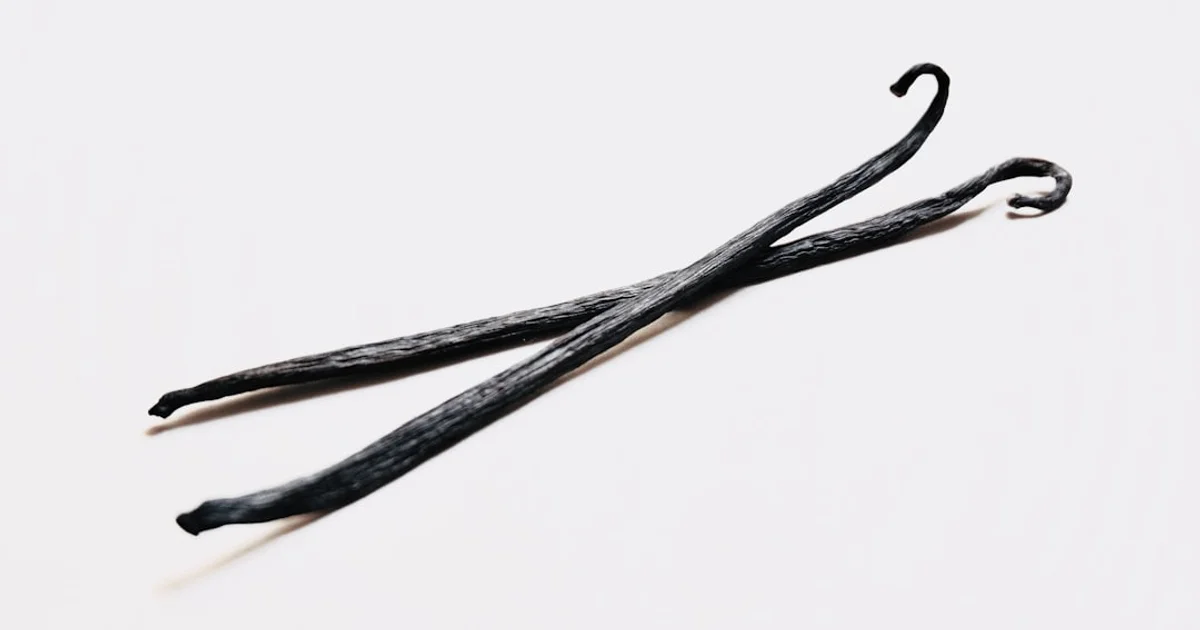
Vanilla bean paste has become a pantry staple for people who want visible vanilla flecks and concentrated flavour without the fuss of scraping a whole pod. Trader Joe’s version — sold in both a standard and a “Bourbon” variant — is a frequent pick. Both share the same underlying halal question, and it’s not the one the name suggests.
“Bourbon” here doesn’t mean whiskey. It’s a variety name — Bourbon vanilla refers to vanilla grown in Madagascar and the surrounding Indian Ocean islands, historically known as the Bourbon islands. Neither Trader Joe’s Vanilla Bean Paste nor the Bourbon Vanilla Bean Paste contains actual bourbon spirit as an added ingredient.
The Real Concern: Ethyl Alcohol in the Extract Base
Both products list organic ethyl alcohol as part of the “concentrated vanilla extract” ingredient — this is standard for how vanilla extract is made industrially; ethanol is the solvent used to pull flavour compounds out of the vanilla bean, and it remains in the finished extract. This isn’t unique to Trader Joe’s — most commercial vanilla extract works the same way.
| Ingredient | Concern | Notes |
|---|---|---|
| Organic sugar, water | None | Standard |
| Concentrated vanilla extract (vanilla extractives, water, ethyl alcohol) | Mushbooh | Alcohol present as part of the extraction process |
| Vanilla bean seeds | None | Whole ingredient |
| Acacia gum, xanthan gum | None | Plant-based stabilisers |
Does Baking Remove the Alcohol?
This is where the verdict gets specific to how you use the product, not just what’s in the jar.
- In baked applications (cakes, cookies, custards that are cooked) — heat drives off most of the alcohol during baking. The majority Hanafi and Maliki position treats this leniently: the finished product does not retain intoxicating amounts of alcohol, and the alcohol was never the product’s defining characteristic.
- In unbaked applications (whipped cream, buttercream frosting, no-bake cheesecake, ice cream base stirred in cold) — no heat is applied, so the alcohol content isn’t reduced by cooking. This is the scenario where caution matters most, and where vanilla bean paste is actually used more often than in baking, since its main appeal is the visible flecks in a finished, unbaked presentation.
A Cleaner Alternative
Trader Joe’s sells a separate Pure Vanilla Flavor (Alcohol Free) product, specifically formulated without ethyl alcohol. If you want vanilla flavour with certainty rather than a baking-dependent judgement call, that’s the more straightforward pick — check the current label to confirm the alcohol-free formulation, as recipes can change.
Summary
| Question | Answer |
|---|---|
| Is Trader Joe’s Vanilla Bean Paste halal? | Mushbooh — contains ethyl alcohol from the vanilla extract base |
| Does “Bourbon” mean it contains whiskey? | No — it’s a vanilla variety name, not added spirit |
| Safer in baked or unbaked use? | Baked — heat reduces alcohol content; unbaked uses carry more caution |
| Alcohol-free alternative | Trader Joe’s Pure Vanilla Flavor (Alcohol Free) |
Look up any E-code from a packaged product in the E-codes database.
To scan a full ingredient list for halal status in seconds, use the ingredient scanner.
How we reached this verdict
We checked the following Tier-1 sources before publishing this verdict:
- Manufacturer/product ingredient lists: current ingredient panels for both Trader Joe’s Vanilla Bean Paste and Bourbon Vanilla Bean Paste confirm organic ethyl alcohol as part of the concentrated vanilla extract; Trader Joe’s Pure Vanilla Flavor (Alcohol Free) confirmed as a separate, alcohol-free formulation.
- Halal certification bodies: no halal certification found for any Trader Joe’s vanilla product; alcohol-free formulations are commonly listed as halal-suitable by independent ingredient checkers.
- Sunni fatwa scholarship across the four madhabs: see our complete guide to alcohol in food for the full breakdown — the majority Hanafi and Maliki position treats processing alcohol that evaporates under heat leniently; HMC-strict and Hanbali-leaning positions apply more caution regardless of cooking method.
Madhab note
The four Sunni madhabs broadly converge on the rules applied in this guide:
- Alcohol as a named ingredient used for extraction, not as a defining flavour — treated more leniently by Hanafi and Maliki scholars when the finished dish is cooked and does not retain intoxicating amounts; some Hanbali-leaning and HMC-strict positions apply caution regardless of cooking method.
- Unbaked use of alcohol-containing extracts — carries more caution under all four madhabs than baked use, since no heat is applied to reduce alcohol content.
If your madhab differs on processing alcohol in extracts, consult a competent scholar in your tradition for a binding ruling.
Ingredients change. Be first to know.
Brands reformulate without warning. We track every E-code update and halal certification — one short weekly email.
Related Articles
 Food & Ingredients
 Is Tteokbokki (Topokki) Halal? Rice Cakes, Fish Cake, and the Gochujang Problem
Tteokbokki's core ingredients — rice cakes, anchovy broth, fish cake — are halal by nature. The real risk is store-bought gochujang, some of which uses alcohol in fermentation or as a preservative.
 Food & Ingredients
 Is Mayonnaise Halal? Hellmann's, Heinz, and Homemade Mayo Explained
Is mayonnaise halal? Plain mayo uses eggs, oil, and vinegar — all halal. The concern is the vinegar type and 'natural flavours' in branded products. Here's how to check your jar.
 Food & Ingredients
 Is Shallot Halal? Raw Shallots vs Crispy Fried Shallot Products (2026)
Raw shallot is a plain vegetable with no halal concern at all. Packaged crispy fried shallots are usually clean too — shallots and palm oil — but check for animal-derived flavour powders on specific brands.