
Xanthan gum appears on ingredient labels across gluten-free bread, salad dressings, ice cream, and dozens of other products. For halal-conscious bakers, it is one of the most important functional ingredients to understand — and to source correctly.
Xanthan gum (E415) is halal in the vast majority of commercial products. The ingredient is microbial, not animal-derived. But the fermentation process has one edge case that matters — and knowing it helps you choose the right brand.
What Is Xanthan Gum?
Xanthan gum is a polysaccharide — a long-chain sugar — produced by the bacterial fermentation of glucose or sucrose using Xanthomonas campestris. The result is a fine white powder that, when dissolved in water, forms a stable, viscous gel.
The E-number is E415.
In food production, xanthan gum serves four main functions:
- Thickener: Adds body and viscosity to sauces, soups, and dressings
- Stabiliser: Prevents emulsions and suspensions from separating
- Binder: Replaces the structural role of gluten in gluten-free products
- Suspension agent: Keeps particles (like cocoa in chocolate milk) evenly distributed
Is Xanthan Gum Halal?
Yes — in standard commercial production, xanthan gum is halal.
The bacteria (Xanthomonas campestris) are not themselves an animal product. The fermentation substrate — what the bacteria feed on — is the critical factor.
| Component | Standard Production | Halal Status |
|---|---|---|
| Bacteria (X. campestris) | Non-pathogenic microorganism | Halal |
| Fermentation substrate | Corn starch, glucose, sucrose (plant-derived) | Halal |
| Final product | Purified polysaccharide — no bacterial residue | Halal |
The one edge case: Some earlier industrial processes used casein (a milk protein) or other animal-derived proteins as nitrogen sources in the fermentation growth medium. Modern food-grade xanthan gum production has largely moved away from this. Major suppliers have been verified by IFANCA and other halal certification bodies.
In practice, the risk is very low for any mainstream brand. Seeking certified halal or kosher-certified xanthan gum removes the residual doubt entirely.
Why Xanthan Gum Matters for Halal Baking
For halal-conscious bakers — particularly those baking gluten-free — xanthan gum is often non-negotiable. Here is why it matters across different baking applications:
Gluten-free bread: Gluten creates the elastic network that gives bread structure. Without it, gluten-free bread crumbles. Xanthan gum is the standard substitute — typically used at 1/4 tsp per cup of gluten-free flour.
Pizza dough: Gluten-free pizza dough without xanthan gum will not stretch or hold toppings. With it, the dough becomes workable and holds its shape.
Cakes and muffins: Adds moisture retention and prevents crumbling. Typically 1/8 tsp per cup of flour.
Pancakes and waffles: Creates the right batter consistency and prevents flat, dense results.
Sauces and gravies: A small pinch (1/8 tsp per cup) thickens without cooking, and the sauce stays thick when cooled or reheated — unlike cornstarch, which can thin on standing.
Top Halal Xanthan Gum Brands
NOW Foods Xanthan Gum Powder 8oz (US)
NOW Foods is one of the most recognised supplement and food ingredient brands in North America. Their xanthan gum carries kosher certification and is widely accepted as halal by Muslim consumers and halal food consultants. NOW Foods has a strong track record of ingredient transparency, and their xanthan gum is produced from plant-based fermentation substrates.
Best for: regular bakers who need a reliable mid-size container.
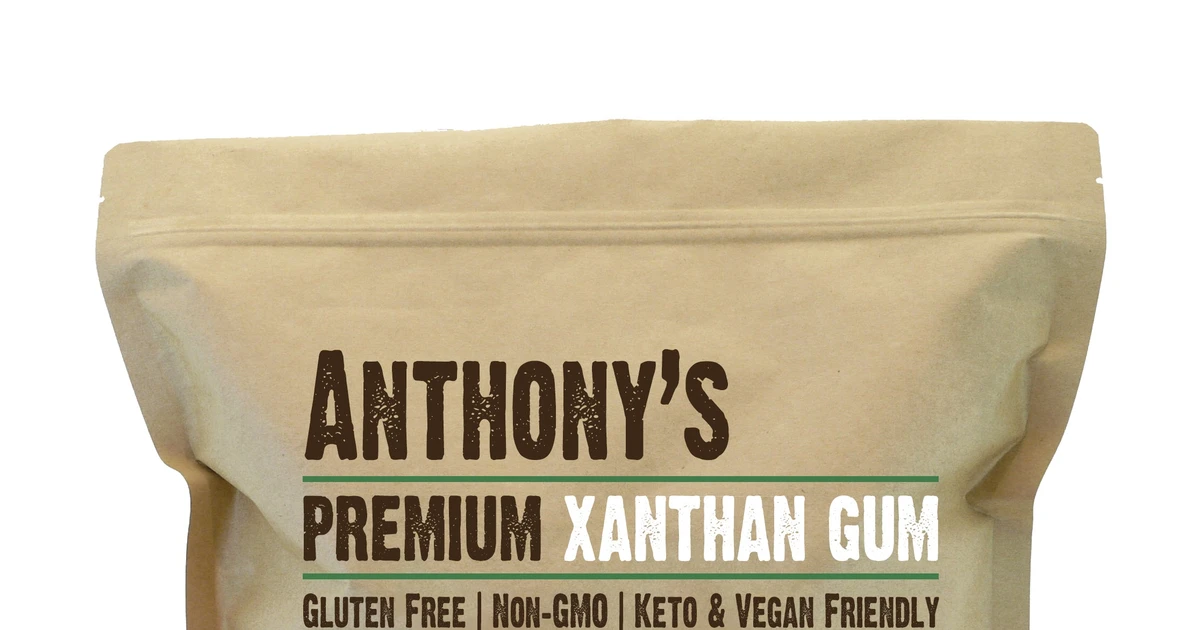
Anthony’s Xanthan Gum 1lb (US)
Anthony’s specialises in bulk baking ingredients and is a popular choice among gluten-free bakers. Their xanthan gum is non-GMO verified and plant-based. The 1lb size is economical for high-volume baking. Anthony’s is transparent about sourcing on their product pages, and their xanthan gum has no animal-derived ingredients in the formulation or production process.
Best for: households that bake gluten-free regularly and want a bulk supply.
Nutricost Xanthan Gum 1lb (US)
Nutricost offers a budget-friendly xanthan gum option without compromising on basic quality. Plant-based, no artificial additives. Suitable for Muslim consumers following mainstream halal standards. Good for bakers trying xanthan gum for the first time before committing to a larger quantity.
Best for: budget-conscious buyers and first-time users.
FREEE Xanthan Gum 100g (UK)
FREEE (by Doves Farm) explicitly states this product is Halal, Kosher, Gluten Free, and Vegan on the packaging. This is the most directly certified option for UK-based Muslim consumers. FREEE is a well-established UK gluten-free brand with wide supermarket distribution. The smaller 100g size suits occasional bakers.
Best for: UK consumers who want explicit halal labelling on the packaging itself.
Brand Comparison Table
| Brand | Size | Certification | Country | Best For |
|---|---|---|---|---|
| NOW Foods | 8oz (227g) | Kosher (widely halal accepted) | US | Regular bakers |
| Anthony’s | 1lb (454g) | Non-GMO verified, plant-based | US | High-volume baking |
| Nutricost | 1lb (454g) | Standard quality | US | Budget / first-time buyers |
| FREEE by Doves Farm | 100g | Halal + Kosher + Vegan | UK | UK consumers, occasional bakers |
How to Use Xanthan Gum in Halal Baking
The key to xanthan gum is using the right amount. Too little and the recipe won’t bind; too much and the texture becomes gummy and unpleasant.
Gluten-free bread: 1/2 tsp per cup of flour (heavier doughs need more binding) Cakes and muffins: 1/4 tsp per cup of flour Cookies: 1/4 tsp per cup of flour Pizza dough: 1/2 tsp per cup of flour Pancakes and waffles: 1/4 tsp per cup of flour Sauces and dressings: 1/8 tsp per cup of liquid (a little goes a long way)
Tip: Xanthan gum clumps if added directly to liquid. Either blend it into your dry ingredients first, or whisk it with a fat (oil) before incorporating into the recipe.
Xanthan Gum vs Agar Agar
Both xanthan gum and agar agar are halal alternatives to gelatine — but they do very different things.
| Property | Xanthan Gum (E415) | Agar Agar (E406) |
|---|---|---|
| Source | Bacterial fermentation | Red seaweed |
| Primary function | Binding, thickening, stabilising | Gelling (sets solid) |
| Use in baking | Gluten substitute, batter binder | Rarely used in baking |
| Use in desserts | Stabiliser in ice cream, mousse | Panna cotta, jelly, pudding |
| Sets solid? | No — stays viscous | Yes — forms a firm gel |
| Dissolves cold? | Yes | Requires heating |
Use xanthan gum when you need binding or thickening without setting. Use agar agar when you need a product to set firm — for jelly-type desserts, mousse, or as a gelatine replacement in any recipe.
Both are unambiguously halal and both serve as halal alternatives to E441 (gelatine), which requires source verification.
Summary
Xanthan gum (E415) is halal in standard production — the ingredient is microbial, plant-substrate-derived, and carries no animal products in mainstream commercial versions. The fermentation substrate edge case is resolved by buying kosher-certified or explicitly halal-certified brands.
For UK consumers, FREEE Xanthan Gum is the clearest choice with explicit halal labelling. For US consumers, NOW Foods and Anthony’s are the established options with clean, plant-based production.
Check the full E415 halal ruling in our e-codes database, or scan any product label to verify xanthan gum and every other additive simultaneously.
Ingredients change. Be first to know.
Brands reformulate without warning. We track every E-code update and halal certification — one short weekly email.
Related Articles
 Ingredient Guides
 Halal Vanilla: Extract vs Powder — What's the Difference?
Vanilla extract contains alcohol — is it halal? Vanilla powder is the safer alternative. Here are the best halal-verified vanilla options for baking.
 Ingredient Guides
 Malaysia's Gummy Candy Ban and the Halal Gelatin Problem JAKIM Found
Malaysia banned eyeball-shaped gummy candy after a child's death, then JAKIM found pork DNA in most marshmallows tested. Here's how to check gummy candy is halal.
 Ingredient Guides
 Ferment Lactique: Halal or Haram? What It Actually Means (2026)
Ferment lactique (lactic ferment) on French food labels is a bacterial culture — halal. The ingredient to actually check for is présure (rennet). Full explainer.