
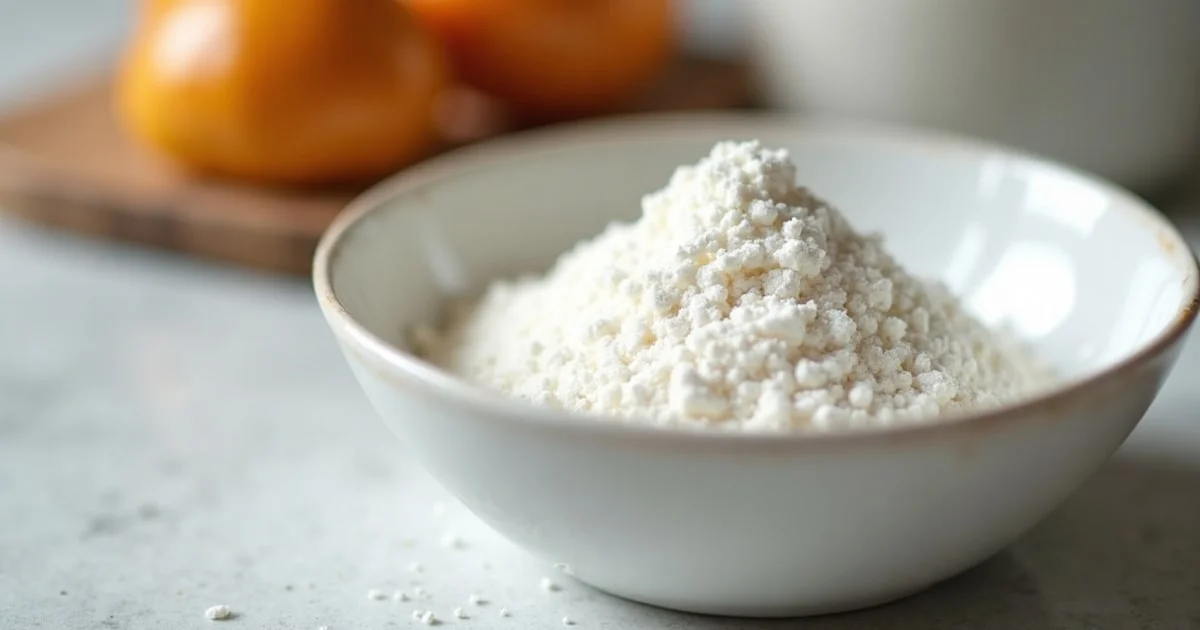
The direct verdict: xanthan gum (E415) is halal. It contains nothing from an animal, nothing from alcohol, and nothing source-ambiguous — which makes it one of the easy E-codes, and a rare piece of good news if you’re scanning a long ingredient list.
The reason people ask about it is the word “fermentation”. Xanthan gum is made by feeding plant sugar — glucose or sucrose from corn, wheat, or sugar cane — to the bacterium Xanthomonas campestris. The bacteria digest the sugar and secrete the gum, which is then precipitated, dried, and milled into powder. Fermentation here means bacterial digestion, not brewing: no ethanol ends up in the final product, and the isopropyl alcohol sometimes used to precipitate the gum is a processing aid that is fully removed and was never khamr (w
Ingredients change. Be first to know.
Brands reformulate without warning. We track every E-code update and halal certification — one short weekly email.
Related Articles
 E-Code Guides
 INS Numbers Explained: The E-Number System Under Another Name
INS numbers are the Codex Alimentarius naming system for food additives, used on labels in India, Australia, Malaysia, Singapore, Indonesia and the Gulf. INS 471 is the same additive as E471, and the halal question is identical. Here is how to read them.
 E-Code Guides
 Is Propylene Glycol (E1520) Halal? The Flavour Solvent Explained
Propylene glycol (E1520) is halal. It is a synthetic diol made from petroleum-derived propylene oxide, contains nothing animal-derived and does not intoxicate. The word 'glycol' is not 'alcohol' in the fiqh sense. Where it does matter: as the carrier in flavourings that may also contain ethanol.
 E-Code Guides
 E951 Aspartame: Is It Halal? Diet Coke, Sugar-Free & More (2026)
E951 aspartame is halal — it's a synthetic amino acid sweetener with no animal derivatives. But check the capsule carrier in supplement form.