
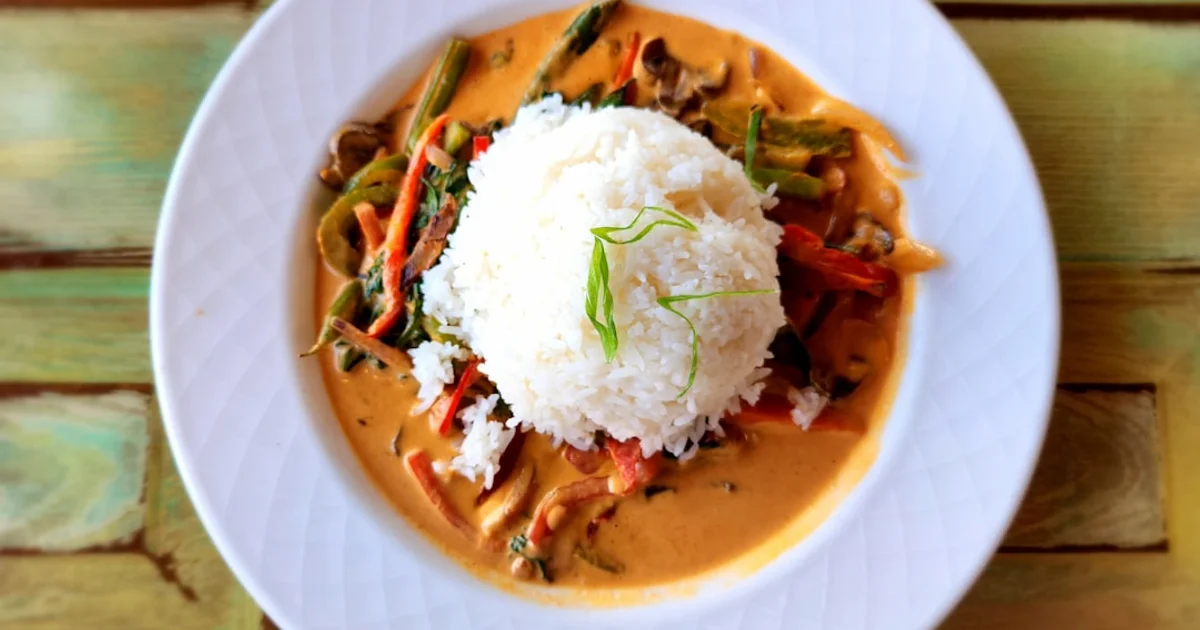
Piaren Ah Manuk doesn’t show up on many restaurant menus outside Sabah, but it’s one of the clearer halal answers on this site: chicken, spice paste, grated coconut, coconut milk. Nothing in the traditional recipe requires a second look at the ingredients label — the only real question is whether the chicken itself is halal-slaughtered, which is the default assumption for chicken sold anywhere in Malaysia.
The dish comes from the Iranun community of Kota Belud, on Sabah’s west coast, and is shared closely with the neighbouring Bajau community. The name breaks down simply: piaren refers to the coconut-based cooking method, ah manuk means chicken. A rempah — a sauteed base of shallots, chillies, and other aromatics — is combined with grated coconut (often lightly toasted first for a deeper flavour) and cooked down with coconut milk until it forms a thick, clinging sauce around the chicken pieces.
Why the Ingredients Aren’t a Concern
Unlike many packaged or Western-manufactured products covered on this site, Piaren Ah Manuk has no E-codes, no undisclosed emulsifiers, and no gelatine to check. It’s a home-style dish built from whole ingredients:
| Ingredient | Halal status | Notes |
|---|---|---|
| Chicken | Halal, if slaughtered per Islamic method | Standard for chicken sold in Malaysia under JAKIM oversight |
| Grated coconut | Halal | Plant-derived, no processing concerns |
| Coconut milk | Halal | Plant-derived |
| Rempah (shallots, chillies, aromatics) | Halal | Standard fresh spice paste, no alcohol-based extracts |
The only scenario that would change this verdict is sourcing chicken from an unverified supplier outside Malaysia — a concern that applies to any chicken dish, not something specific to this recipe.
Piaren Ah Manuk and Its Variants
- Piaren Ah Manuk — the chicken version, the most common form of the dish.
- Piaren Ah Sada — the same coconut-and-rempah method applied to fish. Halal by the same logic, provided the fish itself has no cross-contamination concerns (fish is generally halal regardless of slaughter method under mainstream Sunni rulings).
- Piaren Ah Badak — a vegetarian variant using unripe jackfruit in place of meat. Fully halal, and the safest option for a shared table where meat sourcing can’t be confirmed.
Where to Find It
Piaren Ah Manuk isn’t a dish you’ll typically find on a mainstream Malaysian restaurant menu in Kuala Lumpur or Penang — it’s rooted specifically in Sabahan home cooking and community events. If you’re travelling in Sabah, look for it at:
- Cultural food events and community gatherings in and around Kota Belud
- A small number of Sabahan-specialty restaurants and food stalls in Kota Kinabalu
- Home-hosted meals during festive occasions in Iranun and Bajau households
Summary
| Question | Answer |
|---|---|
| Is Piaren Ah Manuk halal? | Yes — halal ingredients throughout, provided the chicken is halal-slaughtered (standard in Malaysia) |
| Any E-codes or additives to check? | None — it’s a whole-ingredient home-style dish |
| Where is it from? | Kota Belud, Sabah — Iranun and Bajau communities |
| Common variants | Piaren Ah Sada (fish), Piaren Ah Badak (jackfruit, vegetarian) |
Look up any E-code from a packaged product in the E-codes database.
To scan a full ingredient list for halal status in seconds, use the ingredient scanner.
How we reached this verdict
We checked the following Tier-1 sources before publishing this verdict:
- Halal certification bodies (JAKIM): chicken sold across Malaysia, including Sabah, falls under JAKIM’s halal slaughter oversight by default — Piaren Ah Manuk as a home-style dish is not itself a certified product, but its ingredients carry no independent halal concern.
- Recipe and ingredient sources: Sabahan cuisine references and community recipe sources confirm the standard ingredient list — chicken, rempah, grated coconut, coconut milk — with no alcohol, gelatine, or animal-derived additives in the traditional preparation.
- Sunni fatwa scholarship across the four madhabs: whole, unprocessed ingredients (fresh chicken, coconut, spices) carry no additive-related concerns under any of the four madhabs; the halal status of chicken hinges entirely on the slaughter method, which is the same standard applied across all our chicken-based content.
Madhab note
The four Sunni madhabs converge on this verdict — plain, whole-ingredient dishes made from halal-slaughtered chicken, plant-derived coconut products, and fresh spices carry no divergence across Hanafi, Maliki, Shafi’i, and Hanbali rulings. The only school-specific nuance applies to fish (in the Piaren Ah Sada variant): all four madhabs permit fish without requiring Islamic slaughter, though some scholars distinguish specific sea creatures beyond fish — not a concern for this dish.
Ingredients change. Be first to know.
Brands reformulate without warning. We track every E-code update and halal certification — one short weekly email.
Related Articles
 Food & Ingredients
 Is Tteokbokki (Topokki) Halal? Rice Cakes, Fish Cake, and the Gochujang Problem
Tteokbokki's core ingredients — rice cakes, anchovy broth, fish cake — are halal by nature. The real risk is store-bought gochujang, some of which uses alcohol in fermentation or as a preservative.
 Food & Ingredients
 Is Shallot Halal? Raw Shallots vs Crispy Fried Shallot Products (2026)
Raw shallot is a plain vegetable with no halal concern at all. Packaged crispy fried shallots are usually clean too — shallots and palm oil — but check for animal-derived flavour powders on specific brands.
 Food & Ingredients
 Is Trader Joe's Vanilla Bean Paste Halal? The Alcohol Question Explained
Both Trader Joe's Vanilla Bean Paste and the Bourbon version contain ethyl alcohol from the concentrated vanilla extract. Here's why that's Mushbooh rather than a clean Halal, and what changes when it's baked.