
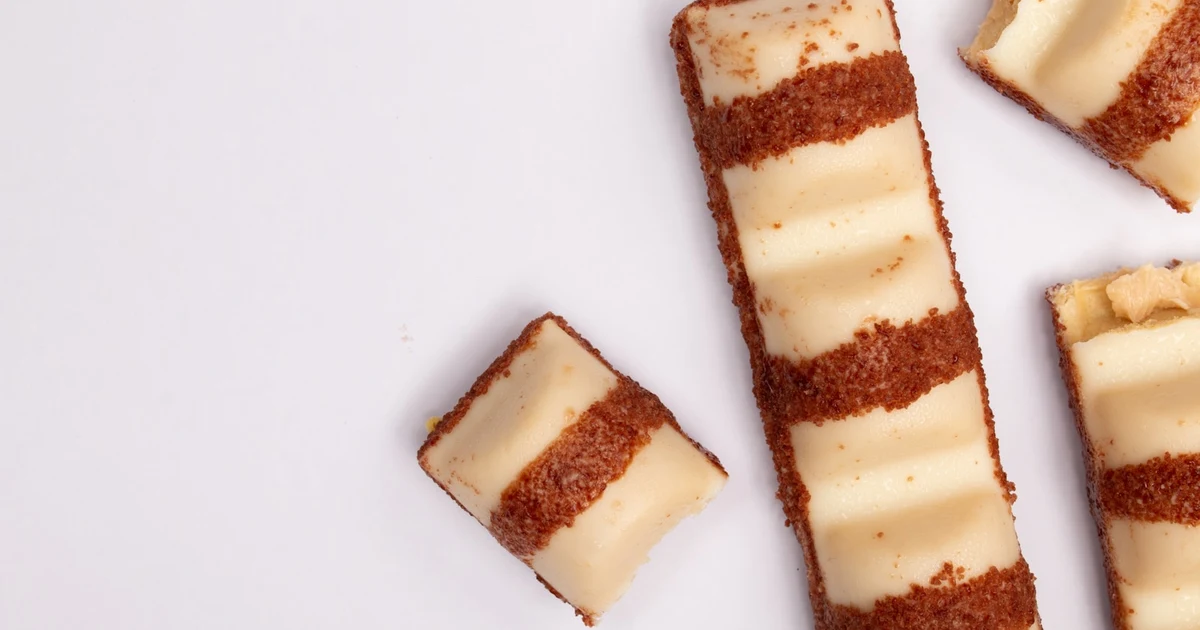
KitKat in the UK is Mushbooh — no halal certification, and the source of its emulsifiers is not confirmed on the label. In Malaysia and Turkey, KitKat is JAKIM-certified halal and fully permissible. If you are in the UK or US and require certification, you should choose a certified alternative.
This guide covers the specific E-codes in KitKat, the regional certification situation, and what changed when Nestlé closed its UK halal production line in 2023.
The E-Codes in KitKat
UK KitKat’s chocolate coating contains three emulsifiers that are relevant to a halal check.
E322 — Lecithin
Status: Mushbooh (without certification)
Lecithin (E322) is the most important emulsifier to check in any chocolate product. In the majority of Nestlé products, lecithin is soy-derived — a plant source and therefore halal. However, lecithin can also be derived from eggs. Without halal certification, the specific source used in any given production batch cannot be confirmed from the label alone.
Most scholars accept soy lecithin as halal. The Mushbooh classification here reflects the absence of certification rather than a known haram source.
E442 — Ammonium Phosphatides
Status: Generally considered halal
E442 is derived from soy lecithin combined with ammonia and phosphoric acid — a process that produces a compound with no animal involvement. It is widely used as an emulsifier in chocolate coatings and is generally accepted as halal by major certification bodies. No significant concern applies to E442 in KitKat.
E476 — PGPR (Polyglycerol Polyricinoleate)
Status: Halal
PGPR is derived from castor oil, a plant source. It is used in chocolate to reduce viscosity, allowing thinner coatings at lower cost. The ingredient itself is plant-based and considered halal. Its presence in KitKat raises no concern.
Whey and Dairy
KitKat contains whey in the wafer. Whey is a dairy by-product and is halal in itself — the dairy supply chain does not require zabihah slaughter. Cross-contamination with non-halal products at a shared facility is a separate question, which certification would address.
Regional Halal Status
| Market | Manufacturer | Halal Certified | Certifying Body | Verdict |
|---|---|---|---|---|
| UK | Nestlé UK | No | — | Mushbooh |
| US | Hershey (Nestlé licence) | No | — | Mushbooh |
| Malaysia | Nestlé Malaysia | Yes | JAKIM | Halal |
| Turkey | Nestlé Turkey | Yes | Local halal body | Halal |
| UAE / Gulf | Nestlé Middle East | Varies by product | — | Check packaging |
Note on UK certification: Nestlé operated a halal-certified production line at its Halifax factory until 2023. That line was closed, ending halal-certified KitKat production in the UK. There is currently no halal-certified KitKat available in the UK market.
KitKat Varieties: Which Are Affected?
| Product | Key Emulsifiers | Halal Certified (UK) | Notes |
|---|---|---|---|
| KitKat 4-finger Milk Chocolate | E322, E442, E476 | No | Mushbooh |
| KitKat Chunky Milk Chocolate | E322, E442, E476 | No | Mushbooh |
| KitKat Dark | E322, E476 | No | Mushbooh |
| KitKat White | E322, E442 | No | Mushbooh |
| KitKat Salted Caramel | E322, E442, E476 | No | Mushbooh |
| KitKat Malaysia (any variety) | Halal-certified ingredients | Yes — JAKIM | Halal |
The certification gap applies across the entire UK KitKat range — it is not limited to one variety.
What Nestlé Says
Nestlé UK does not claim halal status for its standard KitKat range sold in the UK. The company’s position is that lecithin in its chocolate is predominantly soy-derived, but it does not issue a blanket halal guarantee for products sold without certification.
If you need to verify a specific product, Nestlé UK can be contacted through their consumer care line. Some individual production runs may be possible to verify by lot number, though this is not a practical shopping solution.
Summary
| Question | Answer |
|---|---|
| Does KitKat contain pork? | No listed pork ingredients |
| Is UK KitKat halal-certified? | No — certification ended in 2023 |
| Is E322 in KitKat halal? | Likely soy-derived, but unconfirmed without cert |
| Is E476 in KitKat halal? | Yes — plant-derived (castor oil) |
| Is E442 in KitKat halal? | Yes — generally accepted as halal |
| Is Malaysian KitKat halal? | Yes — JAKIM certified |
| Overall UK verdict | Mushbooh |
The verdict for UK and US KitKat is Mushbooh — not because of known haram ingredients, but because halal certification is absent and emulsifier sourcing cannot be confirmed from the label. For those who require certification, Malaysian or Turkish KitKat or certified alternatives are the appropriate choice.
Frequently Asked Questions
Can I eat KitKat if I follow a halal diet?
In the UK and US, this depends on your personal standard. If you require halal certification for all chocolate, UK KitKat does not meet that standard. If you accept products without known haram ingredients and judge the likely soy source of E322 as sufficient, that is a personal and scholarly matter. Malaysian KitKat is certified halal and fully permissible under any standard.
Is KitKat vegetarian?
Yes, UK KitKat is suitable for vegetarians — it contains dairy (milk, whey, lactose) but no meat products. It is not vegan.
Does KitKat contain alcohol?
No. UK KitKat does not contain alcohol or alcohol-based flavourings.
Shopping in the UK or US, where the certification simply isn’t there? Our ranked guide to certified chocolate you can order online covers the milk-chocolate bars that do carry documentation — no certified wafer bar among them, and no dark one either, so it is a substitute rather than a like-for-like swap. Malaysian and Turkish readers, meanwhile, already have a JAKIM-certified KitKat on the shelf.
For a complete reference on emulsifiers in chocolate, see the E-codes database. To scan the label of any chocolate product you have in hand, use Verify Ingredients.
How we reached this verdict
We checked the following Tier-1 sources before publishing this verdict:
- Halal certification bodies (HMC, HFA, JAKIM, MUI): Where the brand or ingredient appears in certified products, the certifying body’s audit covers source verification; where it appears in uncertified products, manufacturer disclosure is required.
- Manufacturer statements: Public ingredient lists, vegetarian / vegan suitability labels, customer-service correspondence on source disclosure.
- Sunni fatwa scholarship across the four madhabs:
- Hanafi-leaning bodies: IslamQA Hanafi, Darul Iftaa Birmingham, AskImam.org, Daruliftaa.com (Mufti Taqi Usmani), Wifaqul Ulama, Darul Iftaa New York.
- Shafi’i / Maliki-leaning bodies: NU (Nahdlatul Ulama, Indonesia), Dar al-Ifta al-Misriyyah (Egypt), e-fatwa.com (UAE), al-Azhar.
- Hanbali / Saudi-Salafi-leaning bodies: Saudi Permanent Committee for Scholarly Research, IslamQA Saudi.
Madhab note
The four Sunni madhabs broadly converge on the rules applied in this guide:
- Pork-derived sources — Haram across all four madhabs.
- Alcohol-based ingredients — Haram across all four madhabs.
- Source-ambiguous E-codes (E471, E476, E631, E627, E635, E920) — manufacturer plant-source disclosure (vegetarian-suitable label) is treated as sufficient under the Hanafi/Maliki/Shafi’i mainstream rule (Darul Ifta Birmingham, IslamQA case 245452); HMC-strict / Hanbali-leaning view requires formal independent certification.
- Istihāla (transformation) — Hanafi and Maliki accept istihāla strongly; spirit vinegar (alcohol → vinegar) is halal. Most Shafi’i scholars permit spirit vinegar specifically; some Hanbali scholars more cautious.
- Insect-derived dyes (E120 cochineal/carmine) — Hanafi, Shafi’i, and Hanbali generally treat as haram; some Maliki scholars permit small insects.
- Non-zabihah meat (Ahl al-Kitāb / People-of-the-Book slaughter) — Maliki and classical Shafi’i/Hanbali generally accept; Hanafi-Deobandi tradition more restrictive.
If your madhab differs on a specific ruling, the relevant section above flags the school-specific position. For binding rulings on borderline products, consult a competent scholar in your tradition.
Ingredients change. Be first to know.
Brands reformulate without warning. We track every E-code update and halal certification — one short weekly email.
Related Articles
 Shopping Guides
 Is Milka Chocolate Halal? Complete EU & UK Guide (2026)
Milka chocolate is Mushbooh — it contains E476 (PGPR) and E471 with undisclosed animal fat sources and no halal certification in UK or EU.
 Shopping Guides
 Is Biscolata Halal? Turkish Chocolate Brand Ingredients Checked
Biscolata is Mushbooh — the Turkish chocolate biscuit brand uses E471 with no halal certification for export markets, though Turkish production may meet local standards.
 Shopping Guides
 Is Terry's Chocolate Orange Halal? Ingredients Checked
Terry's Chocolate Orange is Mushbooh — it contains E476 (PGPR) with undisclosed glycerol source. No halal certification. The Dark version has the same concern.