
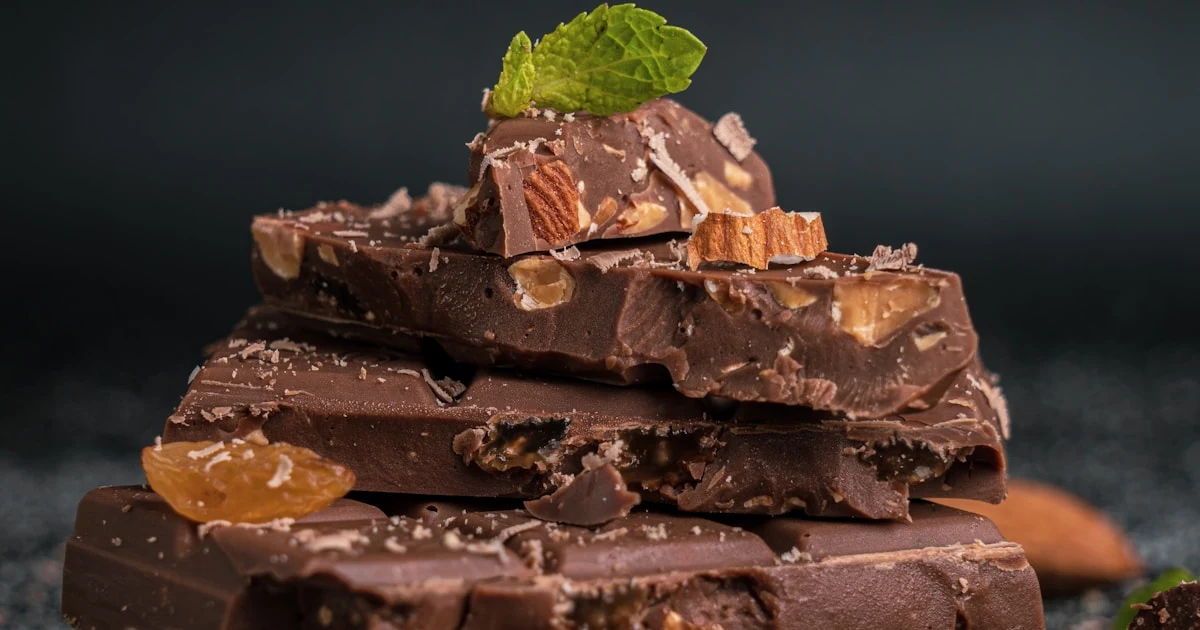
Quick answer: plain chocolate is halal; the risk is in flavourings, emulsifiers, fillings and colours. If you want chocolate with a named halal certifier behind it, buy Ülker or Nestlé Damak (Turkey), Whittaker’s (FIANZ, New Zealand), Firetree (Halal Certification Europe, UK) or Marou (JAKIM). Mainstream US and UK brands — Hershey’s, Lindt, Cadbury, Galaxy, Milka, Kinder — hold no halal certification in those markets and use emulsifiers of undisclosed source, so we rate them Mushbooh.
This guide ranks the certified bars you can actually order online in 2026, explains every e-code that matters in chocolate, and gives a one-line verdict on the big brands people ask about most.
How we chose these bars
Every pick below meets one of two standards, and we say which:
- Certified — a named halal body (Turkish halal authorities, FIANZ, Halal Certification Europe, JAKIM) has audited the product, and the brand states this on its own site or pack.
- Ingredient-verified — no animal-derived or alcohol-based ingredient on the label, but no certifier. We flag these clearly (NOMO is the only one on this page).
We do not list a bar as halal because a community site says so, because it is vegan, or because it is kosher — none of those is a halal audit. We re-checked every brand statement on 19 August 2026; the sources are listed at the end.
Is chocolate halal?
Yes, by default. Cocoa mass, cocoa butter, sugar and milk are all halal. A chocolate bar becomes doubtful or haram only because of what is added to it or how it is made:
| Risk | Where it hides | Halal status |
|---|---|---|
| Alcohol carrier | ”Vanilla extract”, “natural flavour”, liqueur or truffle fillings | Haram if alcohol remains; Mushbooh when undisclosed |
| E476 PGPR, E471, E442 | Cheaper milk chocolate, coatings, Cadbury/Mars/Mondelez bars | Halal if plant-sourced and certified; Mushbooh when the source is not disclosed |
| E120 carmine | Red/pink coatings, some M&M’s, novelty eggs | Haram (insect-derived) |
| E441 gelatine | Mousse, marshmallow and caramel fillings | Haram unless beef/fish gelatine from a halal source |
| Whey, milk powder | Milk chocolate | Halal unless animal rennet whey — rarely disclosed |
| Shared lines | Factories running liqueur or non-halal fillings | Cross-contact risk — what certification actually controls |
E322 lecithin — soya or sunflower — appears in almost every bar and is halal. It is not something to worry about.
The practical rule: a plain bar whose only emulsifier is E322 and whose vanilla is “vanillin” or “natural vanilla flavouring (alcohol-free)” is halal on ingredients. A bar with E476/E471/E442 and no certifier is Mushbooh. A certified bar removes the question entirely. (Full explainer: Is chocolate halal?)
Best halal chocolate bars to buy online — ranked
1. Ülker Turkish Extra Milk Chocolate 6-pack (US + UK)
Halal basis: certified — manufactured in Turkey under Turkish halal certification; halal logo on pack. Our Ülker brand verdict covers the core range.
Ülker is Turkey’s largest food company and the most reliable mainstream halal chocolate you can buy in both markets. The Extra Milk bar is a classic smooth milk chocolate: cocoa, milk, sugar, soya lecithin, vanillin. No alcohol-based flavouring, no E120, no gelatine. The 6-pack is the best-value format on Amazon.
Best for: everyday milk chocolate, households, kids’ treats.
2. Nestlé Damak Milk Chocolate with Pistachio (US)
Halal basis: certified — made at Nestlé’s Turkish plant under Turkish halal certification. Note that Nestlé has no blanket halal status; Damak is a Turkish-made line, which is what makes it different.
Milk chocolate studded with whole roasted Antep pistachios. This is not a compromise product — it is one of the best pistachio chocolates on the market at any price, and it happens to be certified.
Best for: gifts, Eid boxes, anyone who wants premium flavour with certification.
3. Ülker Bitter (Dark) Chocolate 60% Cocoa 6×60g (US)
Halal basis: certified — same Turkish certification as the milk range.
A clean 60% dark bar with no alcohol-based flavouring and the same emulsifier profile as the rest of the Ülker range. Most dark chocolate on US shelves is uncertified, which makes this the easiest certified dark option for American buyers. Ülker also sells a Dark Chocolate with Whole Pistachios for a richer bar.
Best for: certified dark chocolate in the US at a supermarket price.
4. Whittaker’s Dark Ghana 72% and Almond Gold (US, NZ, Australia)
Halal basis: certified — FIANZ (Federation of Islamic Associations of New Zealand) certifies many Whittaker’s Classic and Specialty blocks, including several Dark Ghana cocoa percentages and Almond Gold; Whittaker’s publishes a halal-suitable filter on its own site. Our Whittaker’s verdict is “Varies” only because a few limited editions are not covered — check the block you buy.
Whittaker’s is the rare mainstream chocolate maker that went and got certified rather than leaving Muslims to decode the label. The emulsifier is soya lecithin throughout the certified range. Dark Ghana 72% is a serious, well-tempered dark bar; Almond Gold is the classic milk-and-almond block. Both are on Amazon US as imports; UK stock is patchy.
Best for: halal dark chocolate with a genuine certifier, and a mainstream-quality milk block.
5. Firetree single-estate dark chocolate (UK craft, also on Amazon US)
Halal basis: certified — Firetree’s FAQ states “we are certified by Halal Certification Europe to produce chocolate”; all bars are halal except a few gift boxes that contain alcohol products or partner items.
This is the craft-chocolate answer for Muslims. Firetree makes 69–100% single-estate bars from Solomon Islands, Vanuatu, Madagascar and Philippines cocoa, and most of its dark range is vegan as well. If you want a £4 bar with flavour notes and a certificate, this is the one. Sold direct and through Amazon US (7-bar dark bundle); the UK 8-bar Signature Set is intermittently in stock on Amazon UK — buy direct from Firetree’s own shop when it shows out of stock.
Best for: gifting, tasting, anyone who has outgrown supermarket dark chocolate.
6. Marou Vietnamese single-origin dark (UK and EU)
Halal basis: certified — Marou’s halal collection page states “certified halal by JAKIM Malaysia”; 70–100% dark, 48% milk and 44% white bars are listed in the collection.
Marou is the best-known bean-to-bar maker in Asia, and JAKIM is the strictest widely recognised certifier in the world. The catch is availability: Marou’s EU shop ships to the UK and Europe; US stock is occasional. Check that the specific bar you order appears in Marou’s halal collection — the brand’s FAQ says only “some products” are certified.
Best for: UK and EU readers who want a JAKIM-certified dark bar.
7. Ülker Milk Chocolate with Pistachio 6×70g (UK)
Halal basis: certified — Turkish halal certification, as above.
The UK-market pistachio variant. Same credentials, and it competes directly with premium European pistachio bars at a better price.
Best for: UK buyers who want the Damak experience from a brand stocked locally.
8. NOMO Creamy Chocolate Bar and Mixed Box (UK) — ingredient-verified, not certified
Halal basis: ingredient-verified only. NOMO is vegan and free from dairy, egg and gelatine, and lists no alcohol. It holds no halal certification, and “vegan” does not by itself rule out an alcohol-carried flavouring, so we list it as suitable on ingredients rather than certified.
For dairy-free Muslims this is the most available option in UK supermarkets and on Amazon UK, and the oat-milk Creamy bar is genuinely good. Buy it knowing the basis.
Best for: dairy-free or allergen-aware households in the UK.
Comparison table
| Brand / bar | Halal basis | Certifier | Key e-codes | Buy in |
|---|---|---|---|---|
| Ülker Extra Milk | Certified | Turkish halal authority | E322 | US + UK |
| Nestlé Damak Pistachio | Certified | Turkish halal authority | E322 | US |
| Ülker Bitter 60% dark | Certified | Turkish halal authority | E322 | US |
| Whittaker’s Dark Ghana / Almond Gold | Certified | FIANZ (NZ) | E322 (soya) | US, NZ, AU |
| Firetree single-estate dark | Certified | Halal Certification Europe | E322 | Amazon US/UK, direct |
| Marou single-origin | Certified | JAKIM | E322 | UK/EU shop |
| Ülker Pistachio 6×70g | Certified | Turkish halal authority | E322 | UK |
| NOMO | Ingredient-verified (vegan) | None | E322 | UK |
Is my usual chocolate halal? Mainstream brand verdicts
These are the brands people search for most. Each links to our full brand page, where the ingredient panel and sources are laid out.
| Brand | Verdict (US/UK product) | Why |
|---|---|---|
| Hershey’s / Reese’s | Mushbooh | No US halal certification or statement; emulsifier and flavour sources undisclosed. Locally certified versions in some Muslim-majority markets do not cover US-made bars. |
| Lindt | Mushbooh (plain bars) / Haram (liqueur lines) | Lindt UK states it is not halal or kosher certified. Plain Excellence bars list no animal ingredients but flavour carriers are undisclosed; Lindor liqueur, Irish Cream and similar contain alcohol. Full Lindt guide. |
| Cadbury | Mushbooh | No UK halal certification (not HMC, not HFA); Dairy Milk contains E442 and E476 of undisclosed source. Cadbury made in Malaysia and the Gulf is certified locally. Is Cadbury halal? |
| Godiva | Unverified claim | Godiva’s UK site says its chocolate is certified by HFCE (Halal Food Council of Europe) and contains no alcohol or pork derivatives — but publishes no certificate, and the page does not say which factories it covers. Treat US-market Godiva as unverified and avoid liqueur-filled lines. |
| Galaxy, Mars, Snickers, Twix, Maltesers | Mushbooh | E471 and/or E476 with no animal-or-plant disclosure; no UK/US certification. |
| M&M’s | Varies | Some colours use E120 carmine (haram); check the pack. |
| Milka, Toblerone, Oreo chocolate | Mushbooh | Mondelez: E476/E471 undisclosed; no certification in US/UK. |
| Kinder, Ferrero Rocher | Mushbooh | E471 undisclosed; no halal certification on standard EU range. Nutella is the exception — soya lecithin only, halal on ingredients. Kinder Bueno · Ferrero Rocher. |
| Ritter Sport | Mushbooh | E476/E442 in some variants; no certification. |
| KitKat | Mushbooh (US/UK) / Halal (JAKIM Malaysia pack) | Country of manufacture decides. |
| Tony’s Chocolonely | Unverified | US FAQ has no halal statement; no certifier named. Often listed as halal online without evidence. |
| Hu Kitchen, Taza, Lake Champlain | Ingredient-only | US craft brands often called “halal-friendly”: kosher and organic, but no halal certification or statement on their sites. Vegan dark bars are clean on ingredients; that is all that can be said. |
| Ghirardelli | Mushbooh | No halal mention; FAQ confirms no gelatine since 2019 and that “chocolate liquor” contains no alcohol; flavour carriers undisclosed. |
Does chocolate contain alcohol? (“Chocolate liquor” is not liqueur)
Chocolate liquor on a US label is ground cocoa nibs — pure cocoa mass with 0% alcohol. It is halal. Liqueur (Baileys, rum, cherry brandy fillings) is alcohol and haram. The place alcohol actually enters an ordinary bar is vanilla extract, which is legally defined in the US as a 35% alcohol solution. Certified brands use vanillin or an alcohol-free vanilla; uncertified premium brands often do not say which. If the label says “vanilla extract”, ask the brand or choose a certified bar.
Halal certifiers to look for on chocolate
- Turkey: Turkish halal marks (GİMDES, TSE/HAK) on Ülker, Damak, Eti, Elit exports
- New Zealand: FIANZ (Whittaker’s)
- UK/EU: HMC, HFA, Halal Certification Europe (Firetree), HFCE (Godiva’s claim)
- Malaysia/Indonesia: JAKIM (Marou, Malaysian Cadbury/KitKat), MUI
- US: IFANCA, ISNA, AHF, ISA — rarely seen on chocolate in US retail, which is why imports dominate this list
- Gulf: ESMA/MOIAT (UAE), SFDA (Saudi) — on Patchi and Gulf-market Hershey’s/Cadbury
A logo you cannot trace to a certifier’s own website is not certification. Our guide to halal certification logos explains how to check one.
Frequently asked questions
Is dark chocolate halal? Yes, when it is cocoa mass, cocoa butter, sugar and plant lecithin. Check the vanilla (extract = alcohol carrier; vanillin = fine) and the emulsifier (E476/E471 of undisclosed source = Mushbooh). Certified dark options: Ülker Bitter 60%, Whittaker’s Dark Ghana, Firetree, Marou.
Is E476 in chocolate halal? E476 (PGPR) is made from castor oil (plant) plus glycerol, which can be plant or animal. Halal bodies such as JAKIM and GİMDES accept plant-sourced E476, so a certified bar containing E476 is halal. In an uncertified bar the glycerol source is unknown — we rate that Mushbooh, the same standard we apply to E471. Full entry: E476.
Is vegan chocolate automatically halal? No. Vegan rules out dairy, gelatine and E120, but not an alcohol-carried flavouring or cross-contact on a shared line. Vegan is a good sign, not a certificate — which is why NOMO is listed as ingredient-verified rather than certified.
Is white chocolate halal? White chocolate is cocoa butter, sugar and milk solids — halal on ingredients. The same flavouring and emulsifier checks apply; Marou’s 44% white bar is a certified option.
Which Lindt is halal? None is certified. Plain Lindt Excellence bars are the least problematic (no animal ingredients listed); all Lindor and liqueur-filled lines should be avoided. See Is Lindt chocolate halal?
Is Dubai chocolate halal? The original Fix Dessert Chocolatier bar is made with halal-certified ingredients and is alcohol-free; the supermarket copycats are Mushbooh until you check the emulsifier, flavouring and certifier. Is Dubai chocolate halal?
How we verified these picks
Checked 19 August 2026:
- Ülker / Damak — Turkish halal certification as documented on our Ülker and Nestlé brand pages; halal logo on export packs.
- Whittaker’s — whittakers.co.nz FAQ: FIANZ certification “for many of our Classic and Specialty flavours”; halal filter on the product range.
- Firetree — firetreechocolate.co.uk FAQ: “certified by Halal Certification Europe to produce chocolate”; alcohol gift boxes excluded.
- Marou — marouchocolate.com halal collection: “certified halal by JAKIM Malaysia”; FAQ: “some products are certified halal or kosher”.
- Godiva — godivachocolates.co.uk halal/kosher page: HFCE claim, no certificate published.
- Lindt — lindt.co.uk customer FAQ: not halal or kosher certified.
- Hershey’s, Tony’s Chocolonely, Hu Kitchen, Taza, Lake Champlain, Ghirardelli — brand FAQs contain no halal certification statement.
- E-code positions — our e-codes database: E322 halal; E476, E471, E442 Mushbooh unless source verified; E120 and unspecified E441 haram.
Community halal-status sites are not used as evidence here. They do not audit supply chains and often treat “vegan” as “halal”.
Summary
Certified wins. For milk chocolate, Ülker and Nestlé Damak are the easiest certified buys in the US and UK. For dark chocolate, you now have real certified choices — Ülker Bitter 60%, Whittaker’s Dark Ghana (FIANZ), Firetree (Halal Certification Europe) and Marou (JAKIM). NOMO covers dairy-free on ingredients. Every big Western brand — Hershey’s, Lindt, Cadbury, Galaxy, Milka, Kinder — is Mushbooh in the US and UK because of undisclosed emulsifiers and no audit, not because it contains pork.
When a bar is not on this list, run the label through the ingredient scanner and look up any e-code in the database: E322 is fine, E476/E471/E442 need a certifier, E120 and gelatine are out.
Run a certified halal brand that belongs in this guide?
Get featured here and across HalalCodeCheck — reach shoppers at the moment they verify.
Ingredients change. Be first to know.
Brands reformulate without warning. We track every E-code update and halal certification — one short weekly email.
Related Articles
 Shopping Guides
 Is Kik Imly Candy Halal? The Tamarind Sweet Checked (2026)
Kik Imly is a Pakistani tamarind candy popular in the UK diaspora. The tamarind base is halal, but artificial colours E110, E122, and E129 are present without halal certification. Verdict: Mushbooh.
 Shopping Guides
 Is Dubai Chocolate Halal? Fix vs the Viral Copycats (2026)
The original Fix Dessert Chocolatier Dubai chocolate is halal-certified and alcohol-free. The viral copycats are Mushbooh — check the emulsifier, flavouring and certification first.
 Shopping Guides
 Is Terry's Chocolate Orange Halal? Ingredients Checked
Terry's Chocolate Orange is Mushbooh — it contains E476 (PGPR) with undisclosed glycerol source. No halal certification. The Dark version has the same concern.