
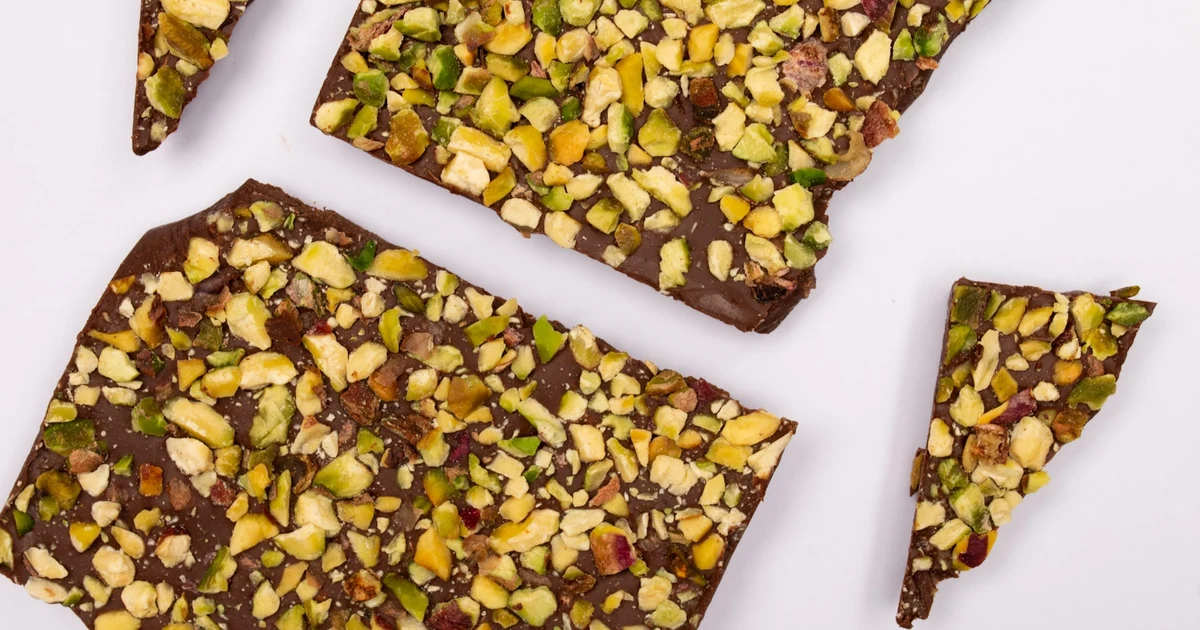
Certified halal Dubai chocolate exists — it’s the original. The dozens of viral copycats flooding supermarket shelves and TikTok shops are a separate question entirely.
The bar that started the craze is made by Fix Dessert Chocolatier in Dubai, which states its chocolate is produced with halal-certified ingredients and is 100% alcohol-free and pork-free. But “Dubai chocolate” is now a style, not a brand — and most of the pistachio-kunafa bars you’ll actually find are unbranded copies with no certification at all. This guide separates the two.
Quick verdict
| Which “Dubai chocolate”? | Status | Why |
|---|---|---|
| Fix Dessert Chocolatier (the original) | ✅ Halal | Halal-certified ingredients, alcohol-free, pork-free |
| Halal-certified copies (carry a halal logo) | ✅ Halal | Certification covers emulsifier + flavouring source |
| Uncertified copycat bars | ⚠️ Mushbooh | Emulsifier source, alcohol flavouring and supply chain unverified |
| Any bar listing an alcohol-based flavouring | ❌ Haram | Alcohol as an ingredient is impermissible |
Bottom line: the original Fix bar is halal. A generic “Dubai chocolate” bar with no halal logo is Mushbooh — check the three points below before you buy.
What is Dubai chocolate made of?
A Dubai chocolate bar is a thick Belgian chocolate shell (milk, dark or white) filled with:
- Pistachio cream — pistachio paste, sugar, oil
- Tahini — sesame seed paste
- Kataifi — toasted shredded kunafa/phyllo pastry (the crunch), made from wheat flour
- Often a little coconut oil to set the filling
On their own, every one of those is naturally halal. Chocolate, pistachios, sesame, wheat and coconut oil raise no Islamic dietary concern. So why isn’t the answer a simple “yes”? Because of what’s not on the front of the pack.
The three halal critical points
Indonesia’s halal inspection body LPPOM (MUI) has publicly flagged Dubai chocolate as a product whose halal status hinges on a few specific control points. They are the same three we check on any chocolate confection.
1. The emulsifier in the chocolate shell
Most chocolate contains an emulsifier to keep it smooth — commonly E471 (mono- and diglycerides) and sometimes E476 (PGPR) or lecithin (E322). E471 can be made from plant oils (halal) or animal fat (a concern if not halal-slaughtered), and the label does not have to say which. Undeclared, it is Mushbooh. E476 is almost always plant-derived (castor + plant oils) and lecithin is usually soy.
2. Alcohol-based flavouring
A minority of pistachio creams and chocolate fillings carry their flavour in an alcohol solvent, or list a vanilla/“natural flavouring” extract that is alcohol-based. Alcohol used as an ingredient is haram across all four Sunni madhabs. The original Fix product is explicitly alcohol-free; a no-name import is not guaranteed to be.
3. Certification and supply chain
The original maker carries halal-certified ingredient sourcing. The viral copies — produced at speed to ride the trend — usually carry no halal certificate, meaning nobody has verified the emulsifier source or the flavouring. Under the standard “when in doubt” principle, an uncertified bar is Mushbooh, not automatically halal.
A few cheaper bars also use sugar refined over bone char. This is a minor and widely debated point — most contemporary Sunni scholars treat refined sugar as halal because of the chemical transformation (istihāla) — so we do not weigh it heavily, but stricter buyers sometimes ask.
How to check a Dubai chocolate bar in 30 seconds
- Look for a halal logo on the pack (HMC, HFA, JAKIM, MUI, ESMA/UAE). If present, you’re done — it’s Halal.
- No logo? Read the emulsifier line. “Soya lecithin”, “sunflower lecithin” or “plant-based emulsifier” = fine. A bare “E471”/“emulsifier (471)” with no source = Mushbooh.
- Scan for alcohol. Any “alcohol”, “ethanol”, “liqueur”, or alcohol-carried flavouring = avoid.
- Check the pistachio cream separately if it’s a filled or imported jar — same emulsifier + flavouring questions apply.
- When unsure, buy the certified original or a halal-certified chocolate instead.
Halal alternatives
If the bar in front of you has no halal logo, you have good options:
- The original Fix Dessert Chocolatier bar — halal-certified, alcohol-free.
- Any halal-certified pistachio-kunafa bar — several Middle-Eastern makers now produce certified versions; look for the ESMA (UAE) or a recognised halal mark.
- A halal-certified chocolate if you just want the chocolate fix without the certification homework — see our is chocolate halal guide for brands that pass.
Summary
| Question | Answer |
|---|---|
| Is Dubai chocolate halal? | Depends on the maker — the original Fix bar is Halal; uncertified copies are Mushbooh |
| Is Fix Dubai chocolate halal? | Yes — halal-certified ingredients, alcohol-free, pork-free |
| What makes a copycat bar doubtful? | Undeclared emulsifier (E471), possible alcohol flavouring, no certification |
| Is the kataifi/pistachio filling halal? | Yes — pistachio, tahini, wheat kataifi are all naturally halal |
| Safest choice | The certified original, or any bar with a halal logo |
If the bar in your hand carries no halal logo, don’t gamble on it — our roundup of certified halal chocolate bars you can order online in 2026 sticks to makers whose emulsifier and flavouring sources are already on record.
Look up any E-code from a Dubai chocolate wrapper in the E-codes database.
To scan a full ingredient list for halal status in seconds, use the ingredient scanner.
How we reached this verdict
We checked the following Tier-1 sources before publishing this verdict:
- Halal certification bodies (HMC, HFA, JAKIM, MUI/LPPOM): LPPOM (MUI, Indonesia) has published guidance treating Dubai chocolate as a product whose halal status depends on emulsifier source, flavouring and certification rather than the headline ingredients. No mainstream UK certifier lists the generic copycat bars.
- Manufacturer statements: Fix Dessert Chocolatier states its bars are made with halal-certified ingredients and are 100% alcohol-free and pork-free.
- Sunni fatwa scholarship across the four madhabs: alcohol-as-ingredient and animal-fat emulsifiers from non-halal slaughter are treated as impermissible / doubtful by Hanafi, Maliki, Shafi’i and Hanbali bodies alike (e.g. IslamQA and Darul Iftaa rulings on E471 emulsifier source and alcohol in flavourings).
Madhab note
The four Sunni madhabs broadly converge on the rules applied in this guide:
- Alcohol-based flavourings — Haram across all four madhabs.
- Source-ambiguous emulsifiers (E471, E476) — manufacturer plant-source disclosure (or a “suitable for vegetarians/vegans” label) is treated as sufficient under the Hanafi/Maliki/Shafi’i mainstream; the HMC-strict / Hanbali-leaning view prefers formal independent certification. Undeclared, the default is Mushbooh.
- Refined sugar (bone-char filtered) — most scholars across all four schools treat refined sugar as halal on the basis of istihāla (complete transformation); a stricter minority avoid it. We do not classify a bar as doubtful on sugar alone.
For a binding ruling on a specific imported bar, consult a competent scholar in your tradition.
Ingredients change. Be first to know.
Brands reformulate without warning. We track every E-code update and halal certification — one short weekly email.
Related Articles
 Shopping Guides
 Is Bebeto Halal? Yes — the Turkish Certification Behind It
Bebeto gummy sweets are halal — but they are set with beef gelatine, not plant or fish. The verdict rests on Bebeto's stated TSE halal certification. Full breakdown inside.
 Shopping Guides
 Halal Chocolate in Malaysia: JAKIM-Certified Brands and What to Check (2026)
Malaysia is Muslim-majority with JAKIM certification as the gold standard. Cadbury Malaysia and Kit Kat Malaysia are JAKIM-certified, but imported chocolate without a logo is uncertain.
 Shopping Guides
 Halal Chocolate in Indonesia: MUI-Certified Brands Explained (2026)
Indonesia requires MUI certification for halal products. SilverQueen, Delfi, and Cadbury Indonesia all hold MUI certification. Here is what to check when buying local and imported chocolate.