
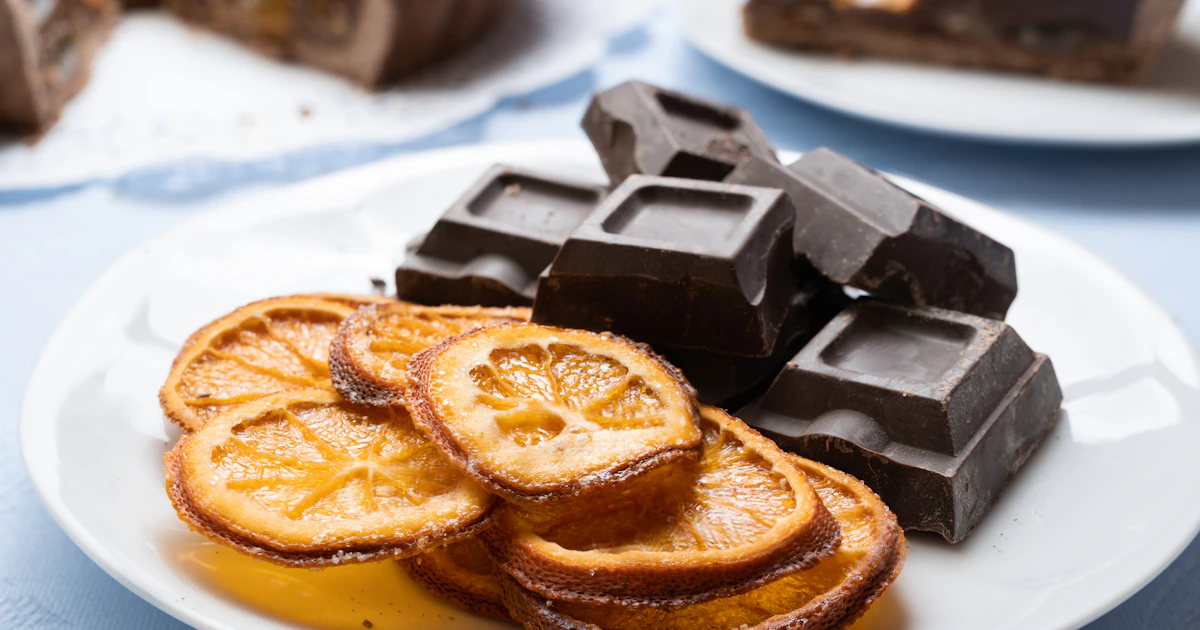
Terry’s Chocolate Orange is one of the UK’s most iconic seasonal gifts — but the orange-segment chocolate carries E476 and E471 with no source disclosure and no halal certification. It has been Mushbooh for as long as those emulsifiers have been in the recipe.
The festive packaging and the satisfying “tap and unwrap” ritual make this a frequent Christmas and Eid gift question. Here is the honest answer.
Who Owns Terry’s Now?
Terry’s was founded in York in 1767 and is one of Britain’s oldest confectionery brands. The brand passed through several corporate owners — Kraft Foods, then to Carambar & Co in 2012. It is now a French-owned brand manufactured in Strasbourg, France.
The change of ownership did not bring halal certification. Terry’s Chocolate Orange is sold across UK supermarkets — Tesco, Sainsbury’s, Asda, Boots — with no HMC, HFA, or MCB certification.
The E-Codes in Terry’s Chocolate Orange
E476 — Polyglycerol Polyricinoleate (PGPR)
E476 (PGPR) appears in Terry’s Chocolate Orange as an emulsifier. PGPR reduces the viscosity of molten chocolate, allowing thinner shells and reducing the amount of cocoa butter needed — a cost-reduction measure common across the chocolate industry.
PGPR is produced from:
- Castor oil — the ricinoleate component (plant-based, permissible)
- Glycerol — the polyglycerol component (may be from animal fat or plant oil)
The glycerol backbone in PGPR can originate from:
- Animal tallow (rendered cattle or pig fat) — Mushbooh to Haram depending on species and slaughter method
- Palm or soy oil glycerol — permissible
Terry’s does not specify the glycerol source on UK labels. Without that disclosure and without halal certification, E476 in Terry’s Chocolate Orange is Mushbooh.
E471 — Mono and Diglycerides of Fatty Acids
E471 (mono and diglycerides of fatty acids) is a second emulsifier present in the chocolate. The same undisclosed source issue applies. Both E471 and E476 are present without any declaration of plant or animal origin.
Milk vs. Dark — Does It Matter?
| Variant | E476? | E471? | Halal Cert? | Verdict |
|---|---|---|---|---|
| Terry’s Milk Chocolate Orange | Yes | Yes | None | Mushbooh |
| Terry’s Dark Chocolate Orange | Yes | Yes | None | Mushbooh |
| Terry’s Chocolate Orange Minis | Yes | Yes | None | Mushbooh |
| Terry’s Chocolate Orange Segsations | Yes | Check label | None | Mushbooh |
| Terry’s Chocolate Orange White | Check label | Yes | None | Mushbooh |
The Dark variant does not eliminate the concern. Dark chocolate uses the same PGPR emulsifier system. Consumers sometimes assume dark chocolate is “simpler” or “purer” — in this case, the same emulsifier concern applies to both.
The Christmas Peak Question
Terry’s Chocolate Orange has a strong seasonal peak around Christmas, and it also appears as an Eid and Ramadan gift item in some South Asian and Middle Eastern diaspora households in the UK. It is one of those products that gets wrapped and gifted without the ingredient label being checked.
The Mushbooh verdict has been consistent. If you are buying Terry’s Chocolate Orange as a gift for a Muslim household, the recipient will be receiving a non-certified product with two source-ambiguous emulsifiers. That is worth knowing before you buy.
Halal Chocolate Orange Alternatives
| Product | Halal Status | Notes |
|---|---|---|
| Lily’s Sweets Chocolate (US) | Check label | Stevia-sweetened, fewer emulsifiers |
| Montezuma’s Dark Chocolate | Check label | UK artisan brand, minimal emulsifiers |
| Green & Black’s Organic | Check label | Organic variants may disclose E476 source |
| Hotel Chocolat (selected) | Check label | Some ranges certified or emulsifier-free |
| Lindt (selected bars) | Check label | Standard bars contain E476 — same concern |
For a chocolate orange experience specifically, specialist halal confectionery shops sometimes produce certified halal chocolate orange products, particularly around Ramadan season.
How we reached this verdict
- UK product ingredient labels for Terry’s Milk Chocolate Orange and Dark Chocolate Orange (current Carambar formulation)
- Halal certification body checks: HMC, HFA, MCB — Terry’s does not appear in certified product lists
- E476 glycerol sourcing: European PGPR production chain analysis
- Sunni fatwa scholarship: Darul Iftaa Birmingham on E476; IslamQA; Wifaqul Ulama statement on chocolate emulsifiers
Madhab note
- E476 with undisclosed glycerol — Mushbooh under Hanafi/Maliki/Shafi’i mainstream; Haram by precaution under HMC-strict and Hanbali-leaning approaches
- E471 with undisclosed source — same analysis as E476
- Both emulsifiers require either plant-source disclosure or halal certification to be cleared
- Seasonal gifts: scholars across madhabs advise that the permissibility question is the same whether a product is gifted or consumed personally — a Mushbooh item gifted to a Muslim household remains Mushbooh
For a binding ruling, consult a scholar in your tradition.
Every alternative in the table above still needs a label check of its own. If you would rather skip that step, our roundup of certified halal chocolate bars you can order online sticks to bars that already carry certification — a sounder gift than a Terry’s box.
Check any chocolate E-code in the E-codes database.
Scan a full ingredient list in seconds using the ingredient scanner.
Related: Is Milka Chocolate Halal? — the same E476 and E471 concerns in another European chocolate brand.
Ingredients change. Be first to know.
Brands reformulate without warning. We track every E-code update and halal certification — one short weekly email.
Related Articles
 Shopping Guides
 Is Milka Chocolate Halal? Complete EU & UK Guide (2026)
Milka chocolate is Mushbooh — it contains E476 (PGPR) and E471 with undisclosed animal fat sources and no halal certification in UK or EU.
 Shopping Guides
 Are Mentos Halal? Every Variety Checked (Rainbow, Mint, Fruit)
Chewy Mentos rolls contain undisclosed gelatine — Mushbooh in UK/EU. Hard mints are gelatine-free but uncertified. Malaysian JAKIM-certified Mentos is halal.
 Shopping Guides
 Is Biscolata Halal? Turkish Chocolate Brand Ingredients Checked
Biscolata is Mushbooh — the Turkish chocolate biscuit brand uses E471 with no halal certification for export markets, though Turkish production may meet local standards.