
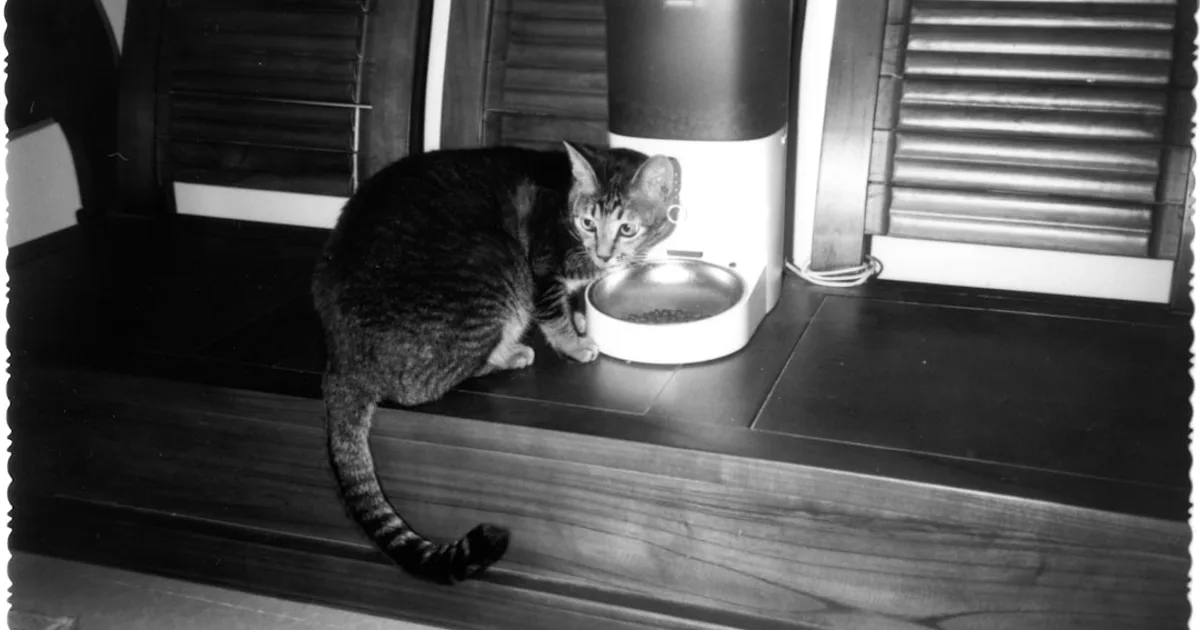
Your cat is allowed to eat pork. You may not be allowed to buy it. That split — between what a cat can eat and what a Muslim can purchase — is the entire halal cat food question, and most articles get it backwards.
Islamic dietary law binds people, not animals. No madhab requires a cat’s food to be zabiha. But the Prophet ﷺ prohibited the sale of pork and dead meat (maytah) — and mainstream scholarship reads a purchase as one half of a sale. Since most supermarket cat food contains non-zabiha meat, unnamed animal fats, and sometimes declared pork by-products, the question follows the owner to the checkout.
What the scholars actually say
The evidence base is one hadith, applied two ways.
In Sahih al-Bukhari (2236), the Prophet ﷺ said: “Allah and His Messenger have forbidden the sale of alcohol, dead meat, pork and idols.” When companions asked whether the fat of dead animals could at least be used for greasing boats and fuelling lamps — uses with no eating involved — the answer was no, it remains prohibited to trade.
From this, the majority position (IslamQA, and the mainstream across the Hanafi and Shafi’i schools) holds:
- Feeding a cat carrion or non-zabiha meat is permissible. If haram meat comes to you free — scraps, a butcher’s discards, found meat — you may give it to the cat.
- Buying products whose value includes pork or carrion is not permissible, because the transaction itself is what the hadith prohibits.
A second contemporary view argues from intent: the buyer of cat food is not buying pork to eat, any more than someone buying hand sanitiser is buying alcohol to drink. Scholars who take this view permit purchasing ordinary cat food, particularly where no practical alternative exists. It is a genuinely held position — but it is the minority one, and it sits awkwardly with the boat-grease exchange in the hadith, where a non-consumption use was still refused.
There is one more distinction worth knowing: declared pork vs. non-zabiha meat. A tin that lists “pork by-products” is the clear case. A chicken-flavoured kibble made from non-zabiha chicken is a weaker concern under the schools that treat improperly slaughtered meat as maytah for trade purposes — but a stronger one under strict Hanafi application. Fish sidesteps all of it: no slaughter requirement exists for fish in any madhab.
What’s actually in mainstream cat food
The practical problem is that cat food labels are looser than human food labels. Pet food manufacturers don’t have to declare the species behind “meat and animal derivatives” — a category that legally covers pork in both the UK and EU.
| Ingredient on the label | What it usually is | Halal concern |
|---|---|---|
| Meat and animal derivatives | Unspecified mammal/poultry material | Can include pork — undeclared |
| Pork / bacon flavour by-products | Declared pig material | The clear haram-purchase case |
| Animal fat (unnamed) | Rendered fat, often mixed species | Source untraceable |
| Animal digest / palatants | Hydrolysed tissue sprayed on kibble | Frequently porcine or non-zabiha |
| Gelatine (wet food, treats) | Usually pork-derived in Western products | Same issue as E441 gelatine in human food |
| Fish, fish meal, fish oil | Named fish material | No concern in any madhab |
If you have read our gelatin guide, the pattern is familiar: the problem ingredient is rarely the headline protein. It is the binder, the palatant, the “derivatives” line. The same source-disclosure logic covered in zabiha vs non-zabiha meat applies here, just with weaker labelling rules.
The practical options, easiest first
1. Fish-based recipes from mainstream brands. The most common answer working Muslim cat owners land on. Check that the recipe is genuinely fish-only — many “ocean” recipes still list meat and animal derivatives or unnamed animal fat further down.
2. Certified halal cat food. A small but real market now exists: HMC-certified and other certified lines have launched in the UK since 2021, and Malaysia has JAKIM-certified options. These solve the purchase question completely. We cover who makes what in our halal cat food brands guide.
3. Home-prepared food from halal meat. Fully clean religiously, but cats have strict nutritional requirements (taurine above all) — do this with a vet-approved recipe, not improvised chicken and rice.
4. Prescription diets are their own case. If a vet prescribes a food that contains pork by-products for a medical condition, the necessity (ḍarūra) principle enters the ruling — we treat that scenario separately in vet-prescribed food containing pork.
How to check any cat food in 30 seconds
- Find the composition line — pet food’s ingredient list, usually in small print near the feeding table.
- Scan for the clear flags: “pork”, “bacon”, “gelatine”, “animal digest”.
- Treat “meat and animal derivatives” with no species named as unknown-source — the same status as an undisclosed E471 in a biscuit.
- Check the fat line — “animal fat” unnamed is untraceable; “salmon oil” is fine.
- Prefer named-fish recipes or a halal certification mark when the label won’t resolve.
Summary
| Question | Answer |
|---|---|
| Does cat food have to be halal for the cat? | No — animals aren’t bound by dietary law in any madhab |
| Can I buy cat food containing pork? | Majority view: no — the sale prohibition covers the purchase |
| Can I feed my cat haram meat I got for free? | Yes — the prohibition is on the transaction, not the feeding |
| Is fish-based cat food safe? | Yes — fish needs no slaughter in any madhab |
| Cleanest option overall | Certified halal cat food, or named-fish-only recipes |
Look up any E-code from a pet food label in the E-codes database.
To scan a full ingredient list for halal status in seconds, use the ingredient scanner.
How we reached this verdict
We checked the following Tier-1 sources before publishing this verdict:
- Halal certification bodies (HMC, HFA, JAKIM, MUI): HMC certification now exists for at least one UK cat food producer; JAKIM certifies cat food lines in Malaysia. No mainstream Western pet food brand (Purina, Whiskas, Felix, Hill’s) holds halal certification for Western-market products.
- Manufacturer statements: UK/EU pet food labelling law (FEDIAF-aligned) permits “meat and animal derivatives” without species disclosure; manufacturers confirm porcine material may be included unless a recipe is explicitly single-species.
- Sunni fatwa scholarship: IslamQA (answer 239264) rules purchase of dead meat/pork for pets impermissible while feeding found/free haram meat to cats is permitted; the Islamic Association of Raleigh and About Islam document the same feed/purchase distinction; the intent-based permissive view is recorded among some contemporary Hanafi muftis. The Shafi’i position aligning with the purchase prohibition is documented in the school’s rulings on trading maytah.
Madhab note
The four Sunni madhabs broadly converge on the rules applied in this guide:
- Feeding haram meat to animals — permitted across the four madhabs; animals are not mukallaf (accountable).
- Buying pork or carrion products — prohibited under the mainstream position of all four madhabs, per the hadith on the sale of maytah and pork (Bukhari 2236); a minority of contemporary scholars permit pet food purchase on the basis of intent and need.
- Non-zabiha meat in pet food — treated as maytah for trade purposes by the mainstream; the practical severity is debated more than the principle.
- Fish — exempt from slaughter requirements in all four madhabs; fish-based pet food raises no purchase concern.
If your madhab differs on a specific ruling, the relevant section above flags the school-specific position. For binding rulings on borderline products, consult a competent scholar in your tradition.
Ingredients change. Be first to know.
Brands reformulate without warning. We track every E-code update and halal certification — one short weekly email.
Related Articles
 Ingredient Guides
 Are Collagen Supplements Halal? Marine vs Bovine vs Porcine Explained (2026)
Collagen supplements default to porcine sources. Marine collagen is halal; bovine needs certification. Full UK brand guide with verdict on each type.
 Ingredient Guides
 Is The Ordinary Multi-Peptide Eye Serum Halal? INCI Checked (2026)
The Ordinary's Multi-Peptide Eye Serum is PETA-certified vegan, alcohol-free, and its peptides are synthetic — permissible to use, though not halal-certified.
 Ingredient Guides
 Is Dog Food Halal? The Question Behind the Question
No halal-certified dog food exists — but the purchase rules are the same as cat food. The dog ownership rulings, the madhab split, and what Muslim dog owners can buy.