
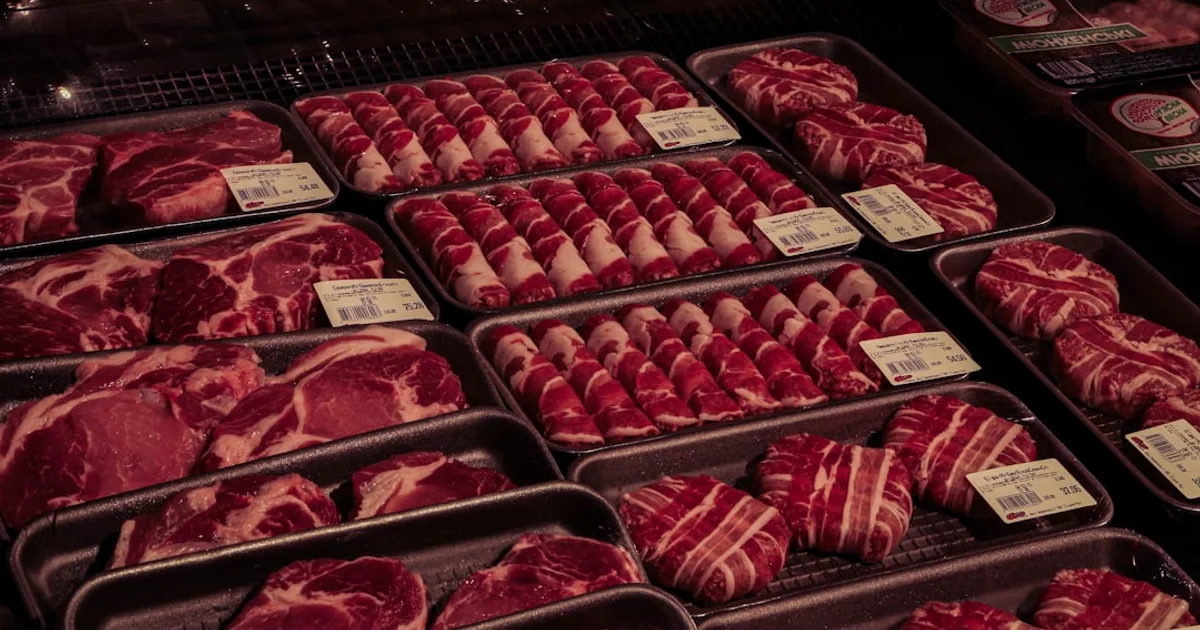
The zabiha debate is uniquely intense in the United States — a country where Muslims represent a small minority, halal butchers are not everywhere, and the question “can I eat at Applebee’s?” becomes a genuine theological and practical question.
The debate has divided American Muslim communities for decades. Here is what the evidence actually shows.
The Core Question
Quran 5:5 states: “The food of the People of the Book is lawful for you, and your food is lawful for them.”
The question: Does this verse permit American Muslims to eat meat slaughtered by Christians or Jews at conventional US slaughterhouses — where no Islamic prayer is recited and the slaughter method may differ from Islamic requirements?
The Madhab Positions
| Madhab | Position on Non-Zabiha Meat | Reasoning |
|---|---|---|
| Hanafi | Requires zabiha (Islamic slaughter) | Christians and Jews in secular West are not “practising People of the Book” in the classical sense; modern slaughter does not meet conditions |
| Maliki | Generally permits (with conditions) | Based on Quran 5:5 — People of the Book meat is permissible |
| Shafi’i | Generally permits (with conditions) | Similar to Maliki, with conditions on slaughter method |
| Hanbali | Requires zabiha | Stricter — requires explicit tasmiyah and proper cut |
Critical nuance in the Hanafi position: Most Hanafi scholars today hold that mainstream US/UK meat does not qualify as “food of the People of the Book” because modern industrial slaughter is not what the Quran verse envisioned — animals are bolt-stunned, the workers are not reciting any religious formula, and the process is not a religious act. This is a contextual interpretation, not a blanket rejection of the verse.
The ISNA 1982 Ruling — Controversial History
In 1982, the Fiqh Council of North America (associated with ISNA) issued a ruling permitting North American Muslims to eat non-zabiha meat from People of the Book under specific conditions. This ruling was:
- Based on Maliki/Shafi’i scholarly opinion
- Immediately controversial
- Rejected by most Hanafi scholars in North America
- Revised/qualified in subsequent ISNA statements
The 1982 ruling created a permission that some American Muslims follow but that the majority of scholars, particularly those from South Asian Hanafi backgrounds, do not endorse.
The UK vs US Context
The zabiha question is more acute in the US than the UK for structural reasons:
UK: Halal meat is widely available. Most major cities have halal butchers on every high street. UK supermarkets label halal products, and every pack carries an oval health-mark stamp you can trace back to the slaughterhouse — see our guide to the UK meat oval code and the establishment lookup tool. The practical burden of finding halal meat is low.
US: Halal butchers are concentrated in major cities. Rural and suburban Muslims may have limited access. The practical burden is higher — which is partly why the “permissive” ruling gained more traction in the US context.
Practical Guide for US Muslims
If you follow the strict zabiha ruling (Hanafi / mainstream):
| Resource | What It Offers |
|---|---|
| ZABIHA.COM | Searchable database of zabiha butchers and restaurants in the US |
| Crescent Foods | Nationally distributed zabiha halal chicken, widely in Whole Foods |
| Midamar | Iowa-based zabiha halal beef supplier |
| Red Meat Halal | HMS-certified (Shariah Board of America) fresh, hand-slaughtered lamb, goat and beef, delivered in IL, WI, IN and MI |
| Saffron Road | ISWA-certified frozen meals at Whole Foods |
| Local mosques | Usually maintain lists of trusted local suppliers |
If you follow the permissive ruling (Maliki/Shafi’i-informed):
Many US restaurants are acceptable under this ruling — avoid pork and alcohol, but standard beef/chicken is permissible. Verify that the specific animal product does not contain cross-contamination from pork (shared grill/fryer is a separate concern).
What About Stunning in US Slaughter?
Even scholars who permit People of the Book meat often add a condition: the animal must not die from the stun before slaughter. In US commercial beef processing, cattle are bolt-stunned — a non-penetrating stun is intended to be temporary, but failures occur. This is an additional concern on top of the tasmiyah question.
How We Reached This Verdict
Our analysis is based on the published positions of: Darul Uloom Deoband, Darul Uloom Karachi, the Hanafi position as expressed by major North American Islamic institutions (ICNA, MAS, Darul Uloom New York), ISNA Fiqh Council published statements (1982 original and subsequent qualifications), and Maliki and Shafi’i scholarly responses from Al-Azhar and Western scholars.
Madhab Note
This is a genuine fiqh ikhtilaf (scholarly disagreement) with valid positions on both sides. Following either the strict zabiha requirement or the permissive People of the Book ruling is a defensible Islamic position provided you are following a recognised scholarly view with clear reasoning.
The important thing is: know which ruling you are following and why, not simply eating whatever is convenient and post-hoc justifying it.
Access, not fiqh, is what settles this for most people in practice. If zabiha is the standard you hold to and there is no butcher within driving distance, our review of zabiha halal meat delivery services in the US sets out which ones publish their certification and which stay vague about it.
Use HalalCodeCheck to find halal-certified US meat brands and verify product certifications.
Browse our halal certification guide to identify trusted US halal logos.
Verify ingredients on any US meat product using your phone camera.
Ingredients change. Be first to know.
Brands reformulate without warning. We track every E-code update and halal certification — one short weekly email.
Related Articles
 Shopping Guides
 Machine-Slaughtered Chicken: Halal or Haram? The Evidence
Machine-slaughtered chicken is a contested issue — accepted by many Western Muslim scholars and some certification bodies but rejected by HMC and stricter Hanafi positions.
 Shopping Guides
 Is Protein Powder Halal? UK Brands Compared (Whey, Vegan, Casein)
Whey protein is Mushbooh without halal certification — it's dairy-derived but processing aids may be animal-based. Vegan protein is generally halal. Full UK brand guide.
 Shopping Guides
 Is Pre-Workout Halal? Caffeine, Beta-Alanine & Proprietary Blends
Most pre-workout powders are halal in formula but lack halal certification. Key concerns: undisclosed flavoring sources, gelatine in capsule form, and alcohol-based extracts.