
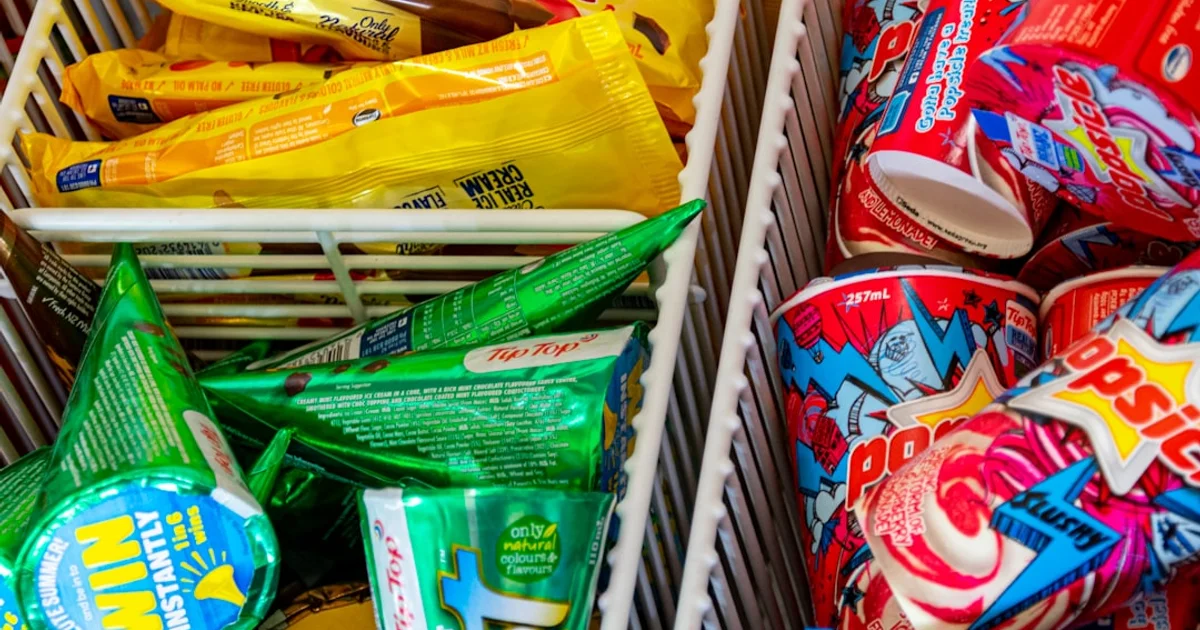
Bon Gelati is Lidl’s private-label ice cream brand, sold across more than 30 European countries including Germany, Austria, Sweden, the Netherlands, and the UK. It is one of the most widely purchased budget ice cream ranges in Europe, available in classic tubs, multipacks, ice lollies, frozen yoghurt, and seasonal specials. For Muslim consumers shopping at Lidl, the halal status of Bon Gelati comes up regularly — and the answer requires checking the ingredient list carefully.
The short version: Bon Gelati is Mushbooh. No halal certification exists for the range in any European market. The primary concern is E471 (mono and diglycerides of fatty acids), whose fat source Lidl does not publicly disclose.
Why Bon Gelati is Mushbooh
Bon Gelati is manufactured under Lidl’s own-brand programme, with production contracted to various European dairy processors depending on the country. No halal certification body — including HMC, HFA (UK), JAKIM (Malaysia), or MUI (Indonesia) — has certified any Bon Gelati product line.
The key issue is E471 — mono and diglycerides of fatty acids. This emulsifier is standard in commercial ice cream and serves to improve creaminess, prevent ice crystal formation, and stabilise the mixture during freezing. E471 can be derived from:
- Animal fat (including pork lard or beef tallow) — Haram or Mushbooh depending on source
- Vegetable oil (palm, sunflower, soya, or rapeseed) — Halal
Lidl does not publish fat-source information for E471 in Bon Gelati products. Enquiries to Lidl customer services across multiple European markets return a standard response that ingredients comply with local food law, without specifying whether emulsifiers are animal or plant-derived.
Without a halal certification or a confirmed plant-based declaration for E471, Bon Gelati cannot be classified as clearly halal. Verdict: Mushbooh.
E-Codes in Bon Gelati Products
| E-code | Name | Found in | Halal status |
|---|---|---|---|
| E471 | Mono and diglycerides of fatty acids | Most ice cream and lolly lines | Mushbooh — source unconfirmed |
| E412 | Guar gum | Ice cream base, frozen yoghurt | Halal |
| E407 | Carrageenan | Ice cream base | Halal |
| E322 | Lecithin (soya) | Chocolate-coated products | Halal — plant-derived |
| E415 | Xanthan gum | Ice cream base, frozen yoghurt | Halal |
| E120 | Cochineal / Carmine | Some strawberry and raspberry flavours | Haram — insect-derived |
E120 (carmine) is the second critical concern. It appears in select Bon Gelati products with strong red or pink colouring — particularly strawberry-flavoured lollies and some raspberry ripple tubs. Carmine is derived from cochineal insects and is considered Haram by all four Sunni madhabs. Always check the label on any brightly coloured Bon Gelati product.
No gelatine (E441) is present in standard Bon Gelati ice cream lines. Texture is achieved through the stabilisers and emulsifiers listed above. Biscuit-based or wafer-coated products within the range may carry gelatine in the biscuit component — check those labels separately.
Product Line Breakdown
| Product line | Verdict | Key concern |
|---|---|---|
| Classic ice cream tubs (vanilla, chocolate, strawberry) | Mushbooh | E471 source unconfirmed; strawberry may contain E120 |
| Ice lollies — plain fruit flavours | Mushbooh / Check label | Red and pink flavours risk E120; plain citrus lower risk |
| Ice lollies — chocolate-coated | Mushbooh | E471 in both ice cream and coating |
| Frozen yoghurt | Mushbooh | E471 source unconfirmed |
| Vegan line | Safest — uncertified | Plant-based fats likely; no dairy E471 risk; still uncertified |
| Seasonal specials (Deluxe, summer editions) | Check label | Variable — some contain gelatine in wafer or biscuit layers |
The Vegan line is the safest choice. Products labelled vegan by Lidl use plant-based fat sources, which substantially reduces the E471 risk. However, Bon Gelati Vegan carries no halal certification, so strict halal compliance still cannot be confirmed.
Seasonal and Deluxe products deserve extra scrutiny. Lidl’s Bon Gelati seasonal range (Christmas logs, summer multipacks, Deluxe tubs) often changes year to year and may include biscuit bases, wafers, or caramel layers that introduce additional ingredients not present in the standard range.
How to Check Bon Gelati Labels
Lidl reformulates products seasonally and varies ingredients by country. A strawberry lolly sold in Germany may differ in composition from the same product sold in Sweden. The label on the specific product in your hand is the only authoritative source.
When reading a Bon Gelati label, look for:
- E471 in the emulsifier list — if present and no plant-source note is given, treat as Mushbooh
- E120 in the colour or flavouring list — if present in any red, pink, or purple product, treat as Haram
- “Gelatine” or “E441” in any biscuit, wafer, or jelly component
- “Vegan” label — reduces E471 risk but does not guarantee halal certification
- Any halal certification logo — none are currently present on standard Bon Gelati packaging in European markets
Lidl’s product pages online do not always carry full ingredient lists, and they may lag behind reformulations. Checking the physical packet is the most reliable approach.
Verdict
Bon Gelati (all standard lines): Mushbooh — E471 source not confirmed as plant-based, no halal certification.
Bon Gelati Vegan line: Generally safer — plant-based fats, no dairy E471 risk. Still not halal-certified.
Any Bon Gelati product with red or pink colouring: Check for E120. If listed, the product is Haram.
For strict halal compliance, the Bon Gelati range cannot be recommended without certification. To check any ice cream label, use the E-codes database or scan the ingredient label. This verdict sits in context in the full Lidl UK aisle-by-aisle halal guide, which covers the rest of the freezer and dairy sections.
How we reached this verdict
We checked the following Tier-1 sources before publishing this verdict:
- Halal certification bodies: HMC (UK), HFA (UK), JAKIM (Malaysia), MUI (Indonesia), and EIFANCA (Europe) — none list any Bon Gelati product as halal-certified. Lidl’s own halal product pages (UK and Germany) do not include Bon Gelati in their certified ranges.
- Manufacturer disclosure: Lidl does not publish fat-source declarations for E471 in the Bon Gelati range. Customer service responses across UK, German, and Dutch markets confirm only that products meet local food labelling law — they do not confirm plant-derived emulsifiers.
- E120 ingredient evidence: Multiple Bon Gelati strawberry and raspberry products reviewed carry E120 in the colouring section. Product formulations vary by season and country; specific products checked included summer strawberry lolly multipacks and raspberry ripple tubs (German market, 2025–2026 season).
- Sunni fatwa scholarship across the four madhabs:
- Hanafi-leaning bodies: IslamQA Hanafi, Darul Iftaa Birmingham, AskImam.org (Mufti Ebrahim Desai) — E471 from undisclosed source = Mushbooh; requires manufacturer confirmation of plant source.
- Shafi’i / Maliki-leaning bodies: NU (Nahdlatul Ulama), Dar al-Ifta al-Misriyyah — same ruling on source-ambiguous emulsifiers.
- Hanbali / Saudi: Saudi Permanent Committee — requires formal halal certification; uncertified products Mushbooh regardless of vegetarian label.
- E120: All four madhabs classify cochineal-derived carmine as Haram without exception.
Madhab note
The four Sunni madhabs converge on the E471 rule: where the fat source is unconfirmed, the emulsifier is Mushbooh (doubtful). The Hanafi, Maliki, and Shafi’i positions accept a “suitable for vegans” label as reasonable evidence of a plant source where no certification exists — this applies to the Bon Gelati Vegan line. The Hanbali and HMC-strict position requires independent halal certification before the product is accepted, meaning even the Vegan line cannot be confirmed under that standard. On E120, there is no madhab disagreement: carmine is Haram, and any Bon Gelati product listing it should be avoided.
Ingredients change. Be first to know.
Brands reformulate without warning. We track every E-code update and halal certification — one short weekly email.
Related Articles
 Shopping Guides
 Halal Ice Cream and Dairy in the Netherlands: Ola, Hertog and What to Check (2026)
No Dutch supermarket ice cream is halal-certified. Ola's Raket is gelatine-free, Albert Heijn labels vegetarian whey, and the classic Malaga flavour contains real rum. The Dutch freezer aisle, checked.
 Shopping Guides
 Halal Ice Cream and Dairy in Germany: Langnese, Schöller and What to Check (2026)
No mainstream German supermarket ice cream is halal-certified. But Langnese's classic water ices are now certified vegan, and Lidl's Bon Gelati declares plant-origin E471. Here is the German freezer aisle, brand by brand.
 Shopping Guides
 Halal Ice Cream and Dairy in Japan: Meiji, Glico, Lotte and What to Check (2026)
No major Japanese ice cream brand is halal-certified. Glico Papico lists gelatine, some Akagi flavours list liqueur, and emulsifier origins are hidden. Here's how Muslims read a Japanese ice cream label.