
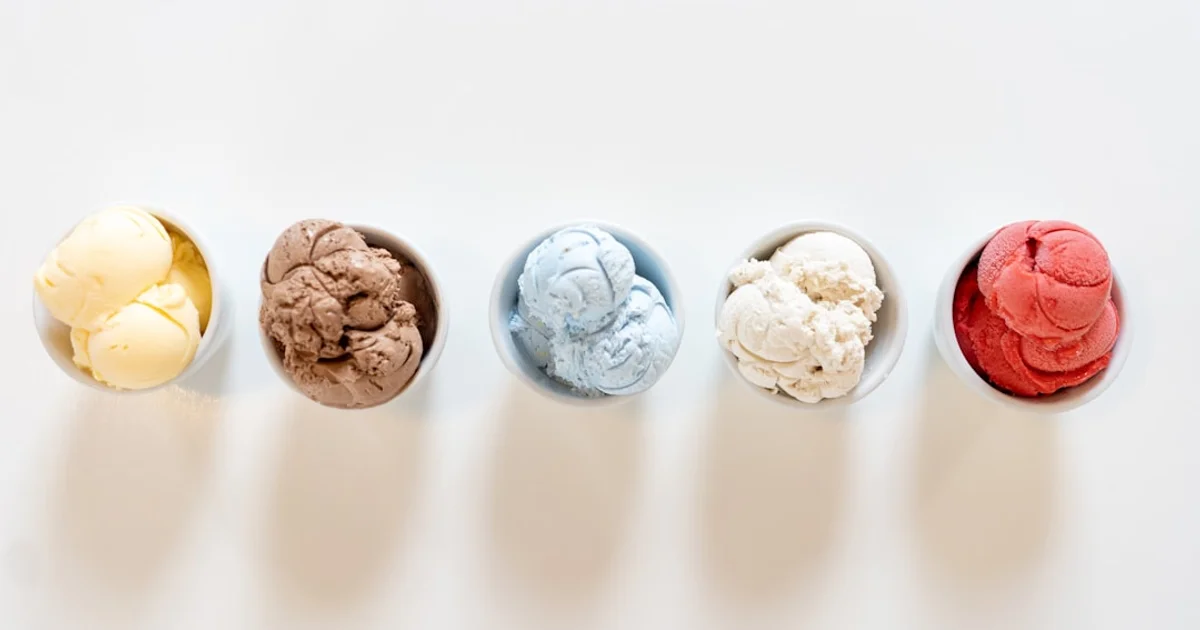
Germany is home to around 5.5 million Muslims — and not a single mainstream supermarket ice cream brand holds halal certification for the German market. That is the headline, but it is not the whole story. Quietly, the German freezer aisle has become easier to navigate than it was a decade ago: Langnese’s classic children’s water ices are now certified vegan, and one supermarket own-brand publishes the exact declaration halal shoppers wish every manufacturer would make.
This guide covers what Muslim residents and visitors will actually find in Edeka, Rewe, Aldi, Lidl and Kaufland — and where the real risks sit.
The Key E-Codes in German Ice Cream
| E-code | Name | Found in | Halal status |
|---|---|---|---|
| E471 | Mono and diglycerides | Most dairy ice cream | Mushbooh — source rarely on pack |
| E322 | Soya lecithin | Chocolate coatings | Halal — plant-derived |
| E476 | PGPR | Chocolate coatings | Generally halal |
| E441 | Gelatine | Some novelty/soft ice | Haram where listed — Langnese states its gelatine is pork-derived |
| E120 | Carmine | Red/pink coatings | Haram — insect-derived |
One German-specific fact changes how you read labels here: Langnese has publicly stated that the food gelatine it uses, where used, comes from pork. In Germany you don’t need to wonder what kind of gelatine is in a Langnese product — if “Gelatine” is in the ingredient list, it is not halal. The same logic applies broadly: around 70% of German gelatine production is pig-skin based.
Langnese (Unilever Germany)
Langnese is Germany’s Heartbrand identity — the same company as Wall’s in the UK, Ola in the Netherlands and Eskimo in Austria, now operating under The Magnum Ice Cream Company after Unilever’s ice cream demerger.
The dairy range — Magnum, Cornetto, Viennetta, Cremissimo tubs — contains E471 throughout. Langnese has stated its mono- and diglycerides are plant-fat based, but this is not declared on packs and no halal certification exists for the German market. Mushbooh — the same verdict as UK Magnum. Halal-certified Magnum exists only in Malaysia, Indonesia and the Gulf.
The vegan water ices are the good news. Flutschfinger, Capri, Dolomiti and Calippo — the classics German kids grew up with — now carry the European Vegetarian Union’s vegan V-Label. Vegan certification means no gelatine and no animal E471, full stop. These are generally halal by ingredients. Historically, cheap water ice and soft ice were exactly where pork gelatine hid in German freezers, so this shift matters.
Magnum Vegan (Almond, Classic, Sea Salt Caramel) is also EVU-certified vegan and stocked in every major German chain — the practical Magnum answer for halal shoppers.
Cuja Mara Split, the orange-vanilla classic, lists no gelatine — but does contain E471 in its milk component. Mushbooh.
Schöller (Froneri / Nestlé)
Schöller is Germany’s other legacy ice cream giant, now part of Froneri. Froneri Germany states that gelatine is always declared on the label, that the E471/E476 it uses are plant-based, and that its whey ingredients use only microbial rennet. As with Langnese, none of this appears on the pack and no halal certification exists — and the German community app HalalCheck flags at least one Polish-made Schöller line (“Eis Hits”) as not halal. Mushbooh — check each label, especially imported multipacks.
Supermarket Own-Brands: Bon Gelati, Mucci and the Rest
Lidl’s Bon Gelati is the strongest own-brand statement in Germany. Its manufacturer’s published FAQ states, on the record: no gelatine is used in any product; the E471 emulsifier is of plant origin; no animal raw materials other than milk and eggs are used. That is precisely the disclosure the mainstream (Hanafi/Maliki/Shafi’i) position accepts as sufficient for source-ambiguous emulsifiers. No halal certification — so strict certification-first readers will still class it Mushbooh — but by ingredients it is the best-documented mainstream tub in the aisle. Full breakdown: Is Bon Gelati Halal?
Aldi’s Mucci makes no equivalent public statement. Checked Mucci products (Eiskonfekt, Spaghetti-Eis, the premium tubs) list no gelatine — stabilisers are guar, locust bean gum and carrageenan — but emulsifiers appear with no source declaration, and the range is produced by multiple contract manufacturers, so formulations vary between products. Mushbooh — per-product label check required. See the full Mucci brand guide.
Edeka and Rewe own-brands publish no ingredient-sourcing statements. EU law requires gelatine to be declared, so the label tells you the critical fact — scan for “Gelatine” first, then emulsifiers.
Sorbet remains the safest freezer category: fruit, sugar, water and citric acid, no dairy, usually no E471. Check red/pink flavours for E120.
Halal-Certified Options: The Turkish Grocery Route
Mainstream chains carry nothing halal-certified, but Germany’s extensive Turkish and Eastern European grocery network does:
- DOGAN vanilla ice cream (from Dovgan, the Hamburg-based Eastern European food importer) is marketed explicitly as halal.
- Golf Dondurma, the major Turkish ice cream brand, states that both its factories in Turkey hold halal certification; its products reach Germany through Turkish grocers.
- Halal Control GmbH in Rüsselsheim — Germany’s established halal certifier, accredited by Turkey’s HAK — certifies specific product lines for the German market; its mark is the one to look for on locally certified products.
In all cases, look for the certifier’s mark on the actual pack — importers change and certification follows the product line, not the brand name.
German Dairy: Yogurt, Quark and Cheese
- Yogurt: gelatine is common in cream yogurts (Sahnejoghurt) and layered dessert cups — and German law only permits gelatine in products labelled “Joghurterzeugnis”, which is itself a label clue. Ehrmann states its Grand Dessert range uses beef gelatine — from non-halal slaughter, so still not acceptable. Plain Naturjoghurt with milk and cultures is the safe default.
- Quark: plain Quark is made with lactic cultures, and microbial rennet now holds over half the German market. Plain Quark is low-risk; Quark desserts frequently add gelatine — different product, different verdict.
- Cheese: German labels distinguish animal “Lab” (rennet) from “mikrobielles Lab”. Hard cheeses using animal rennet from non-halal slaughter are Mushbooh under the Hanafi mainstream; microbial-rennet cheese is halal. The word to find on the pack is “mikrobiell”.
Verdict Summary
| Product | Brand | Verdict |
|---|---|---|
| Magnum / Cornetto / Viennetta | Langnese (Unilever) | Mushbooh |
| Magnum Vegan | Langnese (Unilever) | Generally Halal (EVU vegan) |
| Flutschfinger / Capri / Dolomiti / Calippo | Langnese (Unilever) | Generally Halal (EVU vegan) |
| Anything listing “Gelatine” | Langnese | Haram — stated pork-derived |
| Cremissimo tubs | Langnese (Unilever) | Mushbooh — see brand guide |
| Schöller range | Froneri/Nestlé | Mushbooh — check label |
| Bon Gelati | Lidl own-brand | Mushbooh (best-documented own-brand — plant E471 declared) |
| Mucci | Aldi own-brand | Mushbooh — see brand guide |
| Sorbets (all brands) | Various | Generally Halal (check E120) |
| DOGAN / Golf Dondurma | Turkish grocers | Halal-labelled — verify certifier mark on pack |
| Plain Naturjoghurt / Quark | Various | Low risk |
| Sahnejoghurt / dessert cups | Various | Check for gelatine — often present |
For the neighbouring markets, see Halal Ice Cream and Dairy in Austria and our UK supermarket ice cream ranking. Look up any German label E-code in the E-codes database, or scan a full ingredient list with the ingredient scanner.
How we reached this verdict
We checked the following Tier-1 sources before publishing:
- Manufacturer statements: Langnese’s published FAQ (plant-based E471; pork origin of its food gelatine where used); Bon Gelati’s manufacturer FAQ (no gelatine in any product, plant-origin E471, no animal raw materials beyond milk and eggs); Froneri Schöller’s ingredient-sourcing statements; Ehrmann’s FAQ (beef gelatine in Grand Dessert). Langnese and Froneri statements were cross-checked against published excerpts, as their FAQ pages block direct archiving.
- Product labels: ingredient lists for Cuja Mara Split, Mucci Eiskonfekt, Spaghetti-Eis and Aldi soft-ice lines reviewed via German product databases; no gelatine found in checked SKUs, undisclosed-source emulsifiers found throughout.
- Vegan certification: EVU V-Label status confirmed for Flutschfinger, Capri, Dolomiti, Calippo and Magnum Vegan via the German vegan product registries.
- Halal certification bodies: HMC, HFA — no German retail ice cream certified. Halal Control GmbH (Rüsselsheim) certifies individual product lines; no mainstream freezer brand appears.
- Sunni fatwa scholarship: Hanafi disclosure rule on source-ambiguous emulsifiers (Darul Ifta Birmingham; IslamQA case 245452) applied as elsewhere on this site.
Madhab note
The E471 question dominates German ice cream, and the madhab split is the same as in the UK: where the manufacturer has publicly declared plant origin (Langnese, Bon Gelati, Froneri), the Hanafi/Maliki/Shafi’i mainstream accepts the disclosure; the HMC-strict and Hanbali-leaning position requires independent certification, which no German retail brand holds. The gelatine question has no split — Langnese’s stated pork sourcing makes any gelatine-listing product Haram across all four madhabs. On cheese rennet, the Hanafi position treats animal-rennet cheese from non-halal slaughter as Mushbooh while accepting microbial rennet; Shafi’i scholarship is more permissive on rennet generally. For binding rulings, consult a scholar in your tradition.
Ingredients change. Be first to know.
Brands reformulate without warning. We track every E-code update and halal certification — one short weekly email.
Related Articles
 Shopping Guides
 Halal Ice Cream and Dairy in the Netherlands: Ola, Hertog and What to Check (2026)
No Dutch supermarket ice cream is halal-certified. Ola's Raket is gelatine-free, Albert Heijn labels vegetarian whey, and the classic Malaga flavour contains real rum. The Dutch freezer aisle, checked.
 Shopping Guides
 Halal Ice Cream and Dairy in Japan: Meiji, Glico, Lotte and What to Check (2026)
No major Japanese ice cream brand is halal-certified. Glico Papico lists gelatine, some Akagi flavours list liqueur, and emulsifier origins are hidden. Here's how Muslims read a Japanese ice cream label.
 Shopping Guides
 Halal Ice Cream and Dairy in Denmark: Frisko, Arla and What to Check (2026)
Danish ice cream (Frisko, Premier Is, Hansens) carries no halal logo, and rum-raisin flavours contain real alcohol. Arla butter is HQC-certified for export. Here's what Muslims in Denmark check.