
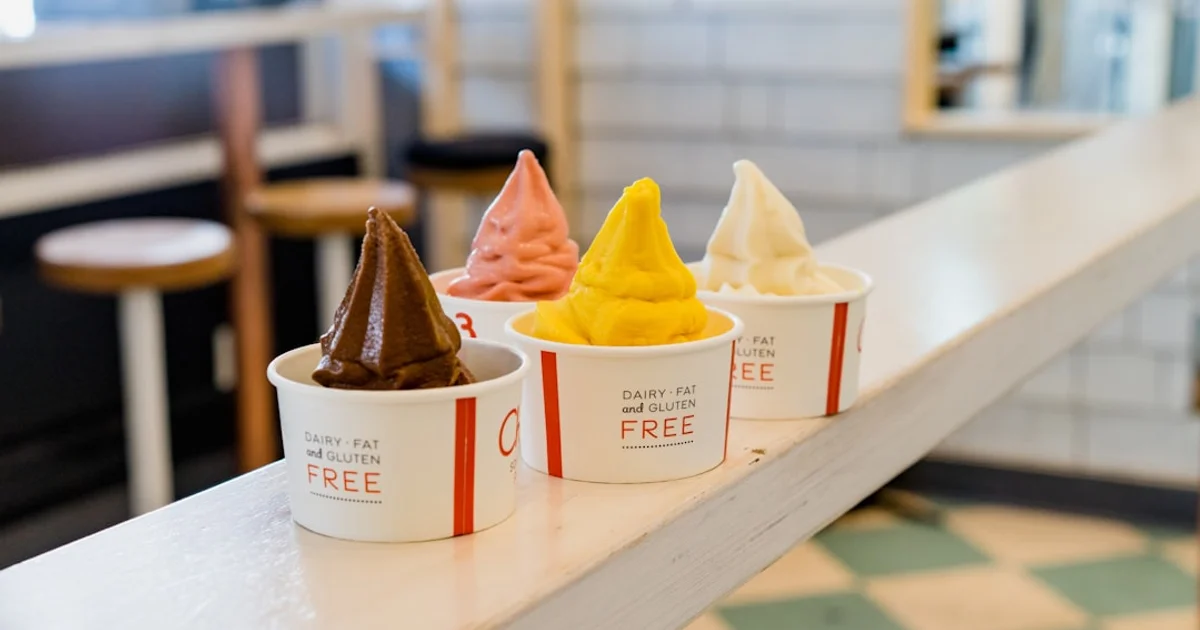
Here is the headline for Muslim residents and visitors: no major Japanese consumer ice cream brand is halal-certified for the Japanese market. Japan has no national halal law. Certification is run by private NPO and mosque bodies and aimed at exporters and restaurants — never at the supermarket freezer. So the work falls to the label, and Japanese labels make it hard: the emulsifier is listed only as 乳化剤 with no origin, and gelatine and liqueur turn up in places you would not expect.
How to Read a Japanese Ice Cream Label
Additives appear after a slash (/) in the ingredient list. The words that matter:
- ゼラチン — gelatine (usually porcine in Japan) — haram-risk
- 乳化剤 — emulsifier; origin almost never disclosed — Mushbooh trigger
- 香料 — flavouring; can be an alcohol carrier
- 洋酒 / リキュール / ラム酒 — liquor / liqueur / rum — appears even in fruit and soda pops — haram
A note on certifiers: JAKIM’s February 2025 list recognises six Japanese bodies (JMA, JHA, JIT, MPJA, Nippon Asia Halal Association, JHF). “MHC” (Malaysia Halal Corporation) is a private Tokyo company not on JAKIM’s list — don’t treat its mark as JAKIM-recognised.
Ice Cream Brands in Japanese Stores
The Cleaner Cups: MOW, Essel Super Cup, Choco Monaka
- Morinaga MOW (vanilla) — marketed with no emulsifier and no stabiliser; among the cleanest mainstream cups. Mushbooh-leaning-friendly.
- Meiji Essel Super Cup Cho-Vanilla — lists no emulsifier and no gelatine (other flavours in the range do list 乳化剤). Mushbooh, vanilla leaning friendly.
- Morinaga Choco Monaka Jumbo — rare transparency: emulsifier declared soy-derived (乳化剤(大豆由来)). Mushbooh-leaning-friendly.
The Gelatine and Liqueur Risks: Papico, Garigari-kun
- Glico Papico (Choco Coffee) — lists gelatine in the stabiliser, source undisclosed. Avoid / strong Mushbooh.
- Akagi Garigari-kun (Soda, Cola-Vanilla) — list リキュール (liqueur). Those flavours are haram; other Garigari-kun flavours need a per-pack check.
The Rest: Pino, Giant Cone, Yukimi Daifuku, Coolish
- Morinaga Pino — emulsifier origin undisclosed. Mushbooh.
- Glico Giant Cone — undisclosed emulsifier; shellac coating on the candy peanuts; no gelatine. Mushbooh.
- Lotte Yukimi Daifuku — contrary to a common rumour, the current vanilla does not list gelatine (rice-flour and egg-white mochi); emulsifier undisclosed. Mushbooh, check per flavour.
- Lotte Coolish — no gelatine or alcohol on the current vanilla label; emulsifier undisclosed. Mushbooh.
Häagen-Dazs Japan
Häagen-Dazs Japan (a Takanashi Milk joint venture) is not certified for Japan. Its own Rum Raisin page states 0.7% alcohol rum content — haram — and its vanilla uses alcohol-extracted vanilla extract. Plain flavours are Mushbooh; liqueur SKUs are haram.
Certified Halal Ice Cream in Japan
Genuinely certified options are niche and mostly export-oriented:
- Masudaen matcha ice cream — JHF-certified
- Imuraya azuki (red bean) bars — JAKIM-certified for Malaysia export
- Halal restaurants and Muslim-friendly cafés in Tokyo (Asakusa, Shin-Okubo), Kyoto and Osaka increasingly offer certified or in-house halal soft-serve
“Muslim-friendly” is a formal lower certificate tier at some Japanese certifiers — distinct from full halal certification. Read which one a product actually claims.
Verdict Summary
| Product | Brand | Verdict |
|---|---|---|
| MOW vanilla | Morinaga | Mushbooh (leaning friendly) |
| Essel Super Cup Cho-Vanilla | Meiji | Mushbooh (leaning friendly) |
| Choco Monaka Jumbo | Morinaga | Mushbooh (soy emulsifier) |
| Papico Choco Coffee | Glico | Avoid (gelatine) |
| Garigari-kun Soda / Cola-Vanilla | Akagi | Haram (liqueur) |
| Pino, Giant Cone, Coolish | Morinaga / Glico / Lotte | Mushbooh |
| Yukimi Daifuku | Lotte | Mushbooh (per flavour) |
| Rum Raisin | Häagen-Dazs Japan | Haram (0.7% alcohol) |
To check any additive on a Japanese label, use the E-codes database or scan the panel with the ingredient checker.
How we reached this verdict
- Meiji / Morinaga / Glico / Lotte: Japanese product pages and label databases reviewed; emulsifier origins undisclosed except Choco Monaka (soy); Glico Papico lists gelatine; MOW and Essel Cho-Vanilla list no emulsifier.
- Akagi: Garigari-kun Soda and Cola-Vanilla ingredient lists show リキュール (liqueur).
- Häagen-Dazs Japan: haagen-dazs.co.jp Rum Raisin page states 0.7% alcohol.
- Certification bodies: JAKIM’s Feb 2025 recognised-CB list (JMA, JHA, JIT, MPJA, Nippon Asia Halal, JHF); no mainstream Japanese ice cream brand certified for the domestic market.
Madhab note
The 乳化剤 (E471-type emulsifier) ruling follows the European pattern — Mushbooh where the source is undisclosed. Gelatine of undisclosed (porcine-standard) origin and liqueur declared as an ingredient are haram across all four madhabs. The “leaning friendly” cups (MOW, Cho-Vanilla, soy-emulsifier Choco Monaka) satisfy the Hanafi/Maliki/Shafi’i mainstream where a plant source is disclosed or no emulsifier is present; the strictest view still prefers formal certification, which Japanese retail ice cream does not carry.
Ingredients change. Be first to know.
Brands reformulate without warning. We track every E-code update and halal certification — one short weekly email.
Related Articles
 Shopping Guides
 Halal Ice Cream and Dairy in the Netherlands: Ola, Hertog and What to Check (2026)
No Dutch supermarket ice cream is halal-certified. Ola's Raket is gelatine-free, Albert Heijn labels vegetarian whey, and the classic Malaga flavour contains real rum. The Dutch freezer aisle, checked.
 Shopping Guides
 Halal Ice Cream and Dairy in Germany: Langnese, Schöller and What to Check (2026)
No mainstream German supermarket ice cream is halal-certified. But Langnese's classic water ices are now certified vegan, and Lidl's Bon Gelati declares plant-origin E471. Here is the German freezer aisle, brand by brand.
 Shopping Guides
 Halal Ice Cream and Dairy in Denmark: Frisko, Arla and What to Check (2026)
Danish ice cream (Frisko, Premier Is, Hansens) carries no halal logo, and rum-raisin flavours contain real alcohol. Arla butter is HQC-certified for export. Here's what Muslims in Denmark check.