
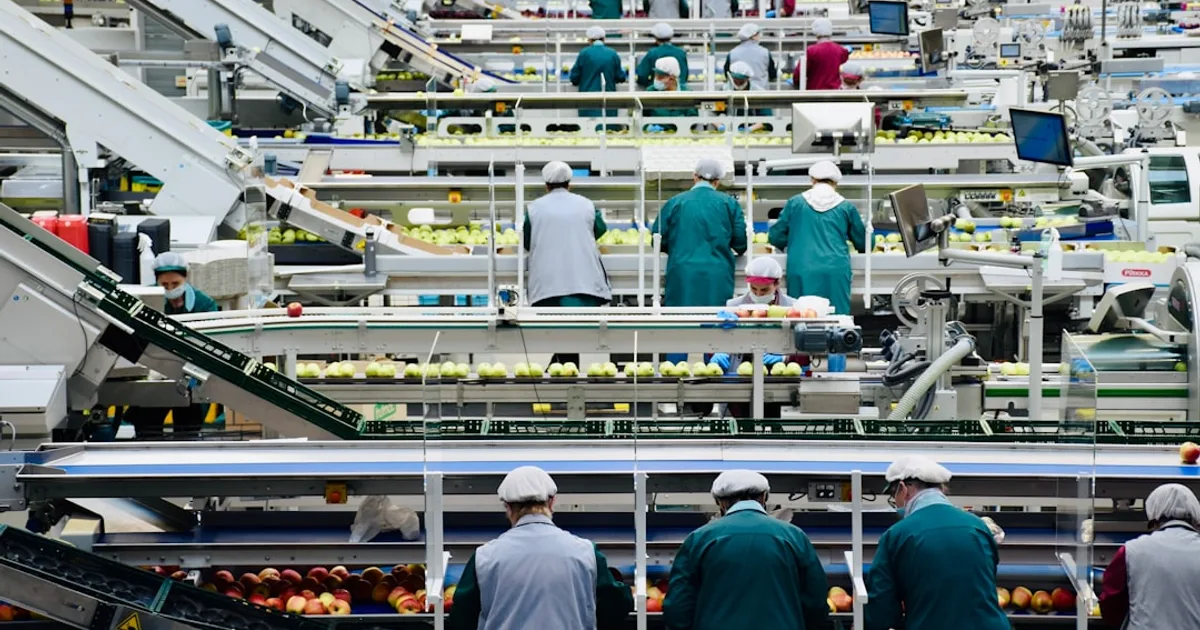
If you sell food, beverages, or food-adjacent products and want to access Muslim markets — which represent 1.8 billion consumers globally and a UK market alone worth over £20 billion annually — halal certification is the commercial signal your buyers look for. Not a sticker, not a statement on your website: a certificate issued by an accredited third-party body after an on-site audit of your facility, supply chain, and processes.
Consider the situation this way: a UK food manufacturer wins a supermarket contract to supply a halal ready-meals range. The buyer’s specification sheet arrives — and one line stops everything: “All suppliers must hold current halal certification from an HMC- or HFA-approved body.” The manufacturer produces clean products, uses no pork, has Muslim staff who vouch for the kitchen — but none of that is auditable. The certification process is what turns a good-faith claim into a commercially defensible one.
At a Glance
| Topic | Summary |
|---|---|
| Best for | Manufacturers, restaurant groups, caterers, importers, exporters, and food brands entering Muslim consumer markets |
| Markets covered | UK, United States, and Australia, with notes on export destinations such as Malaysia, Indonesia, and the GCC |
| Typical timeline | 4 to 12 weeks for straightforward applications; longer where suppliers, segregation, or ingredient approvals are unclear |
| Typical annual cost | From a few hundred pounds/dollars for small restaurant scopes to several thousand for manufacturers and multi-site operations |
| Best first action | Audit your ingredient list and supplier documentation before you contact a certifier |
Who This Guide Is For
This guide is written for businesses making real commercial decisions, not just researching halal in the abstract.
- Manufacturers — if you need a certifier recognised by supermarkets, distributors, or export buyers
- Restaurant groups and caterers — if you want a credible halal claim that customers and corporate clients will trust
- Importers and private-label brands — if you need to know whether an overseas halal claim will be accepted locally
- Exporters — if you are trying to meet buyer requirements in Malaysia, Indonesia, the Gulf, or other Muslim-majority markets
Use this guide differently depending on your role:
- If you run a factory or production site, focus on the certification process, audit scope, and ingredient documentation sections.
- If you run a restaurant or catering business, pay particular attention to certifier choice, kitchen controls, and consumer trust.
- If you are an export or procurement lead, prioritise the certifying-body and post-certification labelling sections.
Do You Actually Need Halal Certification?
Not every food business needs formal certification. The answer depends on where you sell and who your buyers are.
Certification is mandatory (by law) in:
- Malaysia — JAKIM certification required for all imported food products making a halal claim
- Indonesia — BPJPH certification required under Law No. 33 of 2014 on halal product assurance
- Gulf states (UAE, Saudi Arabia, Qatar, Kuwait) — government-issued or government-recognised halal certification required at customs for most food imports
Certification is voluntary but commercially essential in:
- UK — no legal definition of “halal”, but supermarket halal ranges, halal food service distributors, Muslim-majority country exports, and halal-specific retailers all require it
- United States — no federal halal standard, but military food contracts, Muslim institutional buyers, and export markets require certification
- Australia — voluntary domestically; required for most halal beef, lamb, and chicken exports to Muslim-majority markets
- Canada — voluntary; halal food service and institutional buyers expect it
- EU — voluntary; required for exports to Muslim-majority trading partners
Rules of thumb: you likely need it if:
- You sell to halal butchers, halal restaurants, or halal-specific supermarket sections
- You export or plan to export to Malaysia, Indonesia, the UAE, Saudi Arabia, or other Muslim-majority markets
- Your business pitches to event caterers serving Muslim communities
- You want credible placement on halal food delivery platforms
The Certification Process: Step by Step
Halal certification is an audit-based process, not a registration. Here is what it actually involves:
-
Pre-audit review — Before applying, review every ingredient in your product range against the certifying body’s approved ingredients list. Identify any additives, flavourings, or processing aids with ambiguous sourcing. Resolve or replace them before you apply. Common issues: E471 (mono- and diglycerides of fatty acids) from undisclosed animal sources; E441 (gelatine); vanilla extract with alcohol carrier; animal-derived enzymes.
-
Apply to the certifying body — Submit the application form to your chosen certifying body (see the next section). Include your company details, product range, facilities list, and a preliminary list of suppliers.
-
Document submission — The certifying body will request: full ingredient specifications for every product; supplier halal certificates or declarations; facility layout showing segregation of halal and non-halal areas (if applicable); cleaning procedures (CIP — Clean In Place) for shared equipment; staff handling procedures.
-
On-site audit — An auditor visits your facility. They inspect storage, production lines, cleaning records, supplier documentation, and labelling. They interview staff. This visit typically lasts half a day to a full day for a small manufacturer; larger multi-site manufacturers face multi-day audits.
-
Corrective actions (if required) — If the audit identifies non-conformances (an unapproved supplier, inadequate segregation, an unlisted ingredient), you have a set period — typically 4 to 8 weeks — to resolve them and submit evidence.
-
Certification issued — The certificate is issued for a defined term, almost always 12 months. You receive the right to use the certifying body’s logo on products and marketing materials within the scope of certification.
-
Annual renewal — Certification is not permanent. Annual audits — sometimes unannounced — are part of every scheme. Significant changes to ingredients, suppliers, or facilities must be notified to the certifying body between audits.
Choosing a Certifying Body
The right body depends on your market, product type, and the requirements of your buyers. Here are the main options by country.
UK Certifying Bodies
| Body | Best for | Scope | Pricing |
|---|---|---|---|
| HMC (Halal Monitoring Committee) | Meat, poultry, restaurants requiring stricter standard | Meat processors, abattoirs, restaurants | Quote-based; typically depends on site count, audit intensity, and product scope |
| HFA (Halal Food Authority) | General food, exports, supermarket halal ranges | Manufactured food, restaurants, caterers | Quote-based; official fee policy says pricing depends on sector, sites, product range, and staffing |
| HFCE (Halal Food Council of Europe) | UK and European manufacturers | Wide product scope, JAKIM-aligned | Quote-based; broad manufacturer scope and export requirements usually shape pricing |
HMC vs HFA: HMC is the stricter body — it requires hand-slaughter for poultry and prohibits all alcohol on certified premises. HFA accepts mechanical slaughter with stunning under defined conditions and has a less restrictive alcohol policy. For UK consumers, HMC certification carries more weight among stricter observants; HFA is more widely accepted by supermarket buyers. See our full HMC vs HFA comparison.
US Certifying Bodies
| Body | Best for | Pricing |
|---|---|---|
| IFANCA (Islamic Food & Nutrition Council of America) | Global exports, manufactured food, JAKIM/BPJPH-aligned | Quote-based; no public fee schedule shown on official public pages reviewed |
| ISWA (Islamic Services of America) | Domestic US, smaller manufacturers | Quote-based; confirm directly based on products, plants, and buyer requirements |
| HFSAA (Halal Food Standards Alliance of America) | US institutional buyers | Quote-based |
For US businesses, the certification question is usually less about consumer-facing domestic law and more about buyer acceptance, export recognition, and institutional procurement. If your priority is export, certifiers with stronger international recognition matter more than the cheapest domestic option. If your priority is domestic distribution, you need to know which certifier your buyer already recognises rather than assuming any halal logo will do.
Australian Certifying Bodies
| Body | Best for | Key export markets |
|---|---|---|
| AFIC (Australian Federation of Islamic Councils) | Meat exporters, particularly beef and lamb | Malaysia (JAKIM-recognised), Indonesia |
| ANIC (Australian National Imams Council) | GCC-focused exports, general food | UAE, Saudi Arabia, Qatar |
For Australian businesses, halal certification is especially tied to export readiness. Domestic sales may not require third-party certification in law, but major export categories such as meat, poultry, and prepared foods often need a certifier recognised by the destination market. In practice, Australian exporters should work backwards from the target market and confirm recognition before they apply.
Pricing note for Australia: AFIC and ANIC certification is generally quote-based on public-facing information. Export category, destination-market recognition, documentation burden, and site complexity usually matter more than any headline price.
How to Choose Between Bodies
For most businesses, the right certifier comes down to five questions:
-
Which markets do you sell into?
A body that works for UK high-street trust may not be the best fit for Malaysia, Indonesia, or GCC customs clearance. -
What do your buyers already expect?
Supermarket halal ranges, restaurant platforms, institutional buyers, and export importers often have named certifiers or preferred standards. -
What products are in scope?
Meat, poultry, gelatine, flavourings, supplements, and mixed facilities all create different audit complexity. -
How strict is the operational standard?
Some bodies apply stricter rules on slaughter method, alcohol, segregation, or mixed-premises handling than others. -
Can your business maintain the standard year-round?
The cost of certification is not only the fee. It is also the operational discipline required to keep the scope compliant after approval.
For indicative budgets by business type and market, use the dedicated halal certification cost guide. Public certifier sites often do not publish fixed fee cards, so direct quotes are still necessary before budgeting becomes final.
What the Audit Covers
Halal auditors assess your business against a defined standard. The core audit scope includes:
Applies to Almost Every Business
Ingredient sourcing
Every ingredient in every product within the certification scope must be traceable to a halal-permissible source. This includes: all additives and E-numbers; flavourings and flavour carriers; processing aids (including those not declared on the final label); packaging materials that contact food (relevant for gelatine-based capsules or coatings).
Labelling
Labels must accurately reflect the certified halal status and carry the certifying body’s logo within the bounds of the issued licence. No halal claim may appear on products outside the certification scope.
Staff training and procedures
Staff involved in handling halal products must be trained in halal requirements. Written procedures covering cleaning, segregation, and incident response are required.
Higher-Risk Areas for Manufacturers and Mixed Facilities
Manufacturing facility
- Shared equipment with pork-containing products must undergo full CIP between production runs — or be dedicated halal-only
- No pork or pork derivatives stored or handled in the certified area
- Effective segregation between halal and non-halal production areas where both occur on site
Storage and transport
Finished halal products must be stored and transported in conditions that prevent contamination. Third-party logistics and cold storage providers must be assessed if they also handle pork products.
Extra Focus for Restaurants and Caterers
Restaurants and caterers are usually assessed less on complex formulation risk and more on sourcing integrity, segregation, menu accuracy, and staff discipline. Auditors will typically focus on meat suppliers, storage separation, frying oil use, cleaning procedures, and whether the business is making a broader halal claim than its sourcing standard can justify.
Labelling Rules After Certification
Receiving a halal certificate gives you the right to make a certified halal claim — but what that means legally varies by market.
UK: There is no legal definition of “halal” under UK food law (post-Brexit, the UK did not retain EU-specific halal labelling provisions). The Food Standards Agency requires that food labelling does not mislead consumers. A false “halal” claim is technically actionable under general food labelling regulations, but enforcement is limited and rare. After certification, you may display the certifying body’s logo and make the specific claim “certified halal by [body name]” for products within scope.
US: No federal standard or legal definition exists. Self-declaration of “halal” is legal. After third-party certification, you may use the certifying body’s mark on products within the certification scope. Several US states (New Jersey, Illinois, Texas, Michigan) have halal fraud statutes making false halal claims actionable under state law.
Malaysia and Indonesia: JAKIM and BPJPH certification logos are legally required on packaged halal food sold domestically. Foreign products using their own national certifying body’s mark are accepted only if that body has a mutual recognition agreement with JAKIM or BPJPH.
GCC states: Government-recognised halal certification is typically required for food imports. Accepted certifying bodies vary by country.
Country-by-Country Business Reality
United Kingdom
The UK remains a market where halal is legally underdefined but commercially sensitive. For business users, the main question is rarely “Is certification legally required?” but rather “Will my buyer, customer, or distributor accept my claim without it?” In supermarkets, food service, and Muslim-facing retail, the answer is increasingly no.
United States
In the US, halal certification is often a procurement and export tool more than a domestic legal requirement. Multi-site manufacturers, institutional suppliers, and brands targeting Muslim communities still benefit from independent certification, but the exact body matters most where the buyer has an established preference or the goods are entering regulated export channels.
Australia
Australia sits somewhere between domestic flexibility and export discipline. Many domestic businesses can operate without formal certification, but export-led meat, poultry, and prepared-food businesses often need a certifier recognised by the destination market. For Australian operators, halal certification is usually best treated as part of the export compliance stack, not just a marketing add-on.
How We Reached This Verdict
This guide is based on direct review of published certification standards from HMC, HFA, IFANCA, AFIC, ANIC, JAKIM, and BPJPH; interviews with UK food industry contacts who have undergone halal certification; FSA food labelling guidance; and the US federal regulatory framework for halal food claims. Cost estimates are indicative ranges drawn from publicly available information and confirmed industry sources — exact fees must be obtained directly from each certifying body, as they vary by product scope, facility size, and market.
Next Steps
If you are ready to begin the process, the fastest path forward is:
- Audit your own ingredient list against the E-codes database to identify any additives with unclear halal status
- Shortlist the certifying body that matches your market and buyer requirements
- Contact the body directly for an application pack and indicative quote
Best follow-on reads for business users:
- For budget planning: halal certification costs
- For restaurant and catering operations: halal certification for restaurants
- For packaging and claims: halal food labelling requirements
- For UK certifier comparison: UK halal certification bodies compared
- For standard differences: HMC vs HFA — which UK body to choose
Before you contact a certifier: screen your formulation against the E-codes database and pull together every supplier declaration you currently hold. The businesses that move fastest are usually the ones that have already found their weak spots before the auditor does.
Halal Certification Hub
Need the bigger picture, not just this one article?
Browse the full halal certification hub for step-by-step guidance on costs, certification bodies, logos, audits, labelling, and international trade requirements.
Visit the certification hubIngredients change. Be first to know.
Brands reformulate without warning. We track every E-code update and halal certification — one short weekly email.
Partner with HalalCodeCheck
Reach halal-conscious buyers and food businesses at the moment they decide
Our audience uses HalalCodeCheck to verify ingredients, compare certification bodies, and choose products with confidence. That means you can reach both high-intent shoppers and serious food-business decision-makers across the UK, US, Canada, Australia, and Europe.
- Featured product & brand placements
- Certification guide sponsorships & category features
- Search, tool, and directory visibility
Sponsored placements and partnerships by arrangement
Related Articles
 Halal Certification
 Halal Certification for Restaurants: The Full UK Process (Step by Step 2026)
How UK restaurants get HMC or HFA halal certification — the full step-by-step process, supplier requirements, what inspectors check, and how much it costs.
 Halal Certification
 Halal Certification Cost: What to Budget in the UK, USA & Australia (2026)
Halal certification costs vary widely by market, business size, and certifying body. Budget breakdown for UK, US, and Australian businesses, including what usually changes the quote.
 Halal Certification
 Halal Food Labelling Law: UK, EU, US & Export Market Rules Compared (2026)
Halal is not a uniformly protected legal term across food markets. This guide compares UK, EU, US, and key export-market rules, what businesses must disclose, and what certification adds legally.