
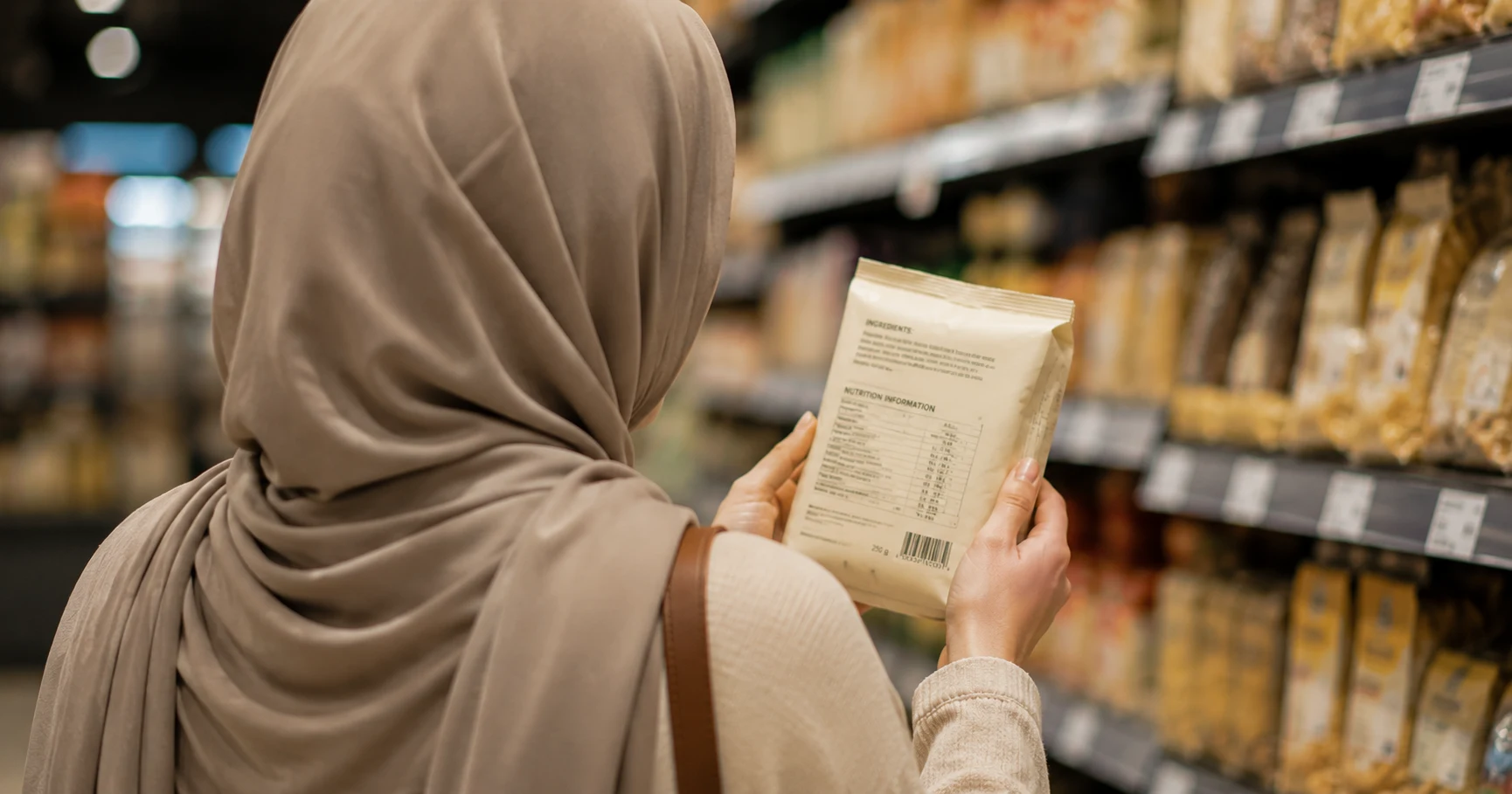
In most major food markets, a manufacturer can print “halal” on packaging without first obtaining third-party certification. This is not an accidental loophole. It reflects the underlying legal structure in many jurisdictions: halal is usually treated as a voluntary claim, not a tightly standardised regulatory designation.
The practical consequence is significant. Consumers making purchasing decisions based on a halal label often cannot rely on the label alone. A product carrying the word “halal” may be: genuinely certified by an accredited body; a good-faith self-declaration by the manufacturer; a marketing claim made without any formal assessment of the ingredient supply chain; or, in the worst cases, a false claim on a product that contains haram ingredients.
This guide compares the legal position in the UK, EU, and US, then connects those systems to the export-market reality businesses face in Malaysia, Indonesia, and the GCC. Halal demand is international, but halal labelling rules are fragmented, unevenly enforced, and often difficult for ordinary consumers to interpret.
At a Glance
UK
Can you use “halal” without certification? Usually yes
What the law mainly controls: General ban on false or misleading labelling
What certification adds: Makes the claim verifiable and commercially safer
EU
Can you use “halal” without certification? Usually yes
What the law mainly controls: General anti-misleading rules plus unstunned slaughter disclosure
What certification adds: Helps with trust and export acceptance, not basic legality
US
Can you use “halal” without certification? Usually yes at federal level
What the law mainly controls: General substantiation rules plus some state halal fraud laws
What certification adds: Provides documentary support and stronger fraud defence
Malaysia / Indonesia / GCC imports
Can you use “halal” without certification? Often no, in practice, for imported halal-positioned products
What the law mainly controls: Recognition of approved foreign certifiers and import compliance
What certification adds: Often the condition for legal or commercial market access
| Market | Can you use the word “halal” without certification? | What the law mainly controls | What certification adds |
|---|---|---|---|
| UK | Usually yes | General ban on false or misleading labelling | Makes the claim verifiable and commercially safer |
| EU | Usually yes | General anti-misleading rules plus unstunned slaughter disclosure | Helps with trust and export acceptance, not basic legality |
| US | Usually yes at federal level | General substantiation rules plus some state halal fraud laws | Provides documentary support and stronger fraud defence |
| Malaysia / Indonesia / GCC imports | Often no, in practice, for imported halal-positioned products | Recognition of approved foreign certifiers and import compliance | Often the condition for legal or commercial market access |
Fast rule: in domestic Western markets, halal is often a voluntary claim governed by general consumer protection law. In major Muslim import markets, certification is much more likely to become a practical or legal gateway requirement.
What matters most for businesses: if you are selling locally, the main legal risk is usually a misleading claim. If you are selling into Muslim-majority import markets, the main risk is often market access failure because your certifier is not recognised.
UK Halal Labelling Law
The core position: There is no legally defined standard for “halal” under UK food law. Post-Brexit, the UK retained EU Regulation 1169/2011 (Food Information to Consumers) in domestic law. That regulation requires food information to be accurate, clear, and not misleading — but it does not define halal.
What this means in practice: A food business can make a “halal” claim on a label without any third-party certification. The only legal constraint is the general prohibition on misleading labelling. If a product claims to be halal but contains, for example, pork-derived gelatine, that is a false and misleading claim and is actionable under the Food Safety Act 1990 and the Food Information Regulations 2014.
However, enforcement is the critical caveat. Local authority Trading Standards offices are responsible for investigating misleading food claims. Prosecutions for false halal claims are rare — not because false claims are rare, but because Trading Standards resource constraints mean that halal claim enforcement competes with a long list of other food law priorities.
Slaughter labelling (different issue, same regulation): UK law does require that meat sold to consumers discloses whether the animal was stunned prior to slaughter. Under retained EU Regulation 1169/2011, meat from animals slaughtered without prior stunning must carry a label stating this. This is relevant to halal and kosher meat but is a separate legal requirement from any “halal” certification or claim.
The Food Standards Agency position: The FSA has repeatedly recommended that consumers look for certification logos from recognised bodies rather than relying on label claims, acknowledging that the word “halal” on a label without an accompanying certification mark provides no verifiable guarantee.
EU Halal Labelling Law
The core position: The EU has no harmonised legal definition of “halal” for food labelling. The same general prohibition on misleading labelling under Regulation 1169/2011 applies across all member states.
Member state variations: Some EU member states have introduced national guidance or labelling frameworks. France, for example, has been the subject of significant legal and political debate about halal labelling standards, but no binding national legal definition has been enacted. Germany, the Netherlands, and the UK (pre-Brexit) were the primary markets where certifying bodies operated established schemes without any legal standard underpinning them.
The slaughter labelling requirement: This is where EU law is most specific on halal-relevant matters. Under Commission Delegated Regulation (EU) 2018/615 (amending Regulation 853/2004), EU member states must ensure that fresh meat from animals slaughtered without prior stunning is labelled to indicate this at the point of sale. The label must read: “Meat from slaughter without stunning.” This requirement applies in EU markets and is the closest the EU comes to any legal framework touching halal practice.
Halal certification in the EU: Several major EU certifying bodies operate — HFCE (Halal Food Council of Europe), HBI (Halal International Authority), and various national bodies. None have legal status in the sense that their certification is required by law. Their value is commercial: access to Muslim consumer markets and export qualification for Muslim-majority country importers.
US Halal Labelling Law
The core position: There is no federal US standard for halal food claims. The USDA and FDA both regulate food labelling, but neither has established a binding legal definition of “halal” equivalent to, for example, the federal kosher labelling standard in some states.
State-level halal fraud statutes: Several US states have enacted halal food fraud statutes that make it a criminal offence to intentionally misrepresent food as halal. These states include:
New Jersey
N.J.S.A. 56:8-63 et seq. (Halal Food Consumer Protection Act)
Illinois
410 ILCS 650 (Halal Food Act)
Texas
Texas Agriculture Code Chapter 45
Michigan
M.C.L.A. 289.7111 et seq.
| State | Statute |
|---|---|
| New Jersey | N.J.S.A. 56:8-63 et seq. (Halal Food Consumer Protection Act) |
| Illinois | 410 ILCS 650 (Halal Food Act) |
| Texas | Texas Agriculture Code Chapter 45 |
| Michigan | M.C.L.A. 289.7111 et seq. |
New Jersey’s statute is the most comprehensive and most enforced. It creates a specific consumer protection mechanism for halal claims, requires that businesses making halal claims provide documentation on request, and gives the state Attorney General enforcement power.
USDA voluntary halal claim framework: The USDA permits meat processors to make halal claims on federally inspected meat products if the claim is substantiated and the plant has documentation to support it. The USDA does not certify halal status itself — it reviews the substantiation provided by the processor. The USDA’s position is that a third-party certification from a recognised Islamic organisation is acceptable substantiation for a halal claim.
Export Markets: Where Certification Stops Being Optional in Practice
Malaysia (JAKIM): Imported products marketed as halal generally need certification from a foreign body recognised by JAKIM. This is not just about consumer trust. It is about whether the halal claim will be accepted within the import and retail system.
Indonesia (BPJPH / MUI framework): Indonesia has moved toward a state-backed halal assurance framework. For imported products, certification from an approved foreign body is often a practical prerequisite for lawful halal positioning.
GCC markets (UAE, Saudi Arabia, Qatar, Kuwait, Bahrain, Oman): Rules vary by country and product type, but the shared pattern is clear: self-declared halal claims carry much less weight than certification from a recognised body. For meat and higher-risk food categories, recognised certification is often essential.
For businesses, this is the dividing line that matters most:
- Domestic market claim risk is mainly about misleading-labelling exposure
- Export market risk is often about market access, customs acceptance, and importer recognition
- Certification shifts from “helpful evidence” to “commercial necessity” much faster once cross-border halal trade is involved
What Halal Certification Adds to Your Legal Position
For a food business operating across international consumer or export markets, obtaining third-party halal certification does the following:
Creates a defensible claim. Instead of “halal” (an unsubstantiated assertion), you can say “certified halal by [body name]”. If challenged — by a regulator, a buyer, or a consumer — you have an audited supply chain and a third-party opinion supporting the claim.
Opens export markets. JAKIM (Malaysia) and BPJPH (Indonesia) require certification from a recognised foreign body for imported food products carrying a halal claim. Without certification from an approved body, your product cannot legally be sold as halal in these markets. GCC countries (UAE, Saudi Arabia, Qatar, Kuwait, Bahrain, Oman) similarly require government-recognised certification for halal food imports.
Provides audit trail documentation. In the event of a Trading Standards investigation (UK) or a state attorney general inquiry (US), you have documentary evidence — ingredient specs, supplier certificates, audit reports — demonstrating that due diligence was applied to the halal claim.
Builds consumer trust. The commercial argument for certification goes beyond legal protection. Muslim consumers in many markets have become sophisticated about distinguishing between self-declared “halal” and certified halal. A recognised certification mark is a signal that can be checked against a public register or recognised body.
Required vs Optional Label Elements
Understanding what the law requires a business to disclose — as opposed to what a halal claim optionally adds — is essential context for any food business operating in cross-border or diverse consumer markets.
Allergens (14 major allergens)
Legal requirement: Mandatory — UK FIR 2014, EU Reg 1169/2011
Relevance to halal status: Indirect: some allergen-free products are also free of animal-derived ingredients
Ingredients list
Legal requirement: Mandatory
Relevance to halal status: Consumers can identify E-numbers and additives manually
Additive function and name/number
Legal requirement: Mandatory
Relevance to halal status: Allows identification of E471, E441, E120, E631, and similar additives
Origin of meat
Legal requirement: Mandatory for fresh/frozen/chilled meat
Relevance to halal status: Relevant but does not indicate slaughter method
Slaughter method (unstunned)
Legal requirement: Mandatory for meat from animals not stunned (UK/EU)
Relevance to halal status: Directly relevant to halal and kosher
Halal claim
Legal requirement: Voluntary
Relevance to halal status: The entire subject of this guide
Certifying body logo
Legal requirement: Voluntary
Relevance to halal status: The signal that makes the halal claim verifiable
Vegetarian/vegan claim
Legal requirement: Voluntary
Relevance to halal status: Does not confirm halal status
| Label element | Legal requirement | Relevance to halal status |
|---|---|---|
| Allergens (14 major allergens) | Mandatory — UK FIR 2014, EU Reg 1169/2011 | Indirect: some allergen-free products are also free of animal-derived ingredients |
| Ingredients list | Mandatory | Consumers can identify E-numbers and additives manually |
| Additive function and name/number | Mandatory | Allows identification of E471, E441, E120, E631, etc. |
| Origin of meat | Mandatory for fresh/frozen/chilled meat | Relevant but does not indicate slaughter method |
| Slaughter method (unstunned) | Mandatory for meat from animals not stunned (UK/EU) | Directly relevant to halal and kosher |
| Halal claim | Voluntary | The entire subject of this guide |
| Certifying body logo | Voluntary | The signal that makes the halal claim verifiable |
| Vegetarian/vegan claim | Voluntary | Does not confirm halal status |
Common Questions
Is it illegal to call food halal without certification in the UK?
Not automatically. UK law does not make third-party halal certification a universal legal prerequisite for using the word “halal” on a label. The legal risk arises when the claim is false, misleading, or cannot be substantiated if challenged.
Can I label food halal if it is vegetarian?
Not automatically. Vegetarian or vegan positioning may remove slaughter-related concerns, but halal status can still be affected by alcohol carriers, doubtful additives, processing aids, or contamination risk on shared production lines.
What does the law say about halal labelling in the EU?
The EU does not provide a harmonised legal definition of halal for food labelling. The main legal control is the general prohibition on misleading food information, with a more specific rule around disclosure where meat comes from slaughter without prior stunning.
How We Reached This Verdict
This guide is based on: the text of retained EU Regulation 1169/2011 as it applies in UK domestic law; FSA food labelling guidance; Commission Delegated Regulation (EU) 2018/615 on slaughter labelling; published state-level halal fraud statutes (New Jersey, Illinois, Texas, Michigan); USDA Food Safety and Inspection Service policy on halal claims; and published analysis from UK food law practices. Legal positions are summarised for general guidance only — food businesses with specific compliance questions should seek advice from a food law solicitor.
Next Steps
If you are deciding how to act on this:
- For the full certification process: How to get halal certification — the complete business guide
- For packaging marks and recognition: Halal certification logos — what each mark means
- For UK body selection: HMC vs HFA — which UK body to choose
- For the full certification cluster: Halal certification hub — all guides
Check any additive on a label right now: The E-codes database covers 360+ food additives with their halal status, source analysis, and which products they appear in most often. Or scan a product label and let the tool flag the issues for you.
Halal Certification Hub
Need the bigger picture, not just this one article?
Browse the full halal certification hub for step-by-step guidance on costs, certification bodies, logos, audits, labelling, and international trade requirements.
Visit the certification hubIngredients change. Be first to know.
Brands reformulate without warning. We track every E-code update and halal certification — one short weekly email.
Partner with HalalCodeCheck
Reach halal-conscious buyers and food businesses at the moment they decide
Our audience uses HalalCodeCheck to verify ingredients, compare certification bodies, and choose products with confidence. That means you can reach both high-intent shoppers and serious food-business decision-makers across the UK, US, Canada, Australia, and Europe.
- Featured product & brand placements
- Certification guide sponsorships & category features
- Search, tool, and directory visibility
Sponsored placements and partnerships by arrangement
Related Articles
 Halal Certification
 Halal Certification for Restaurants: The Full UK Process (Step by Step 2026)
How UK restaurants get HMC or HFA halal certification — the full step-by-step process, supplier requirements, what inspectors check, and how much it costs.
 Halal Certification
 How to Get Halal Certification: Complete Guide for Food Businesses (UK, USA & Australia 2026)
Step-by-step halal certification process for food manufacturers, restaurants, and importers in the UK, USA, and Australia. Certifying bodies, costs, and audit requirements explained.
 Halal Certification
 Halal Certification Cost: What to Budget in the UK, USA & Australia (2026)
Halal certification costs vary widely by market, business size, and certifying body. Budget breakdown for UK, US, and Australian businesses, including what usually changes the quote.