
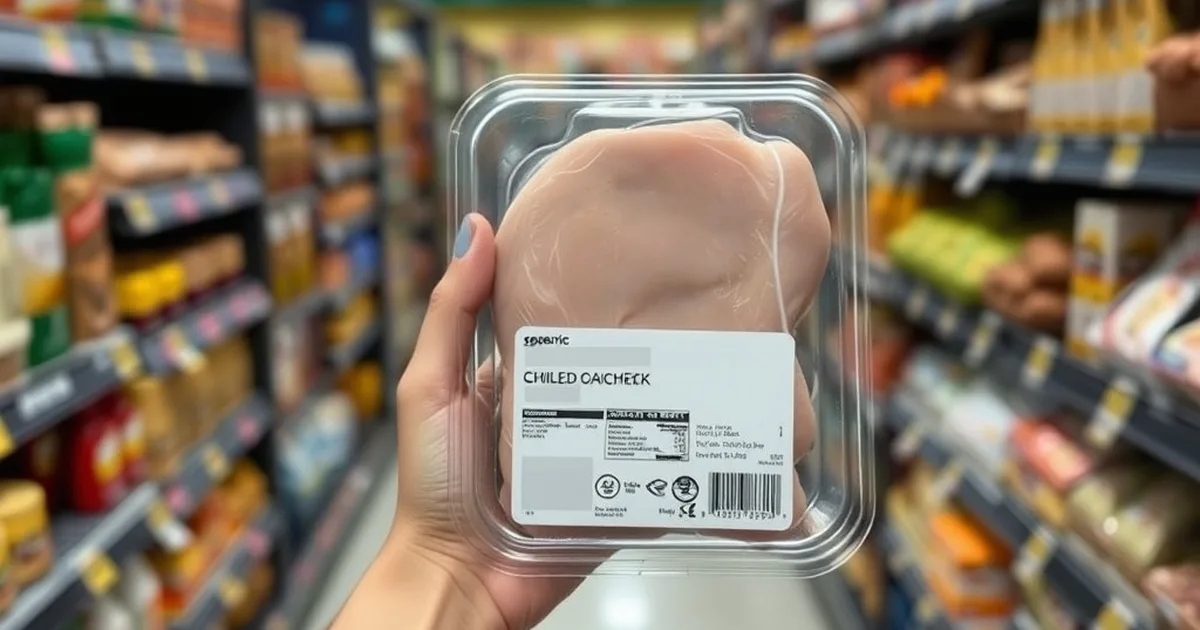
No US agency defines or certifies halal. The word on a pack is a marketing claim, and the law only asks that it be truthful. For a shopper, that means the word ‘halal’ on its own tells you very little. What stands behind it is what counts.
This guide sets out the legal baseline, explains where private certification fits, and gives you a five-step way to judge package wording.
At a Glance
| Question | Answer |
|---|---|
| Does the US government define halal? | No. It does not define it, certify products or issue a halal seal. |
| Who checks a halal claim? | Nobody checks it against a religious standard. It is treated like any other label claim: truthfulness under FDA, or FSIS for meat and poultry. |
| Does USDA inspection mean halal? | No. Inspection covers safety and humane handling, not Islamic slaughter. |
| Is a certificate legally required? | Not federally. In practice, retailers and shoppers expect one. |
| Does ‘Certified Halal’ on meat need paperwork? | Yes. The FSIS guideline calls for documentation current within the last year. |
What the Federal Government Does and Doesn’t Do
No federal agency defines halal. It is a religious standard, so nobody at FDA or USDA is checking whether a product meets it.
What the government does care about is whether a label is truthful. FDA handles most food labels and treats a product as misbranded if its labeling is false or misleading. Meat and poultry go through USDA’s Food Safety and Inspection Service (FSIS), which applies similar truthfulness rules and reviews certain label claims before the product ships.
So a halal claim is handled like any other marketing statement. A company that can back it up with records is fine. One that cannot faces the same exposure as for any unsupported claim: enforcement, recalls and unhappy customers.
For you, the practical point is simple. A halal claim on a US pack has not been approved by a religious authority on your behalf. It is only as reliable as the evidence behind it.
Meat and Poultry: Why the USDA Stamp Isn’t a Halal Mark
Meat and poultry get the closest federal look, but that look is not about halal. USDA inspection checks food safety and humane handling. It does not check whether slaughter followed Islamic law.
That means a halal claim on a meat product rests on supply-chain paperwork and the certifier, not on the federal inspection stamp. A pack can be USDA-inspected and carry no halal evidence at all. Equally, the stamp adds nothing to a halal claim.
There is one specific line in the FSIS Guideline for Label Approval (March 2024, FSIS-GD-2024-0001). It says that a ‘Certified Halal’ or ‘Certified Zabihah Halal’ claim must have documentation in the labeling record that is current within the last year to support the use of the claim.
That guideline is addressed to the label-approval process, not to shoppers. You will not see the documentation on the shelf. But it tells you that, for meat and poultry, a ‘Certified’ halal claim is expected to have paperwork behind it, and that the paperwork should not be out of date.
What Halal Means in Practice (and Where Scholars Differ)
Because there is no federal definition, the meaning comes from Islamic practice.
- Ingredients: pork and pork-derived products are off limits, and alcohol is generally excluded too, including in some processing aids.
- Slaughter: for meat and poultry, this typically means a Muslim slaughterer invoking God’s name and the blood being drained.
- Handling: a halal product cannot pick up contact with prohibited substances during production, storage or shipping.
Scholars do not agree on every detail. Gelatin, enzymes, emulsifiers and flavorings are the usual trouble spots, and two certifiers might reach different conclusions about the same ingredient. That is why it helps to know which standard sits behind a claim, not only that a claim exists.
Where Third-Party Certification Fits
Since the government does not certify halal, most US companies go through a private certifier. These organizations audit ingredients, suppliers, production lines and records, then issue a certificate and often a logo.
The process usually runs like this:
- The company submits a full ingredient list with suppliers and processing aids.
- The certifier reviews each component.
- Someone visits the facility to look at production, cleaning and storage.
- Periodic audits and sampling follow, along with a requirement to report any formula or supplier change.
Certification does not replace label compliance. It backs up the claim, and the product still needs an accurate label. Logos are licensed, and a company can use one only where the certifier’s rules allow.
How Claims Go Wrong
There are several mistakes that keep recurring on the producer side. Here they are, with what each one means when you are standing in the aisle.
| Common failure | What it means for you |
|---|---|
| A certifier’s logo used without permission | A logo on its own is not proof. It is worth knowing which certifier it belongs to. |
| Assuming USDA inspection covers halal | The inspection stamp tells you nothing about halal status. |
| A lapsed certificate | A claim can become unsupported overnight, so a certificate needs to be current. |
| A quiet supplier change, such as a new flavoring or enzyme | A product can look and taste the same and still contain a non-halal ingredient. |
| Absolute wording such as ‘100% halal’ | It reads as a guarantee. The claim should match what the certification actually covers. |
These are risks the source describes for producers. Most packs will not have any of these problems, but they show why a bare word on the front of a pack is the weakest form of evidence.
State Laws
Some states have passed laws touching halal food, mostly around restaurant disclosure or certain food sales. These laws differ a lot and change over time.
How to Check a ‘Halal’ Claim Yourself
- Look for a named certifier or logo, not just the word ‘halal’. The word alone is a bare claim.
- Check whether the certifier is one you or your community recognize. Retailers and distributors recognize only some certifiers, and standards differ between them.
- For meat, treat the USDA stamp as separate. It says nothing about halal. Look for the halal claim and the certifier on their own.
- Read the ingredient list for gelatin, enzymes, emulsifiers and flavorings. These are the usual trouble spots. Look up any E-code in our E-codes database.
- If you are unsure, ask the company for its current certificate. The certificate should match the exact product, facility and shipment date, and a lapsed one leaves the claim unsupported.
Summary
| Question | Answer |
|---|---|
| Is there an official US halal label? | No. Claims are private and must be truthful. |
| Does USDA inspection mean halal? | No. It covers safety and humane handling. |
| Is a certificate required by federal law? | No, but the claim must be backed up. |
| What does ‘Certified Halal’ on meat need? | Documentation current within the last year (FSIS guideline). |
| Best first check | A named certifier you recognize, not just the word ‘halal’. |
Look up any E-code from a packet in the E-codes database.
To scan a full ingredient list for halal status in seconds, use the ingredient scanner.
How We Reached This Verdict
This guide rests on:
- FSIS Guideline for Label Approval (March 2024, FSIS-GD-2024-0001), the primary source for the line that a ‘Certified Halal’ or ‘Certified Zabihah Halal’ claim must have documentation in the labeling record current within the last year: downloads.regulations.gov.
Madhab note
Scholars differ on details such as gelatin, enzymes, emulsifiers and flavorings, and certifiers can reach different conclusions about the same ingredient. The source treats pork and alcohol as excluded. For anything borderline, follow a scholar or standard you trust. This guide does not issue a ruling.
Halal Certification Hub
Need the bigger picture, not just this one article?
Browse the full halal certification hub for step-by-step guidance on costs, certification bodies, logos, audits, labelling, and international trade requirements.
Visit the certification hubIngredients change. Be first to know.
Brands reformulate without warning. We track every E-code update and halal certification — one short weekly email.
Partner with HalalCodeCheck
Reach halal-conscious buyers and food businesses at the moment they decide
Our audience uses HalalCodeCheck to verify ingredients, compare certification bodies, and choose products with confidence. That means you can reach both high-intent shoppers and serious food-business decision-makers across the UK, US, Canada, Australia, and Europe.
- Featured product & brand placements
- Certification guide sponsorships & category features
- Search, tool, and directory visibility
Sponsored placements and partnerships by arrangement
Related Articles
 Halal Certification
Halal Sticker Rolls on Noon: Why a Sticker Is Not Certification
A generic halal sticker proves nothing about how a product was made. Check for a MoIAT-registered certifier and a genuine mark on the original packaging.
 Halal Certification
 in Australia: AFIC, ICCV, HCA and the Approved Bodies List (2026)
How halal certification works in Australia — the major certifiers (AFIC, ICCV, HCA), the government's export-only approval program, and how to verify any halal claim.
 Halal Certification
UK Halal Certification Bodies: HMC, HFA, HFCE and Other Logos Explained (2026)
Compare UK halal certification bodies and logos. HMC, HFA, HFCE, Halal Trust, MCB, and international certifiers explained — what they do, how standards differ, and how to verify claims.