
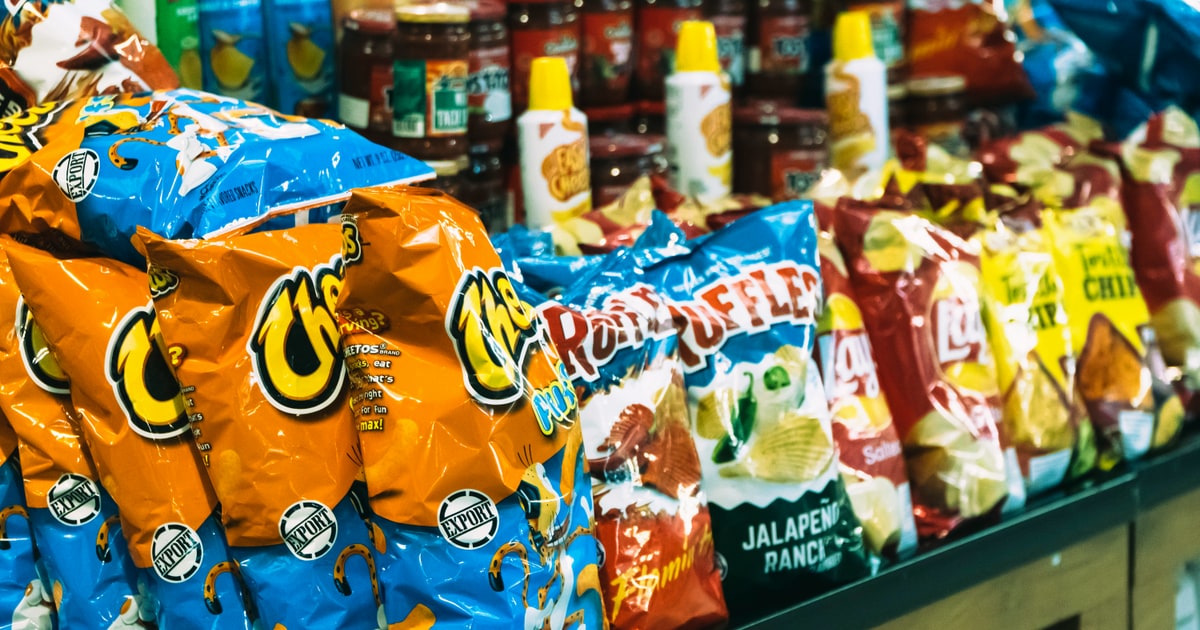
Standing in the snack aisle reading ingredient lists while your shopping basket fills up is not most people’s idea of an efficient shop. But a few minutes spent learning which E-codes to scan for can make the process much faster — you are really only looking for a handful of numbers, and if none of them appear, you can move on with confidence.
Here are the ten E-codes that matter most when buying snacks as a Muslim consumer, ranked by the severity and frequency of the concern.
1. E120 — Carmine (Cochineal)
Status: HARAM
What it is: Carmine is extracted from crushed cochineal insects. It produces vivid red, pink, and crimson colours.
Why it matters: Insects are impermissible under all mainstream schools of Islamic jurisprudence. Carmine is made from insect bodies, making it clearly haram. Every major halal certification body confirms this ruling.
Where you’ll find it: Red and pink yoghurts (strawberry, raspberry), some pink lemonade, some confectionery in red/pink shades (certain Jelly Belly flavours), maraschino cocktail cherries, some fruit-flavoured drinks.
Label names: E120, carmine, cochineal, cochineal extract, carminic acid, natural red 4, crimson lake, CI 75470.
Safe alternatives: Look for E162 (beetroot red), E163 (anthocyanins), or E124 (Ponceau 4R, synthetic but halal) in place of E120.
2. E441 — Gelatine
Status: HARAM (in most UK commercial applications)
What it is: Gelatine is a protein extracted by boiling animal connective tissue — bones, skin, and cartilage. In UK/EU commercial production, the dominant source is porcine (pig skin and bones).
Why it matters: “Gelatine” on a UK food label without qualification means porcine gelatine in the vast majority of cases. Only gelatine specifically labelled as “beef gelatine” or “fish gelatine” with accompanying halal certification is permissible.
Where you’ll find it: Gummy sweets (Haribo UK standard range), marshmallows, jelly products, some yoghurts, pharmaceutical gel capsules, some cream cheese, some fortified products where vitamins are encapsulated in gelatine.
Label names: Gelatine, gelatin, E441.
Safe alternatives: Agar-agar (E406), pectin (E440), carrageenan (E407), konjac (E425). Look for halal-certified gummy sweets from brands such as Bebeto or Candy Kittens (gelatine-free).
3. E471 — Mono- and Diglycerides of Fatty Acids
Status: MUSHBOOH
What it is: An emulsifier derived from fatty acids, which can be from plant oils (palm, soy, sunflower — halal) or animal fats (beef tallow, pork lard — haram).
Why it matters: E471 is the most common emulsifier in commercial biscuits, crisps, crackers, and bakery snacks. UK labels never specify the fat source. Without vegan labelling or halal certification, it is mushbooh.
Where you’ll find it: Digestive biscuits, rich tea biscuits, cookies, crackers, some flavoured crisps, breadsticks, and most commercial bakery snack products.
Label names: E471, mono- and diglycerides of fatty acids, monoglycerides, diglycerides.
Check: Vegan label = plant-based E471. Halal cert = verified source. Neither = mushbooh.
4. E631 — Disodium Inosinate
Status: MUSHBOOH / HARAM (source-dependent)
What it is: A flavour enhancer (umami) used alongside MSG. Can be derived from fish (halal), pork muscle (haram), or fermentation.
Why it matters: E631 from pork is haram, and there is no way to determine the source from the label. It is never declared as “pork-derived” even when it is.
Where you’ll find it: Strongly flavoured crisps (some Pringles variants, some KP snacks), instant noodle flavour sachets, some flavoured nuts, BBQ and prawn cocktail flavour products.
Label names: E631, disodium inosinate, sodium inosinate.
Safe option: Plain/unflavoured versions of crisps and snacks avoid flavour enhancers entirely.
5. E627 — Disodium Guanylate
Status: MUSHBOOH
What it is: A flavour enhancer used alongside E621 (MSG) and E631 to intensify umami taste. Can be from yeast extract (halal) or pork-derived sources.
Why it matters: Like E631, E627 is used in many flavoured snack products without any indication of its source. It almost always appears alongside E631 when it is present — the two work synergistically.
Where you’ll find it: Same products as E631 — flavoured crisps, instant noodle sachets, flavoured nuts, meat-flavour snack products.
Label names: E627, disodium guanylate, sodium guanylate.
Practical note: If you see E635 (disodium ribonucleotide), that is a pre-made blend of E627 and E631, carrying the same concern.
6. E904 — Shellac
Status: DEBATED (avoid by precaution)
What it is: A resin secreted by the female lac insect, used as a glazing agent to give sweets their shiny coating.
Why it matters: Unlike carmine (insect body), shellac is an insect secretion. Some scholars permit it by analogy with honey; most UK halal certifiers do not certify products containing E904. The safe position is to avoid it.
Where you’ll find it: Jelly Belly jelly beans, some chocolate-coated confectionery, some pharmaceutical tablets.
Label names: E904, shellac, lac resin, confectioner’s glaze, resinous glaze.
Safe alternative: Look for confectionery glazed with E903 (carnauba wax, plant-derived) instead of E904.
7. E542 — Bone Phosphate (Edible Bone Phosphate)
Status: MUSHBOOH
What it is: Calcium phosphate derived from animal bones, used as an anti-caking agent and mineral supplement. The animal source (porcine, bovine, or mixed) is not declared.
Why it matters: While bone phosphate is less common than it once was (synthetic calcium phosphate has largely replaced it in many applications), it still appears in some products as an anti-caking agent, particularly in some flour and powdered food products.
Where you’ll find it: Some powdered food products, certain flour preparations, some nutritional supplements.
Label names: E542, bone phosphate, edible bone phosphate, calcium phosphate (when from bone — though synthetic calcium phosphate also uses this name, making differentiation difficult).
Note: E341 (calcium phosphate) is more commonly synthetic — E542 specifically indicates the bone-derived form.
8. E920 — L-Cysteine
Status: MUSHBOOH / HARAM (source-dependent)
What it is: L-cysteine is an amino acid used as a dough conditioner in bread and bakery products. It relaxes the gluten network, making dough easier to process at high speed in industrial bakeries.
Why it matters: L-cysteine was traditionally produced from porcine bristles (pig hair) or human hair (collected from barbershops in Asia). It can also be produced from feathers (poultry, which may be from non-Islamically slaughtered birds) or by microbial fermentation (halal). Without halal certification, the source is unknown.
Where you’ll find it: Commercial bread, burger buns, pizza dough, and other commercial bakery products — often listed alongside E471 and E472e.
Label names: E920, L-cysteine, cysteine, L-cysteine hydrochloride.
Precautionary note: Commercial bread with E920 and without halal certification should be treated as mushbooh.
9. E160a — Beta-Carotene
Status: MUSHBOOH (carrier concern)
What it is: Beta-carotene is a plant-derived orange-yellow pigment. The concern is not the pigment itself but the gelatine carrier matrix used to make it water-dispersible, which may be porcine.
Why it matters: The porcine gelatine carrier for E160a is included within the E160a declaration and is not labelled separately. Consumers have no way to know from the label whether porcine or plant-based carriers were used.
Where you’ll find it: Margarine, some flavoured crisps (orange-flavoured products), some confectionery, breakfast cereals, plant milks, orange-coloured bakery products.
Label names: E160a, beta-carotene, natural beta-carotene, beta carotene.
Check: A vegan or vegetarian label guarantees a plant-based carrier. Without this claim, E160a is mushbooh.
10. E422 — Glycerol (Glycerin)
Status: MUSHBOOH
What it is: A humectant derived from either plant oils (palm, soy, coconut — halal) or from animal fats as a byproduct of soap manufacturing (haram if porcine). Most commercial glycerol today is plant-derived, but the label does not specify the source.
Why it matters: Glycerol appears in a wide range of sweet and savoury snack products as a moisture-retention agent and texture modifier. Without a vegan claim or halal certification, the source cannot be confirmed.
Where you’ll find it: Some cake products, some confectionery, some energy bars, certain dried fruit products, flavoured syrups.
Label names: E422, glycerol, glycerin, glycerine.
Check: Vegan label = plant-based glycerol. Halal cert = verified source. Neither = mushbooh.
The Snack-Aisle Checklist
Print this list or save it on your phone for quick reference:
| Priority | E-Code | Name | Status |
|---|---|---|---|
| 1 | E120 | Carmine | HARAM |
| 2 | E441 | Gelatine | HARAM (porcine) |
| 3 | E471 | Mono/Diglycerides | MUSHBOOH |
| 4 | E631 | Disodium Inosinate | MUSHBOOH/HARAM |
| 5 | E627 | Disodium Guanylate | MUSHBOOH |
| 6 | E904 | Shellac | DEBATED |
| 7 | E542 | Bone Phosphate | MUSHBOOH |
| 8 | E920 | L-Cysteine | MUSHBOOH/HARAM |
| 9 | E160a | Beta-Carotene | MUSHBOOH (carrier) |
| 10 | E422 | Glycerol | MUSHBOOH |
Most of what this list rules out is a sourcing question someone else has already answered — see the UK picks that settle the E441 gelatine question outright: Sweetzone’s whole-brand halal range, Bebeto, HMC-certified Heavenly Delights gummy bears, and agar agar if you set desserts yourself. It won’t rescue the flavoured-crisp aisle, though — E631 and E627 aren’t addressed there, and the nearest certified crunch is a rice cracker.
For how these checks apply to school lunchbox snacks specifically, the top three codes on this list — E441, E120 and E471 — do almost all the work for UK parents.
The Two-Step Shortcut
If checking all ten E-codes on every product feels like too much, there is a practical shortcut that covers most of these concerns in one step:
Step 1: Does the product have a halal certification logo from a credible body (HMC, HFA, or similar)? If yes, all ten concerns have been professionally assessed. Buy it.
Step 2: Does the product have a “suitable for vegans” label? A vegan claim eliminates E120 (insect-derived), E441 (animal gelatine), E471 (animal fat emulsifier), E160a (porcine gelatine carrier), E422 (animal fat glycerol), and E542 (animal bone). E920 from pig bristle also cannot be in a vegan product. This single label check covers 7 of the 10 items on this list.
E631, E627, and E904 in vegan products: E631 from fish would not be vegan, so a vegan product’s E631 would have to be fermentation-derived (halal) or the product would not carry a vegan claim. E627 from pork is not vegan; the yeast-derived form is. E904 (shellac) is not vegan. So a vegan label also helps with these three.
The vegan label is not a perfect proxy for halal, and there are concerns vegan certification does not cover (alcohol used as a processing aid, for example). But for the specific concern of animal-derived E-codes in snacks, it is a powerful and quick indicator.
Use HalalCodeCheck to scan ingredient lists when you need a full assessment.
Ingredients change. Be first to know.
Brands reformulate without warning. We track every E-code update and halal certification — one short weekly email.
Related Articles
 E-Code Guides
 Haram E-Numbers to Avoid: The Complete Reference List (2026)
There is no single haram E-number list — status depends on source. But a specific set are either always haram (E120, E441, E542) or high-risk Mushbooh you should verify. Here is the full reference.
 E-Code Guides
 Which Foods Contain E471? A Category-by-Category Halal Guide (2026)
E471 turns up in chocolate, biscuits, bread, ice cream, spreads, instant noodles and protein bars. Here is a category-by-category breakdown of where it hides and which certified alternatives exist.
 E-Code Guides
 Is Cheese Halal? Animal Rennet, Microbial Rennet and What to Check (2026)
The halal status of cheese depends on the rennet used to set it. Microbial or vegetarian rennet is halal; animal rennet from non-zabiha cattle is Mushbooh. Here is how to check.