
Are Jaffa Cakes Halal?
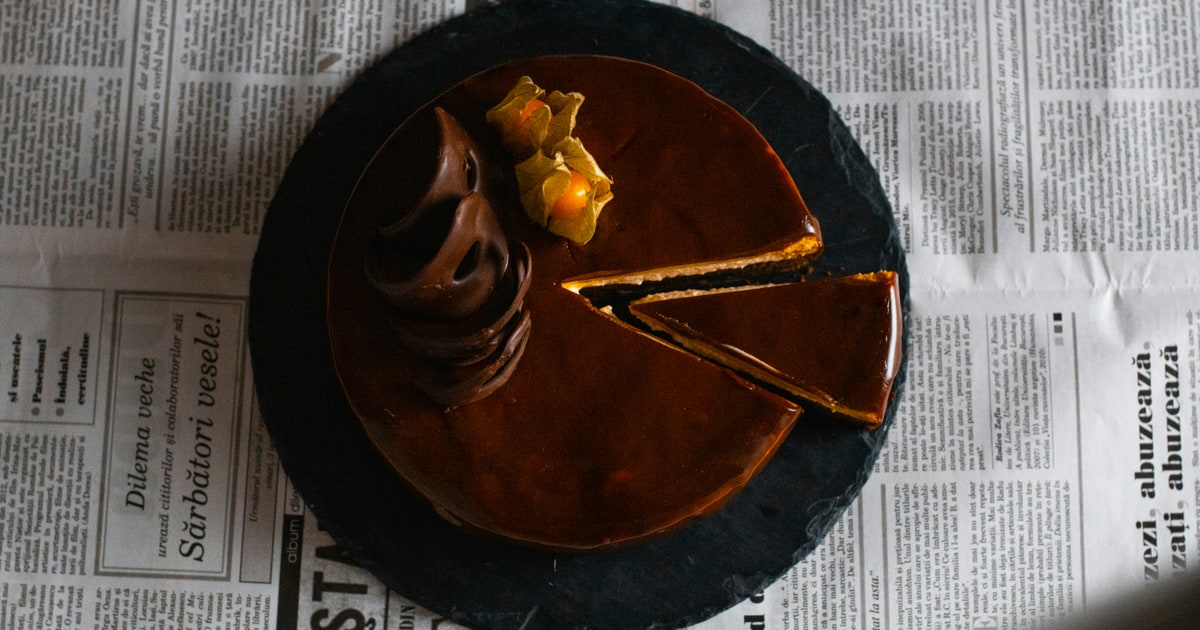
Jaffa Cakes occupy a unique place in British snack culture — partly biscuit, partly cake (a distinction famously litigated in VAT law), and fully beloved. The combination of soft sponge, orange jelly, and dark chocolate coating makes them a teatime staple. But for Muslim consumers, the halal question requires a closer look at that orange jelly and the chocolate coating.
The verdict: McVitie’s Jaffa Cakes (UK) are Mushbooh. Key concerns include E471 (source unconfirmed), potentially E120 (carmine) in some jelly formulations, and the absence of halal certification.
Ingredients Check
Standard McVitie’s Jaffa Cakes contain: glucose syrup, sugar, orange jelly (glucose syrup, sugar, water, orange juice from concentrate, gelling agent (E440), citric acid, orange oil, colour (E160a)), dark chocolate (sugar, cocoa mass, cocoa butter, emulsifier (E471, E322), vanilla extract), wheat flour, free range eggs, humectant (E422), raising agents (E500, E450), palm oil, salt.
E471 — Mono- and Diglycerides of Fatty Acids Present in the dark chocolate coating. As consistently noted across our chocolate reviews, E471’s source — plant or animal — determines halal permissibility. McVitie’s (owned by United Biscuits, now part of the Turkish company Yıldız Holding) has not confirmed plant-based sourcing for E471 in Jaffa Cakes UK, and no halal certification exists.
E120 — Carmine / Cochineal (potential) The orange jelly in the current standard Jaffa Cakes formulation uses E160a (beta-carotene — plant-derived, halal) for orange colouring. However, some past formulations and certain product variants have used E120 (carmine) for red/orange colouring. If E120 is present, the product is Haram. Always read the specific label you’re purchasing — formulations change and regional variants exist.
E440 — Pectin The gelling agent in the orange jelly. Pectin is derived from citrus peel or apple skins — 100% plant-derived and halal. This is the reason Jaffa Cakes’ jelly does not raise gelatine concerns: they use pectin, not animal gelatine.
E322 — Soy Lecithin Present in the dark chocolate alongside E471. Soy lecithin is halal.
E422 — Glycerol (humectant) Used in the sponge to retain moisture. Glycerol (glycerine) can be plant or animal-derived. In most commercial biscuit manufacturing, vegetable glycerol is standard, but without halal certification this cannot be guaranteed.
E160a — Beta-Carotene The orange colouring in the jelly of current standard formulation. Beta-carotene is typically derived from carrots or synthesised from plant sources — halal.
E500 — Sodium Bicarbonate (raising agent) Halal. Baking soda.
E450 — Diphosphates (raising agent) Halal. Mineral-derived leavening agent.
Free range eggs Halal. Eggs from hens are permissible regardless of whether they are free range or caged.
Vanilla extract Natural vanilla extract is mentioned in some formulations. Unlike vanillin (synthetic), natural vanilla extract is typically prepared using alcohol as a solvent. The alcohol is used in trace amounts in extraction. Most scholars permit vanilla extract due to its transformed nature, but the strict position is to prefer vanillin. This is a secondary concern and not a primary reason for Mushbooh classification.
The Jelly Question: Why Pectin Matters
A very common misconception about Jaffa Cakes is that the orange jelly contains gelatine. This is understandable — many jellied confections use gelatine as a setting agent. However, McVitie’s uses pectin (E440) in Jaffa Cakes’ jelly, not gelatine.
Pectin is extracted from the cell walls of fruit, typically citrus peel or apple pomace left over from juice production. It creates a firm jelly texture without any animal-derived ingredients. This means the jelly component of Jaffa Cakes is halal.
The halal challenge lies elsewhere — in the chocolate coating and its E471.
McVitie’s and Halal Certification
McVitie’s is one of the UK’s most iconic biscuit brands, producing Digestives, Hobnobs, Rich Tea, and Jaffa Cakes. The company is now owned by Yıldız Holding, a Turkish conglomerate — Turkey being a predominantly Muslim country with a sophisticated halal food industry.
Despite this ownership, McVitie’s has not brought UK halal certification to its mainstream product lines. Some McVitie’s products manufactured specifically for export to Muslim-majority markets or for Islamic supermarkets in the UK may carry halal certification — but standard supermarket Jaffa Cakes do not.
Other Jaffa Cake Brands
Tesco Own-Brand Jaffa Cakes Check the label. Own-brand formulations vary. Some Tesco products include simpler ingredient lists; others replicate the McVitie’s profile closely.
Sainsbury’s Own-Brand Jaffa Cakes Same advice — check the label. Sainsbury’s own-brand sometimes uses different colourant choices.
Lidl / Aldi Jaffa Cakes Budget supermarket versions often use very similar formulations to the McVitie’s original, with the same E471 emulsifier in the chocolate. Mushbooh status applies equally.
Halal Jaffa Cake Alternatives Some halal bakeries and Islamic supermarkets produce their own sponge-jelly-chocolate biscuits using halal-certified chocolate and no problematic emulsifiers. These are not widely marketed under the Jaffa Cake name but are functionally equivalent.
Summary
| Factor | Detail |
|---|---|
| Status | Mushbooh |
| Main Concern | E471 (source unconfirmed); E120 possible in some variants |
| Jelly Gelling Agent | E440 (pectin) — Halal, not gelatine |
| E160a | Beta-carotene — Halal (current standard formulation) |
| E120 | Check label — if present, variant is Haram |
| Halal Certified | Not certified in UK |
| Verdict | Mushbooh — check each label for E120; avoid without halal certification |
Ingredients change. Be first to know.
Brands reformulate without warning. We track every E-code update and halal certification — one short weekly email.
Related Articles
 Shopping Guides
 UK Biscuits: Which Brands and Varieties Are Halal? (2026)
Animal fat (lard) in shortcrust and E471 in cream-filled biscuits are the main risks. Full audit of McVitie's, Fox's, Lotus, Jammie Dodgers, Maryland, Leibniz and own-brand.
 Shopping Guides
 Halal Snacks in Austria: Crisps, Crackers and Biscuits Guide (2026)
TUC kekse, Chio chips, Pringles Austria — most Austrian snacks are Mushbooh due to E471 and undisclosed flavouring sources. Here is the full guide.
 Shopping Guides
 Is McVitie's Halal? (UK Biscuits Guide 2026)
McVitie's holds no UK halal certification despite its Turkish parent company. E471 in chocolate coatings is mushbooh. Full product breakdown and halal alternatives.