
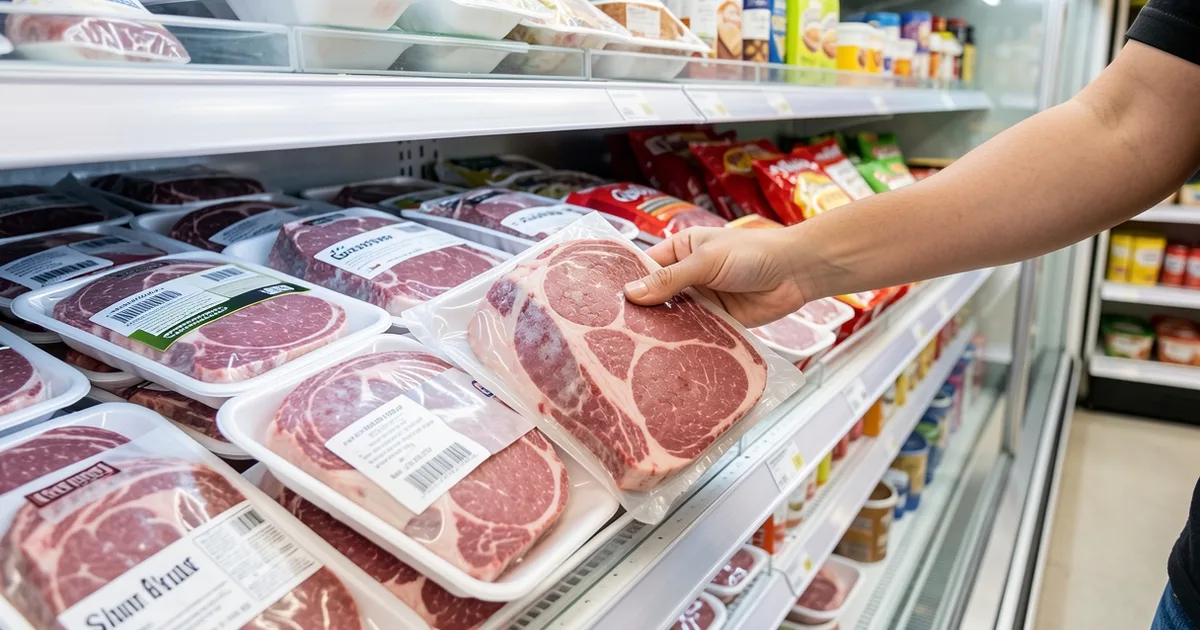
A halal certifier’s standing in an importing country can affect whether a particular shipment can enter that market. New Zealand’s Ministry for Primary Industries (MPI) lists guidance specifically titled “United Arab Emirates: Halal Certification NZIDT”, issued on 12 October 2026, on its UAE export requirements page.
NZIDT is the New Zealand Islamic Development Trust, a halal certification body. We could verify that MPI lists the notice, but not the notice’s contents or the present status of affected shipments. Exporters should check the latest MPI guidance for their own products and establishments. The notice alone does not establish that all New Zealand meat exports to the UAE stopped, or that any meat was found non-halal.
At a glance
| Question | Answer |
|---|---|
| What official guidance exists? | MPI lists UAE guidance F35/26 concerning halal certification and NZIDT |
| What date is shown? | 12 October 2026 |
| Have all NZ meat exports to the UAE stopped? | That is not established by the notice listing alone |
| Does a registration issue prove the meat is non-halal? | No. It concerns a certifier or market requirement, not a finding about a particular product |
| Where should exporters start? | MPI’s current UAE guidance and the relevant UAE authority |
Why a certifier’s standing matters
A halal certificate is issued for a defined scope. For an international shipment, exporters must also satisfy the destination’s applicable requirements. Those checks can include the certification body, the type of product and the establishment. A certificate that serves one market does not automatically establish eligibility in another.
MPI describes New Zealand’s halal assurance system for exports. Under that framework, MPI approves halal certification bodies to assess and certify halal programmes. The destination market’s acceptance is a separate question, so exporters should check both sides.
NZ approval and UAE acceptance: different questions
| Check | What to look for |
|---|---|
| New Zealand approval | Whether the body is approved under MPI’s export assurance framework |
| UAE market requirements | Whether the destination accepts the body and the relevant certificate for the product |
| Establishment and product | Whether the plant, product category and shipment fall within the applicable scope |
| Current documents | The latest guidance, certificate dates and any market-specific conditions |
MPI provides a list of approved bodies through its registers and lists. A body appearing on a New Zealand list should not be treated as proof of its current acceptance for every market or product.
What exporters should do
- Read MPI’s current UAE market requirements and the latest guidance that applies to the shipment.
- Confirm the certifier’s destination-market standing and scope with the relevant authorities and the certifier.
- Check the production establishment and exact product against the required documentation.
- Ask MPI or the relevant UAE authority about any transition arrangements before relying on older certificates or guidance.
- Keep the shipment’s documents together so the importer can check the certification and establishment details.
The public listing of F35/26 does not tell us when any disruption may end, what alternative arrangements apply to a particular exporter, or whether shoppers will see shortages or price changes. Those claims need current, specific evidence.
What shoppers can check
If you buy New Zealand meat in the UAE, ask the retailer or importer which body certified the product and whether it can provide the relevant documentation. Check that the certificate covers the product and is current. A missing item on a shelf could have many causes; its absence alone does not establish a certification finding.
For processed meat products, ingredient information can answer different questions from the halal certificate. Our E-codes database and ingredient scanner can help you identify ingredients that warrant follow-up, but cannot verify how an animal was slaughtered or whether a certificate is valid.
Certification and religious guidance
An administrative decision about a body’s recognition is not by itself a ruling about the permissibility of every product it has certified. Consumers who have questions about slaughter practices or standards can ask the certifier and consult a qualified scholar.
For the official export guidance, start with MPI’s UAE requirements page. Our halal certification hub explains how certification and verification fit together.
Halal Certification Hub
Need the bigger picture, not just this one article?
Browse the full halal certification hub for step-by-step guidance on costs, certification bodies, logos, audits, labelling, and international trade requirements.
Visit the certification hubIngredients change. Be first to know.
Brands reformulate without warning. We track every E-code update and halal certification — one short weekly email.
Partner with HalalCodeCheck
Reach halal-conscious buyers and food businesses at the moment they decide
Our audience uses HalalCodeCheck to verify ingredients, compare certification bodies, and choose products with confidence. That means you can reach both high-intent shoppers and serious food-business decision-makers across the UK, US, Canada, Australia, and Europe.
- Featured product & brand placements
- Certification guide sponsorships & category features
- Search, tool, and directory visibility
Sponsored placements and partnerships by arrangement
Related Articles
 Halal Certification
Indonesia Halal Certification: 2028 Deadline for Micro and Small Businesses
Indonesia’s halal agency describes a 2028 phase-in for specified products from micro and small businesses. Here is what shoppers should know.
 Halal Certification
BARMM Halal Accreditation: How It Relates to JAKIM and MUIS
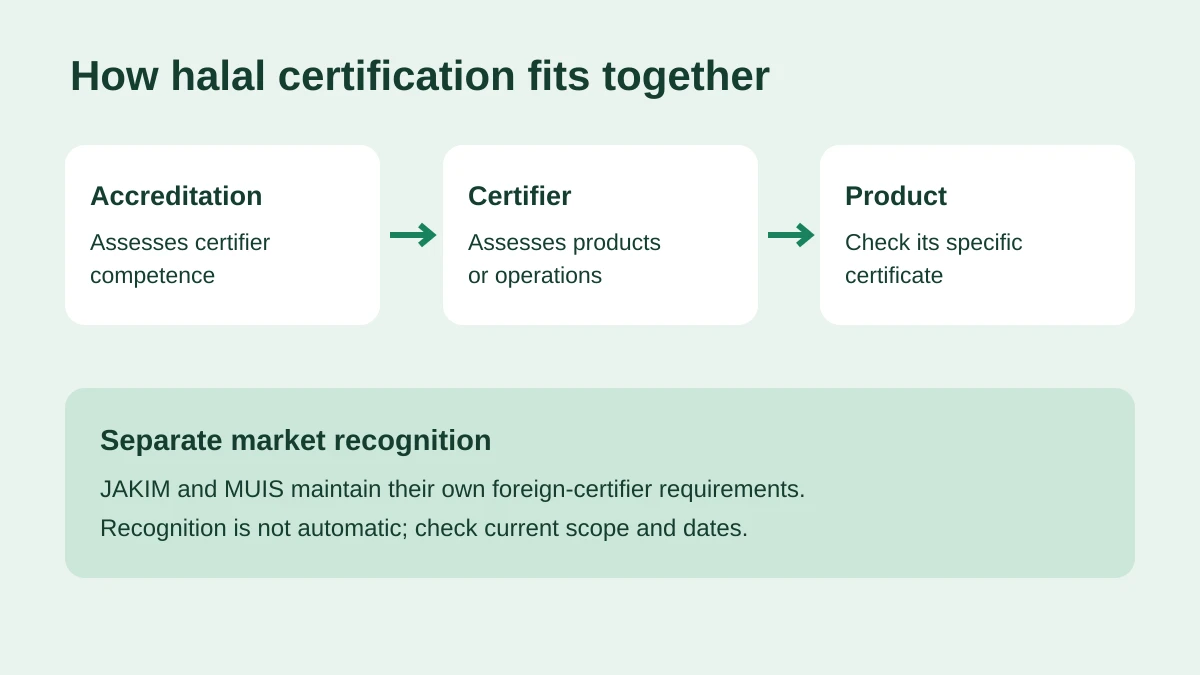
Learn what the Bangsamoro halal framework assesses and how to check foreign certifier recognition in Malaysia and Singapore.
 Halal Certification
Lotteria Singapore: How to Check Halal Certification
Check the current Muis certification status of Lotteria outlets in Singapore before visiting.