
Indonesia has adjusted the timetable for mandatory halal certification. For food, drink, slaughter products and slaughter services from micro and small businesses, BPJPH says the phase-in now runs through 17 October 2028. The rule is specific to the categories and business sizes listed in the regulation: it is not a universal extension for all products.
The change also affects imported products. According to BPJPH’s explanation of Government Regulation No. 40 of 2026, the obligation for food, drink, slaughter products and slaughter services originating abroad begins on 18 October 2028.
At a glance
| Question | Answer |
|---|---|
| What changed for micro and small businesses? | The phase-in for specified food, drink and slaughter categories runs through 17 October 2028 |
| Does the same date cover every business? | No. Medium and large businesses have a different schedule |
| What about imported food and drink? | BPJPH says the relevant obligation begins 18 October 2028 |
| Has mandatory certification been repealed? | No. BPJPH says the underlying obligation remains |
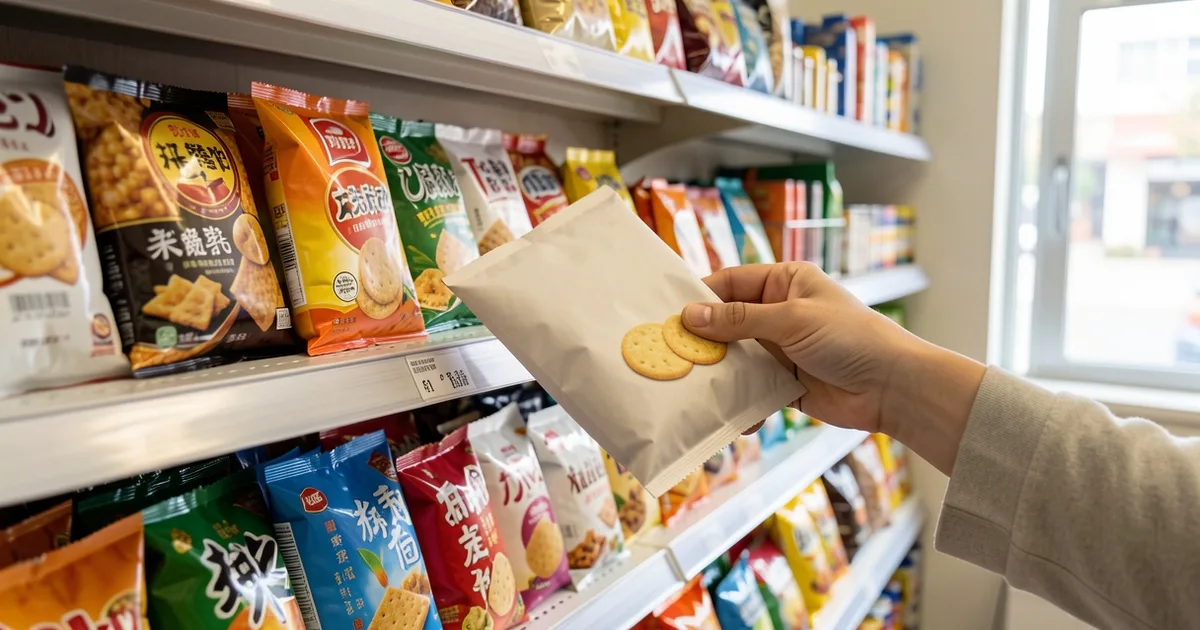
| Does a missing logo prove a snack is haram or uncertified? | No. Its certification status is not evident from the package |
The dates and categories
BPJPH distinguishes the final day of a phase-in from the day the obligation begins. Its explanation of the revised regulation gives these categories:
| Products and services | Schedule in BPJPH’s explanation |
|---|---|
| Food, drink, slaughter products and slaughter services from micro and small businesses | Phase-in through 17 October 2028 |
| Food, drink, slaughter products and slaughter services from medium and large businesses | Obligation applies from 18 October 2024 |
| Food, drink, slaughter products and slaughter services originating abroad | Obligation starts 18 October 2028 |
| Specified other categories, including cosmetics and supplements | Phase-in through 17 October 2028 |
Other medicines and medical devices have different schedules. The precise category matters, and producers should consult the regulation and BPJPH for their own circumstances.
Why the distinction matters
A small local snack maker and an overseas exporter do not necessarily enter the framework through the same route. Business size, product type and origin are relevant to the dates BPJPH describes. For example, the deadline for specified micro and small business food products does not imply a general extension for a medium-sized domestic food manufacturer.
BPJPH says the adjustment takes account of readiness across the halal ecosystem and feedback from businesses and industry. The agency also says the core certification obligation remains in place. An extension gives covered businesses more preparation time; it does not settle whether a particular product is certified today.
What an Indonesian snack label can tell you
A halal mark can direct you to the body behind a certification claim, but check that the certificate covers the actual product and is current. If there is no mark, the pack alone does not establish whether a certificate exists, whether the product falls within a particular legal category, or whether its ingredients meet your requirements.
For an Indonesian product purchased outside Indonesia, local import and labelling rules may also differ. An Indonesian deadline does not automatically determine what a retailer in Malaysia, Singapore, the UK or another market requires.
How to check a packet
- Look for a halal mark and identify the certifier. Ask the manufacturer if the label does not make the issuer clear.
- Ask the certifier or manufacturer whether a current certificate covers the product and production site.
- Read the full ingredient list. Our E-codes database can help explain additives, and the ingredient scanner can flag questions for follow-up.
- Ask about the source of an ambiguous ingredient or processing aid. A list alone may not disclose its origin.
- If you need a personal religious ruling, consult a qualified scholar or a certifier whose standards you trust.
What businesses should check
Identify the product category and business size first, then review the applicable deadline and the official requirements for certification. Importers should also check current rules on foreign certification and registration. Dates can change through later regulations, and this shopper’s guide is not a substitute for advice on an individual shipment.
The official source for the timetable above is BPJPH’s explanation of PP 40/2026. For more background on certification, see our halal certification hub.
Halal Certification Hub
Need the bigger picture, not just this one article?
Browse the full halal certification hub for step-by-step guidance on costs, certification bodies, logos, audits, labelling, and international trade requirements.
Visit the certification hubIngredients change. Be first to know.
Brands reformulate without warning. We track every E-code update and halal certification — one short weekly email.
Partner with HalalCodeCheck
Reach halal-conscious buyers and food businesses at the moment they decide
Our audience uses HalalCodeCheck to verify ingredients, compare certification bodies, and choose products with confidence. That means you can reach both high-intent shoppers and serious food-business decision-makers across the UK, US, Canada, Australia, and Europe.
- Featured product & brand placements
- Certification guide sponsorships & category features
- Search, tool, and directory visibility
Sponsored placements and partnerships by arrangement
Related Articles
 Halal Certification
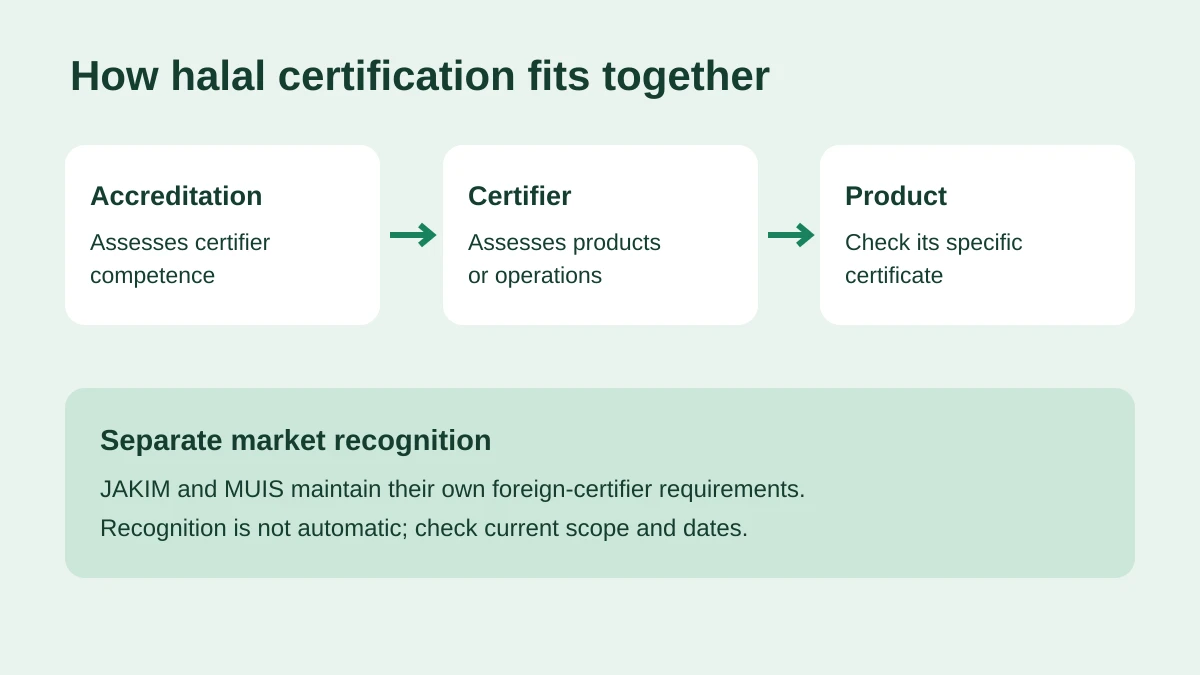
BARMM Halal Accreditation: How It Relates to JAKIM and MUIS
Learn what the Bangsamoro halal framework assesses and how to check foreign certifier recognition in Malaysia and Singapore.
 Halal Certification
Lotteria Singapore: How to Check Halal Certification
Check the current Muis certification status of Lotteria outlets in Singapore before visiting.
 Halal Certification
US Halal Label Rules: What FDA and USDA Actually Require
The US has no federal halal definition or certification. A halal label is a private claim that must be truthful. Here is what FDA and USDA rules mean for you.