
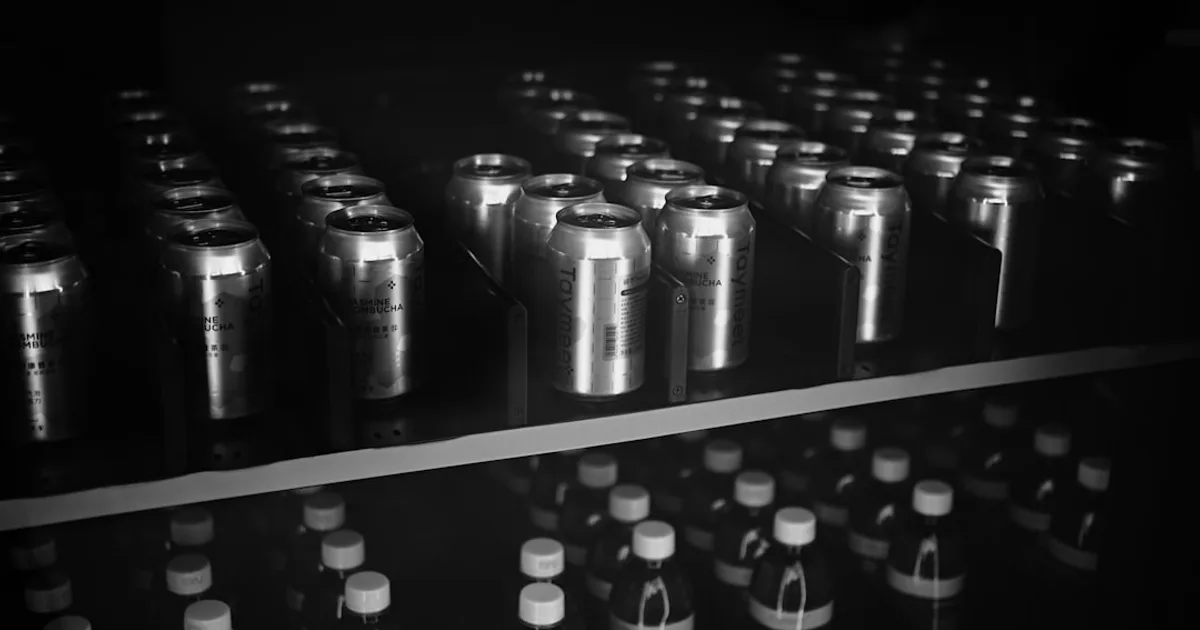
Kombucha has moved from health food stores to mainstream supermarket shelves, and with it has come a genuine question for Muslim consumers: is a fermented drink with measurable alcohol content acceptable?
The answer is nuanced — and depends on the specific product, its alcohol content, and which scholarly framework you follow.
What Is Kombucha?
Kombucha is fermented tea made by adding a SCOBY (Symbiotic Culture of Bacteria and Yeast) to sweetened tea and allowing it to ferment for 1–4 weeks. The fermentation process:
- Yeast in the SCOBY consumes sugars and produces ethanol (alcohol) and CO₂
- Bacteria convert ethanol to organic acids (acetic acid, etc.)
- The result is a slightly fizzy, acidic drink with residual alcohol
The alcohol content in the final product depends on fermentation time, temperature, and whether secondary fermentation has occurred.
Alcohol Content by Product Type
| Product Type | Typical ABV | Examples |
|---|---|---|
| Commercial soft kombucha | 0.5-1.5% | GT’s Synergy, Health-Ade |
| ”Non-alcoholic” commercial | <0.5% | Some GT’s varieties, Remedy Kombucha |
| Home-brewed | 1-3% | Variable |
| Hard kombucha | 3-8% | JuneShine, Flying Embers |
GT’s Kombucha note: GT’s produces multiple lines. The “Synergy” range is typically 0.5-1.7% ABV depending on flavour and lot. The “Classic” and “Enlightened” ranges vary. GT’s explicitly sells some products as “non-alcoholic” where ABV is below 0.5%. Check the specific bottle.
Remedy Kombucha (UK/Australia): Uses a longer fermentation process designed to reduce alcohol to below 0.5% — the brand specifically markets to non-drinkers including Muslims. Generally accepted.
The Scholarly Framework
The 0.5% Threshold
Many contemporary Muslim scholars, particularly in Hanafi-influenced countries, apply a pragmatic threshold for naturally fermented products: if a product is below 0.5% ABV and is not classified or consumed as an intoxicating drink, it may be permissible.
This position is supported by the principle that many foods undergo natural fermentation (vinegar, bread, kefir, yoghurt) and produce trace amounts of alcohol as a byproduct of microbial activity. The key test is: can this drink intoxicate if consumed in normal amounts? For sub-0.5% kombucha, the answer is no.
The Stricter View (Hanbali/Conservative Hanafi)
The stricter position holds that any amount of alcohol — regardless of source — makes a drink impermissible if it comes from an intentional fermentation process. Kombucha’s alcohol is produced by deliberate fermentation, which distinguishes it from trace alcohol in, say, overripe fruit.
This is the position of some UK scholars and Saudi scholars. Under this view, all kombucha is Mushbooh at minimum, and most would advise avoiding it.
JAKIM Position (Malaysia)
Malaysia’s JAKIM has ruled that kombucha with alcohol content exceeding 0.5% is not halal. Products under 0.5% are in a grey area and require case-by-case assessment. This aligns with the moderate mainstream position.
Practical Consumer Guide
| Product | ABV | Recommended Action |
|---|---|---|
| GT’s Enlightened Synergy | 0.5-1.5% | Check label; avoid if strict |
| GT’s Classic (non-alcoholic line) | <0.5% | Generally accepted by moderate scholars |
| Remedy Kombucha | <0.5% | Widely accepted |
| Hard Kombucha (JuneShine, etc.) | 3-8% | Not halal — avoid |
| Home-brewed | Variable | Caution — test ABV if possible |
How We Reached This Verdict
Our assessment is based on peer-reviewed fermentation science literature on kombucha alcohol content, JAKIM’s published guidance on fermented beverages, AMJA and UK Darul Uloom responses on naturally fermented foods, and alcohol content declarations from major kombucha brands.
Madhab Note
Hanafi (mainstream): Products naturally fermented below 0.5% ABV, which are not intoxicating in any realistic quantity, are permissible under the principle that the prohibitions target intoxication — not trace fermentation byproducts.
Hanbali: More restrictive — fermented drinks with intentional yeast activity are viewed with greater suspicion regardless of final ABV. Avoidance is recommended.
Maliki and Shafi’i: Similar to the moderate Hanafi position — the intoxicating nature of the final product is the key test.
Our recommendation: Choose brands that explicitly test and publish ABV below 0.5% (Remedy Kombucha is transparent about this). Avoid hard kombucha entirely. If you follow the strict position, avoid kombucha altogether.
Check the halal status of any beverage ingredient with HalalCodeCheck.
Browse our E-code database for food and drink additives.
Verify ingredients on any kombucha label with your phone camera.
Ingredients change. Be first to know.
Brands reformulate without warning. We track every E-code update and halal certification — one short weekly email.
Related Articles
 Shopping Guides
 Is Vidal Candy Halal? Spanish Sweets Checked for Gelatin & E-Codes
Vidal sweets are Mushbooh to Haram — most gummy products contain pork gelatine. Some products use plant-based alternatives — check the label for each variant.
 Shopping Guides
 Is Protein Powder Halal? UK Brands Compared (Whey, Vegan, Casein)
Whey protein is Mushbooh without halal certification — it's dairy-derived but processing aids may be animal-based. Vegan protein is generally halal. Full UK brand guide.
 Shopping Guides
 Is Pre-Workout Halal? Caffeine, Beta-Alanine & Proprietary Blends
Most pre-workout powders are halal in formula but lack halal certification. Key concerns: undisclosed flavoring sources, gelatine in capsule form, and alcohol-based extracts.