
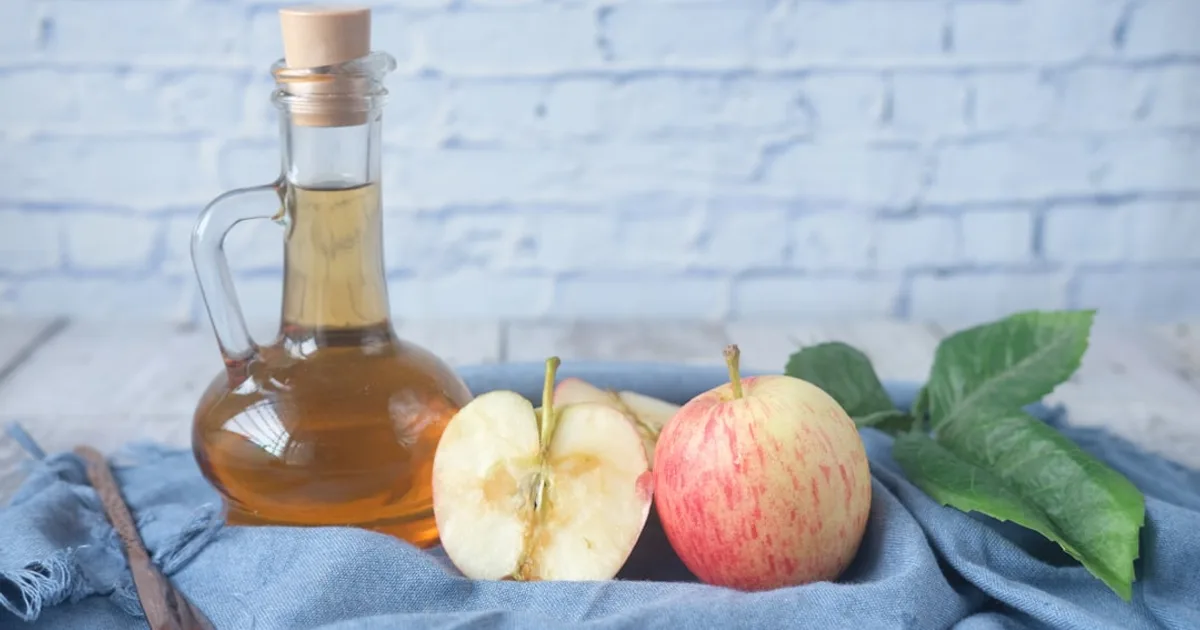
Bragg Apple Cider Vinegar is one of the few genuinely halal-positive entries in the health supplement space — the product is simply fermented apple vinegar, the fermentation is complete, and the result is acetic acid in water. No haram inputs, no animal derivatives, no ambiguity.
The common concern — “but it starts as alcohol, doesn’t it?” — has a clear answer in Islamic jurisprudence. This is the full guide.
What Is Bragg ACV?
Bragg is a US health food brand founded in 1912. Its apple cider vinegar is produced by:
- Crushing organic apples to produce apple juice (apple cider)
- Fermenting the apple cider with yeast — producing hard apple cider with approximately 6-8% alcohol
- Fermenting the hard cider a second time with Acetobacter bacteria — converting the alcohol to acetic acid (vinegar)
The final product, Bragg ACV, contains approximately 5% acetic acid and under 0.5% alcohol (trace residual from incomplete conversion). The key question is: does this transformation process — from fruit juice to vinegar via an alcoholic intermediate — produce a halal end product?
The Istihāla (Transformation) Principle
Islamic food law has a well-established principle called istihāla — the complete transformation of a substance into something with a different nature and ruling. The classic example, cited by scholars across all four madhabs, is exactly this: alcohol converting to vinegar.
The transformation of khamr (wine/intoxicating alcohol) into vinegar has been addressed in the fiqh literature:
- Hanafi madhhab: Vinegar produced spontaneously from grape wine is halal. This is the position of Imam al-Sarakhsi and is the mainstream Hanafi position, cited by Darul Iftaa Birmingham and Darul Uloom Deoband.
- Maliki madhhab: Permits vinegar from wine; the transformation is complete and produces a permissible substance.
- Shafi’i madhhab: Permits fruit vinegar (apple, malt, date). There is a scholarly discussion on grape wine specifically, but fruit vinegars including ACV are broadly permitted.
- Hanbali madhhab: Permits vinegar derived from naturally occurring fermentation.
The case of Bragg ACV is actually simpler than grape wine vinegar — the raw material is apple cider, which has a lighter alcohol content and transforms completely into vinegar. There is no scholarly controversy around apple cider vinegar specifically.
Bragg ACV Ingredient Analysis
Bragg Organic Apple Cider Vinegar (Unfiltered, With the Mother) contains:
- Organic apple cider vinegar (from crushed organic apples)
- The “mother” — naturally occurring acetic acid bacteria culture and cellulose fibres
That is the complete ingredient list. Two ingredients. Both from apples and bacteria.
The “mother” — the cloudy strands and sediment visible when you shake the bottle — is not an animal product. It is a colony of Acetobacter bacteria embedded in a cellulose matrix. It is analogous to a probiotic culture or a sourdough starter. There is nothing concerning about it from a halal perspective.
Verdict: Halal
Bragg Product Range — Halal Status
| Product | Key Concern | Verdict |
|---|---|---|
| Bragg Organic ACV (liquid) | None | Halal |
| Bragg Organic ACV with Honey | Honey: halal by consensus | Halal |
| Bragg ACV Drinks (Apple Ginger, etc.) | Apple juice, ACV, no haram additives | Halal |
| Bragg Liquid Aminos | Soy-based, no animal ingredients | Halal |
| Bragg Coconut Aminos | Coconut sap-based | Halal |
| Bragg ACV Capsules | Check capsule shell material | Mushbooh — verify HPMC vs gelatine capsule |
| Bragg ACV Gummies | Check gelatine vs pectin gelling agent | Mushbooh — verify gelling agent source |
| Bragg Nutritional Yeast | Yeast-derived, no animal ingredients | Halal |
The Supplement Capsule Issue
The Mushbooh concern for Bragg’s capsule and gummy products is not the active ingredient (ACV) — it is the delivery format. Capsule-format supplements routinely use two types of capsule shell:
- Gelatine capsules — derived from bovine or porcine collagen. Without halal certification, the source is unknown → Mushbooh to Haram.
- Vegetable capsules (HPMC) — derived from hydroxypropyl methylcellulose, a plant polymer → Halal.
On Bragg ACV capsule packaging, check the ingredient list for “capsule shell” or “capsule (HPMC)” vs “capsule (gelatine).” If it says HPMC or vegetable capsule, the product is halal. If it says gelatine without source specification, it is Mushbooh.
For ACV gummies, the gelling agent is either gelatine (Mushbooh/Haram) or pectin (halal) — check the label.
Why Bragg ACV Is a High-Value Halal Find
For health-conscious Muslims, Bragg ACV is one of the cleanest products on the health supplement shelf — it is genuinely halal, well-documented in Islamic jurisprudence, and widely available. The only caution is for supplement-format Bragg products where the delivery mechanism (capsule shell or gummy binder) introduces uncertainty.
For the liquid ACV — buy with confidence.
How we reached this verdict
- Bragg ACV ingredient list: confirmed two-ingredient formulation (organic apple cider vinegar, the mother)
- Istihāla scholarship: Darul Iftaa Birmingham on fruit vinegar; IslamQA on apple cider vinegar specifically; Darul Uloom Deoband; Wifaqul Ulama; Dar al-Ifta al-Misriyyah
- Fermentation chemistry: acetic acid fermentation pathway reviewed against halal fermentation principles
- Supplement capsule sourcing: HPMC vs gelatine capsule composition confirmed
Madhab note
- Apple cider vinegar (liquid) — Halal across all four madhabs. The transformation of alcohol to acetic acid is complete and produces a permissible substance. This is one of the clearest-cut halal verdicts in food science.
- Fruit vinegars generally — Halal across all four madhabs without controversy.
- Gelatine capsule shells (undisclosed source) — Mushbooh. All four madhabs require source verification for gelatine.
- Pectin-based gummies — Halal across all four madhabs.
Check any ingredient or E-code in the E-codes database.
Scan a full ingredient list instantly with the ingredient scanner.
Related: Are Natural Flavours Halal? — the supplement industry’s most ambiguous ingredient.
Ingredients change. Be first to know.
Brands reformulate without warning. We track every E-code update and halal certification — one short weekly email.
Related Articles
 Shopping Guides
 Halal Shopping at Coles: Aisle-by-Aisle Australia Guide (2026)
Coles stocks halal-certified meat from accredited abattoirs but own-brand packaged goods require E-code checking — here's what to look for in each aisle.
 Shopping Guides
 Halal Shopping at Carrefour: France, UAE & Turkey Guide (2026)
Carrefour's halal status varies by country — UAE stores stock certified halal products throughout, while French stores require label-by-label checking.
 Shopping Guides
 Halal Food in Malaysia: Beyond JAKIM — Full Supermarket & Brand Guide
JAKIM certification is Malaysia's gold standard but not every product on shelf is JAKIM-certified — here's how to shop confidently in Mydin, Giant, and Aeon.