
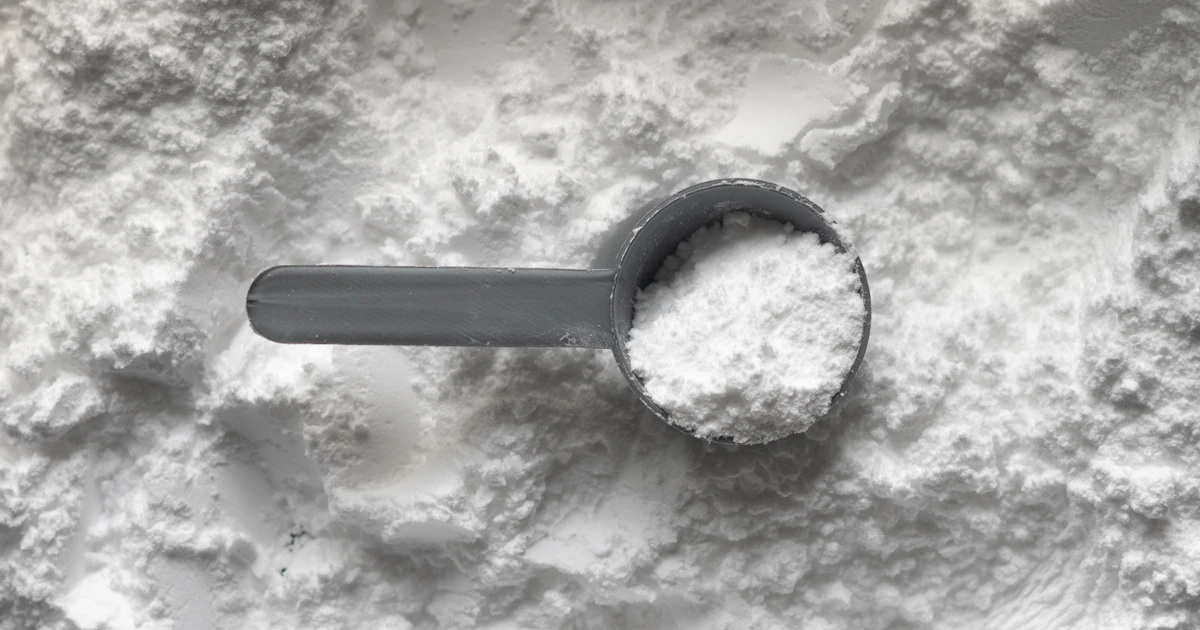
For Muslim women managing PCOS, inositol has become one of the most-discussed supplements in the community — and with good reason. Clinical trials show myo-inositol significantly improves insulin sensitivity, menstrual regularity, and ovarian function. The halal question deserves a clear, respectful answer.
Inositol itself is halal. The active ingredient is plant-derived in virtually every commercial product. The verification you need to do is about packaging and excipients — not the inositol itself.
What Is Inositol?
Inositol is a carbocyclic sugar that plays a critical role in cellular signalling, particularly in insulin pathways. It was historically classified as vitamin B8, though it is now understood that the body can synthesise sufficient quantities under normal conditions.
There are 9 stereoisomers of inositol. The two used therapeutically are:
- Myo-inositol — the most abundant form; used for PCOS, anxiety, OCD, and metabolic support
- D-chiro-inositol (DCI) — used alongside myo-inositol for PCOS; involved in insulin signal transduction
The recommended PCOS protocol from Italian research (Unfer, Nestler et al.) is 40:1 myo-inositol to DCI — mirroring the physiological ratio.
How Is Inositol Manufactured?
Myo-Inositol: Corn or Rice Bran Extraction
Commercial myo-inositol is produced from phytic acid (inositol hexaphosphate, IP6), which is abundant in:
- Corn bran (the primary commercial source)
- Rice bran
- Wheat bran
The process: phytic acid is extracted from the bran, hydrolysed (phosphate groups removed) to yield free inositol, then purified and crystallised.
No animal involvement at any stage. This is a purely plant-based process.
D-Chiro-Inositol: Enzymatic Conversion or Carob/Soy Extraction
DCI is manufactured via:
- Enzymatic conversion of myo-inositol (using microbial enzymes — halal)
- Extraction from carob pods (Ceratonia siliqua) — fully plant-based
- Soy-derived processes — plant-based
All commercial DCI production routes are plant-based or microbial. Halal.
The Actual Concern: Capsule Format
The inositol molecule is halal. The risk comes from what it is packaged in.
Standard Gelatin Capsules — Check Carefully
Many inositol supplements, particularly from US brands, use standard hard gelatin capsules. These are predominantly porcine (pork-derived) gelatin.
On the label, “gelatin capsule” without species specification = assume porcine.
HPMC (Vegetable) Capsules — Halal
Look for:
- “Vegetable capsule”
- “HPMC”
- “Plant-based capsule”
These are cellulose-derived and fully halal.
Powder Form — Safest
Myo-inositol powder with no capsule is the cleanest option. It mixes easily with water (tasteless or very mildly sweet). Many brands sell 250g to 500g tubs of pure myo-inositol powder.
Excipients to Check
Even in HPMC capsule or tablet form, check for:
- Magnesium stearate — can be plant or animal-derived; plant-source is common but not always stated
- Stearic acid — same concern
- Gelatin as a filler or coating (rare but possible)
Products labelled “vegan” address all of these concerns at once.
Brand Comparison Table
| Brand | Product | Format | Capsule Type | Vegan? | Verdict |
|---|---|---|---|---|---|
| Wholesome Story | Myo-Inositol | Powder | No capsule | Yes | Halal |
| Fairhaven Health | Ovasitol (powder) | Powder | No capsule | Not stated | Halal (no capsule) |
| Theralogix | OvaScience | Capsule | HPMC | Yes | Halal |
| Inofolic Alpha | Myo + DCI | Sachet | No capsule | Not stated | Halal (no capsule) |
| Nature’s Best | Myo-Inositol | Capsule | Gelatin | No | Mushbooh |
| NOW Foods | Inositol | Powder/Capsule | HPMC available | Check variant | Halal (HPMC/powder) |
| Jarrow Formulas | Inositol | Capsule | Gelatin | No | Mushbooh |
Top recommendation: Wholesome Story myo-inositol powder or Ovasitol sachets — both powder form, no capsule concern, widely available.
Inositol for Mental Health (OCD, Anxiety, Panic)
Beyond PCOS, inositol is used for anxiety, panic disorder, and OCD — the research base here is smaller but significant. The halal status of inositol for mental health applications is identical: the active ingredient is halal; verify format and excipients.
For sisters managing both PCOS and anxiety (these conditions frequently co-occur), inositol powder is the practical single supplement addressing both applications.
A Note on Folate/Folic Acid Combinations
Many PCOS inositol products are combined with folic acid or methylfolate. These are synthetic B-vitamins — fully halal. The combination does not introduce any new halal concerns.
How We Reached This Verdict
- Manufacturer technical documentation: Corn bran phytic acid extraction confirmed as the standard commercial route for myo-inositol (AlzChem, Cayman Chemical, Sigma-Aldrich product sheets)
- Halal certification bodies: HMC, HFA — plant-derived inositol not classified in haram/mushbooh ingredient lists; capsule type is the practical concern
- Clinical literature: Unfer et al. (2016), Nordio & Proietti (2012) — confirming plant-derived commercial sources in cited brands
- Scholarly sources: Darul Iftaa Birmingham on plant-derived supplements — permissible; capsule concerns addressed separately
Madhab Note
The inositol molecule raises no concern across any of the four Sunni madhabs — it is plant-derived and has no intoxicating properties.
- Hanafi: Plant-derived supplement = permissible. Porcine gelatin capsule = haram; HPMC capsule = halal.
- Maliki, Shafi’i, Hanbali: Same position on plant-derived active ingredients and porcine gelatin.
The only madhab-relevant question is the capsule shell. Choose powder or HPMC capsule and this concern is completely resolved.
Check our ingredient scanner to verify the full ingredient list of any inositol product. See the E-codes database for E441 (gelatin) — the code most likely to appear as an excipient. For the broader supplement capsule question, read are gelatin capsules in medicines halal.
Ingredients change. Be first to know.
Brands reformulate without warning. We track every E-code update and halal certification — one short weekly email.
Related Articles
 Shopping Guides
 Is Protein Powder Halal? UK Brands Compared (Whey, Vegan, Casein)
Whey protein is Mushbooh without halal certification — it's dairy-derived but processing aids may be animal-based. Vegan protein is generally halal. Full UK brand guide.
 Shopping Guides
 Is Pre-Workout Halal? Caffeine, Beta-Alanine & Proprietary Blends
Most pre-workout powders are halal in formula but lack halal certification. Key concerns: undisclosed flavoring sources, gelatine in capsule form, and alcohol-based extracts.
 Shopping Guides
 Is L-Carnitine Halal? Meat-Derived Supplement Checked
L-Carnitine halal status depends on production method — synthetic L-Carnitine is halal, but bacterial fermentation and meat-extracted variants require verification.