
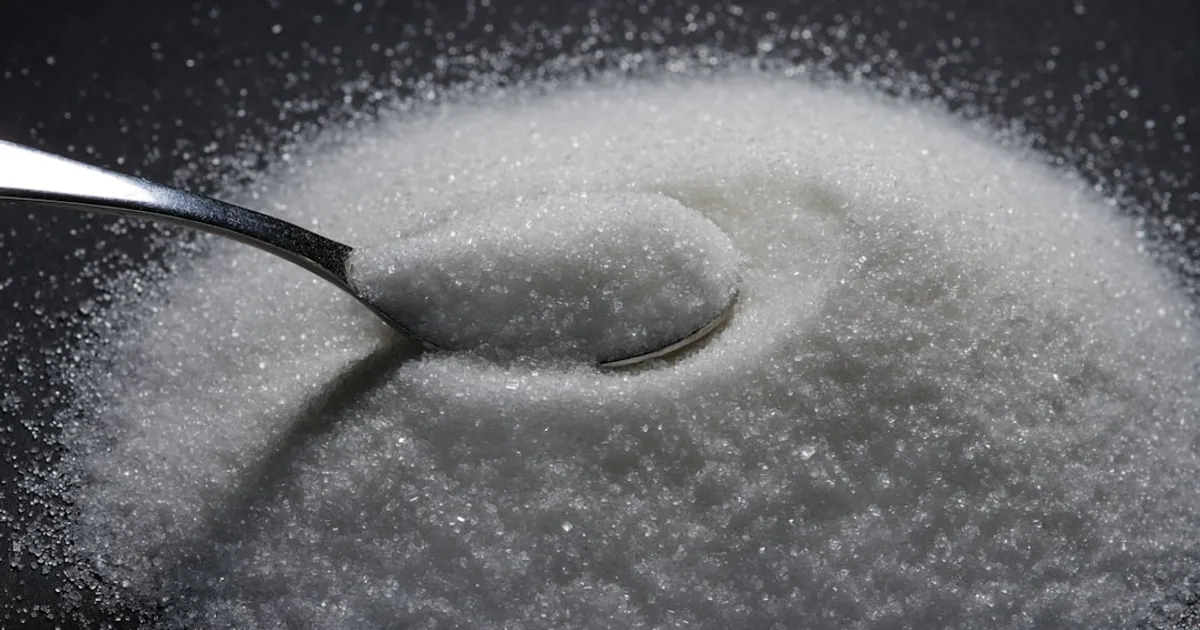
Acesulfame K is one of the most widely used sweeteners in the food industry and one of the least discussed. It appears in energy drinks, diet sodas, protein bars, and sugar-free snacks — often alongside aspartame or sucralose — without attracting much attention. For halal consumers, the attention can be brief: acesulfame K is halal, full stop. But understanding why, and knowing what to look for on labels, helps you navigate sugar-free products confidently.
What Acesulfame K Is
Acesulfame potassium (also written as acesulfame-K, ace-K, or labelled E950) is a synthetic, calorie-free sweetener approximately 200 times sweeter than sucrose. It was discovered by German chemist Karl Clauss in 1967 and has been approved for use in the EU, UK, USA, and most global markets.
The “K” in the name refers to potassium — acesulfame K is the potassium salt of 6-methyl-1,2,3-oxathiazine-4(3H)-one 2,2-dioxide. Despite the complex chemistry, the key practical fact is simple: acesulfame K is entirely synthetic, manufactured through a series of organic chemical reactions involving acetoacetic acid and sulfamic acid.
No animal materials. No fermentation processes using animal-derived growth media. No alcohol. No cross-contamination concerns at production level.
The Halal Analysis
| Factor | Detail | Ruling |
|---|---|---|
| Production method | Chemical synthesis | Halal |
| Raw materials | Acetoacetic acid, sulfamic acid (mineral/chemical origin) | Halal |
| Processing aids | No animal-derived processing aids | Halal |
| Carrier in food | Water, other synthetic ingredients | Halal |
| Halal certification | Certified by IFANCA, and other bodies | Confirmed Halal |
The analysis is clean. Unlike glycerol (which may be animal-derived) or E160a (where a gelatine carrier may be used), acesulfame K has no uncertain origin. It is a defined synthetic molecule produced through well-documented chemistry.
Acesulfame K in the Energy Drink Aisle
Energy drinks are probably the product category where halal consumers encounter acesulfame K most frequently. The standard Red Bull Sugar Free, Monster Energy Ultra, and their variants all use acesulfame K — typically alongside sucralose (E955) or aspartame (E951).
From a sweetener perspective, these are halal. The broader halal status of energy drinks as a category depends on:
- Whether they contain alcohol (standard energy drinks do not — they are carbonated soft drinks, not malt beverages)
- Other additives (taurine, L-carnitine, B vitamins — all halal)
- Manufacturing facility cross-contamination (not typically a concern for major brand energy drink production)
The short version: Red Bull Sugar Free, Monster Zero, Relentless Zero, Reign, and similar products are halal from an ingredient perspective. The acesulfame K they contain is not the issue.
The Sweetener Blend Strategy
Manufacturers use acesulfame K because of how it performs alongside other sweeteners. Alone, at concentrations needed to achieve noticeable sweetness, it can produce a slightly metallic or bitter aftertaste — a known limitation shared with many high-intensity sweeteners.
The solution is blending:
Acesulfame K + Aspartame — the most common pairing in carbonated drinks. Acesulfame K provides the initial, fast sweetness; aspartame provides the lingering, more sugar-like finish. Together they use less of each, reducing aftertaste from both.
Acesulfame K + Sucralose — common in products where heat stability matters (baking, hot beverages). Sucralose is thermally stable; acesulfame K is also heat-stable. Both are halal.
Acesulfame K + Stevia (E960) — increasingly common in products marketed as “natural” sweeteners. Stevia is plant-derived and halal; acesulfame K is synthetic and halal.
All these blends are halal from a sweetener component perspective.
What E950 Looks Like on Labels
Acesulfame K appears on UK food labels as:
- E950
- Acesulfame K
- Acesulfame potassium
- Ace-K
- Acesulfame-K
It is rarely highlighted prominently — you will find it in the ingredients list, often near the end where additives appear, or in a sub-section of a longer sweetener declaration. Products using multiple sweeteners sometimes declare them as: “sweeteners (acesulfame K, aspartame)” or “sweeteners (E950, E951).”
How We Reached This Verdict: Halal
- Acesulfame K is produced entirely by chemical synthesis
- The raw materials (acetoacetic acid, sulfamic acid) are mineral/chemical origin, not animal-derived
- No animal-derived processing aids or growth media are used
- No fermentation processes that could raise contamination questions
- Certified halal by IFANCA (one of the most stringent halal certification bodies globally)
- Confirmed halal by HMC, Jamiatul Ulama, and equivalent bodies in Malaysia (JAKIM) and Indonesia (MUI)
- No scholarly dissent on this classification — this is genuinely unambiguous
Madhab Note
Acesulfame K has no recorded scholarly dispute across Hanafi, Shafi’i, Maliki, or Hanbali schools. The synthetic production process, which involves no animal inputs or alcohol, places it clearly in the permissible category under all jurisprudential frameworks that consider synthetic food ingredients. This is one of the E-codes where the halal ruling is clear and consistent.
Comparing Common Sweeteners at a Glance
| Sweetener | E-Code | Halal Status | Notes |
|---|---|---|---|
| Acesulfame K | E950 | Halal | Fully synthetic |
| Aspartame | E951 | Halal | Check capsule carrier in supplements |
| Sucralose | E955 | Halal | Fully synthetic |
| Saccharin | E954 | Halal | Fully synthetic |
| Stevia (steviol glycosides) | E960 | Halal | Plant-derived |
| Xylitol | E967 | Halal | Can be plant or synthetic |
| Sorbitol | E420 | Mushbooh | Can be animal-derived |
Check any E-code instantly — search our E-codes database for halal rulings on all 370+ approved EU additives.
Scan a product — our ingredient scanner reads labels from photos and flags every E-code that needs checking.
Related reading — E951 Aspartame: Is It Halal? — acesulfame K’s most common blending partner.
Ingredients change. Be first to know.
Brands reformulate without warning. We track every E-code update and halal certification — one short weekly email.
Related Articles
 E-Code Guides
 E951 Aspartame: Is It Halal? Diet Coke, Sugar-Free & More (2026)
E951 aspartame is halal — it's a synthetic amino acid sweetener with no animal derivatives. But check the capsule carrier in supplement form.
 E-Code Guides
 Is Propylene Glycol (E1520) Halal? The Flavour Solvent Explained
Propylene glycol (E1520) is halal. It is a synthetic diol made from petroleum-derived propylene oxide, contains nothing animal-derived and does not intoxicate. The word 'glycol' is not 'alcohol' in the fiqh sense. Where it does matter: as the carrier in flavourings that may also contain ethanol.
 E-Code Guides
 E476 (PGPR): Is It Halal? The Chocolate Emulsifier Guide (2026)
E476 (PGPR) is Mushbooh — made from castor oil and glycerol that may be animal-derived. Here's what every halal-conscious chocolate buyer needs to know.