
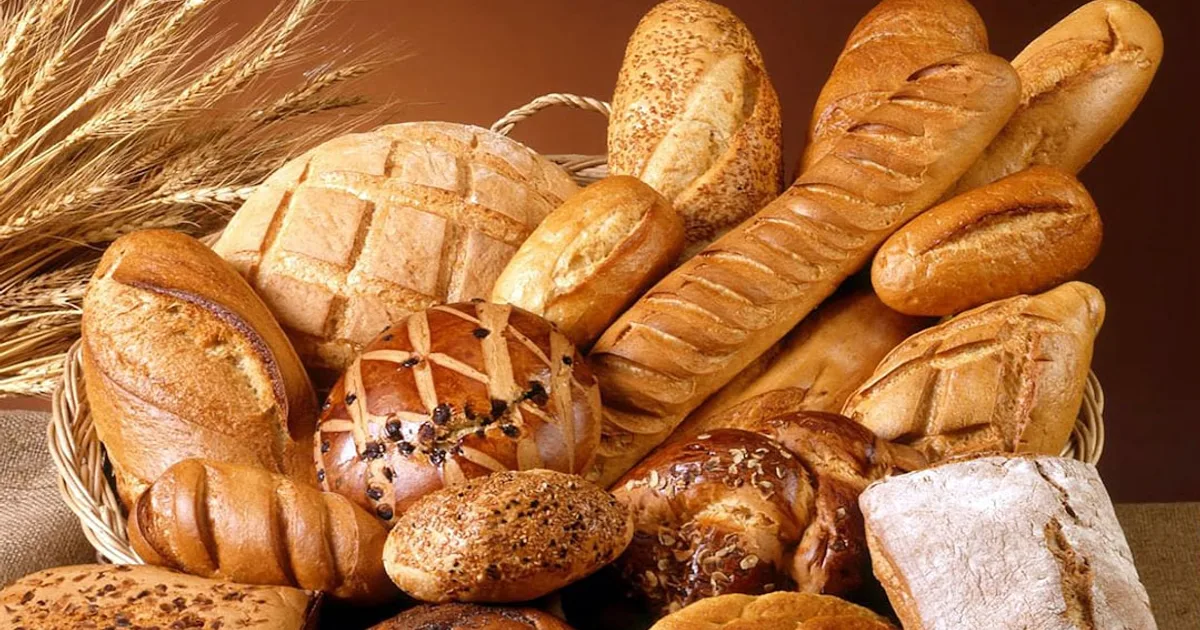
Bread is a daily staple in most Muslim households, and the standard sliced loaf from a UK supermarket almost certainly contains E481. This additive barely registers in public discussion, yet it sits firmly in mushbooh territory — and the reason is one you cannot identify from the label. The stearic acid in E481 may come from pig fat, beef tallow, or a vegetable oil, and British bread packaging tells you nothing about which.
What E481 Sodium Stearoyl Lactylate Is
Sodium stearoyl lactylate (SSL) is an emulsifier produced by the esterification of stearic acid with lactic acid, followed by partial neutralisation with sodium hydroxide to create the sodium salt. The full name — sodium stearoyl-2-lactylate — indicates the chemical structure: a stearic acid molecule bonded to a lactic acid unit, with the sodium salt neutralisation.
E482 (calcium stearoyl lactylate, CSL) is a related compound using calcium instead of sodium. Both share the same stearic acid concern.
SSL is an effective dough conditioner because it:
- Strengthens gluten networks — interacts with gluten proteins to create a more extensible, gas-retaining dough
- Interacts with starch — forms complexes with amylose, delaying gelatinisation and retrogradation (the process that makes bread go stale)
- Emulsifies fat — evenly distributes any fat or oil in the recipe through the dough
- Improves crumb texture — produces the soft, fine crumb structure consumers expect in commercial sandwich bread
For industrial bakers producing millions of loaves weekly with consistent quality requirements, SSL is highly valued. It delivers reliability and shelf life extension that pure flour-water-yeast-salt formulations cannot match.
The Stearic Acid Problem
Stearic acid (octadecanoic acid, CH₃(CH₂)₁₆COOH) is an 18-carbon saturated fatty acid. It occurs naturally in:
| Source | Type | Halal Status |
|---|---|---|
| Lard (pork fat) | Animal | Haram |
| Beef tallow | Animal (without zabihah slaughter) | Mushbooh |
| Beef tallow (halal-slaughtered) | Animal | Halal |
| Palm oil | Vegetable | Halal |
| Soya oil | Vegetable | Halal |
| Shea butter | Vegetable | Halal |
| Rapeseed oil | Vegetable | Halal |
Industrial stearic acid is produced primarily from:
- Palm oil and palm kernel oil hydrogenation — the dominant global route; yields high stearic acid content
- Animal fat saponification — historically common, still used in some pharmaceutical-grade production
- Tallow (beef fat) processing — used in some food-grade applications in countries with abundant beef by-product supply
The complication is that stearic acid from different sources is chemically identical — you cannot test a finished product and determine whether the stearic acid was palm-derived or animal-derived. The determination must be made through supply chain documentation.
Why the Label Cannot Tell You
UK and EU food labelling regulations require the declaration of E481 as an additive. They do not require the manufacturer to declare the source of each constituent raw material within that additive. When a bread manufacturer’s ingredient label reads “emulsifier (E481),” they have met their legal obligation. Whether the SSL was made from palm oil stearic acid or tallow stearic acid is not information that the label requires or provides.
Bread manufacturers themselves often use SSL supplied by large food ingredient companies (Corbion, Kerry Group, Palsgaard, Puratos). These ingredient companies supply SSL made to commercial specifications — and the stearic acid source in their supply chains may vary with commodity pricing. A manufacturer may genuinely not know the precise sourcing at any given time unless they have specifically required vegetable-only sourcing in their supply contract.
What We Know About Industry Practice
Several mainstream UK bread manufacturers have responded to halal consumer enquiries over the years. The general picture is:
- Warburtons: Has communicated that their SSL is vegetable-derived, but does not carry halal certification
- Kingsmill: Has indicated vegetable-sourced emulsifiers in some communications, but formulations are not certified
- Hovis: Position varies by product line; some premium ranges state vegetable emulsifiers
- Own-brand bread: Supermarket own-brand has highly variable sourcing, often lowest-cost supply chain
None of these products carry systematic halal certification that would independently verify the supply chain. Manufacturer claims without third-party verification are classified as mushbooh by conservative halal standards.
How We Reached This Verdict: Mushbooh
E481 receives a Mushbooh ruling because:
- The stearic acid in SSL can legitimately be from porcine, bovine, or plant sources
- All three sources produce chemically identical SSL
- The label provides no source information
- Most mainstream bread does not carry halal certification
- Supply chains may change without label updates
- Even manufacturer statements lack independent third-party verification
For halal consumers who apply precautionary standards, this is sufficient reason to treat E481-containing products as doubtful until certified.
Madhab Note
On the istihalah principle: Some Hanafi scholars apply istihalah (complete chemical transformation) to argue that even animal-derived stearic acid becomes halal through the SSL manufacturing process. The majority of contemporary halal certification bodies (HMC UK, IFANCA, JAKIM) do not accept this argument for SSL and maintain a mushbooh ruling for uncertified SSL.
For Shafi’i, Maliki, and Hanbali followers: The transformation argument is less well-established in these schools, and mushbooh or haram rulings for uncertified animal-derived emulsifiers are the dominant position.
Practical guidance: If you follow HMC-certified or equivalent standards, avoid bread without halal certification. If you apply a more permissive standard and trust manufacturer statements, Warburtons and Kingsmill are the brands most commonly cited as using vegetable SSL — but this has not been independently certified.
Finding E481-Free Bread
Look for halal-certified bread — A small number of UK bakery brands carry HMC or other halal certification. These have verified the SSL source.
Choose sourdough — Traditional sourdough uses flour, water, salt, and a bacterial/yeast starter. No SSL, no emulsifiers.
Choose artisan or “clean label” bread — Many supermarkets now stock “clean label” or “no artificial additives” ranges. Check the ingredient list: if SSL (or E481) is not listed, the product avoids this concern.
Read labels at the deli counter — Freshly baked in-store bread from supermarket bakeries often uses simpler recipes without SSL.
Bake your own — A basic white loaf requires only flour, water, yeast, and salt.
Check any E-code instantly — our E-codes database has halal rulings for 370+ food additives.
Scan a bread label — use our ingredient scanner to photograph a label and check every additive at once.
Related reading — E470b Magnesium Stearate: The Supplement Ingredient You Need to Check — the same stearic acid concern in a supplement context.
Ingredients change. Be first to know.
Brands reformulate without warning. We track every E-code update and halal certification — one short weekly email.
Related Articles
 E-Code Guides
 E470b Magnesium Stearate: The Supplement Ingredient You Need to Check
E470b magnesium stearate is Mushbooh — the stearic acid component can be animal-derived (often pork). Critical check for supplement capsules.
 E-Code Guides
 E322 Lecithin: Soy vs Sunflower — Which Is Halal?
E322 lecithin is usually halal — most is soy or sunflower-derived. Egg lecithin and animal-derived variants exist but are rare. Here's how to tell.
 E-Code Guides
 Haram E-Numbers to Avoid: The Complete Reference List (2026)
There is no single haram E-number list — status depends on source. But a specific set are either always haram (E120, E441, E542) or high-risk Mushbooh you should verify. Here is the full reference.