
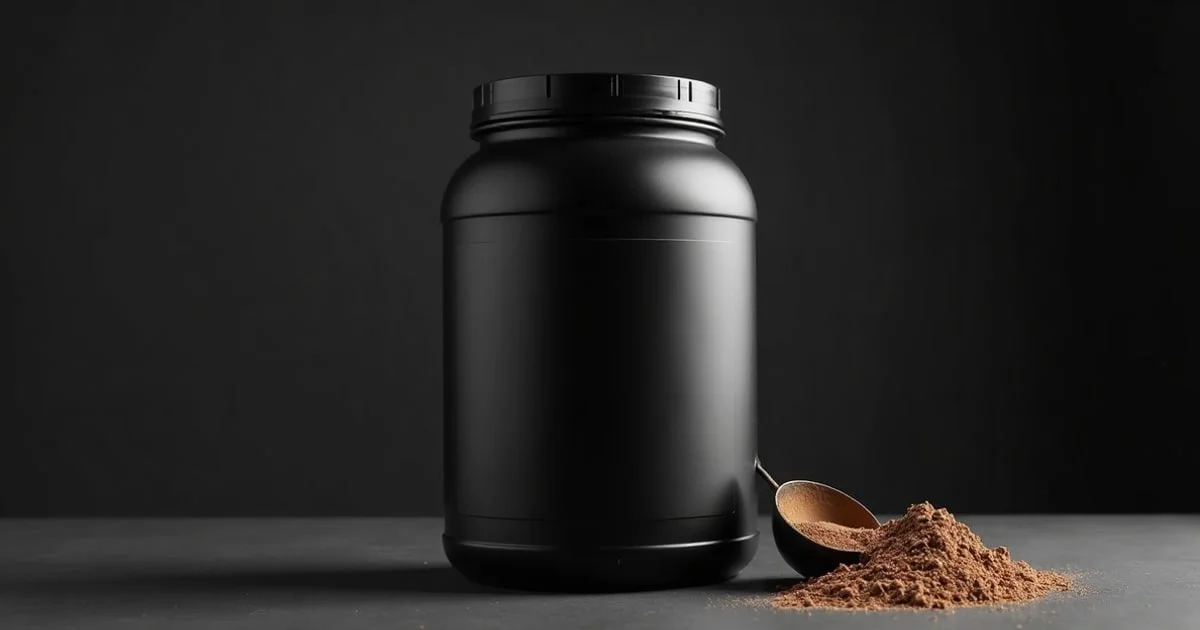
“Everything that enters Saudi Arabia is halal — you don’t even need to ask.” It’s the most common answer a Muslim gym-goer in Riyadh will hear, and for supplements it is only half true. The half that isn’t true runs straight through the best-selling product in the category: whey protein.
The rule of thumb: gelatine products on Saudi shelves are halal-checked at the border; whey products are not. SFDA import rules require a recognised halal certificate for anything containing gelatine, collagen, meat derivatives or animal enzymes — but clearly labelled whey, milk and milk-fat ingredients are explicitly exempt from that requirement. The rennet question that decides whey’s halal status is never examined. And anything you order from iHerb arrives by cross-border parcel, bypassing retail import screening altogether.
What SFDA Does and Doesn’t Check
Every supplement sold in Saudi retail must be registered with the SFDA — a safety, labelling and GMP check. Halal verification is a separate layer, run through the Saudi Halal Center, and it only triggers for specific ingredients:
- Requires a halal certificate at import: gelatine (including softgel shells), collagen, meat and meat derivatives, animal fats, animal rennet and enzymes — in any proportion. Pork derivatives and alcoholic beverages are banned outright.
- Exempt: ingredients clearly declared as whey, milk, butter or milk-derived fats.
- Unscreened in practice: ethanol used as a flavour carrier, and anything arriving by cross-border e-commerce parcel.
The practical consequence: an omega-3 softgel on a Nahdi shelf has had its gelatine checked; the whey tub next to it has had no halal review at all. Two omega-3 products at the same pharmacy can even differ — some in bovine gelatine, some in fish gelatine — so the shell is still worth reading. Our Saudi ice cream and dairy guide covers how the same regime works for food.
Brand by Brand
| Brand | Where you’ll see it | Status (July 2026) |
|---|---|---|
| Applied Nutrition | Nahdi, Sporter, Amazon.sa | ✅ Marketed halal-certified — confirm the certifier logo on your pack |
| Laperva | Dr. Nutrition, Noon, Amazon.sa | ✅ Sold as halal-certified; the strongest halal-positioned GCC brand |
| MyProtein (specific flavours) | myprotein.com, ships to KSA | ✅ Certified Impact Whey flavours only (certifier not named by MyProtein) — see our MyProtein brand page |
| Sunna Supplements | Sporter | ⚠️ Halal claimed — no public documentation confirming the certifier or covered products |
| Optimum Nutrition | Everywhere | ⚠️ Not certified — ON confirms most flavours use alcohol in flavourings; see our Optimum Nutrition verdict |
| Dymatize ISO100 | Sporter, iHerb | ⚠️ Not certified; company states no pork ingredients — unverified rennet |
| MuscleTech, BSN | Sporter, iHerb | ⚠️ No halal information published at all |
| Big Ramy Labs (beef protein) | Dr. Nutrition, GNC | ⚠️ Unverified beef protein — the highest-stakes gap, since slaughter method matters most here |
The Big Ramy Labs case deserves the emphasis: a beef-protein powder is precisely the product where zabiha slaughter matters, and we found no certification evidence for it.
The Whey Question, Saudi Edition
Here is the twist most international halal guides miss: the Saudi religious establishment is lenient on whey. The Permanent Committee ruled decades ago that cheese made with rennet from animals not slaughtered Islamically remains permissible — Muslims were not even required to ask about the rennet — and whey takes the same ruling. Under that position, an uncertified whey isolate is halal as long as nothing haram is added to it.
Stricter positions — followed by many outside the Hanbali mainstream, and by anyone who buys certified-only — treat unknown-source whey as doubtful. Our whey explainer and rennet guide map the full scholarly landscape.
What’s not covered by any leniency:
- Gelatine softgels from unverified bovine sources — retail stock is border-checked, iHerb stock is not. Our capsule guide covers the shell problem in depth.
- BCAAs hydrolysed from feathers or human hair rather than fermented from corn — labels never say which; human-hair L-cysteine derivatives are impermissible regardless of school.
- Flavouring alcohol — Optimum Nutrition itself confirms most Gold Standard flavours use alcohol as a carrier. Trace, fully-dispersed amounts are tolerated by many scholars (the OIC Fiqh Academy sets thresholds around 0.5% in flavourings), but certified products remove the question.
- Creatine is the easy one: synthetic, no animal inputs, halal — see our pre-workout guide for the rest of the stack.
How we reached this verdict
We checked the following Tier-1 sources before publishing (all checked July 2026):
- SFDA / Saudi Halal Center — supplement registration requirements and the 2025 halal-certification circular (No. 4/1445/11), which lists the trigger ingredients and the explicit whey/milk exemption.
- Manufacturers — Optimum Nutrition’s own support pages (not halal-certified; alcohol in most flavourings; bovine and porcine gelatine elsewhere in its range); Dymatize’s public statement (no pork ingredients, no certification); MyProtein’s official halal-certification page (HFA, per-flavour); Applied Nutrition and Laperva retail listings marketing halal certification.
- Retailer listings — Nahdi, Sporter, Dr. Nutrition and Amazon.sa product pages for availability and gelatine-shell sources.
- Sunni fatwa positions — the Saudi Permanent Committee on rennet and cheese from non-Muslim sources; IslamQA on gelatine (answer 219137) and trace alcohol in food (answers 59899, 201520); the OIC Fiqh Academy’s Resolution 225 on ethanol thresholds in flavourings.
Community verdict apps flag several of these brands inconsistently and without reasoning. We do not treat them as authoritative.
Madhab note
The whey verdict is genuinely school-divergent. The Hanafi position (Imam Abu Hanifa) and the Saudi Hanbali establishment (Permanent Committee, Ibn Taymiyyah’s view) treat rennet from non-halal-slaughtered animals as pure, making unknown-source whey permissible. The sahibayn within the Hanafi school and much Shafi’i/Maliki opinion treat non-zabiha animal rennet as impure, making the same whey doubtful. We flag uncertified whey as acceptable under the lenient mainstream positions and Mushbooh for those who require verification — and note that certification renders the disagreement moot.
Summary
| Question | Answer |
|---|---|
| Does SFDA registration mean halal? | No — safety check only; halal certs trigger on gelatine/meat/collagen, not whey |
| Is uncertified whey halal? | Yes per the Saudi Permanent Committee’s lenient position; doubtful under stricter schools |
| Safest certified picks | Applied Nutrition, Laperva, MyProtein’s listed certified flavours |
| Biggest risks | iHerb gelatine softgels (unscreened), unverified beef protein, BCAA sourcing |
| Always halal | Synthetic creatine monohydrate |
Building a fuller halal pantry in the Kingdom? Start with our Saudi Arabia halal food guide. Check any additive in the E-codes database or scan a label with the ingredient checker.
Ingredients change. Be first to know.
Brands reformulate without warning. We track every E-code update and halal certification — one short weekly email.
Related Articles
 Shopping Guides
 Is Ritz Crackers Halal? Nabisco Ingredients Checked (2026)
Ritz Original Crackers are Mushbooh — they contain E471 (mono and diglycerides) with no animal source disclosure and no halal certification.
 Shopping Guides
 Is Milka Chocolate Halal? Complete EU & UK Guide (2026)
Milka chocolate is Mushbooh — it contains E476 (PGPR) and E471 with undisclosed animal fat sources and no halal certification in UK or EU.
 Shopping Guides
 Are Mentos Halal? Every Variety Checked (Rainbow, Mint, Fruit)
Chewy Mentos rolls contain undisclosed gelatine — Mushbooh in UK/EU. Hard mints are gelatine-free but uncertified. Malaysian JAKIM-certified Mentos is halal.