
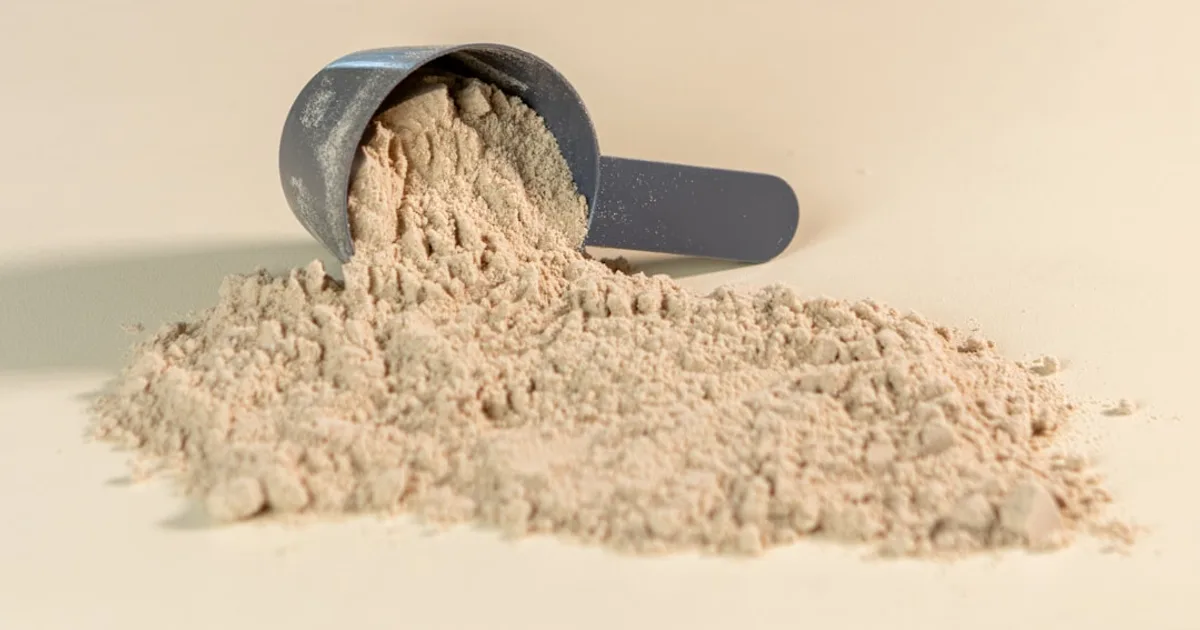
Cheap BCAA powders sitting on supplement shelves from the US to the UK are derived from duck feathers and human hair. That tub of unflavoured aminos almost certainly does not say that on the label — but the source determines whether it is halal or haram, and most brands do not volunteer the information.
For Muslim athletes, three supplement categories contain genuine halal minefields: protein powder (whey source and E-codes in flavoured blends), pre-workout (creatine origin and occasionally undisclosed animal-derived ingredients), and recovery supplements (BCAAs and creatine). Get these right and the rest of your supplement stack is straightforward. With the 2026 FIFA World Cup running across the United States, Mexico, and Canada, this matters to Muslim footballers, gym-goers, and families checking products in North America as much as anywhere else. This guide covers each category in detail, names specific brands, and gives you a shopping checklist you can use in-store or online.
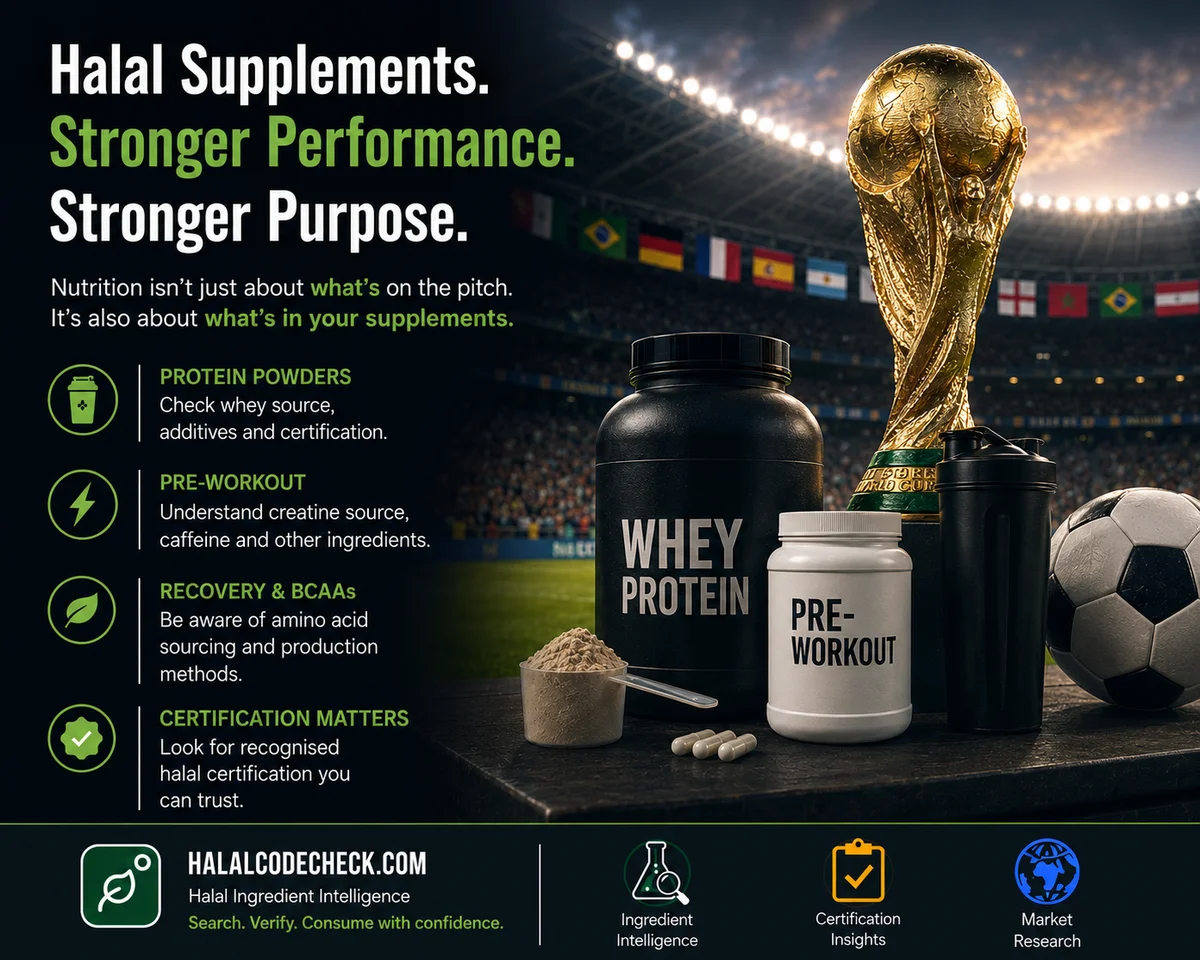
The three minefields explained
1. Protein powder
Whey protein is a by-product of cheese manufacturing. Whether the whey is halal depends entirely on the rennet used to curdle the milk. Animal rennet from a non-zabiha slaughtered animal makes the whey — and any protein powder made from it — mushbooh at minimum, haram under strict opinion.
Microbial rennet (fermentation-derived) and fermentation-produced chymosin (FPC) are the halal-acceptable alternatives. Many large supplement brands in the US, UK, and Europe now use microbial or FPC rennet, but few carry formal halal certification that removes all doubt.
Flavoured whey introduces a second problem: E-codes. Common additives in flavoured protein blends include:
- E471 (mono- and diglycerides of fatty acids) — can be animal-derived; status is mushbooh without sourcing confirmation
- E120 (cochineal/carmine) — derived from insects; haram under mainstream Sunni opinion
- E441 (gelatine) — pork or beef; haram if pork-derived
- E476 (polyglycerol polyricinoleate) — typically plant (castor oil) derived; generally halal but worth checking
Unflavoured whey isolate from brands that confirm microbial rennet carries far less risk than a flavoured blend with a long additives list.
2. Pre-workout
Pre-workout formulas look alarming on first read — but most of the key actives are synthetic and straightforwardly halal:
- Caffeine — synthesised or extracted from plants; halal
- Beta-alanine — synthetic amino acid; halal
- L-citrulline — synthetic or fermented; halal
- Taurine — can be animal-derived or synthetic; synthetic is the norm in supplements; generally halal, but verify
- Creatine (when included in pre-workout) — see below
The creatine question is the one that catches people. Creatine in supplements is overwhelmingly synthetic (produced from sarcosine and cyanamide via chemical synthesis). Animal-derived creatine exists in food (red meat contains roughly 4–5 g per kg) but is not used in commercial supplement manufacturing at any meaningful scale. Standard creatine monohydrate is halal.
Watch for proprietary “performance blends” in pre-workouts that do not disclose individual ingredient sources. If the blend includes amino acids and does not specify synthetic or plant-fermented origin, treat it as mushbooh until confirmed.
3. Recovery supplements and BCAAs
This is where the most hidden haram risk sits. BCAAs — leucine, isoleucine, and valine — are the three branched-chain amino acids marketed for muscle recovery. The problem is the manufacturing source.
Two cheap raw material sources dominate global BCAA production, particularly from Chinese and Indian ingredient suppliers:
- Human hair — hydrolysed to extract L-cysteine and other amino acids; haram by consensus
- Duck feathers — hydrolysed keratin used to extract amino acids; haram
Neither source is required to appear on the finished product label in the US or UK beyond “BCAAs” or “branched chain amino acids.” Brands purchasing from these suppliers often do not know — or do not disclose — the raw material origin.
The safe alternative: fermented plant-based BCAAs. These are produced via microbial fermentation of plant sugars. They cost more to manufacture, which is why they are less common in budget supplements. Look for labels that explicitly state “fermented,” “plant-based,” or “vegan BCAAs.” If a BCAA tub costs significantly less than comparable fermented products and does not specify the source, treat it as suspect.
Protein powder deep-dive
Whey concentrate vs isolate vs hydrolysate
All three forms carry the same rennet question — the processing method does not change the halal status of the source material. An isolate from non-zabiha animal rennet is no more halal than a concentrate from the same source.
Casein vs whey
Casein is the slow-digesting milk protein often taken before bed. The same rennet question applies. Casein is also found in cheese, and many casein powders are manufactured in facilities that process cheese products. Halal status depends on rennet sourcing — not on whether it is casein or whey.
Plant-based protein: simpler halal picture
Pea protein, soy protein, rice protein, and hemp protein do not carry rennet, gelatine, or BCAA-source concerns. The main thing to check in plant-based protein is flavouring additives — specifically E120 (cochineal) in some berry flavours, and E471 if present.
Unflavoured plant protein from any reputable brand is essentially halal by default. Flavoured versions require the same E-code check as whey.
Brand-by-brand assessment
| Brand / Product | Type | Rennet / Source | Certification | Status |
|---|---|---|---|---|
| MyProtein Impact Whey (unflavoured) | Whey concentrate | Microbial rennet (confirmed by customer service) | No halal certification identified | Mushbooh |
| MyProtein Impact Whey (flavoured) | Whey concentrate | Microbial rennet + E471 in some SKUs | None | Mushbooh |
| Optimum Nutrition Gold Standard 100% Whey | Whey blend | Microbial rennet (ON confirmed); E471 in flavoured | None | Mushbooh |
| PhD Nutrition Smart Protein | Whey blend | Not disclosed; E471 present in flavoured | None | Mushbooh |
| Bulk (formerly Bulk Powders) Pure Whey Protein | Whey concentrate | Microbial rennet confirmed; some flavours E471 | None | Mushbooh |
| Bulk Vegan Protein Powder (unflavoured) | Pea + brown rice | Plant origin | None | Halal |
| MyProtein Vegan Blend (unflavoured) | Pea + fava bean | Plant origin | None | Halal |
| Pulsin Plant Protein (unflavoured) | Pea protein | Plant origin | None | Halal |
| Garden of Life Sport Organic Plant Protein | Plant blend | Plant origin | Certified organic | Halal |
| MyProtein Vegan BCAAs | BCAAs | Fermented (confirmed vegan source) | None | Halal |
| Generic unflavoured BCAAs (budget, unspecified) | BCAAs | Unspecified (feather/hair risk) | None | Haram (assumed) |
Note: “Mushbooh” here reflects the absence of formal HMC/HFA halal certification combined with an inability to independently verify the rennet and E-code supply chain. Under the Hanafi mainstream position — where animal-derived E-codes from non-pork sources are permissible if confirmed — many of the “Mushbooh” products above would be acceptable when the brand confirms microbial rennet and non-pork E-code sourcing.
Pre-workout guide: ingredient by ingredient
| Ingredient | Origin | Halal Status | Notes |
|---|---|---|---|
| Caffeine | Synthetic or plant | Halal | Standard in all major pre-workouts |
| Creatine monohydrate | Synthetic | Halal | Produced from sarcosine + cyanamide |
| Beta-alanine | Synthetic | Halal | No animal source used commercially |
| L-citrulline | Synthetic or fermented | Halal | Check “fermentation” variants are plant-based |
| L-arginine | Synthetic or fermented | Halal | Same check as citrulline |
| Taurine | Synthetic (predominantly) | Halal | Historically animal-derived; virtually all commercial taurine is now synthetic |
| Betaine anhydrous | Synthetic or plant (beet) | Halal | Beet-derived is common |
| Niacin (B3) | Synthetic | Halal | Standard vitamin |
| Proprietary amino blend (unspecified) | Unknown | Mushbooh | Cannot verify source without disclosure |
Meal timing around prayers during training
For Muslim athletes observing salah, workout scheduling interacts with prayer times in practical ways:
Fajr window (pre-dawn): Suhoor timing during Ramadan, or early morning pre-workout. A protein meal or shake at this point sets up anabolic signalling before the fast begins or before a morning training session.
Dhuhr and Asr windows: Midday and mid-afternoon prayers create natural training breaks. Scheduling training between Dhuhr and Asr (or after Asr) allows for post-workout nutrition immediately after the session without prayer interruption.
Ramadan-specific: Training in the final hour before iftar means the fast breaks immediately after the session — allowing the post-workout protein window to align with the iftar meal. This is practical for many athletes who train while fasting during Ramadan.
Outside Ramadan, prayer scheduling is personal. The main practical point is to plan the post-workout protein window (30–60 minutes after training) so it does not conflict with obligatory prayer times in a way that requires rushing salah.
How we reached this verdict
Our assessment draws on:
- Direct brand communication — customer service responses from MyProtein, Optimum Nutrition, and Bulk confirming rennet sourcing for their core whey products
- E-code database cross-reference — each additive number in flavoured products checked against our E-codes database for sourcing and halal status
- BCAA supply chain research — published food industry sourcing studies and ingredient supplier documentation confirming the prevalence of feather and hair hydrolysate in budget amino acid production
- Creatine synthesis pathway — standard organic chemistry of creatine production (Strecker synthesis from sarcosine and cyanamide) confirming no animal inputs
- Halal certification cross-check — halal certification status reviewed for the brands mentioned here, including checks against major UK certification registers where relevant
The absence of halal certification does not automatically make a product haram. It means independent third-party audit of the supply chain has not occurred. The difference matters for Muslims who require certified halal versus those who accept brand confirmation of ingredient sourcing under the Hanafi majority position.
Madhab note
Hanafi mainstream position (followed by many Muslims globally): E-codes from non-pork animal sources are generally permissible when the animal is not explicitly identified as pork-derived, particularly after istihala (transformation). Under this view, E471 from a plant or bovine source in a flavoured whey that otherwise uses microbial rennet is acceptable. MyProtein and Bulk whey products with microbial rennet confirmation would fall within permissible bounds.
HMC-strict position: Only products carrying HMC or HFA certification are accepted without reservation. Under this position, all the “Mushbooh” products in the table above are avoided regardless of brand confirmation of ingredient sourcing. Unflavoured plant-based protein powders are the safe default.
Shafi’i position: Animal-derived E-codes require the underlying animal to have been slaughtered according to Islamic rites. E471 without certified halal sourcing is not permissible under this position.
Shopping checklist
Before buying any supplement, run through these five checks:
- Protein type: If whey, has the brand confirmed microbial or FPC rennet in writing?
- E-codes: Check the ingredient list against the E-codes database — especially E471, E120, E441
- BCAAs: Does the label specify “fermented,” “plant-based,” or “vegan” amino acid source?
- Creatine: Is it labelled creatine monohydrate? (Synthetic — halal. No further check needed.)
- Certification: Does the product carry HMC or HFA certification? If yes, buy with confidence. If no, apply the checks above.
Quick-reference summary
| Question | Answer |
|---|---|
| Is whey protein halal? | Depends on rennet source. Microbial rennet = halal/mushbooh. Animal rennet from non-zabiha = haram. |
| Are flavoured protein powders safe? | Check E-codes — especially E471 and E120. Unflavoured is lower risk. |
| Is creatine monohydrate halal? | Yes. Commercially produced creatine is synthetic. |
| Are BCAAs halal? | Only if labelled fermented/plant-based. Unspecified BCAAs carry feather/hair risk. |
| Is MyProtein halal? | Mushbooh (no HMC/HFA cert; microbial rennet confirmed by brand but not audited). |
| Are pre-workouts halal? | Most standard actives (caffeine, beta-alanine, citrulline, creatine) are halal. Check undisclosed proprietary blends. |
| Best safe default? | Unflavoured plant-based protein + fermented vegan BCAAs + creatine monohydrate. |
Use the E-codes database to look up any E-code you find on a supplement label.
Scan a full ingredient list with the ingredient scanner to get a halal status check across every additive at once.
Ingredients change. Be first to know.
Brands reformulate without warning. We track every E-code update and halal certification — one short weekly email.
Related Articles
 Shopping Guides
 We Checked 50 UK Protein Bars: Every Halal Verdict (2026)
Gelatin, carmine, E471 from animal fat, and undisclosed alcohol-based flavourings appear across 50 UK protein bars. Full results table covering Grenade, Trek, Clif, Quest, Rxbar, Barebells and more.
 Shopping Guides
 We Checked 40 US Candy Brands: Gelatin, Carmine and Hidden Haram (2026)
US candy labelling hides gelatin behind "confectioner's glaze" and carmine behind "Red 40" confusion. Full audit of Skittles, Starburst, Sour Patch Kids, Haribo US, Swedish Fish, Trolli and more.
 Shopping Guides
 Halal Nutrition During Pregnancy: Vitamins, Supplements & Food Guide (2026)
Gelatin capsules in prenatal vitamins, D3 from lanolin, and omega-3 in fish gelatin capsules make pregnancy supplementation more complicated for Muslim women. Complete guide with safe UK brand picks.