
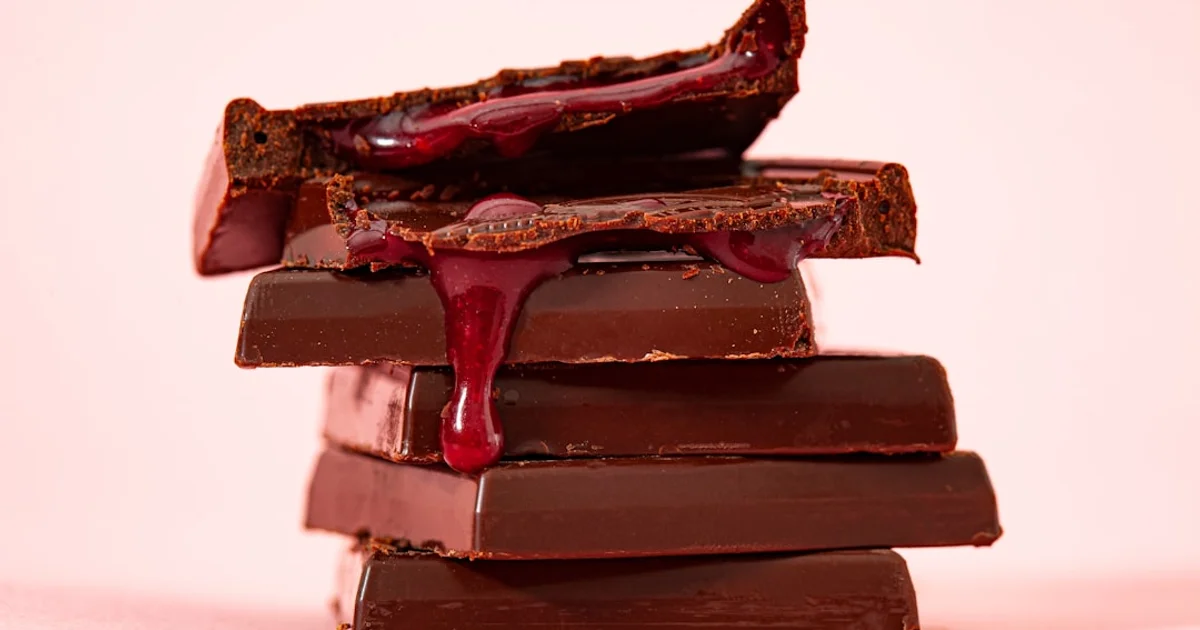
Certified halal chocolate exists in the Netherlands. Almost none of it is Dutch. The country that gave the world the cocoa press and Droste’s cacaomeisje has no mainstream chocolate brand with a published halal certificate — and the one brand every Dutch reader asks about, Tony’s Chocolonely, has never applied for one.
That is the whole story of this guide. The Dutch supermarket chocolate aisle is ingredient-clean far more often than it is certified, and the difference matters depending on which standard you hold yourself to.
Tony’s Chocolonely: Clean List, Shared Lines, No Certificate
Tony’s is an Amsterdam brand, but the bars are made in Belgium. The brand’s own wholesale FAQ answers the halal question directly: there is no official halal certification, most ingredients are halal-friendly, no animal fats and no alcohol are used, but production in shared factories “cannot eliminate cross-contamination”. That is a more honest answer than most brands give.
The milk chocolate bar lists sugar, dried whole milk, cocoa butter, cocoa mass, soya lecithin (E322) and natural vanilla. The dark bars drop the milk. There is no E471, no E476, no gelatine, no glazing agent. On ingredients alone this is one of the cleaner mass-market bars in Europe.
Why it is still Mushbooh on this site: two reasons. The shared-line admission is the brand’s own, not ours. And the filled bars — caramel sea salt, pretzel toffee, the seasonal limited editions — add inclusions whose flavourings are not itemised. Under the mainstream Hanafi/Shafi’i/Maliki view, an ingredient list with no animal-derived or alcohol-derived component is sufficient and the plain bars are fine to eat. Under the HMC-strict view a certificate is required, and there isn’t one.
Verkade and Droste: The Dutch Heritage Brands
Verkade (Zaandam) is now part of pladis — the same group that owns McVitie’s and Ülker. That ownership sometimes leads readers to assume Verkade inherits Ülker’s Turkish halal certification. It does not. Certification is per site and per product; Verkade’s Dutch-made chocolate letters, tablets and biscuits carry no halal mark, and pladis publishes none for them. Verkade’s plain tablets list soya lecithin as the only emulsifier, so the ingredient picture resembles Tony’s: clean, uncertified.
Droste pastilles are made by the Hosta group. No halal certification is published. The classic milk and dark pastilles use soya lecithin; the filled and flavoured tins are the ones to read carefully.
Both brands: Mushbooh by the same logic as Tony’s. Nothing haram declared; nothing certified.
Albert Heijn and Jumbo Own-Brand
Albert Heijn runs a dedicated halal section online — but it is built from partner brands (Wahid, Marhaba, Silifke and others) selling meat, deli slices and ready meals. AH’s own-brand chocolate is not part of it and is not halal-labelled. AH does not name a certifier anywhere on its halal pages, so the section is a curation of suppliers’ own claims, not an AH certification. We cover the whole AH range in the Albert Heijn halal shopping guide.
For AH and Jumbo own-brand tablets, use the label rule from our Netherlands product-identification guide: if the emulsifier line reads emulgator: lecithine (soja) and there is no E471, E476, gelatine or alcohol in the list, the bar clears the ingredient test. The caramel and zeezout tablets, and anything with a cream or liqueur filling, need the full read.
Milka, Côte d’Or and the International Bars
The Mondelez bars on Dutch shelves are the standard European product, not a certified export line.
Milka chocolate (Mondelez International) contains E476 (PGPR — polyglycerol polyricinoleate) whose source is not disclosed for UK and European products. Mondelez holds no halal certification for Milka in the UK. The brand is Mushbooh for UK Muslim consumers until the emulsifier source is confirmed or certification is obtained.
Full Milka brand guide →Côte d’Or is in the same position. Neither brand publishes a halal certificate for its European production.
Where the Certified Bars Actually Are
- Ülker — Turkish tablets and chocolate-coated biscuits, certified in Turkey, stocked by Turkish and Moroccan supermarkets across the Randstad and increasingly by AH’s world-food shelf.
Ülker is halal for its core product lines manufactured in Turkey. As Turkey's leading food conglomerate, halal compliance is foundational to Ülker's production. Always verify local label when purchasing outside Turkey.
Full Ülker brand guide →- HQC-certified European makers — Halal Quality Control is headquartered in the Netherlands and certifies confectionery and biscuit sites across Belgium, Germany and Poland (Bahlsen’s Pick Up! bars are one example we have checked — see the Bahlsen brand page). The HQC logo on a pack is a real, checkable certificate, not a marketing claim.
- Halal Correct (Leiden) and HFFIA (The Hague) — the other two Dutch certifiers. Their logos appear mostly on meat and snacks, occasionally on confectionery.
Quick Reference
| Brand | Halal certification | Ingredient picture | Verdict |
|---|---|---|---|
| Tony’s Chocolonely | None (brand confirms) | No animal fat, no alcohol; soya lecithin; shared lines | Mushbooh |
| Verkade | None | Soya lecithin on plain tablets | Mushbooh |
| Droste | None | Soya lecithin on plain pastilles; flavoured tins vary | Mushbooh |
| AH / Jumbo own-brand | None; not in AH’s halal section | Read emulsifier line per bar | Mushbooh unless the list is clean |
| Milka | None | E476 and undisclosed flavourings on many lines | see brand page |
| Ülker (imported) | Turkish certification | — | see brand page |
Summary
| Question | Answer |
|---|---|
| Is any Dutch chocolate brand halal-certified? | No mainstream one. Certified bars on Dutch shelves are Turkish or HQC-certified imports. |
| Can I eat Tony’s plain bars? | Ingredient-clean and alcohol-free per the brand; uncertified and shared-line — Mushbooh, acceptable under the ingredient-based view. |
| Which logo should I look for? | HQC, Halal Correct or HFFIA. |
| Safest quick pick | A Turkish-certified Ülker bar from a Turkish supermarket. |
Check any emulsifier code from a Dutch wrapper in the E-codes database, or photograph the ingrediënten line and run it through the ingredient scanner.
How we reached this verdict
Sources checked September 2026:
- Tony’s Chocolonely: the brand’s wholesale FAQ (complimentxl.eu, “Tony’s Chocolonely product features”), which states no halal certification, no animal fats, no alcohol, and shared-line cross-contact risk; standard bar ingredient lists as printed on pack.
- Albert Heijn: ah.nl halal shop page — partner brands listed, no certifier named, no own-brand chocolate included.
- Dutch certifiers: HQC (hqc.eu client register), Halal Correct and HFFIA — logo recognition per our Netherlands identification guide.
- Verkade / Droste: ownership (pladis; Hosta) and on-pack ingredient lists; no certificate found on either company’s site.
- Milka / Ülker: existing HalalCodeCheck brand verdicts, rendered above from the brand pages rather than re-derived.
- Sunni fatwa scholarship on soya lecithin and cross-contact: IslamQA (Hanafi), Darul Iftaa Birmingham — plant-derived emulsifiers are permissible; trace cross-contact on shared equipment does not render a product haram under the majority view.
Madhab note
- Soya lecithin (E322) — plant-derived, halal across all four madhabs.
- Uncertified but ingredient-clean chocolate — sufficient under the Hanafi, Maliki and Shafi’i mainstream position when no animal or alcohol-derived ingredient is declared; the HMC-strict / Hanbali-leaning view requires certification.
- Shared-line cross-contact — the majority position treats trace contact as excused (‘umum al-balwa); stricter scholars advise avoidance where a certified alternative exists.
If your madhab differs on a specific ruling, consult a competent scholar in your tradition for binding guidance.
Ingredients change. Be first to know.
Brands reformulate without warning. We track every E-code update and halal certification — one short weekly email.
Related Articles
 Shopping Guides
 Halal Chocolate in Turkey: Why Ülker Has No GİMDES Certificate and What TSE Actually Means
Turkey has real halal certification infrastructure, and since June 2023 certifiers must be state-accredited. But two different bodies both brand themselves TSE, Ülker holds no GİMDES certificate, and Şölen's published certificate expired in July 2026.
 Shopping Guides
 Halal Chocolate in Switzerland: Lindt, Frey, Toblerone and the Liqueur Praline Problem
No mainstream Swiss chocolate bar carries halal certification, and Lindt says so itself. The real Swiss issue is alcohol: kirsch and Marc de Champagne fillings are a whole supermarket category. Swiss packs must warn you, which makes them easier to read than most.
 Shopping Guides
 Halal Chocolate in South Korea: Lotte Ghana, Choco Pie's Two Recipes and KMF (2026)
Korea's own chocolate — Lotte Ghana, Crunky, ABC — is uncertified for the domestic market. Orion's Choco Pie exists in two recipes: pork gelatine in Korea, beef gelatine and JAKIM/MUI/GCC certification from Vietnam. Here is how to tell them apart on the shelf, and which Korean confectionery KMF actually certifies.