
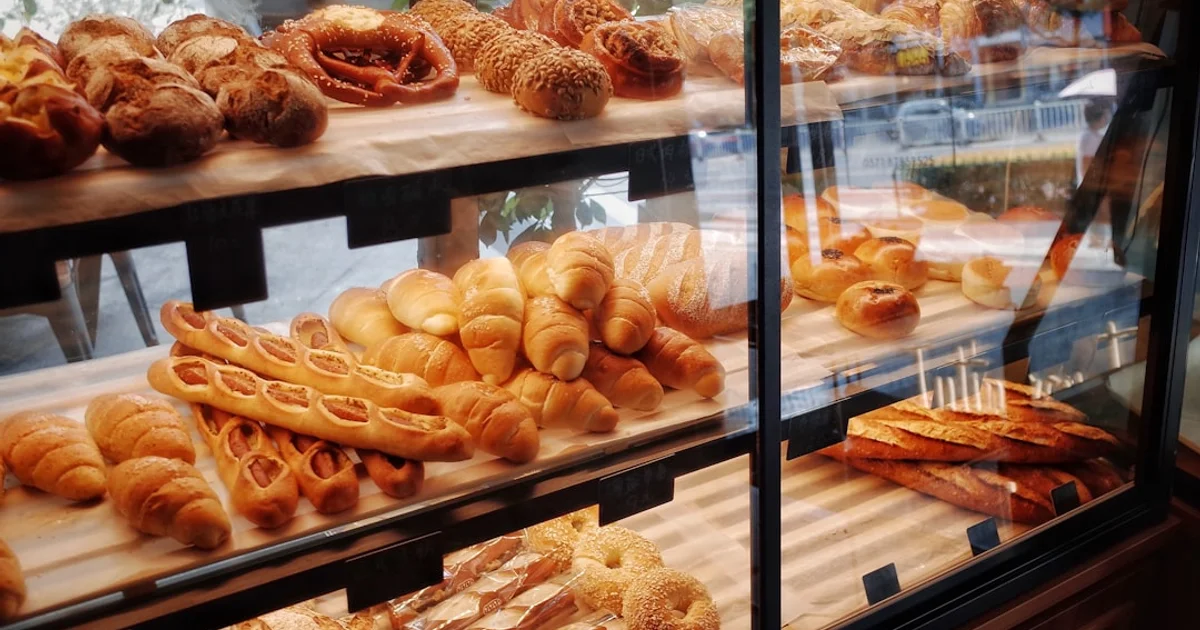
A cake with zero alcohol can still be refused halal certification in Indonesia — if it is called rum raisin. That single rule, and a 2024 law that made certification compulsory for every large bakery chain, explain almost everything about the Indonesian bakery aisle in 2026.
The short version: the big chains are now overwhelmingly certified — including some, like J.CO and BreadTalk, that spent years uncertified and still drag that reputation behind them. The doubt has moved from “is this chain certified?” to two narrower places: rum-flavoured products, and the handful of chains whose certificates you cannot yet verify in the registry.
Why 2024 Changed the Bakery Aisle
Indonesia’s Halal Product Assurance Law (Law 33/2014) made halal certification mandatory, not voluntary. On 18 October 2024, the obligation took effect for food and drink from medium and large businesses — uncertified products face warnings and withdrawal from sale. Micro businesses and imported products have until 17 October 2026.
Two details matter for shoppers:
- BPJPH issues the certificate; MUI issues the fatwa behind it. Since 2019 the certifying authority is BPJPH under the Ministry of Religious Affairs, with audit bodies (LPPOM, Sucofindo, Muhammadiyah’s LPH-KHT) doing inspections. Our Malaysia vs Indonesia requirements comparison covers how this differs from JAKIM’s model.
- Certificates are now effectively lifetime — valid as long as ingredients and processes don’t change. The old “their certificate expired” problem that caught J.CO and BreadTalk in 2018 largely can’t recur.
And the registry has teeth: in August 2024 BPJPH revoked the certificate of Roti Okko (not to be confused with Roti’O) after the food agency found an unapproved additive in its bread.
Chain by Chain: Who Is Certified
| Chain | Status (July 2026) | Detail |
|---|---|---|
| Holland Bakery | ✅ Certified | National LPPOM certificate since July 2017; grade-A halal assurance system |
| Sari Roti | ✅ Certified | MUI-certified for decades; halal logo printed on every pack |
| BreadLife | ✅ Certified | MUI certificate since November 2016 |
| Dunkin’ Indonesia | ✅ Certified | Lifetime BPJPH certificate, April 2024; first certified back in 1995 |
| J.CO | ✅ Certified | BPJPH certificate May 2023 — after an uncertified gap from 2018 |
| Tous les Jours | ✅ Certified | Certified since 2020 |
| Paris Baguette | ✅ Certified | BPJPH certificate issued 7 May 2026, covering all 23 outlets |
| The Harvest | ✅ Certified — re-verify | Certificate issued 2021; confirm current registry entry |
| Dapur Cokelat | ⚠️ Claimed | Brand states MUI certification (2024) but we found no certificate number — check the registry |
| BreadTalk | ⚠️ Verify | Certificate lapsed 2018; the rebranded MAKO entity was certified in 2023; the BreadTalk site now claims halal — confirm in the registry |
| Roti’O | ⚠️ Unverified | Appeared on an older LPPOM not-certified list; aggregators now say certified but give no certificate number |
The pattern worth knowing: Paris Baguette’s May 2026 certification (audited through Muhammadiyah’s LPH-KHT) closed the last big gap among Korean-style chains, and the J.CO/BreadTalk warnings you still see shared in group chats mostly date from the 2018–2023 uncertified years.
The Rum Question
Indonesian bakeries are the world capital of the rhum essence debate, and the rules are stricter than most shoppers expect:
- Real rum in baking is haram, full stop. Blackforest sponge brushed with rum, rum-raisin fillings, fla with rum — khamr does not become halal because some alcohol bakes off.
- Alcohol-free “rhum essence” cannot be certified either. MUI Fatwa No. 4/2003 bars certification for products using names or flavours that evoke haram things — rum flavour is the textbook case. A bakery using rhum essence can be otherwise spotless and still never carry the halal logo on those products.
- Trace industrial ethanol is treated differently. Under MUI Fatwa 10/2018, non-khamr ethanol used in processing is not najis and is tolerable in non-beverage products — the concern is rum as a flavour identity, not solvent traces. Our guide to alcohol in food covers the general rulings.
Practical rule: at a certified chain, everything in the case is covered by the certificate. At an uncertified independent bakery, ask specifically about rhum in the blackforest, fla and butter cream — it is the single most common hidden ingredient in Indonesian cakes.
What to Check on a Packaged Cake Label
For supermarket bakery goods without the halal logo, four ingredients decide most verdicts:
- Emulsifiers E471/E472 — in nearly every packaged bread and non-dairy whip topping; plant- or animal-derived, and the label rarely says which. LPPOM treats these as a critical point; our E471 guide explains the source problem.
- Gelatine — mirror glazes, mousse layers, marshmallow toppings. Bovine or porcine; unverified source means Mushbooh at best.
- Bread improvers with L-cysteine (E920) — historically made from human hair (haram under MUI fatwa) or feathers; the microbial version is halal, but labels don’t distinguish.
- Cheese toppings — Indonesian bakeries love cheese floss and kraft-style toppings; the rennet source is the critical point.
How we reached this verdict
We checked the following Tier-1 sources before publishing (all checked July 2026):
- BPJPH — official announcements of the October 2024 mandatory-certification phase, the Roti Okko revocation (August 2024), and the public certificate registry at bpjph.halal.go.id.
- LPPOM MUI / halalmui.org — certification records for Holland Bakery (2017), BreadLife (2016), The Harvest (2021); LPPOM’s published guidance on rhum flavouring and bakery critical points.
- MUI fatwas — No. 4/2003 (products named/flavoured after haram things are not certifiable), No. 10/2018 (alcohol/ethanol thresholds), No. 2/Munas VI/2000 (human-derived ingredients, the basis for the L-cysteine ruling).
- Company and certifier announcements — J.CO certificate ID00410001991420323 (May 2023, LPH Sucofindo); Dunkin’ Indonesia lifetime certificate (April 2024, LPH Surveyor Indonesia); Paris Baguette certificate ID31410066629440526 (May 2026, LPH-KHT Muhammadiyah); Erajaya’s official announcement.
Community aggregator sites list several chains as “certified” without certificate numbers. We flag those as unverified rather than repeating the claim — check the BPJPH registry directly before relying on them.
Verdict Summary
| Question | Answer |
|---|---|
| Are the major chains halal-certified? | Yes — all the big names except Roti’O and Dapur Cokelat are registry-verifiable |
| Is rum essence halal if alcohol-free? | Not certifiable per MUI Fatwa 4/2003; real rum is haram |
| Is uncertified automatically haram? | No — but post-2024, a large uncertified chain is a red flag |
| Biggest label risks on packaged cakes | E471/E472 source, gelatine glazes, L-cysteine improvers, cheese rennet |
Shopping in Indonesia more broadly? Start with our Indonesia halal food guide, the MUI-certified snacks guide and the Indonesia protein and supplements guide. For any additive on a label, check the E-codes database or scan the pack with the ingredient checker.
Ingredients change. Be first to know.
Brands reformulate without warning. We track every E-code update and halal certification — one short weekly email.
Related Articles
 Shopping Guides
 Halal Bakery and Cakes in Spain: Mantecados Are Made With Lard, and Some Are Certified Anyway
Spain's most famous festive sweets are built on pork lard, which the name itself tells you. Several Andalusian makers reformulated with vegetable fat and hold Instituto Halal certificates. The big industrial bakery brands hold nothing.
 Shopping Guides
 Halal Shopping at Coles: Aisle-by-Aisle Australia Guide (2026)
Coles stocks halal-certified meat from accredited abattoirs but own-brand packaged goods require E-code checking — here's what to look for in each aisle.
 Shopping Guides
 Halal Shopping at Carrefour: France, UAE & Turkey Guide (2026)
Carrefour's halal status varies by country — UAE stores stock certified halal products throughout, while French stores require label-by-label checking.