
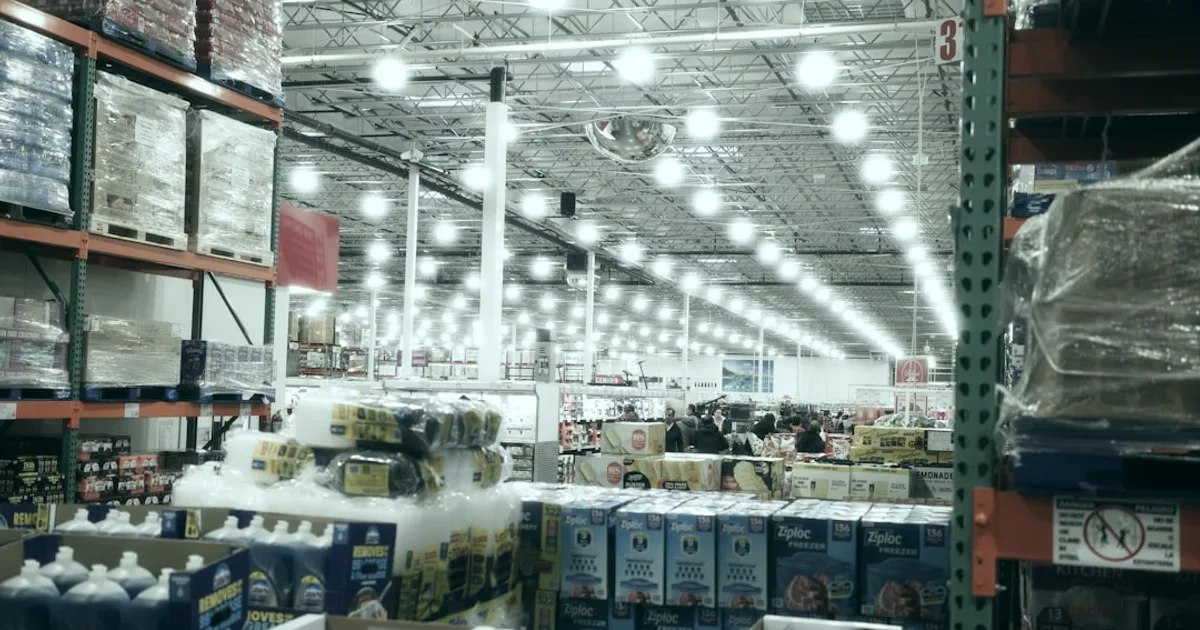
Carrefour operates in over 30 countries across Europe, the Middle East, Africa, and Asia — making it a supermarket Muslim travellers and expats encounter everywhere. The critical insight: Carrefour is not a single halal experience. The store in Dubai and the store in Paris are fundamentally different from a halal-compliance perspective.
Country-by-Country Breakdown
UAE Carrefour — High Confidence Halal
Carrefour UAE is operated by Majid Al Futtaim under strict UAE food regulations. The UAE’s Food Safety Law (Federal Law No. 15 of 2009) mandates that all animal-derived products sold in the UAE be halal-certified. ESMA (Emirates Authority for Standardization and Metrology) oversees enforcement.
What this means in practice:
- All fresh meat: halal-certified, country of origin marked
- All frozen poultry and beef: halal-compliant
- Imported packaged goods must meet ESMA halal import requirements
- Dedicated halal signage throughout meat sections
Still check: Imported European confectionery (especially chocolates) on the international foods aisle — these may still contain E471, E476, or E441 depending on their origin and import certification.
French Carrefour — Label-by-Label Required
France has significant Muslim communities but no legal requirement for halal labelling or dedicated halal sections in supermarkets. Carrefour France operates by French food law — secular, with no religion-specific food standards.
Fresh meat in French Carrefour: Mix of conventional and halal. Some stores in areas with high Muslim populations have halal butcher counters (Boucherie halal). Look for: AVS (Abattage Viande et Salmonellose), HCF, or Mosquée de Paris logos.
Packaged goods: Standard French/European labelling. E-code checking is required. E471 will appear on numerous products; source is typically not declared.
Own-brand “Carrefour” products in France: No halal certification unless explicitly marked. Check for E441, E471, E120.
Turkish Carrefour (CarrefourSA) — TSE Certified Context
Turkey’s Carrefour operates as CarrefourSA. Turkey has a growing halal certification ecosystem with TSE (Turkish Standards Institution) running the halal programme. However, not all products in CarrefourSA carry TSE halal certification.
Meat: Turkish regulations and cultural practice mean most meat in mainstream Turkish supermarkets is halal. Look for TSE logo on certified products.
Packaged goods: Turkish domestic brands are generally compliant. Imported European goods follow the same E-code cautions as anywhere.
Saudi Carrefour — Strictest Compliance
All food sold in Saudi Arabia must meet Saudi halal import requirements via SASO (Saudi Standards, Metrology and Quality Organization) and SFDA. Carrefour Saudi Arabia cannot sell non-halal meat products. The concern for Saudi shoppers is imported packaged goods with undisclosed additive sources.
Polish/European Carrefour
Poland has the largest Carrefour operation in Eastern Europe. Halal certification is not the default. Muslim shoppers (including the substantial Tatar Muslim community and Muslim expats) must check labels individually. E-code verification is essential.
E-Code Watch List for Carrefour Shopping
| E-Code | Products | Risk | Action |
|---|---|---|---|
| E441 (Gelatine) | Gummy sweets, marshmallows, some yoghurts | High | Avoid unless certified |
| E471 (Mono/diglycerides) | Biscuits, margarine, chocolate | Mushbooh | Verify source |
| E120 (Cochineal) | Red/pink sweets, drinks, yoghurt | Haram | Avoid |
| E476 (PGPR) | Budget chocolate, hot chocolate mixes | Mushbooh | Verify |
| E542 (Bone phosphate) | Processed meat products | Mushbooh | Verify |
How We Reached This Verdict
Our assessment is based on UAE Food Safety Law Federal No. 15/2009, ESMA halal certification framework, French food labelling law (no religious marking requirements), TSE halal programme documentation, and SASO/SFDA Saudi import regulations. Country comparisons were built from direct regulatory analysis, not assumption.
Madhab Note
The question of imported products in Western Carrefour stores is consistent across madhabs: where ingredients include gelatine (E441) without certification, it is treated as haram (Hanafi, Hanbali) or at minimum requiring avoidance (Maliki, Shafi’i). The country-by-country approach in this guide applies regardless of which school you follow — the regulatory environment determines what has been certified, and certification (or its absence) is the key practical data point.
Quick Reference: Carrefour Halal Confidence by Country
| Country | Meat Section | Packaged Goods | Own-Brand |
|---|---|---|---|
| UAE | High confidence | Check imports | Generally compliant |
| Saudi Arabia | High confidence | Check imports | Generally compliant |
| France | Check for logos | Label check required | No default cert |
| Turkey | Generally halal | Label check for imports | TSE where marked |
| Poland/EU | No default | Full label check | No cert |
Travelling through Europe or the Middle East? Use HalalCodeCheck to scan any Carrefour product label instantly.
Check our E-code database for all additives with halal status before you shop.
Verify ingredients from any Carrefour product label using your phone camera.
Ingredients change. Be first to know.
Brands reformulate without warning. We track every E-code update and halal certification — one short weekly email.
Related Articles
 Shopping Guides
 Halal Shopping at Coles: Aisle-by-Aisle Australia Guide (2026)
Coles stocks halal-certified meat from accredited abattoirs but own-brand packaged goods require E-code checking — here's what to look for in each aisle.
 Shopping Guides
 Halal Food in Malaysia: Beyond JAKIM — Full Supermarket & Brand Guide
JAKIM certification is Malaysia's gold standard but not every product on shelf is JAKIM-certified — here's how to shop confidently in Mydin, Giant, and Aeon.
 Shopping Guides
 Is Halal Food Actually Halal? The Certification Trust Gap
Some products claim halal but aren't — this is an honest look at the certification trust gap, the four failure modes, and a practical 5-point consumer verification framework.