
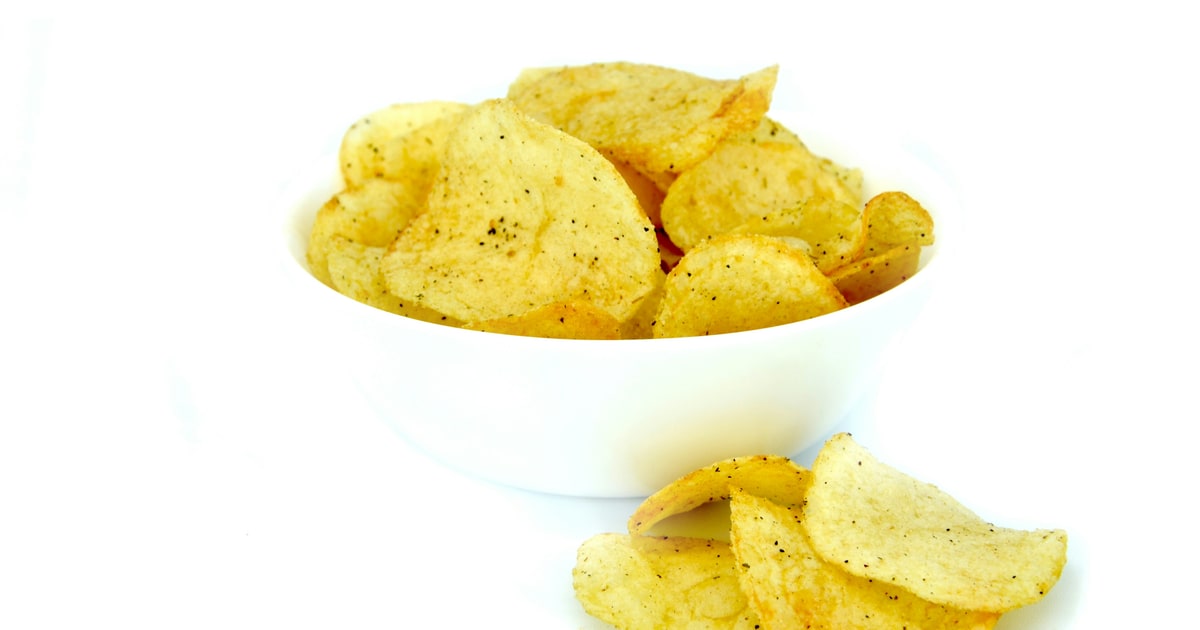
Is E627 halal?
E627 (disodium guanylate) is Mushbooh. It can be produced from yeast extract (halal), from dried fish (halal), or from pork (haram). UK labels disclose only the E-number — never the source. Without halal certification, you cannot determine which production route was used. A vegan-labelled product containing E627 would confirm a non-pork source (yeast or fish), which is halal.
Is E631 halal or haram?
E631 (disodium inosinate) is Mushbooh, and the haram risk is higher than E627. It is produced from fish (halal) or pork muscle (haram). Some production uses microbial fermentation on permissible feedstocks (halal). Without disclosure, it cannot be confirmed. A vegan label is only partially helpful: fish-derived E631 would not be vegan, so a vegan label could indicate either yeast fermentation or pork — both scenarios where pork is impossible in a vegan product. In practice, a vegan product cannot use pork-derived E631, making a vegan label a practical safety check.
The cleanest approach: Look for halal certification, or choose plain/lightly salted snacks that do not contain flavour enhancers.
Grabbing a bag of crisps seems like one of the simplest snack choices. The ingredient lists are short, the flavours are familiar, and nothing on the front of the pack suggests any concern for halal consumers. Yet tucked into the flavouring section of many crisp ingredient lists are two E-numbers — E631 and E627 — that carry a potential source issue that most people have never considered.
Understanding Flavour Enhancers
Flavour enhancers are substances that amplify the existing taste of food without contributing a distinct flavour of their own. They make other flavours seem stronger, fuller, and more satisfying. The most widely known flavour enhancer is E621 (monosodium glutamate, MSG), but it rarely works alone in commercial snack food formulations.
E631 (disodium inosinate) and E627 (disodium guanylate) are almost always used alongside MSG in what food technologists call a synergistic combination. Together, these three compounds create an umami taste effect far more powerful than any of them could achieve alone. This is why flavoured crisps — particularly strong flavours like BBQ, sour cream and chive, prawn cocktail, and chicken — have that addictive depth of flavour that plain crisps lack.
The three-compound system (MSG + E631 + E627) is used because it allows manufacturers to use less of each individual compound while achieving a stronger overall effect. From a cost and regulatory perspective, this is efficient. From a halal consumer perspective, it introduces two additional source questions.
The Source Problem with E631
E631 (disodium inosinate) is the disodium salt of inosinic acid, a compound that occurs naturally in animal muscle tissue. It contributes a savoury, meaty umami note to foods.
Commercial production routes for E631:
From fish — Inosinic acid can be extracted from certain fish, particularly sardines and anchovies. This route produces halal E631.
From pork muscle — Inosinic acid can also be extracted from pork (specifically from porcine muscle tissue). This route produces haram E631.
From fermentation — Some E631 is produced through microbial fermentation processes. Fermentation-derived E631 using permissible feedstocks would be halal.
The UK label will simply say “E631” or “disodium inosinate” regardless of which production route was used. There is no legal requirement to specify that it came from pork, even though that disclosure would be extremely material to a significant portion of UK consumers.
The Source Problem with E627
E627 (disodium guanylate) is the disodium salt of guanylic acid, another naturally occurring compound that provides an umami taste. It is generally more potent than E631.
Commercial production routes for E627:
From yeast extract — Guanylic acid can be derived from yeast extract through enzymatic hydrolysis. Yeast is halal, making this route permissible.
From dried fish — Some E627 is produced from dried fish, also halal.
From pork — Like E631, E627 can be produced from porcine sources. Pork-derived E627 is haram.
Again, the label discloses none of this. “E627” is all you will see.
Products Where E631 and E627 Commonly Appear
Pringles — Multiple Pringles flavour variants list both E621 (MSG) and E631/E627. The Original flavour does not contain them, but many of the more complex flavours (Sour Cream & Onion, BBQ, Salt & Vinegar in some markets) do. The specific ingredients vary by country and production batch, so always check the label on the specific can you are buying.
KP Snacks — Some KP Nuts products and KP flavoured crisps contain flavour enhancers including E631. KP’s McCoy’s brand uses flavour enhancers in several of its stronger flavours.
Walkers — Most standard Walkers crisps (including Ready Salted) do not use E631/E627. However, some of Walkers’ more intensely flavoured variants and limited edition products have used these enhancers. Walkers’ Sensations range has been noted for containing flavour enhancers in some flavours.
Instant noodle flavour sachets — This is a high-risk category. The flavour powder sachets in instant noodles (Pot Noodle, Batchelors Super Noodles, and many Asian brands) frequently contain E621, E631, and E627 together. The flavour sachets are where the most complex flavouring systems are used, and without halal certification, the source of these enhancers is unknown.
Flavoured popcorn — Some commercially produced flavoured popcorns use MSG and the E631/E627 pair. Plain or simply salted popcorn avoids this.
Meat-flavoured snacks — Any product with a “chicken”, “beef”, “prawn”, or similar meat flavour is likely to use umami enhancers, and the source concern is heightened precisely because the flavour system is designed to mimic meat.
Why This Is Particularly Tricky
Several factors make E631 and E627 harder to navigate than something like E441 (gelatine):
Low visibility — These E-numbers don’t feature prominently in halal food awareness campaigns in the way gelatine does. Many Muslim consumers who are vigilant about gelatine have never checked for E631/E627.
No pork labelling trigger — UK allergen labelling law requires declaration of major allergens including cereals, milk, eggs, nuts, and several others. Pork is not a listed allergen under UK law (as it is not an allergen in the allergic reaction sense). This means even in products containing pork-derived E631, there will be no “contains pork” warning on the label.
Always hidden in “flavourings” — Sometimes E631 and E627 are not even individually listed; instead they are captured under the blanket declaration “flavourings”, which can contain a complex mixture of compounds. In this case, even checking for E631 or E627 by name will not help.
The Safest Approach to Crisps as a Muslim Consumer
Plain and simple is safe — Crisps that contain only potato, vegetable oil, and salt do not require flavour enhancers. Walkers Ready Salted, Tyrrell’s Lightly Sea Salted, and similar plain products are free of E631/E627 concerns. Check the ingredients list to confirm — some “plain” products do contain additional flavourings.
Halal-certified snacks — Several brands catering to South Asian and Middle Eastern markets in the UK produce halal-certified crisps where the entire flavouring system has been verified. These are found in Asian grocery stores and halal supermarkets.
Vegan is not enough — Unlike with E471 or E422, a vegan claim does not protect you from E631/E627 concerns. Fish-derived E631 and yeast-derived E627 are both vegan, but so is pork-derived… wait, no — pork is not vegan. Actually, vegan products cannot use pork-derived enhancers, making vegan labelling a useful (though imperfect) proxy here. Fish-derived E631 in a vegan product would be a contradiction, so a vegan claim does offer some protection. However, it is not a guarantee, as fermentation routes can also produce these compounds.
Read every label, every time — Crisp manufacturers change recipes. A product that was fine last year may have changed its flavouring system. The only reliable practice is reading the ingredients on the specific pack in your hand.
E-Code Quick Reference
| E-Code | Name | Halal Status |
|---|---|---|
| E621 | Monosodium glutamate (MSG) | Halal (from plant fermentation) |
| E627 | Disodium guanylate | Mushbooh (source-dependent) |
| E631 | Disodium inosinate | Mushbooh / Haram (may be pork-derived) |
| E635 | Disodium ribonucleotide | Mushbooh (blend of E627 + E631) |
| E640 | Glycine and its sodium salt | Mushbooh (source-dependent) |
If you would rather sidestep the source question than interrogate every flavouring panel, our UK snack picks answer the instant-noodle half of this problem — the halal-labelled Nongshim Shin Ramyun Black and Samyang Buldak cups. They do not answer the crisp half. Watch for E635 in particular when shopping this category: it is a blend of E627 and E631, so a pack marketed as halal can still carry the exact additives covered above. There is currently no certified crisp we can point you to.
E631 and E627 also appear in children’s flavoured snacks. For the full list of E numbers to watch when buying food for children — including both haram codes and the Southampton Six hyperactivity additives — see E Numbers to Avoid for Children.
Ingredients change. Be first to know.
Brands reformulate without warning. We track every E-code update and halal certification — one short weekly email.
Related Articles
 E-Code Guides
 E1442 Hydroxypropyl Distarch Phosphate: Halal Guide (Chips & Sauces)
E1442 is halal — it's a chemically modified starch from corn, potato or tapioca. No animal derivatives. Found in chips, sauces, and frozen foods.
 E-Code Guides
 Is Propylene Glycol (E1520) Halal? The Flavour Solvent Explained
Propylene glycol (E1520) is halal. It is a synthetic diol made from petroleum-derived propylene oxide, contains nothing animal-derived and does not intoxicate. The word 'glycol' is not 'alcohol' in the fiqh sense. Where it does matter: as the carrier in flavourings that may also contain ethanol.
 E-Code Guides
 Is Sodium Citrate (E331) Halal? The Short Answer (2026)
Sodium citrate (E331) is a fully synthetic acidity regulator made from citric acid and sodium hydroxide. No animal source, no alcohol — halal across all four Sunni madhabs.