
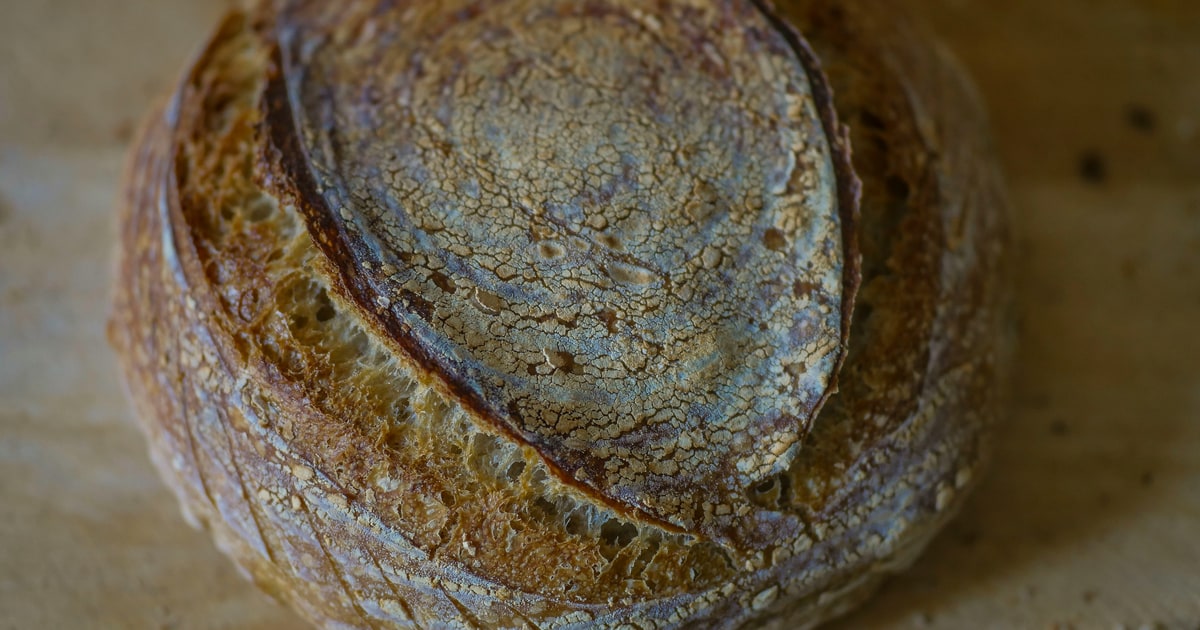
Most Muslims who check bread labels look for E471 — mono- and diglycerides of fatty acids — as the emulsifier to watch. E472e is E471’s less-famous cousin, doing similar work in bread and dough with the same source ambiguity. If you have been checking for one but not the other, this guide covers what you need to know about DATEM.
What DATEM Is and What It Does
E472e is the food additive code for diacetyl tartaric acid esters of mono- and diglycerides of fatty acids — usually shortened to DATEM for obvious reasons. The full chemical name tells you exactly what it is: a chemical modification of mono- and diglycerides (themselves derived from fatty acids) with diacetyl tartaric acid.
DATEM has a specific functional role in bread-making that distinguishes it from E471. While E471 is a general-purpose emulsifier affecting texture and moisture retention, DATEM works specifically on the gluten network in dough.
When DATEM is added to bread dough, it interacts with gluten proteins and strengthens the bonds between them. This creates a more robust, elastic gluten network that:
- Holds gas produced by yeast fermentation more effectively
- Allows the dough to expand more during fermentation and in the oven
- Produces a loaf with greater volume, better shape, and a more open, airy crumb
- Improves the dough’s tolerance for variations in mixing time and flour quality
For industrial bakers producing millions of loaves that must all look and feel the same, DATEM is an extremely valuable processing tool. It reduces the variability caused by differences in flour protein content and allows the use of slightly lower-protein (and cheaper) flour while maintaining product consistency.
The Source Concern
DATEM is made by esterifying mono- and diglycerides with diacetyl tartaric acid (a derivative of tartaric acid, which is plant-derived). The mono- and diglycerides component is where the halal concern lies — exactly as with E471.
Mono- and diglycerides of fatty acids can be produced from:
Vegetable oils — palm oil, sunflower oil, soy oil, rapeseed oil. All halal. Palm oil is the most widely used source in European food manufacturing.
Animal fats — beef tallow or pork lard. Pork-derived DATEM is haram. Beef tallow-derived DATEM from non-Islamically slaughtered animals is mushbooh.
The tartaric acid component of DATEM (the diacetyl tartaric acid part) is always plant-derived — tartaric acid comes from grapes. This part of the molecule is not the concern. The concern is exclusively the fatty acid component.
As with E471, UK food labelling does not require the fat source to be specified. The label will say “emulsifier (E472e)” or “emulsifier (DATEM)” without indicating whether the underlying fat was from plants or animals.
Where DATEM Appears in Commercial Food Production
Sandwich bread and sliced bread — DATEM is widely used in the high-volume, soft sandwich loaves that dominate UK supermarket bread shelves. The major brands — Warburtons, Hovis, Kingsmill — use DATEM in some of their products alongside or instead of E471.
Pizza bases and dough — Commercial pizza dough requires a strong, extensible gluten network to stretch thin without tearing. DATEM is a standard ingredient in commercial pizza base production. Supermarket fresh pizza, some frozen pizza bases, and foodservice pizza dough frequently contain E472e.
Croissants and laminated pastry — The layered structure of croissants and other laminated doughs (danish pastry, pain au chocolat) benefits from a strong gluten network. Commercial croissant producers frequently use DATEM.
Bagels — The chewy texture characteristic of bagels requires a particularly strong gluten network. DATEM is commonly used in commercial bagel production.
Cake mixes — Some commercial cake mixes include DATEM as part of their leavening and structure system.
Burger buns and rolls — Fast food and takeaway burger buns use DATEM extensively to achieve the soft, pillowy texture and high volume that customers expect.
Flour tortillas — Commercial flour tortillas (supermarket wraps) use DATEM to create the extensible, pliable dough structure.
DATEM vs E471: Which Should You Be More Concerned About?
Both carry the same source risk. In practice, DATEM receives less attention than E471 in halal food discussions, which means Muslim consumers who know to check for E471 may overlook E472e on the same label. The two emulsifiers sometimes appear together in the same product — a bread might contain both E471 and E472e.
The halal check is identical for both:
- Is the product vegan-labelled? If yes, the emulsifiers are plant-derived. Safe.
- Does the product have halal certification from a credible body? If yes, the emulsifier source has been verified. Safe.
- Is neither present? The emulsifier source is undeclared — mushbooh. Avoid if following a cautious standard.
Other E472 Variants and Their Status
The E472 series covers several related emulsifiers, all derived from fatty acids:
| E-Code | Name | Concern |
|---|---|---|
| E472a | Acetic acid esters of mono/diglycerides | Same fatty acid source concern |
| E472b | Lactic acid esters of mono/diglycerides | Same fatty acid source concern |
| E472c | Citric acid esters of mono/diglycerides | Same fatty acid source concern |
| E472d | Tartaric acid esters of mono/diglycerides | Same fatty acid source concern |
| E472e | DATEM | Same fatty acid source concern |
| E472f | Mixed tartaric/acetic acid esters | Same fatty acid source concern |
All of these share the same underlying concern: the fatty acid component can be from plant or animal sources. All require the same check — vegan or halal certification.
Artisan Bread: The Natural Alternative
The reason artisan bread and sourdough rarely contain DATEM is the production method itself. In long-fermentation bread, the extended time the dough spends fermenting (often 12-24 hours or more) allows the gluten to develop naturally to a level of strength and extensibility that DATEM would otherwise artificially create. The lactic acid produced during sourdough fermentation also modifies the dough structure in ways that improve its baking properties.
A genuine artisan loaf made by a craft baker using long fermentation has no need for DATEM. The fermentation process replaces the additive.
This is one reason why artisan bread, despite often being more expensive, is a simpler choice for halal consumers: the ingredients list is typically just flour, water, salt, and starter culture.
Practical Label Reading
Look for these terms on bread and dough products:
- E472e — the EU code
- DATEM — the standard abbreviation
- diacetyl tartaric acid esters of mono- and diglycerides of fatty acids — the full name (rarely written out in full)
- emulsifier (E472e) — typical label format
If you see any of these on a product that does not carry a vegan or halal certification, treat it as mushbooh.
E-Code Quick Reference
| E-Code | Name | Halal Status |
|---|---|---|
| E472e | DATEM | Mushbooh (source-dependent) |
| E471 | Mono- and diglycerides of fatty acids | Mushbooh (source-dependent) |
| E481 | Sodium stearoyl lactylate | Mushbooh (source-dependent) |
| E482 | Calcium stearoyl lactylate | Mushbooh (source-dependent) |
| E920 | L-Cysteine | Mushbooh/Haram (may be pig bristle) |
Ingredients change. Be first to know.
Brands reformulate without warning. We track every E-code update and halal certification — one short weekly email.
Related Articles
 E-Code Guides
 E481 (Sodium Stearoyl Lactylate): Why Your Bread May Be Mushbooh
E481 SSL is Mushbooh — the stearic acid in this bread emulsifier may come from animal fat. No disclosure on most UK bread labels.
 E-Code Guides
 E471 (Mono and Diglycerides): Halal or Haram? Bread, Margarine & More (2026)
E471 is Mushbooh — it depends on whether the source fat is animal or vegetable. Here's how to check on any product — bread, margarine, biscuits, ice cream.
 E-Code Guides
 Is Propylene Glycol (E1520) Halal? The Flavour Solvent Explained
Propylene glycol (E1520) is halal. It is a synthetic diol made from petroleum-derived propylene oxide, contains nothing animal-derived and does not intoxicate. The word 'glycol' is not 'alcohol' in the fiqh sense. Where it does matter: as the carrier in flavourings that may also contain ethanol.