
Quick verdict
| Condition | Status |
|---|---|
| Product labelled “suitable for vegans” | ✅ Halal — glycerol must be plant-based |
| Product labelled “suitable for vegetarians” | ✅ Halal — animal glycerol excluded |
| Halal-certified product | ✅ Halal — source independently verified |
| No vegetarian/vegan label, no halal cert | ⚠️ Mushbooh |
E442 is usually from rapeseed oil (halal), but the glycerol component may come from animal fat. The vegetarian/vegan label is the fastest check.
E442 (ammonium phosphatides) appears on countless chocolate bars. If you have picked up a Cadbury Dairy Milk, a Milka, or a Kinder Bueno and turned it over to check the ingredients, you will likely have seen it. The question of whether E442 is halal does not have a single yes-or-no answer — it depends on the source of one specific component, and that source is rarely declared on the label.
What Is E442?
Ammonium phosphatides (E442, also labelled “Emulsifier YN”) are a group of emulsifiers produced by reacting ammonia with partially hydrogenated rapeseed oil and phosphatides. In plainer language: they are derived from rapeseed/canola oil with ammonium salts added.
Their function in chocolate is the same as lecithin (E322): they reduce viscosity, allowing molten chocolate to flow smoothly during manufacturing, ensuring even coating and consistent texture in the final bar. E442 was developed as an alternative to lecithin, particularly for manufacturers seeking to reduce costs or who cannot source soy lecithin.
Why E442 Is Mushbooh
The core issue is the glycerol that may be present as a component in the production process. Glycerol (E422) is a common co-product or carrier in emulsifier manufacturing, and glycerol can come from:
- Vegetable oil — halal
- Animal fat (including pork fat or beef tallow) — haram if porcine, mushbooh if bovine without halal slaughter
- Synthetic (petrochemical) — halal
When ammonium phosphatides are produced from rapeseed oil with plant-derived glycerol, the resulting E442 is halal. The problem is that manufacturers do not specify which type of glycerol their E442 supplier used, and you cannot determine this from the label.
In practice, the dominant commercial route uses plant-derived glycerol, which is why the risk is relatively low but not zero. This is precisely the mushbooh definition: probably permissible, but not confirmable without further investigation.
The Vegan/Vegetarian Label Shortcut
The fastest check at the supermarket: look for “suitable for vegans” or “suitable for vegetarians” on the packaging.
- Vegan: guarantees no animal-derived ingredients whatsoever — the glycerol in the E442 must be plant-based or synthetic
- Vegetarian: confirms no meat or meat by-products — this includes animal-derived glycerol from slaughter, so a vegetarian label also effectively confirms plant-derived glycerol
If the product has neither label (which is common for mainstream milk chocolate containing dairy), the E442 source cannot be confirmed from the packaging alone.
Chocolate Brands That Use E442
Cadbury Dairy Milk — Cadbury has used E442 in some formulations. The original UK Dairy Milk contains milk, which means it cannot carry a vegan label, so the glycerol source in the E442 is not externally confirmed by that route. Cadbury has stated that their emulsifiers are vegetable-based, which would make E442 halal in their products — but this is a manufacturer claim, not a verified certification.
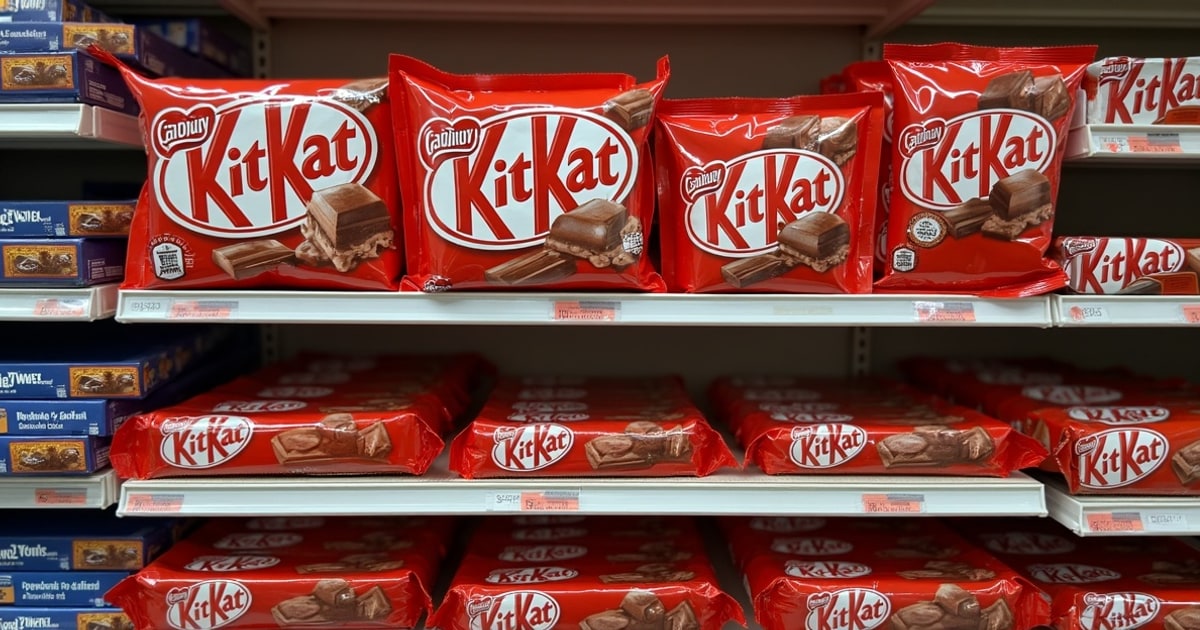
Nestlé KitKat — KitKat bars have contained E442 in some markets. Again, the milk chocolate formulation prevents a vegan label. Nestlé has halal-certified some KitKat lines in certain markets (particularly the Middle East and Southeast Asia), but UK-sold standard KitKat does not carry UK halal certification.
Milka — The Milka range (owned by Mondelēz, same parent company as Cadbury) uses ammonium phosphatides in various bars. Milka is predominantly sold in Continental Europe.
Kinder Bueno — Ferrero products including Kinder Bueno have used E442. Ferrero’s Italian factories produce under halal certification for some lines, but again, UK-sold standard Kinder Bueno does not carry halal certification.
Thorntons Classic Collection — Thorntons (now also owned by Ferrero) has used E442 in chocolate assortments.
Halal-Certified Chocolate Options
For consumers who follow strict halal standards and want certainty rather than a probability:
Certified halal chocolate brands — Several brands produce chocolate specifically for Muslim consumers with verified halal supply chains:
- Ülker (Turkish brand, widely available in UK halal shops and online) — halal certified
- Damak — halal certified milk chocolate with pistachio
- Selamlique — premium Turkish chocolate, halal certified
- Galaxy — does not carry UK halal certification but Mars Inc. has produced halal-certified Galaxy for some markets
Dark chocolate — Dark chocolate that carries a vegan certification will have no animal-derived ingredients. The E442, if present, will therefore be from plant-derived glycerol.
Home baking — Callebaut and Valrhona couverture chocolates used by professional bakers are available in halal-certified versions for the trade. Retail versions from specialist suppliers are also available online.
How to Verify for a Specific Product
- Check for vegetarian/vegan label — as described above, this is the quickest in-store check
- Check for halal certification logo — HFA, HMC, IFANCA, or the relevant national body for imported products
- Contact the manufacturer — ask specifically: “Is the glycerol component in your E442 ammonium phosphatides derived from plant or animal sources?” A responsible manufacturer should be able to answer this
- Use HalalCodeCheck — scan the ingredient list and our database will flag E442 with its mushbooh status and this exact guidance
E-Code Quick Reference
| E-Code | Name | Halal Status |
|---|---|---|
| E442 | Ammonium Phosphatides | Mushbooh (vegan label = halal) |
| E322 | Lecithin | Usually halal (soy/sunflower); mushbooh if egg-derived |
| E471 | Mono- and diglycerides of fatty acids | Mushbooh (source-dependent) |
| E476 | Polyglycerol polyricinoleate (PGPR) | Halal (castor oil derived) |
| E422 | Glycerol | Mushbooh (source-dependent; vegan label = halal) |
The key rule for chocolate emulsifiers: E476 (PGPR) is unambiguously halal (castor oil). E322 from sunflower or soy is halal. E442 and E471 require the vegetarian/vegan label or halal certification to confirm.
Ingredients change. Be first to know.
Brands reformulate without warning. We track every E-code update and halal certification — one short weekly email.
Related Articles
 E-Code Guides
 E476 (PGPR): Is It Halal? The Chocolate Emulsifier Guide (2026)
E476 (PGPR) is Mushbooh — made from castor oil and glycerol that may be animal-derived. Here's what every halal-conscious chocolate buyer needs to know.
 E-Code Guides
 E322 Lecithin: Soy vs Sunflower — Which Is Halal?
E322 lecithin is usually halal — most is soy or sunflower-derived. Egg lecithin and animal-derived variants exist but are rare. Here's how to tell.
 E-Code Guides
 Which Foods Contain E471? A Category-by-Category Halal Guide (2026)
E471 turns up in chocolate, biscuits, bread, ice cream, spreads, instant noodles and protein bars. Here is a category-by-category breakdown of where it hides and which certified alternatives exist.