
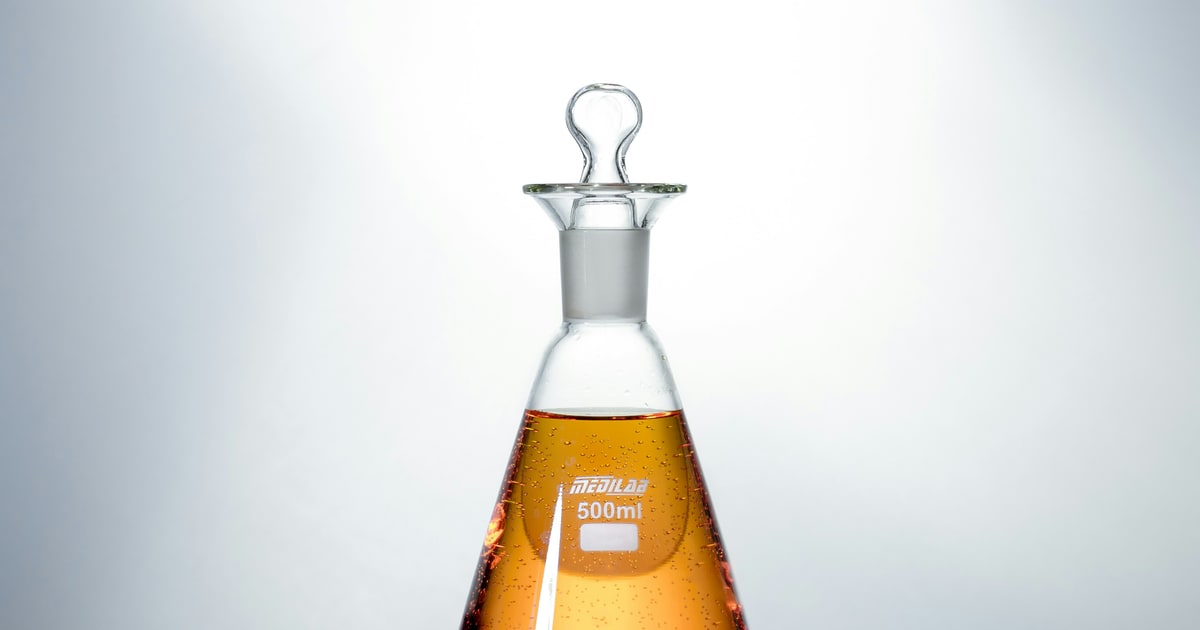
Glycerol appears on food labels under several names — glycerin, glycerine, glycerol, and the E-number E422. It is one of those additives that seems harmless at first glance: a colourless, odourless liquid with a slightly sweet taste. Yet for Muslim consumers, E422 sits firmly in the mushbooh category because its halal status is entirely source-dependent, and UK labels almost never specify the source.
What Glycerol Does in Food
E422 (glycerol) is classified as a humectant — it attracts and retains moisture. This property makes it valuable across several food applications:
- In baked goods and cakes: glycerol prevents the crumb from drying out, extending the soft texture and shelf life
- In confectionery: it prevents sugar crystallisation and keeps sweets pliable
- In energy drinks: used as a carrier for other ingredients and as a potential ergogenic aid in some formulations
- In food coatings: provides a flexible, glossy coating on some dried fruits and confectionery
- In syrups and liqueurs: acts as a sweetener and texture agent
It is a genuinely useful additive from a food technology perspective, which is why it appears in such a wide variety of products.
The Source Problem: Plant Oil vs Animal Fat
Glycerol is produced commercially through two main routes:
From vegetable oils — The most common modern route. When vegetable oils (primarily palm oil, but also soy, coconut, and rapeseed) are processed — either through saponification to make soap, or through biodiesel production — glycerol is released as a byproduct. This vegetable-derived glycerol is halal.
From animal fats — When animal fats (tallow from cattle or lard from pigs) are saponified during soap manufacturing, the same glycerol byproduct is produced. Animal-derived glycerol from pork sources is haram. Animal-derived glycerol from non-pork sources (beef, sheep) where the animal was not slaughtered Islamically is mushbooh.
Synthetic glycerol — A smaller proportion of commercial glycerol is produced synthetically from propylene (a petroleum derivative). Synthetic glycerol is halal as it has no animal connection whatsoever.
The critical issue: all three types of glycerol are chemically identical. Without knowing the production route, you cannot tell them apart by looking at or testing the final ingredient.
The UK Commercial Reality
The global shift toward palm oil-based biodiesel and soap production has made plant-derived glycerol the dominant form in commercial food manufacturing. Much of the glycerol used in UK food production today is derived from palm oil, particularly as large manufacturers have moved supply chains away from animal fats following consumer pressure around vegan and vegetarian products.
However, this market shift does not mean the problem has gone away entirely. Smaller food manufacturers, some confectionery producers, and certain specialist product categories may still use animal-derived glycerol, particularly if they are sourcing from suppliers who process both animal and vegetable fats.
Without a declaration on the label or confirmation from the manufacturer, you cannot know which source was used for any specific product.
Products Commonly Containing E422
Commercial cakes and pastry — Supermarket own-brand cakes, celebration cakes, muffins, and similar products frequently use glycerol as a humectant. Mr Kipling, supermarket own-brand cake ranges, and many confectionery cake products list glycerol among their ingredients.
Energy and sports drinks — Some Lucozade formulations have used glycerol. The energy drink category more broadly uses glycerol in some products, either as a functional ingredient or a carrier.
Sugar-free and reduced-sugar confectionery — Glycerol appears in some sugar-free sweets and chewing gum products as a humectant and mild sweetener.
Dried fruit products — Some commercially prepared dried fruits use glycerol as a coating to prevent them from sticking together and to maintain softness. This can include dried cranberries, dates (commercially packaged), and similar products.
Flavoured syrups — Cocktail syrups, coffee syrups, and similar products sometimes use glycerol.
Cake icing and fondant — Ready-to-roll fondant icing frequently contains glycerol to maintain its pliable texture. This is particularly relevant when buying ready-made cake decorating products.
How to Get a Definitive Answer
The vegan label test — A “suitable for vegans” claim on the product is the most immediately accessible check. Vegan certification verifies that no animal-derived ingredients are used, which means any glycerol in that product must be plant-based or synthetic. This is the quickest and most reliable shortcut at the supermarket.
Halal certification — A credible halal certification (from bodies such as HFA, HMC, IFANCA, or similar) verifies that all ingredients including glycerol have been assessed and confirmed as permissible. The certifier will have checked the supply chain documentation.
Direct manufacturer contact — For products you buy regularly, contacting the manufacturer is a reasonable step. Ask specifically whether the glycerol used is plant-derived, animal-derived, or synthetic, and whether they can provide documentation. Some manufacturers respond promptly to this; others do not.
The Fiqh Position on Undeclared Glycerol
Scholars and halal certification bodies differ on how strictly to treat undeclared-source glycerol:
Some take the position that because plant-derived glycerol now dominates the market, and because it undergoes significant chemical transformation during processing (no longer resembling the original fat), the probability of harm is low enough that it falls below the threshold of concern.
Others hold that the precautionary principle applies: if you cannot verify the source, treat it as mushbooh and avoid it.
The HFA (Halal Food Authority) and similar UK certification bodies generally class unverified glycerol as mushbooh. HMC (Halal Monitoring Committee) takes a stricter approach and would require positive confirmation of a plant source before permitting it in certified products.
The practical implication for consumers: if you follow a stricter halal standard (as guided by HMC-type bodies), look for the vegan label or halal certification. If you follow a more moderate position, the likelihood of the glycerol being plant-derived in mainstream UK products is relatively high — but it cannot be guaranteed without a label claim.
Glycerol in Personal Care and Cosmetics
While this guide focuses on food, it is worth noting that glycerol/glycerin is also widely used in toothpaste, mouthwash, skincare, and cosmetics. The same source concern applies. Many Muslim consumers who follow strict halal standards choose vegan-certified personal care products for this reason.
E-Code Quick Reference
| E-Code | Name | Halal Status |
|---|---|---|
| E422 | Glycerol / Glycerin | Mushbooh (source-dependent; vegan label = halal) |
| E471 | Mono- and diglycerides of fatty acids | Mushbooh (source-dependent) |
| E473 | Sucrose esters of fatty acids | Mushbooh (source-dependent) |
| E475 | Polyglycerol esters of fatty acids | Mushbooh (source-dependent) |
| E477 | Propylene glycol esters of fatty acids | Mushbooh (source-dependent) |
Glycerol/glycerin is also in toothpaste, where the same animal-vs-plant source question applies. For a brand-by-brand breakdown of UK toothpaste brands and their glycerin source, see Is Glycerin in Toothpaste Halal?.
UK Brands Commonly Flagged for E422
The brands below have dedicated verdict pages — E422 was identified as a concern in their ingredient lists.
| Brand | Category | Verdict |
|---|---|---|
| Trident | Chewing gum | ⚠️ Mushbooh |
| Wrigley’s | Chewing gum | ⚠️ Mushbooh |
E422 also appears without a specific brand page in: cake icing and fondant, glacé cherries and dried fruit, soft chewy sweets, and some energy drinks. For any of these, a vegan label or halal certification is the fastest way to confirm the glycerol source.
For the full E-code technical reference, see the E422 Glycerol detail page.
Halal-Certified Alternatives to Sweets Containing E422
Ingredients change. Be first to know.
Brands reformulate without warning. We track every E-code update and halal certification — one short weekly email.
Related Articles
 E-Code Guides
 Which Foods Contain E471? A Category-by-Category Halal Guide (2026)
E471 turns up in chocolate, biscuits, bread, ice cream, spreads, instant noodles and protein bars. Here is a category-by-category breakdown of where it hides and which certified alternatives exist.
 E-Code Guides
 Is Cheese Halal? Animal Rennet, Microbial Rennet and What to Check (2026)
The halal status of cheese depends on the rennet used to set it. Microbial or vegetarian rennet is halal; animal rennet from non-zabiha cattle is Mushbooh. Here is how to check.
 E-Code Guides
 Haram E-Numbers to Avoid: The Complete Reference List (2026)
There is no single haram E-number list — status depends on source. But a specific set are either always haram (E120, E441, E542) or high-risk Mushbooh you should verify. Here is the full reference.