
Is E160a halal?
E160a itself is halal — it is a natural plant pigment from carrots, algae, or synthetic production. However, E160a in commercial food products is often dissolved in a gelatine carrier to make it water-dispersible, and that carrier can be porcine. The carrier is part of the E160a declaration and is not labelled separately.
Quick verdict:
- Product labelled “suitable for vegetarians” or “suitable for vegans” → E160a is halal (carrier must be plant-based)
- No vegetarian/vegan label and no halal certification → Mushbooh (carrier source unknown)
This means you can often resolve the E160a question in 5 seconds by checking for a vegetarian or vegan claim on the front of pack.
Beta-carotene presents one of the more counterintuitive challenges in halal food navigation. The molecule itself comes from plants — from carrots, from algae, or from entirely synthetic production. There is no animal in the beta-carotene. Yet E160a ends up classified as mushbooh by many halal food scholars and certification bodies because of what surrounds the beta-carotene in its commercially used form: the carrier.
What Beta-Carotene Is
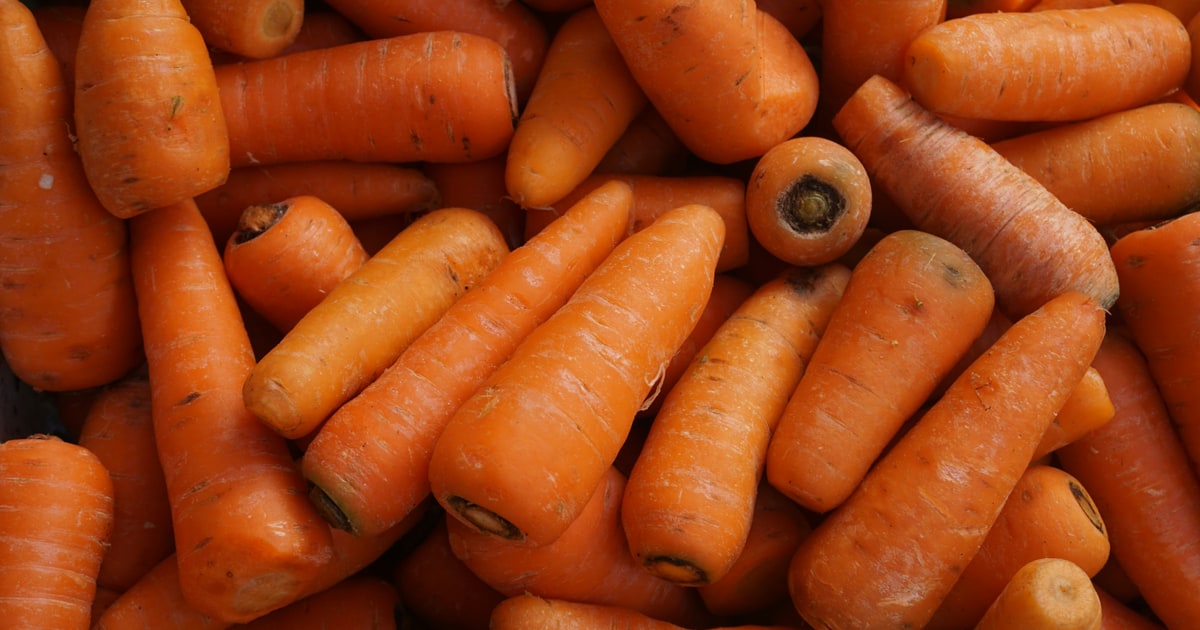
Beta-carotene is an organic pigment from the carotenoid family. It is found abundantly in orange and yellow plants — carrots, sweet potatoes, butternut squash, apricots, and leafy greens. The human body converts beta-carotene into Vitamin A, which is why it is called a provitamin.
As a food additive (E160a), beta-carotene serves two purposes:
- Colouring — it provides the characteristic orange-yellow colour used in margarine, butter-based products, orange-tinted confectionery, and breakfast cereals
- Nutritional fortification — it is added to plant milks, cereals, and other products as a source of provitamin A
The commercial sources of beta-carotene are:
- Natural extraction — from carrots, algae (particularly Dunaliella salina), and other plant material
- Fermentation — from fungi such as Blakeslea trispora
- Synthetic production — chemical synthesis produces beta-carotene identical to the natural molecule
All three sources are halal. Beta-carotene itself is never the problem.
The Carrier Problem
Beta-carotene is a fat-soluble compound. It dissolves readily in oil and fat, but it will not dissolve in water. This creates a significant practical problem for food manufacturers.
Most food products — drinks, dairy products, cereals, confectionery glazes — are water-based or have a high water activity. You cannot simply mix an oil-soluble pigment into a water-based product and expect it to stay evenly distributed. Without intervention, the beta-carotene would clump together, separate from the water phase, and create an uneven, unattractive result.
The food technology solution is to create an emulsified, water-dispersible form of beta-carotene. The beta-carotene is encapsulated in a matrix that protects it and allows it to disperse evenly in water-based products. Several materials can form this carrier matrix:
Gelatine — historically the most common carrier. Porcine gelatine creates an excellent encapsulation matrix with good stability. It is a preferred carrier in many commercial formulations precisely because it performs so well technically. This is the same porcine gelatine that rules out standard UK Haribo and most gel capsules — Is gelatin halal or haram? covers the full sourcing picture.
Modified starch — a plant-based carrier that works well for most food applications. Starch-encapsulated beta-carotene is entirely halal.
Gum arabic — another plant-derived carrier option. Halal.
Pectin — plant-derived, halal.
Sucrose — in some spray-dried formulations, sucrose is used as a carrier. Halal.
The critical issue is that the label does not tell you which carrier was used. When a manufacturer adds water-dispersible beta-carotene to their product, the formulation sheet will say “E160a” — and E160a includes both the beta-carotene and its carrier matrix. The gelatine, if present, is not separately declared.
Why the Carrier Is Not Labelled Separately
In EU and UK food law, carriers and solvents used for food additives are subject to a “carry-over” principle: if the quantity of carrier carried over into the final food product is not technologically significant and does not itself have a technological function in the final product, it does not need to be labelled as an ingredient.
The gelatine carrier in a water-dispersible beta-carotene preparation meets this threshold in most applications — it is present in very small quantities, and in the final product, the gelatine is doing nothing except keeping the beta-carotene dispersed. From a food technology regulatory perspective, it is a processing aid associated with the additive, not a food ingredient in its own right.
From an Islamic food law perspective, the conclusion is different. The presence of porcine gelatine — in any quantity, as a carrier for any other ingredient — renders the product mushbooh or haram, because the question of purity is not governed by quantity thresholds in the same way.
Products Most Likely to Use Gelatine-Carried E160a
Margarine and spreads — The yellow-orange colour of margarines (Flora, own-brand spreads) comes from beta-carotene. The processing of margarine involves an aqueous phase, meaning water-dispersible beta-carotene is used. Historically, this would have used gelatine carriers. Many major margarine producers now use plant-based carriers, particularly as their products carry vegetarian or vegan claims. Check for the vegetarian/vegan label.
Processed cheese — The orange colour in processed cheese slices and similar products often uses beta-carotene. Without a vegetarian claim, the carrier status is uncertain.
Breakfast cereals — Some cereals are coloured with E160a. Given that many major cereal brands carry vegetarian claims, the carrier is likely to be plant-based for these products.
Confectionery — Some orange-coloured confectionery and cake decorations use beta-carotene. The carrier depends on whether the product holds vegetarian or vegan status.
Dietary supplements — Beta-carotene supplements and multivitamins often use beta-carotene in soft-gel capsules. Here the gelatine problem is doubled: both the capsule shell and the carrier matrix may be porcine gelatine. Halal-certified supplements use HPMC plant-based capsules and starch-based carriers.
The Shortcut: Vegetarian and Vegan Labels
Since porcine gelatine is not acceptable for vegetarian products, any product with a genuine “suitable for vegetarians” (the green V symbol or equivalent) or “suitable for vegans” claim guarantees that no porcine gelatine carrier was used for E160a. The beta-carotene in a vegetarian-certified product will use a plant-based carrier — starch, pectin, gum arabic, or sucrose.
This is the most practical label-reading shortcut for E160a in supermarket shopping.
Colour Alternatives Used Alongside E160a
When formulating products with orange-yellow colouring, manufacturers have several alternatives to beta-carotene:
| E-Code | Name | Halal Status |
|---|---|---|
| E160a | Beta-carotene | Mushbooh (check vegetarian label) |
| E160b | Annatto / Bixin | Halal (plant seed extract) |
| E160c | Paprika extract | Halal (plant-derived) |
| E160d | Lycopene | Halal (from tomatoes) |
| E160e | Beta-apo-8’-carotenal | Mushbooh (same carrier concern) |
| E101 | Riboflavin | Halal (fermentation-derived) |
| E102 | Tartrazine | Halal (synthetic) |
Annatto (E160b), extracted from the seeds of the achiote tree, is a widely used orange-red natural colourant that does not share the carrier concern — it is water-soluble and does not require an encapsulation matrix. Products using annatto rather than beta-carotene sidestep the E160a issue entirely.
A Note on Natural Beta-Carotene vs Synthetic
Some labels distinguish between “natural beta-carotene” and “beta-carotene” (which may be synthetic). For halal purposes, this distinction is irrelevant to the carrier concern — both natural and synthetic beta-carotene require water-dispersible carriers in water-based products, and both can be in a gelatine matrix. The “natural” descriptor refers only to the origin of the pigment molecule, not the carrier.
E-Code Quick Reference
| E-Code | Name | Halal Status |
|---|---|---|
| E160a | Beta-carotene | Mushbooh (carrier may be porcine gelatine) |
| E160b | Annatto | Halal |
| E160c | Paprika extract | Halal |
| E441 | Gelatine | Haram (porcine) / Halal (certified halal beef/fish) |
| E1450 | Starch sodium octenyl succinate | Halal (modified starch) |
Ingredients change. Be first to know.
Brands reformulate without warning. We track every E-code update and halal certification — one short weekly email.
Related Articles
 E-Code Guides
 Is E441 (Gelatin) Halal? The Complete 2026 Guide
E441 gelatin is Mushbooh — its halal status depends entirely on the animal source. Pork gelatin is haram; halal-certified beef or fish gelatin is permissible.
 E-Code Guides
 E441 Gelatin: Pork vs Beef vs Fish — The 2026 Guide
The definitive guide to E441 gelatine: which source is halal, which is haram, how to identify gelatine on food labels, and the best halal-friendly alternatives.
 E-Code Guides
 Is Propylene Glycol (E1520) Halal? The Flavour Solvent Explained
Propylene glycol (E1520) is halal. It is a synthetic diol made from petroleum-derived propylene oxide, contains nothing animal-derived and does not intoxicate. The word 'glycol' is not 'alcohol' in the fiqh sense. Where it does matter: as the carrier in flavourings that may also contain ethanol.