
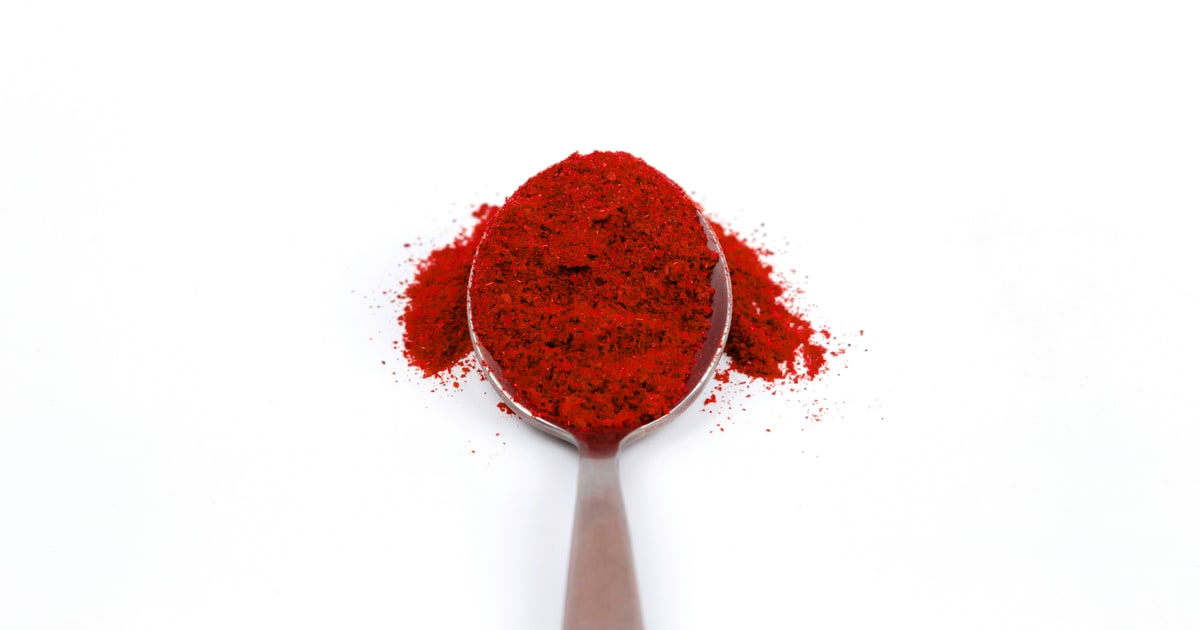
Red and pink food colouring in the UK supermarket is frequently the product of crushed insects. E120 — carmine, cochineal, carminic acid — is derived from Dactylopius coccus, a scale insect farmed in South America and the Canary Islands specifically for the production of this vivid red pigment. For Muslim consumers, E120 is unambiguously haram, and it appears in a wider range of products than most people realise.
How Carmine Is Produced
The cochineal insect (Dactylopius coccus) is a scale insect that feeds on cactus pads (specifically Opuntia cacti). The insect accumulates carminic acid — a red anthraquinone compound — as a defence mechanism against predators. Carminic acid gives the insect its distinctive vivid red-crimson colour.
Carmine production involves:
- Farming cochineal insects on cactus plantations (primarily in Peru, Bolivia, Mexico, and the Canary Islands)
- Harvesting the insects by brushing them off the cactus pads
- Killing the insects with heat, steam, or submersion in hot water
- Drying the insect bodies
- Crushing the dried insects to produce cochineal extract
- Further processing to purify and precipitate carmine (the aluminium lake of carminic acid)
Approximately 70,000 insects are required to produce one pound (454g) of carmine dye. It is an intensely labour-intensive process, which is one reason carmine is expensive relative to synthetic alternatives — yet manufacturers still use it because it produces a vibrant, light-stable red that synthetic dyes struggle to match.
Why Carmine Is Haram Without Exception
Unlike some insect-derived substances (such as E904 shellac, where scholarly opinion is divided), carmine is made from the crushed bodies of insects. The mainstream ruling in Islamic jurisprudence is clear: insects are impermissible food, their by-products are impermissible, and carmine is therefore haram.
This ruling is consistent across the major schools of Islamic jurisprudence (Hanafi, Maliki, Shafi’i, Hanbali) and is confirmed by all major UK and international halal certification bodies, including HMC, HFA, JAKIM, IFANCA, and others. There is no serious scholarly position that permits carmine in the way that some scholars permit shellac.
UK Products Known to Contain E120 Carmine
Dairy and Yoghurt
Yoghurt is one of the most significant carmine categories. The vivid red-pink colour of strawberry, raspberry, and cherry yoghurts in mainstream brands has historically relied on E120. Products where carmine has been identified or reported:
- Müller Corner (strawberry, raspberry variants) — Müller has used carmine in some of their fruit corner products. Formulations change; always check the current label
- Yoplait (strawberry and raspberry variants in some ranges)
- Some supermarket own-brand strawberry yoghurts
Many yoghurt brands have reformulated away from carmine in recent years, partly due to vegan and clean-label consumer pressure. Check the current label of any pink or red yoghurt, as formulations change regularly.
Fruit Drinks and Juices
- Some pink lemonade products use carmine for their colour
- Some pink grapefruit juice products use added colouring that includes carmine
- Some fruit-flavoured squash and cordials in red/pink variants
Confectionery
- Some Jelly Belly jelly bean flavours (particularly red-pink shades) use carmine. Note that Jelly Belly also uses E904 shellac as a glazing agent, making them doubly problematic for strict halal consumers
- Some maraschino cherries (cocktail cherries) are coloured with carmine
- Some candy-coated chocolates in red formulations
Dairy Products
- Some pink-coloured cream cheese products
- Some strawberry-flavoured milk products
Cosmetics and Medications
While beyond the food scope of this guide, it is worth noting that carmine is widely used in lipsticks, blushers, and eye shadows (red and pink shades), and in some pharmaceutical tablet coatings and liquid medications. Muslim consumers who avoid carmine in food typically also seek carmine-free cosmetics and medications.
How to Identify Carmine on UK Labels
Train yourself to recognise all the names carmine goes by:
- E120 — the EU food additive number
- Carmine — the processed pigment name
- Cochineal — the raw extract name (less refined than carmine)
- Cochineal extract — another extract name
- Carminic acid — the pure compound (less common on food labels)
- Natural Red 4 — the colour index name
- Crimson Lake — an older trade name
- CI 75470 — the colour index number
UK labels most commonly use “E120”, “carmine”, or “cochineal”. Products imported from the US often say “carmine” or “cochineal extract” as FDA regulations require these to be named rather than coded.
A key habit: always check products with red, pink, and crimson colours — red velvet cake, strawberry yoghurt, raspberry jam (though jam uses naturally red fruit and rarely needs added colour), pink lemonade, cocktail cherries, and cherry-flavoured products.
Products That Have Changed Their Formulation
Product formulations change regularly, and carmine is one additive where significant reformulation has occurred since 2015, driven by:
- Growing Muslim consumer label-checking behaviour
- Vegan consumer pressure (carmine is not vegan)
- Cost volatility of carmine (insect farming is susceptible to climate and harvest variability)
- “Clean label” trends preferring fruit-derived colours
Müller, for example, has reformulated several of their yoghurt products to use fruit concentrate rather than carmine in some lines. However, this does not mean all Müller products are now carmine-free — the reformulation is product by product, not brand-wide.
This is why HalalCodeCheck emphasises checking the current label every time, even for familiar products. A product you bought and checked six months ago may have changed ingredients.
Halal-Friendly Alternatives for Red/Pink Colour
When a product uses E120 for its red or pink colour, there are several halal-friendly alternatives manufacturers can and do use:
E162 (Beetroot Red / Betanin) — Extracted from red beetroot. Provides a vivid crimson-red colour. Used in some strawberry yoghurts and pink products as a clean-label alternative. Less stable to heat and light than carmine, but effective in refrigerated products.
E163 (Anthocyanins) — Extracted from grape skin, blueberries, red cabbage, and other dark berries and plants. Produces shades from red to purple depending on pH. Widely used as a clean-label natural colourant.
E160d (Lycopene) — From tomatoes. Provides an orange-red colour. More stable than beetroot red and increasingly used in confectionery and drinks.
E124 (Ponceau 4R) — A synthetic red dye. Halal (no animal origin). Provides a bright red colour. Subject to EU requirements for an advisory statement on packaging when used.
When a product you use switches from E120 to one of these, that reformulation is a positive development for halal consumers.
E-Code Quick Reference
| E-Code | Name | Halal Status |
|---|---|---|
| E120 | Carmine / Cochineal | Haram (insect body-derived) |
| E162 | Beetroot Red (Betanin) | Halal |
| E163 | Anthocyanins | Halal |
| E160d | Lycopene | Halal |
| E124 | Ponceau 4R | Halal (synthetic) |
| E904 | Shellac | Debated (insect secretion) |
Ingredients change. Be first to know.
Brands reformulate without warning. We track every E-code update and halal certification — one short weekly email.
Related Articles
 E-Code Guides
 Is E120 (Carmine) Halal? The Insect Dye in Your Food (2026)
E120 (carmine) is derived from crushed insects and is haram. Learn which products contain it and what to look for on food labels.
 E-Code Guides
 Haram E-Numbers to Avoid: The Complete Reference List (2026)
There is no single haram E-number list — status depends on source. But a specific set are either always haram (E120, E441, E542) or high-risk Mushbooh you should verify. Here is the full reference.
 E-Code Guides
 10 E-Codes in Snacks You Should Always Check Before Buying
The 10 most important E-codes to look for when buying snacks as a Muslim consumer. Includes both haram and mushbooh additives with practical identification tips.