
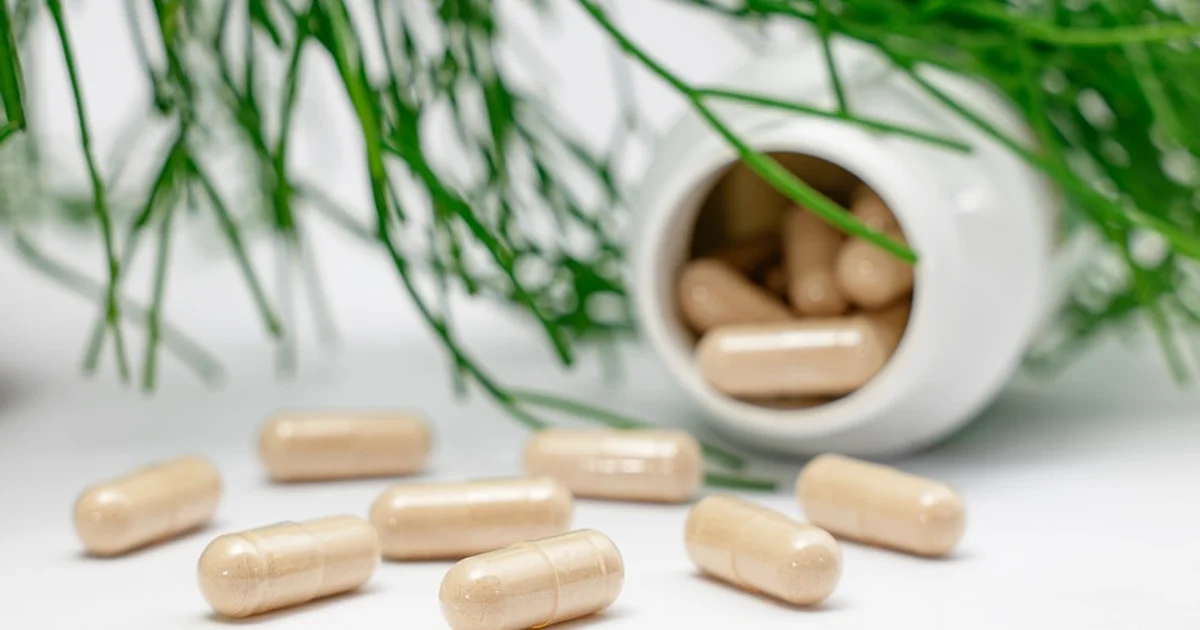
The capsule matters more than the bacteria for this category. Every mainstream probiotic brand’s marketing focuses on CFU counts and strain names — none of the six we checked lead with what the capsule shell is made from, which is the actual halal-relevant question.
Why the Capsule Is the Real Question, Not the Bacteria
Probiotic bacteria strains — Lactobacillus rhamnosus, Bifidobacterium, and similar — are halal. That’s settled and not really in dispute. What’s worth checking is the delivery mechanism: probiotics need moisture protection that gelatin doesn’t reliably provide, which is why the supplement industry has largely moved to HPMC (hydroxypropyl methylcellulose), a plant-derived, halal-neutral capsule material, for this specific category more than for vitamins generally. That’s a genuinely favorable structural fact about probiotics as a category — but “the industry trend favors HPMC” isn’t the same as “this specific bottle uses HPMC,” and none of the six brands we checked disclose capsule material on their main product pages.
What We Checked, and What We Found
No halal claim found
- Seed (DS-01 Daily Synbiotic) — no halal or kosher certification mentioned anywhere on the brand’s own product page. A claim that Seed is halal certified appears in general search summaries; it does not trace back to anything on Seed’s own site.
- Culturelle — no halal certification found on the brand’s own product pages. Marketed as vegetarian, non-GMO, and gluten-free, with no halal or kosher claim either way.
- Align — the least transparent of the six. No mention of halal certification, kosher certification, or even capsule material (HPMC vs. gelatin) anywhere on the brand’s own product page.
- Ritual Synbiotic+ — discloses more than most: capsules are hypromellose (a form of HPMC) and gellan gum, with ingredient sourcing named by component (probiotics from Denmark, prebiotic from Georgia, postbiotic from Spain). That’s a genuinely unusual level of supply-chain transparency for this category — but none of it is presented as a halal claim, and no certification is stated.
Partially certified, product-by-product
Garden of Life — our supplement capsule guide and multivitamins roundup already document Garden of Life as a mixed case: some Raw whole-food capsule products carry HFA certification, others (like some collagen items) carry no certification and are rated Mushbooh. We could not reach Garden of Life’s own certifications pages directly during this research to check probiotic-specific SKUs, so we’re relying on and cross-linking those existing, product-specific findings rather than asserting a blanket verdict for the brand.
Salaam Nutritionals: the UK and US claims don’t match
Salaam Nutritionals is a US brand with HPMC capsules; no certifying body is named publicly (see our UK vitamins guide and omega-3 guide). The US site claims the company “passed a rigorous inspection to obtain a Kosher and Halal certificate” — without saying who issued it. If you’re buying from Salaam Nutritionals in the US, ask which body issued the certificate — the UK certification doesn’t automatically carry over.
Comparison Table
| Brand | Halal Certification | What We Found |
|---|---|---|
| Seed (DS-01) | Not stated | No halal mention on own site; unsupported claim seen in search results |
| Culturelle | Not stated | No halal or kosher claim found |
| Align | Not stated | Least transparent — no capsule material disclosed either |
| Ritual Synbiotic+ | Not stated | Discloses HPMC/gellan capsule and ingredient origin, but not a halal claim |
| Garden of Life | Product-dependent | Some Raw-line items HFA certified per our existing coverage; others uncertified |
| Salaam Nutritionals | Unresolved | US site claims a certificate with no body named; conflicts with our existing UK-brand documentation |
What to Ask Before Buying a Probiotic
- Is the capsule HPMC, gelatin, or something else? Most brands don’t say on the main product page — check the supplement facts panel or ask directly.
- Is a specific certifying body named, or just the word “certified”? Salaam Nutritionals’ US site is the clearest example in this guide of the second, weaker version of that claim.
- Does the certification apply to the exact product, or the brand generally? Garden of Life is the clearest example here — some lines certified, others not.
- Are you looking at the brand’s own claim, or a repeated search-result summary? Seed is the clearest example of a claim that doesn’t survive checking the primary source.
Summary
| Question | Answer |
|---|---|
| Are probiotic bacteria strains themselves halal? | Yes — the capsule shell is the actual question, not the bacteria |
| Which brand discloses the most about sourcing? | Ritual Synbiotic+ — capsule material and ingredient origin named, though not framed as a halal claim |
| Which brand’s certification claim is confirmed on its own site? | None of the six cleanly, for a US-market SKU — Garden of Life is certified for specific products only |
| Is the “Seed is halal certified” claim seen online accurate? | Not traceable to Seed’s own site |
For the general framework on probiotic capsule types, see our supplement capsule guide. To check any specific ingredient, use the E-codes database.
How we reached this verdict
We checked the following before publishing this guide:
- Each brand’s own product or certification pages, fetched directly (August 2026), looking for a named certifying body — not aggregator “halal certified” lists or general web search summaries, one of which produced an unsupported claim about Seed that does not appear anywhere on the brand’s own site.
- Our existing coverage of Garden of Life and Salaam Nutritionals, cross-referenced rather than re-derived where direct verification wasn’t possible (Garden of Life’s certifications pages returned an access error) or where a genuine discrepancy surfaced (Salaam Nutritionals’ US site vs. our existing UK-brand documentation).
- What we explicitly could not confirm: capsule material for Align, probiotic-specific certification status for any Garden of Life SKU, and which of two possible readings of the Salaam Nutritionals situation is correct.
Madhab note
The underlying question for probiotic capsules — HPMC/plant-derived vs. gelatin, and if gelatin, from what animal source — follows the same framework as this site’s gelatin guide and supplement capsule guide: bovine gelatin from a zabiha-slaughtered animal is accepted across all four Sunni madhabs, porcine gelatin is prohibited without exception, and HPMC/plant-based capsules avoid the question entirely. None of the six brands in this guide confirm their exact capsule material on their main product pages — ask directly if this matters to your standard.
Run a certified halal brand that belongs in this guide?
Get featured here and across HalalCodeCheck — reach shoppers at the moment they verify.
Ingredients change. Be first to know.
Brands reformulate without warning. We track every E-code update and halal certification — one short weekly email.
Related Articles
 Shopping Guides
 Halal Chocolate in South Korea: Lotte Ghana, Choco Pie's Two Recipes and KMF (2026)
Korea's own chocolate — Lotte Ghana, Crunky, ABC — is uncertified for the domestic market. Orion's Choco Pie exists in two recipes: pork gelatine in Korea, beef gelatine and JAKIM/MUI/GCC certification from Vietnam. Here is how to tell them apart on the shelf, and which Korean confectionery KMF actually certifies.
 Shopping Guides
 Halal Bakery, Cakes and Gummies in South Africa: Albany, Woolworths, Beacon (2026)
South Africa is the easiest country in this series: Albany's bakeries sit on SANHA's public register, Sasko is certified for flour, and Woolworths prints the SANHA logo on what its certified suppliers make. Beacon Jelly Tots are starch-set with no gelatine; Beacon's gelatine lines say 'bovine'. Here is the logo rule.
 Shopping Guides
 Halal Sweets and Candy in Ireland: Haribo, Rowntree's and the Certified Aisle (2026)
Ireland has no locally certified confectionery brand. Haribo on Irish shelves is the UK/German pork-gelatine stock; Rowntree's Fruit Pastilles and Jelly Tots are gelatine-free; Lily O'Brien's certifies its desserts, not its chocolates. The certified gummies are imports — Bebeto, Sweetzone, Vidal.