
Red Meat Halal: Is It Halal?
✅ HalalRed Meat Halal is halal. Its lamb, goat and beef are certified by HMS (Halal Monitoring Services) under the Shariah Board of America, which requires hand-slaughtered zabiha and prohibits mechanical slaughter.
Country
United States
Product Types
Fresh halal lamb, Fresh halal goat, Fresh halal beef +2 more
Halal Certification
HMS (Halal Monitoring Services) certified under the Shariah Board of America — hand-slaughtered zabiha only. Distributor certificate S-163, valid to 31 December 2026.
Why Red Meat Halal Receives a Halal Verdict
Red Meat Halal is halal. The brand’s lamb, goat and beef are certified by HMS (Halal Monitoring Services), the halal-monitoring arm of the Shariah Board of America.
That certification determines HalalCodeCheck’s verdict. The rest of this guide looks at the service itself — including fresh delivery, cultural cuts, traceability and pricing — to help you decide whether it suits your household. Unless another source is cited, operational and commercial details come from Red Meat Halal.
Red Meat Halal launched in September 2025 from Herscher, Illinois, roughly 70 miles south of Chicago, and currently delivers to Illinois, Wisconsin, Indiana and Michigan.
Certification, Slaughter and Sourcing
Certification. Red Meat Halal holds HMS distributor certificate S-163 for lamb, goat and beef, issued 23 July 2026 and valid to 31 December 2026. HMS operates under the Shariah Board of America, requires hand-slaughtered zabiha meat and prohibits mechanical slaughter. Its monitoring covers the meat supply chain and includes unannounced inspections.
Slaughter. HMS certification confirms hand slaughter by Muslims and excludes mechanical slaughter. Red Meat Halal also states that the tasmiyah (Bismillah) is recited over each animal and that no stunning is used. For more context on the distinction, see our zabiha and non-zabiha guide.
Sourcing. The brand says its grass-fed lamb, goat and beef come from Midwest farms, with no hormones and no unnecessary antibiotics. HMS separately lists the Herscher processing plant as a certified slaughterhouse for lamb, goat, veal and beef.

Red Meat Halal
Herscher, Illinois · HMS-certified lamb, goat and beef · Fresh, never frozen · Delivers to IL, WI, IN and MI
redmeathalal.com →How Red Meat Halal Works
The service combines after-order processing, cultural cut choices and chilled regional delivery. According to the brand’s published process:
- You order — a subscription box (lamb, goat, beef or a steak box) or individual cuts from the shop.
- The animal is processed after your order is placed. Red Meat Halal states it does not hold stock; slaughter and butchery happen against live orders.
- Hand-cut to your cuisine. Subscribers pick a cultural cut style (Arab, Indo-Pakistani, Central Asian, or Turkish/Balkan) and the same lamb or goat is butchered to suit that kitchen.
- Vacuum-sealed, QR-tagged and shipped chilled at 34–38°F in an insulated box with gel packs — no dry ice, never frozen, never imported.
- Delivered within 48 hours of ordering, free, anywhere in the four-state service area. Someone must be home to receive the box; the brand tells customers to refrigerate on arrival.
Plans and prices
| Plan | What you get | From |
|---|---|---|
| Lamb subscription | Half lamb (20 lb) or whole lamb (40 lb), every 2 or 4 weeks, cultural cut of your choice | $259 per delivery |
| Goat subscription | Half (20 lb) or whole (40 lb), every 2 or 4 weeks, cultural cut of your choice | $259 per delivery |
| Beef subscription | 20, 30 or 40 lb, every 2 or 4 weeks | $259 per delivery |
| RMH Signature Steak Box | 15 or 20 lb of ribeye, T-bone, filet mignon, NY strip plus lamb chops and loin | $299 per delivery |
| Shop direct (no subscription) | Ground beef 85/15 $9.99; ribeye, NY strip and T-bone steaks $18.99–$21.99; lamb chops $24.99; whole lamb box $599.99; ¼ beef share $549.99 (as listed in the shop) | — |
Prices shown were listed by Red Meat Halal in August 2026 and may change. Subscriptions can be paused, skipped or cancelled from the account page with no lock-in.
Fresh, Not Frozen: How It Differs From Other D2C Halal Meat Brands
Many nationwide halal meat delivery services ship meat frozen. Red Meat Halal instead says it processes meat after an order and delivers it chilled. Frozen halal meat remains halal; the distinction is about freshness, storage and customer preference rather than halal status.
| Red Meat Halal | Typical D2C halal meat brand | |
|---|---|---|
| State on arrival | Chilled, 34–38°F, never frozen | Frozen, shipped on dry ice |
| When the animal is processed | After your order | Ahead of time, held as frozen inventory |
| Time from order to door | Within 48 hours (brand’s stated standard) | Multi-day carrier transit |
| Coverage | IL, WI, IN, MI only | Usually all 48 contiguous states |
| Origin | Midwest farms, processed in Illinois — never imported | Varies — US, Australia, New Zealand imports common |
| Cut style | Chosen per cuisine (see below) | Standard American retail cuts |
| Certifier | HMS (Shariah Board of America) | Varies — ISNA, IFANCA, HFSAA, in-house |
Fresh-after-order delivery depends on a short cold chain, which is why coverage is limited to four states. If you live elsewhere, you can explore our US halal meat delivery guide for nationwide alternatives.
Cultural Cuts: The Same Lamb, Cut Four Ways
One of the service’s more distinctive features is the choice of cultural cut style. Red Meat Halal says it can butcher lamb or goat to suit the cuisine the household cooks:
| Cut style | Typical dishes | How the animal is cut |
|---|---|---|
| Arab | Mansaf, ouzi, kabsa | Bone-in shoulders, leg cuts, marrow bones for rice trays |
| Indo-Pakistani | Nihari, biryani, karahi, paya | Curry-cut pieces; bone-in shank sawn across the bone for nihari with the nalli (marrow) left in |
| Central Asian | Uzbek plov, shashlik, beshbarmak | Shoulder in two-inch chunks plus ribs for the kazan; fat cap and kidney fat kept in rather than trimmed |
| Turkish / Balkan | Adana and Urfa kebab, köfte, çevirme, çöp şiş | Ground for köfte, kuşbaşı cubes for shish |
The style is set once in the customer account and applied to every box.
These four styles are the ones Red Meat Halal has built out so far, not a limit on who it serves. Families whose cuisine is not listed — Malaysian, Somali, Bosnian, Bangladeshi, West African and others — can message the butcher and agree a custom break-down.
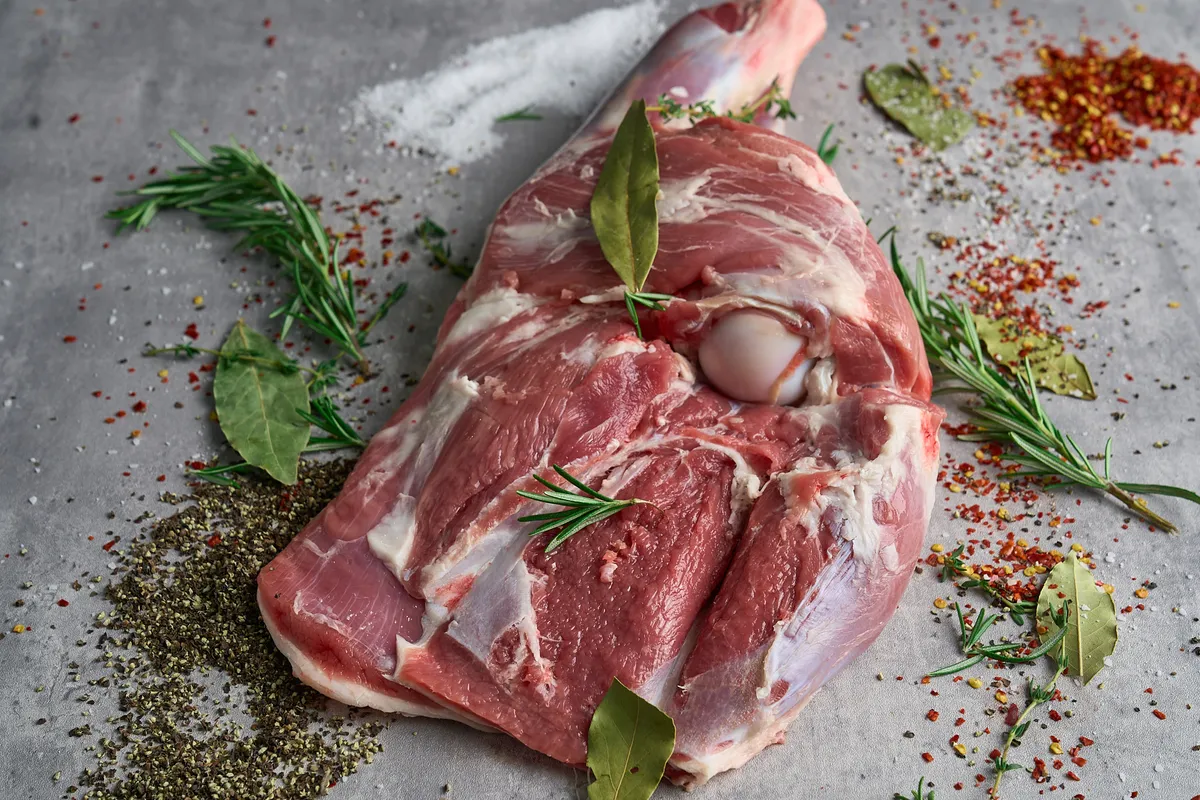
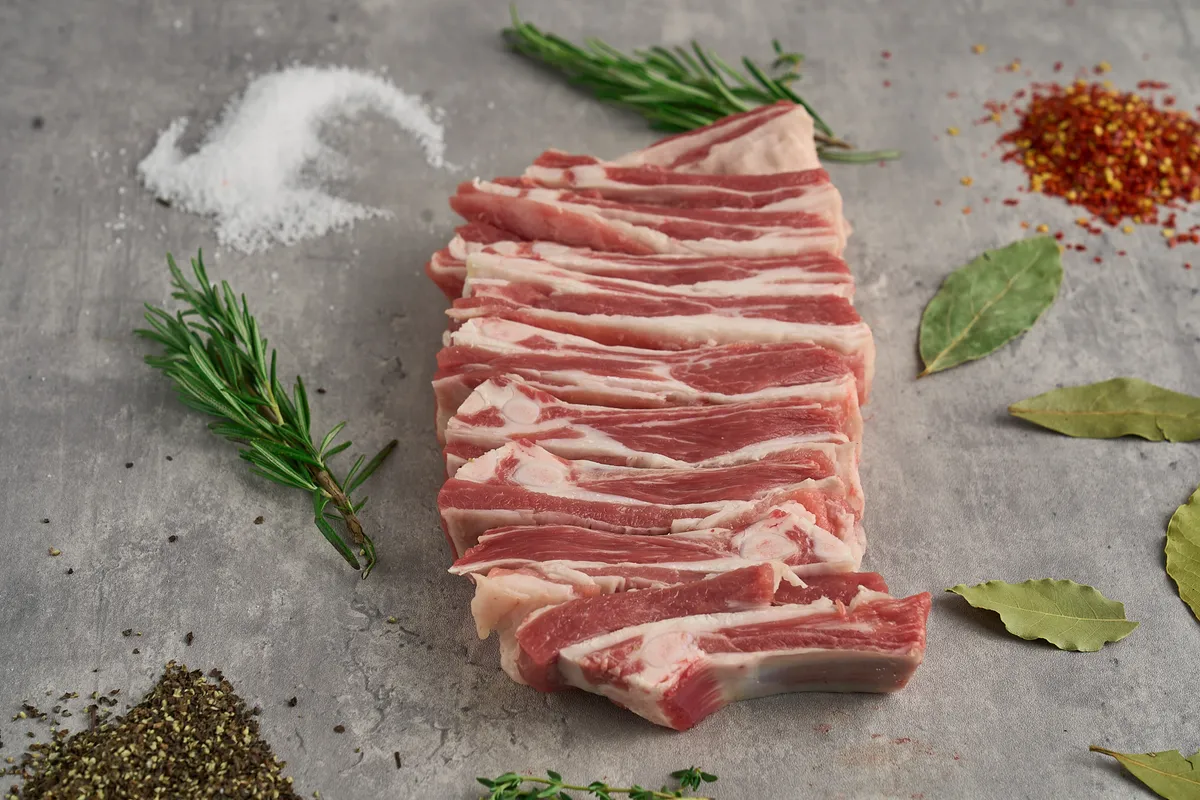
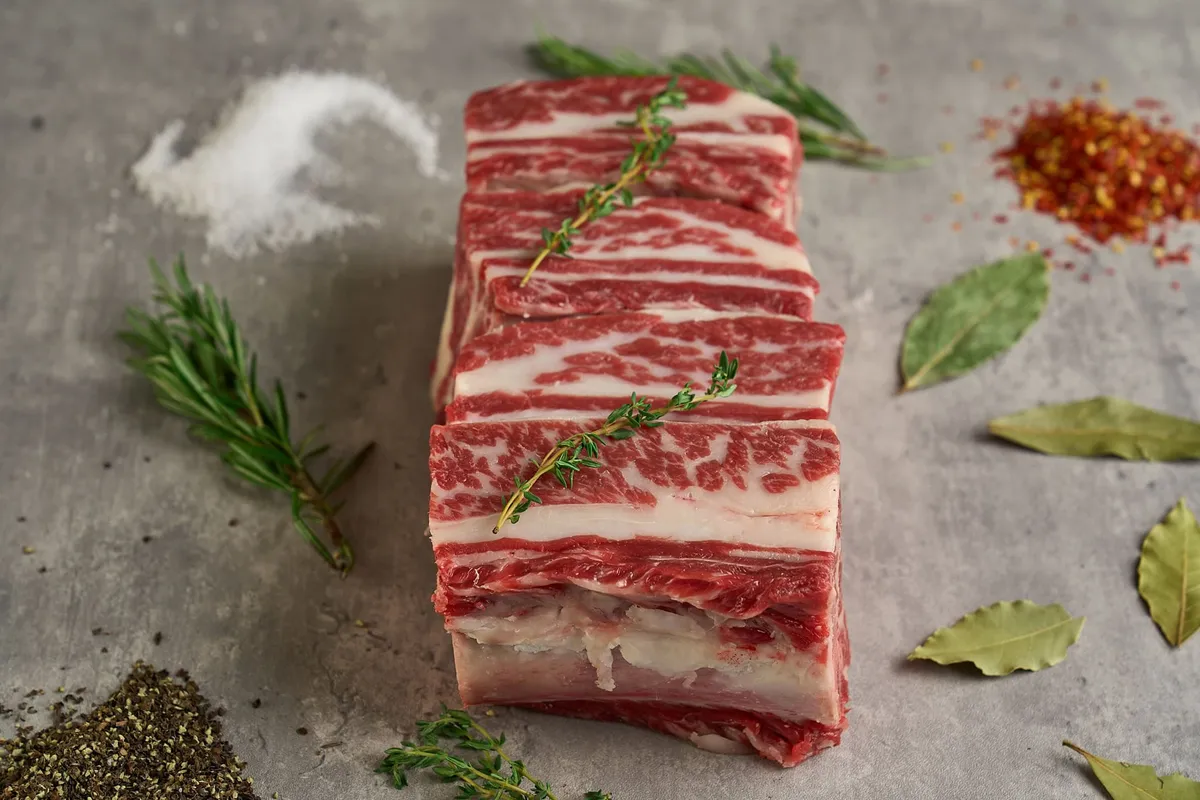
Photography supplied by Red Meat Halal.
QR Traceability
Red Meat Halal says each box carries a QR code showing the farm the animal came from, the slaughter date and the butcher who cut it. This gives customers a traceability record they can check after delivery.
Delivery Coverage and Packaging
- Where: Illinois, Wisconsin, Indiana and Michigan. Free delivery across the whole service area. No shipping outside those four states at the time of writing.
- How fast: the brand’s stated standard is 48 hours from order to door, because the animal is processed against your order rather than picked from a freezer.
- How it arrives: vacuum-sealed cuts in an insulated box with gel packs, chilled to 34–38°F. No dry ice.
- What you need to do: be home to receive it — the brand requires someone at the door for a chilled box — and refrigerate it on arrival. Follow the package’s use-by date. If no date is provided, USDA refrigeration guidance recommends using or freezing ground meat within 1–2 days and steaks, chops or roasts within 3–5 days.
- If something goes wrong: the brand offers a 100% refund or free replacement on a first box, free replacement for damage in transit, and says there is no time limit on halal-integrity concerns.
Sadaqa Fund and MeatCoin Rewards
Red Meat Halal says 2.5% of every sale goes from company revenue to its RMH Sadaqa Jariyah Fund. Customers also earn one “MeatCoin” per dollar, worth $0.025 toward Qurbani/Udhiyah or Aqiqah orders.
The People Behind It
The founding butcher is Daud Gafurov, a master butcher with more than twenty years at the block, trained in fine-dining kitchens in Saint Petersburg before moving to the US with his family. His stated reason for starting the company is the one most Midwest Muslim families will recognise: the choice between meat he trusted and meat cut the way his family cooked, when he could not find both in one place. His co-founders are Azme Taha, a logistics business owner, and Dr Amjad T. Assi, a Purdue-trained food-security researcher; together they own the Herscher plant.
Why Red Meat Halal Exists
Red Meat Halal says its philosophy is rooted in the Qur’anic concept of halalan tayyiban — food that is not only lawful, but wholesome. In its view, halal should not stop at the permissibility of the meat itself, but should also consider how the animal was raised, how the meat was handled, and how transparent the business is about where it came from.
That philosophy extends to how the company operates: “a business that keeps its word, treats a customer as an amanah, gives from its own revenue before anyone asks, and cuts the same animal differently for every family that walks through the door.” As Red Meat Halal puts it: “The meat is how we do it, not why.”
Who Red Meat Halal Is For
The service is a good fit if you:
- live in Illinois, Wisconsin, Indiana or Michigan;
- want HMS-certified, hand-slaughtered lamb, goat or beef and care about fresh over frozen;
- cook Arab, Indo-Pakistani, Central Asian or Turkish dishes and are tired of re-cutting American retail cuts at home;
- get through 20–40 lb of meat a month, or want a whole/half animal for Eid, Aqiqah or a big gathering.
Summary
| Factor | Details |
|---|---|
| Halal certification | HMS (Halal Monitoring Services) under the Shariah Board of America — certificate S-163, lamb/goat/beef, valid to 31 Dec 2026 |
| Slaughter method | Hand-slaughtered by a Muslim with individual tasmiyah; no mechanical slaughter (HMS requirement); no stunning (brand statement) |
| Sourcing | Grass-fed lamb, goat and beef from Midwest farms (brand statement); processed at an HMS-listed plant in Herscher, IL |
| Fresh or frozen | Fresh — processed after order, delivered chilled at 34–38°F, never frozen |
| Delivery area | Illinois, Wisconsin, Indiana, Michigan — free delivery, 48-hour standard |
| Traceability | QR code per box: farm, slaughter date, butcher |
| Charity | 2.5% of revenue to the RMH Sadaqa Jariyah Fund (brand commitment) |
| Verdict | ✅ Halal — HMS-certified hand-slaughtered zabiha; suitable for consumers who require zabiha certification |
How we reached this verdict
HalalCodeCheck’s verdict relies on the HMS Zabiha Halal Distributor Certificate published by Red Meat Halal. Certificate S-163 covers lamb, goat and beef and is valid to 31 December 2026. Because HMS requires hand slaughter by Muslims and prohibits mechanical slaughter, the certificate supports a clear Halal verdict.
Madhab note
All four Sunni madhabs accept meat slaughtered by a Muslim with tasmiyah when the animal is alive at a valid cut. HMS certification confirms hand slaughter by Muslims and excludes mechanical slaughter; Red Meat Halal states that tasmiyah is recited over each animal and that no stunning is used. On that basis, no school-specific caveat changes the verdict. If your community follows a particular certifier’s list, check whether it recognises HMS/Shariah Board of America.
Not sure about a specific Red Meat Halal product?
Scan the ingredient label or search by E-code — checks every additive instantly against our database.
Stay informed
Brand formulas change without warning
We update every brand guide when manufacturers reformulate or earn halal certification. Be first to know — one short weekly email.
Related Brands
Boxed Halal
✓ HalalBoxed Halal is a US direct-to-consumer halal meat delivery brand. All meats are zabiha halal certified — sourced from certified halal farms and processors, hand-slaughtered to Islamic requirements. Products include steaks, ground beef, chicken, and lamb, available as sampler bundles and individual cuts. Ships frozen across the US.
Read brand guide
Midamar
ℹ VariesMidamar is halal-certified by Islamic Services of America (ISA) and operates from a USDA-inspected facility. Founded in 1974 in Cedar Rapids, Iowa, it is one of the pioneering halal meat producers in the United States. All Midamar beef is hand-cut zabiha halal. Poultry varies by product: items labelled Zabiha are hand-slaughtered, while others — including the fully cooked chicken tenders — carry Midamar's own note that the chicken is mechanically slaughtered. Readers who require hand zabiha should buy the beef and the Zabiha-labelled poultry only.
Read brand guide
SNAPDOWN
✓ HalalSNAPDOWN Halal Beef Jerky is zabiha halal certified, meaning the beef is sourced and slaughtered according to Islamic requirements. No pork derivatives, no cross-contamination. Available in Original BBQ and Sweet Teriyaki flavours in the US and UK. A clear halal choice for Muslim consumers and halal-conscious gym-goers.
Read brand guide