
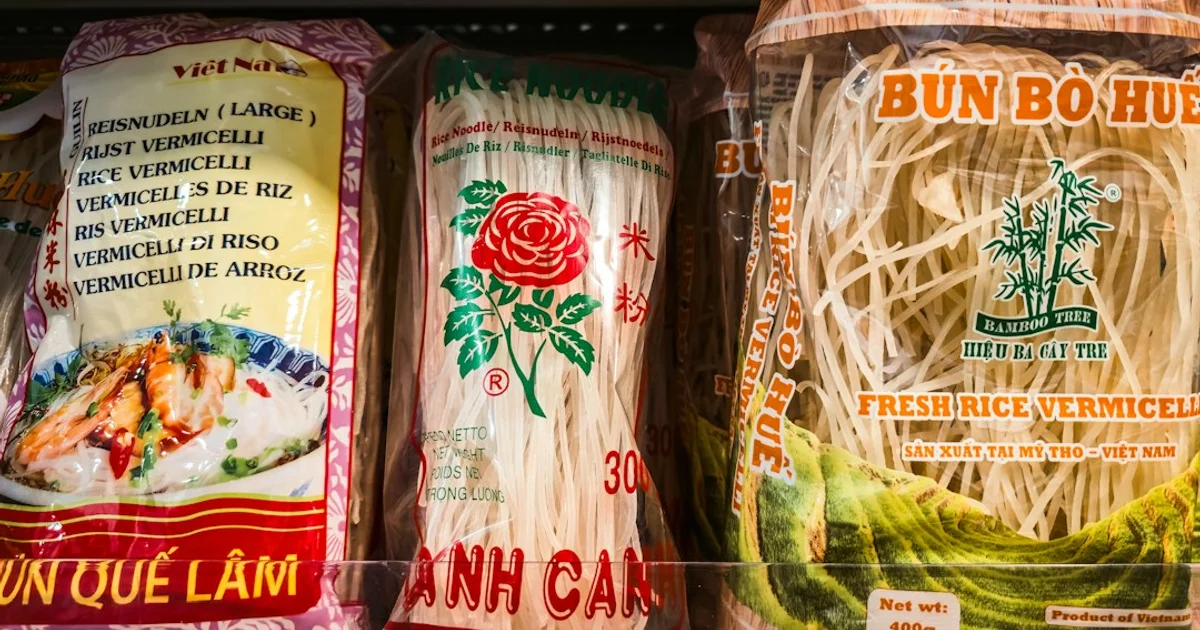
Vietnam has no Muslim majority, no state halal authority of the JAKIM or BPJPH kind, and as of August 2026 more halal certifiers recognised by Malaysia than any country except Australia and Japan. Five of them. For a Malaysian shopper that means a Vietnamese rice-noodle packet or coffee tin can now carry a halal mark that is lawful in Malaysia without the producer going to JAKIM directly. It also means five logos to learn and a long list of Vietnamese logos that still do not count.
The five bodies
JAKIM’s list of recognised foreign halal certification bodies and authorities, gazetted under the Trade Descriptions (Certification and Marking of Halal) Order 2011 and effective 21 August 2026, names 96 entities from 49 countries. Vietnam’s entries, as reported by the Vietnam Trade Office in Malaysia:
| Body | Abbreviation | Base |
|---|---|---|
| Halal Certification Agency | HCA | Hanoi / Ho Chi Minh City |
| Vietnam Halal Company Limited | HVN | Hanoi / Ho Chi Minh City |
| Vietnam National Halal Company Limited | VNH | Hanoi / Ho Chi Minh City |
| Halal Certification and Assessment Company Limited | VINAHIC | Hanoi / Ho Chi Minh City |
| Global Halal Certification Company Limited | GHC | Hanoi / Ho Chi Minh City |
All five have branches in Can Tho, the Mekong Delta hub for rice, seafood and fruit processing, which is where much of Vietnam’s halal-relevant export production sits.
Five puts Vietnam third on JAKIM’s list by number of recognised bodies, behind Australia and Japan. Note what that ranking measures: the count of certifiers, not the volume of trade or the strictness of any standard.
Why recognition is the whole game in Malaysia
Malaysia’s rule is unusual in being a trade-descriptions law rather than a religious guideline. The 2011 Order makes it an offence to describe or mark food as halal unless it was certified by JAKIM, a state religious council, or a foreign body on JAKIM’s recognised list. A halal logo from an unrecognised body is not merely weaker; it is a false trade description.
That is why the list matters more than the logo. Our guide to JAKIM-recognised foreign bodies explains the mechanism; the Vietnam entries are a clean example of it working as intended, because Vietnamese halal certification has for years been a crowded field of private companies with varying credibility.
Three consequences for the shelf:
- A Vietnamese product with one of the five logos is lawfully marked halal in Malaysia and can be checked against JAKIM’s list.
- A Vietnamese product with any other halal logo cannot be marked halal in Malaysia. If you see one, it is either grey-market stock or mislabelled.
- A Vietnamese product with a JAKIM logo was certified by JAKIM directly, which Vietnamese exporters did before recognition and some still do.
What recognition does and does not check
JAKIM assesses a foreign body’s competence to certify to a standard it treats as equivalent to Malaysia’s, chiefly MS 1500, and the Vietnamese trade office’s description of what the recognised bodies require matches that: compliance across raw material selection, processing, storage, packaging and transport, with dedicated halal officers and trained staff.
Two limits apply to every entry on the list, Vietnam’s included:
- Recognition is scope-bound. A body recognised for processed food is not thereby recognised for slaughter, and a body recognised in one category is not recognised in all. For meat and poultry, which is a small part of Vietnam’s halal export mix but a sensitive one, check the scope.
- Recognition is revocable. JAKIM withdrew recognition from three foreign bodies with effect from 19 February 2025 and gave their certificate holders six months to re-certify. An entry on the August 2026 list is a dated fact. JAKIM republishes the list; check the current edition.
Recognition is also a statement about the certifier, not a JAKIM audit of each product. The product’s halal status rests on the Vietnamese body’s audit, accepted by JAKIM as competent.
What this means for Vietnamese food you already buy
Vietnamese products common in Malaysian and overseas Asian supermarkets, and the halal question each raises:
| Product type | Usual halal concern | How the recognition helps |
|---|---|---|
| Rice noodles, rice paper, dried vermicelli | Low; rice, water, sometimes tapioca | A recognised logo confirms no shared-line contamination with non-halal lines |
| Instant pho and noodle cups | Flavour sachets: meat extracts, fats, E631/E627 flavour enhancers of possible animal origin | Certification traces the sachet ingredients to source |
| Fish sauce, oyster-style and soy sauces | Alcohol from fermentation, oyster sauce additives | Certification confirms the fermentation and additives were assessed |
| Coffee (ground and 3-in-1) | Creamer fats, flavourings | Certification covers the creamer and flavour sources; see our Trung Nguyên brand guide |
| Dried fruit, nuts, cashews | Low for plain product; coatings and flavours otherwise | Plain product rarely needs it; flavoured product benefits |
| Frozen seafood | Processing aids, glazes, shared lines | Certification covers aids and lines |
For a Malaysian shopper the practical change is that the product in front of you may now carry an HCA, HVN, VNH, VINAHIC or GHC mark instead of a JAKIM one, and both are lawful. For a shopper in the UK, US or Australia the change is nil: the Malaysian rule governs Malaysian shelves, and a Vietnamese halal logo abroad is as checkable as the body behind it. JAKIM’s acceptance is a useful signal of that body’s credibility, not a legal guarantee in your country.
How to check a Vietnamese halal logo in Malaysia
- Read the certifier’s name on the logo. The five recognised abbreviations are HCA, HVN, VNH, VINAHIC and GHC.
- Confirm it against JAKIM’s current recognised list on the Halal Malaysia portal; the August 2026 edition is the one in force at the time of writing.
- If the name is not on the list, the halal marking is not lawful in Malaysia. Treat the product as uncertified.
- If the logo is JAKIM’s own, check the product on the Halal Malaysia portal directly, as explained in our guide to JAKIM.
Summary
| Question | Answer |
|---|---|
| How many Vietnamese certifiers does JAKIM recognise? | Five, effective 21 August 2026: HCA, HVN, VNH, VINAHIC, GHC |
| Where does that put Vietnam? | Third by number of recognised bodies, after Australia and Japan |
| Can other Vietnamese halal logos be used in Malaysia? | No; the 2011 Order makes unrecognised halal marking an offence |
| Does recognition mean a JAKIM audit of each product? | No; it accepts the Vietnamese body’s audit as competent |
| Can recognition be withdrawn? | Yes; JAKIM removed three foreign bodies in February 2025 |
| Does this change anything outside Malaysia? | No legal effect; a useful credibility signal about the certifier |
Look up any E-code from a Vietnamese pack in the E-codes database.
To scan a full ingredient list for halal status in seconds, use the ingredient scanner.
For the regional context, the Malaysia-Indonesia joint halal council explains where cross-border recognition is heading; for the E-codes that matter most in instant noodles, our JAKIM E-codes guide.
How we reached this guide
We checked the following sources before publishing:
- Vietstock / Việt Nam News (Bizhub), “Việt Nam has five Halal certification bodies recognised by Malaysia” (9–10 October 2026), quoting Phùng Văn Thành, trade counsellor at the Vietnam Trade Office in Malaysia: the five bodies, their bases and branches, the third-place ranking behind Australia and Japan, 96 entities from 49 countries on JAKIM’s list as of 21 August 2026.
- JAKIM, The Recognized Foreign Halal Certification Bodies & Authorities, effective 21 August 2026: the 69-page list gazetted under the Trade Descriptions (Certification and Marking of Halal) Order 2011.
- Trade Descriptions (Certification and Marking of Halal) Order 2011: the legal basis for the recognition requirement.
- JAKIM announcement effective 19 February 2025: withdrawal of recognition from three foreign bodies with a six-month re-certification window, as reported by The Halal Times (21 September 2026).
- Vietnam.vn / Báo Quốc Tế (10 October 2026): regional context on Malaysian halal diplomacy.
No product verdict is given in this guide. Brand-level verdicts for Vietnamese products live on their own pages.
Ingredients change. Be first to know.
Brands reformulate without warning. We track every E-code update and halal certification — one short weekly email.
Related Articles
 Shopping Guides
Halal Shopping at Coles: Aisle-by-Aisle Australia Guide (2026)
Coles stocks halal-certified meat from accredited abattoirs but own-brand packaged goods require E-code checking — here's what to look for in each aisle.
 Shopping Guides
Halal Shopping at Carrefour: France, UAE & Turkey Guide (2026)
Carrefour's halal status varies by country — UAE stores stock certified halal products throughout, while French stores require label-by-label checking.
 Shopping Guides
Halal Food in Malaysia: Beyond JAKIM — Full Supermarket & Brand Guide
JAKIM certification is Malaysia's gold standard but not every product on shelf is JAKIM-certified — here's how to shop confidently in Mydin, Giant, and Aeon.