
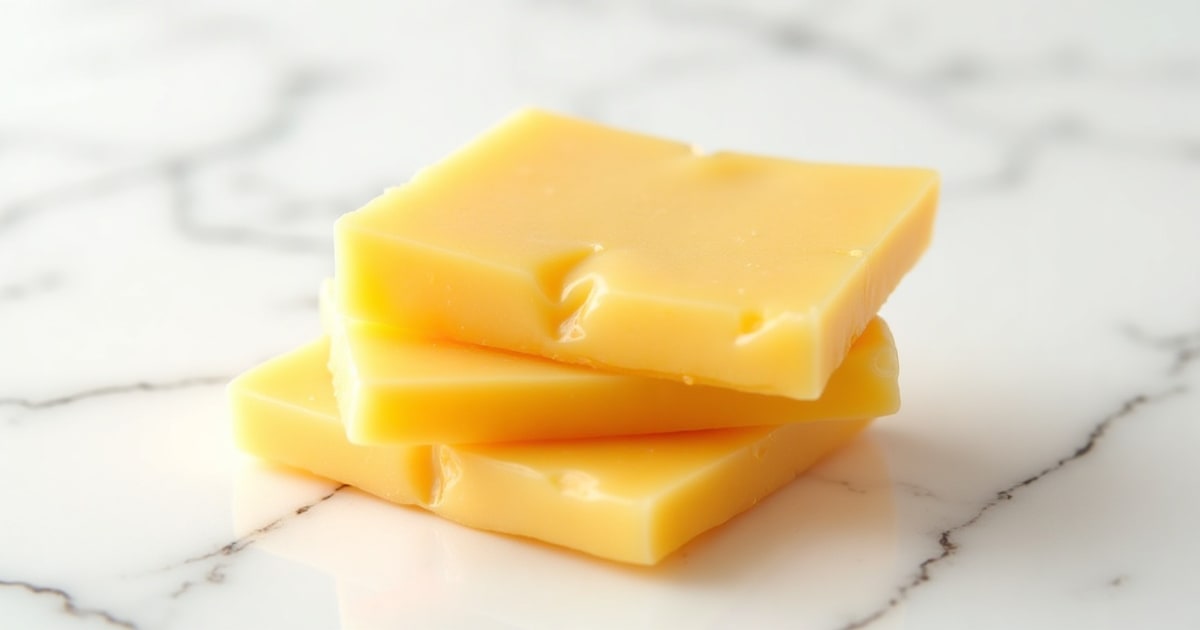
Cheese has two separate halal problems — and most people only know about one of them. The rennet issue (is it from an animal slaughtered correctly?) gets most of the attention. But processed cheese slices and spreadable triangles add a second layer: emulsifying salts like E339, E450, and E452, whose halal status depends on how they were manufactured.
The short answer for processed cheese: it depends entirely on the brand, the format, and two ingredient questions you need to answer. This guide covers both questions, explains the PDO loophole that makes Parmesan always problematic, and audits seven major UK brands by name.
The Two Separate Halal Problems in Cheese
Problem 1: Rennet Source
Rennet is the enzyme that curdles milk into cheese. It comes in three forms:
- Animal rennet — extracted from the stomach lining of a slaughtered calf. If the animal was not slaughtered according to Islamic requirements, the rennet is haram. Even if slaughtered correctly, the source needs to be verified.
- Microbial rennet — derived from fungi or bacteria, fully vegetarian. Halal by default.
- FPC (fermentation-produced chymosin) — a lab-produced version of the calf enzyme, grown in yeast or fungal cultures. No animal slaughter involved. Generally accepted as halal by most scholars, though a minority view holds it mushbooh.
The problem is that UK food labelling law does not require manufacturers to specify which type of rennet they use. “Cheese” on an ingredients list tells you nothing about the rennet. You have to check the brand’s allergy/dietary information pages or look for the vegetarian label (more on that below).
Problem 2: Emulsifying Salts in Processed Cheese
Block cheese is typically just milk, salt, starter culture, and rennet. Processed cheese — slices, triangles, squeezy cheese, spreadable formats — is a different product. It’s made by melting real cheese and blending it with emulsifying salts to create a smooth, stable texture that doesn’t separate or go oily.
The most common emulsifying salts in UK processed cheese are:
- E339 — Sodium phosphates: Derived from phosphoric acid and sodium compounds. Generally mineral-derived and considered halal, but source matters.
- E450 — Diphosphates (pyrophosphates): Also phosphate-based. Typically synthetic/mineral origin. Generally halal, but can theoretically be derived from bone char in some manufacturing processes — verify with manufacturer if uncertain.
- E452 — Polyphosphates: Longer-chain phosphates. Same category, same considerations. Generally accepted as halal in most scholarly opinions when from mineral sources.
The concern with E450 in particular is that some production routes historically involved bone-derived phosphates, though modern industrial production is almost entirely mineral-based. Most UK halal authorities treat E450 as halal unless there is specific evidence of animal-derived production.
The Vegetarian Label Shortcut
Here is the single most useful piece of information in this article: if a cheese product carries a “Suitable for Vegetarians” label in the UK, it almost certainly uses microbial or FPC rennet.
Animal rennet is not vegetarian. No responsible manufacturer would put a vegetarian label on a product containing calf stomach enzyme. The Vegetarian Society’s trademarked V logo and the standard UK vegetarian claim are both incompatible with animal rennet.
This shortcut does not tell you about emulsifying salts in processed cheese, and it does not guarantee halal slaughter certification for any meat derivatives. But for the rennet question specifically — which is the biggest variable for cheese — the vegetarian label is a reliable proxy.
If a cheese says “Suitable for Vegetarians” on the pack: rennet is not from a non-halal-slaughtered animal. Proceed to check E-codes.
If there is no vegetarian claim: rennet source is unknown. Treat as mushbooh until confirmed.
PDO Cheese: The Legal Loophole That Forces Animal Rennet
Protected Designation of Origin (PDO) is a European and UK legal status that locks in the production method for certain traditional cheeses. Some PDO designations explicitly require animal rennet as part of the authentic production process:
- Parmigiano-Reggiano (Parmesan): PDO specification requires calf rennet
- Grana Padano: Also requires animal rennet under its PDO rules
- Pecorino Romano: Must use lamb rennet under its PDO specification
This is not a question of brand practice — it is a legal requirement. A producer cannot call their cheese “Parmigiano-Reggiano” and use microbial rennet. The moment they do, it loses PDO status.
What this means in practice: any authentic Parmesan, Grana Padano, or Pecorino Romano you buy in a UK supermarket is using animal rennet. These products cannot carry a vegetarian label for their hard cheese, and they should be considered haram or mushbooh depending on your madhab’s position on rennet.
The exception: pre-grated “Italian hard cheese” or “Parmesan-style” sold without the PDO name. These can legitimately use microbial rennet — check for the vegetarian label on the packaging.
Président Camembert and Brie (Normandy PDO): the Camembert de Normandie and Brie de Meaux PDO designations also specify traditional animal rennet, though Président sells both PDO and non-PDO versions in UK supermarkets. The standard Président Camembert and Brie sold in most UK stores is not PDO-specified and can use microbial rennet — check for the vegetarian label on the specific pack you are purchasing.
UK Brand Audit 2026
| Brand / Product | Format | Rennet Source | Key E-codes | Vegetarian Label | Status |
|---|---|---|---|---|---|
| Dairylea Triangles | Spreadable triangles | Unspecified | E450, E452 | Not present | Mushbooh |
| Dairylea Slices | Processed slices | Unspecified | E339, E450 | Not present | Mushbooh |
| Kraft Singles | Processed slices | Unspecified | E339, E450 | Not present | Mushbooh |
| Philadelphia Original | Cream cheese | Microbial (confirmed) | None of concern | Present | Halal-suitable |
| Philadelphia Light | Cream cheese | Microbial (confirmed) | None of concern | Present | Halal-suitable |
| Cathedral City Block | Block cheddar | Unspecified | None | Not present | Mushbooh |
| Cathedral City Slices | Processed slices | Unspecified | E339, E450 | Not present | Mushbooh |
| Babybel Original | Wax-coated mini | Microbial (confirmed) | None | Present | Halal-suitable |
| Babybel Light | Wax-coated mini | Microbial (confirmed) | None | Present | Halal-suitable |
| Parmigiano-Reggiano (any brand) | Hard cheese | Animal rennet (PDO required) | None | Cannot carry | Haram/Mushbooh |
| Grana Padano (any brand) | Hard cheese | Animal rennet (PDO required) | None | Cannot carry | Haram/Mushbooh |
| Pecorino Romano (any brand) | Hard cheese | Animal rennet (PDO required) | None | Cannot carry | Haram/Mushbooh |
| Président Camembert (standard) | Soft cheese | Check pack | None typically | Check pack | Mushbooh |
Notes on the table:
- “Unspecified” means the manufacturer does not publicly confirm rennet source via their allergen/dietary information pages as of June 2026.
- “Confirmed” means the manufacturer has stated microbial rennet in writing on their UK consumer information pages.
- Status may change — always verify on the current pack and manufacturer website before purchasing.
Dairylea: Why It Stays Mushbooh
Dairylea (owned by Mondelez International) does not carry HMC or HFA certification and does not publicly confirm microbial rennet for its Triangles or Slices range as of June 2026. The Triangles contain E450 (diphosphates) as an emulsifying salt. The Slices contain E339 and E450.
Neither product carries a “Suitable for Vegetarians” label, which means rennet source cannot be confirmed as non-animal. Combined with the E450 (low concern but worth noting), both products sit firmly in mushbooh territory.
Philadelphia: The Cleaner Profile
Philadelphia cream cheese is a more straightforward case. Kraft (the manufacturer) confirms microbial rennet on its UK allergen and dietary information pages, and Philadelphia Original and Light both carry the “Suitable for Vegetarians” designation. The ingredients list contains no phosphate emulsifying salts in the original and light formats.
Philadelphia does not hold HMC or HFA certification — so it is not formally certified halal. However, the ingredient profile (microbial rennet, no problematic additives) means most scholars and Islamic food authorities would consider it halal-suitable for general consumption. If you require formal certification, it does not qualify.
Babybel: A Positive Outlier
Mini Babybel (by Bel Group) is one of the more straightforward cases in the UK market. The brand confirms microbial rennet on its UK website and the product carries a “Suitable for Vegetarians” label. It contains no phosphate emulsifying salts. The wax coating is plant-derived.
Babybel does not carry HMC/HFA certification, but based on ingredient profile, most mainstream UK Islamic guidance treats it as halal-suitable.
Kraft Singles: The Processed Slice Problem
Kraft Singles are a processed cheese product (technically “cheese slices” or “processed cheese food” in UK labelling terms). They contain E339 (sodium phosphate) and E450 (diphosphates) as emulsifying agents. The rennet source for the underlying cheese is not confirmed on Kraft’s UK consumer pages.
No vegetarian label is present. Mushbooh status is the appropriate call until confirmed otherwise.
How we reached this verdict
Our assessment follows this process for each product:
- Checked manufacturer allergen/dietary pages for explicit rennet type confirmation
- Checked UK retail listings (Tesco, Sainsbury’s, ASDA) for current ingredient lists and dietary claims
- Verified PDO specifications against official UK/EU PDO documentation for affected cheeses
- Cross-referenced HMC and HFA databases for any formal halal certification
- Applied the vegetarian label test as a proxy for rennet confirmation where manufacturer statements were absent
- Assessed E-codes against our database using mainstream UK scholarly positions (Sunni Hanafi methodology as primary reference, noting where other madhabs differ)
Where we could not confirm a key variable (rennet source, E-code production route), we defaulted to mushbooh rather than halal. We do not give the benefit of the doubt on unlabelled animal derivatives.
Madhab note
Rennet from non-zabiha animals: The mainstream Hanafi position (and the position of HMC and HFA) is that rennet from an animal not slaughtered according to Islamic requirements renders the cheese impermissible. Some Shafi’i and Maliki scholars apply a transformation (istihalah) argument — that the calf stomach enzyme is so transformed in the cheese-making process that it no longer carries the ruling of the original substance — and would permit cheese made with non-zabiha animal rennet. This is a legitimate scholarly disagreement. Our assessments default to the stricter Hanafi position. Consult your own scholar if you follow a madhab with a different ruling on istihalah in rennet.
FPC (fermentation-produced chymosin): Accepted as halal by the majority of contemporary scholars, including HMC and HFA guidance. A minority view holds it mushbooh due to its genetic origin from calf DNA. If you follow the stricter position, note that even “vegetarian” rennet includes FPC.
E450 and phosphate salts: The mainstream position of UK Islamic food authorities is that E450 from mineral/synthetic sources is halal. We have reflected this in our assessments. If you have specific reason to believe a product uses bone-derived phosphates, treat as mushbooh and contact the manufacturer directly.
Quick-Reference Summary
| Question | Answer |
|---|---|
| Is Dairylea halal? | Mushbooh — no rennet confirmation, no vegetarian label, contains E450 |
| Is Philadelphia halal? | Halal-suitable — microbial rennet confirmed, vegetarian label, no problematic E-codes. No formal HMC/HFA cert. |
| Is Babybel halal? | Halal-suitable — microbial rennet confirmed, vegetarian label. No formal HMC/HFA cert. |
| Is Kraft Singles halal? | Mushbooh — no rennet confirmation, no vegetarian label, contains E339 and E450 |
| Is Parmesan halal? | Haram/Mushbooh — PDO requires animal rennet by law. Avoid unless specifically halal-certified. |
| Is “Parmesan-style” cheese halal? | Check for vegetarian label — non-PDO versions may use microbial rennet |
| Are E339, E450, E452 halal? | Generally halal from mineral sources (mainstream UK position). Verify if uncertain. |
| Does “Suitable for Vegetarians” mean halal? | Not fully — but it does confirm non-animal rennet, which resolves the biggest cheese variable |
Practical Shopping Tips
Do this in the cheese aisle:
- Look for “Suitable for Vegetarians” on the pack — this clears the rennet question
- Check the ingredients list for E339, E450, E452 — present in most sliced/processed formats
- Avoid any PDO hard cheese (Parmigiano-Reggiano, Grana Padano, Pecorino Romano) unless you have a halal-certified version
- For block cheddar with no vegetarian label: rennet source unknown, mushbooh by default
- When in doubt, check the manufacturer’s UK allergen information page before buying
Brands with cleaner profiles (halal-suitable, no formal cert): Philadelphia Original/Light, Babybel Original/Light
Brands to treat as mushbooh without further verification: Dairylea, Kraft Singles, Cathedral City, most unverified cheddar blocks
Use the E-codes database to look up E339, E450, or E452 and any other E-code you find on a cheese label.
Scan a full ingredient list with the ingredient scanner to check an entire cheese product label at once.
Ingredients change. Be first to know.
Brands reformulate without warning. We track every E-code update and halal certification — one short weekly email.
Related Articles
 Ingredient Guides
 Are Starter Cultures & Microbial Rennet Halal?
Starter cultures and microbial rennet are generally halal — the bacteria themselves are pure. The real concern is the growth medium they're propagated on. Here's how to check.
 Ingredient Guides
 The Supplement Capsule Halal Problem: Gelatin vs HPMC vs Pullulan (2026)
Most vitamin capsules use porcine gelatin — the cheapest shell material. Here's how to identify HPMC (vegetable) capsules on any label and which UK supplement brands use halal-safe capsules.
 Ingredient Guides
 "No Pork" Doesn't Mean Halal: 8 Other Ingredients to Check (2026)
Gelatin, carmine, shellac, L-cysteine, isinglass, natural flavours, vanilla extract and animal rennet are all haram or mushbooh — and none come from pork. The complete guide to what else to check.