
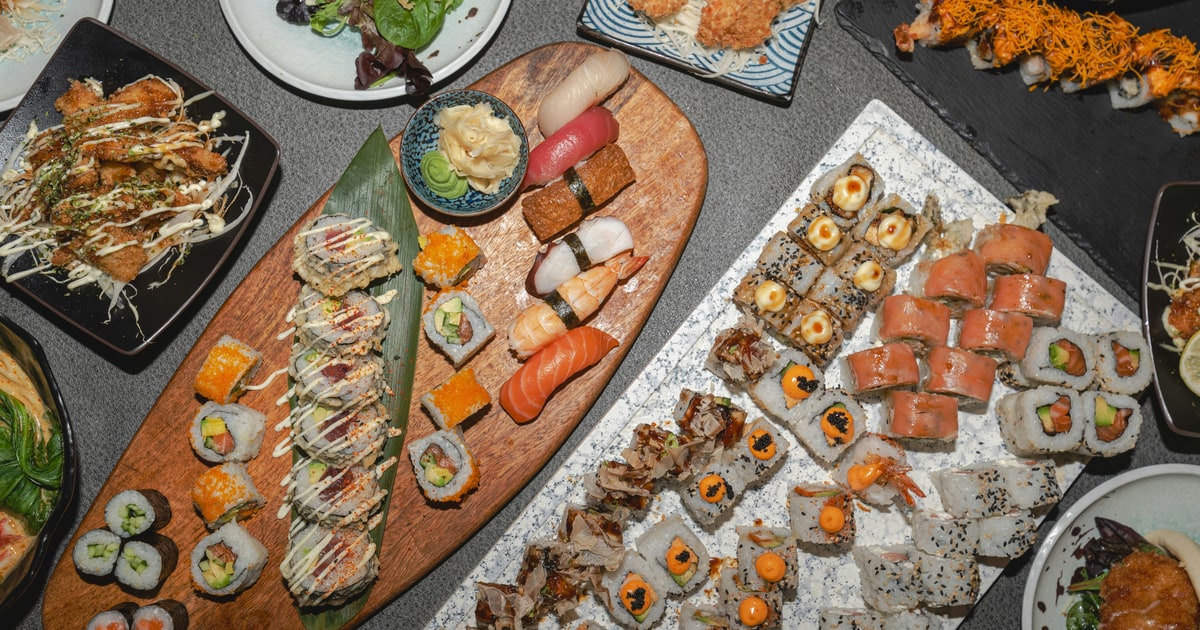
Yes — fish-based sushi is halal. Salmon, tuna and other fish do not require ritual slaughter under any of the four Sunni schools, and plain nigiri or maki from a pork-free kitchen is permissible. The real questions sit in the seasonings — mirin (a 14% ABV cooking wine), the rice vinegar, imitation crab additives — and in what else the kitchen prepares. Here is each one, checked.
Is the Fish in Sushi Halal?
The foundation of most sushi — fish — is clearly halal under the Sunni schools of jurisprudence. Unlike land animals, which require zabiha slaughter, seafood (specifically fish with scales and gills, and the broader category of sea creatures) does not require ritual slaughter. The Quran (5:96) explicitly permits the game and food of the sea.
This covers the most common sushi fish:
- Salmon (sake in Japanese) — Halal
- Tuna (maguro) — Halal
- Yellowtail (hamachi) — Halal
- Prawn/shrimp (ebi) — Halal for Shafi’i, Maliki, and Hanbali followers; genuinely debated within Hanafi fiqh (Darul Uloom Deoband classifies prawns as fish and permits them, while other Hanafi authorities do not)
- Crab (kani) — Halal for Shafi’i, Maliki, and Hanbali followers; impermissible in the Hanafi school
- Scallop (hotate) — Halal for Shafi’i, Maliki, and Hanbali followers; impermissible in the Hanafi school
- Octopus (tako) — Halal for Shafi’i, Maliki, and Hanbali followers; impermissible in the Hanafi school
- Squid (ika) — Halal for Shafi’i, Maliki, and Hanbali followers; impermissible in the Hanafi school
- Eel (unagi) — Halal; often glazed with a teriyaki sauce containing mirin (see below)
Is Sushi Halal in the Hanafi Madhab?
Fish-only sushi is halal for Hanafis; shellfish sushi is not. The Hanafi school permits only fish (samak) from the sea, so salmon, tuna, yellowtail and eel nigiri are unproblematic, while octopus, squid, crab and scallop are impermissible.
- Prawns are the one genuinely debated case within Hanafi fiqh: scholars at Darul Uloom Deoband classify them as fish and permit them, while other Hanafi authorities do not. Follow your own scholar’s position.
- The Shafi’i, Maliki and Hanbali schools permit all of the above — the shellfish caution applies to Hanafi followers only.
- Safe Hanafi order: vegetable rolls, then fish nigiri/sashimi, avoiding ebi, kani, tako and hotate.
Is Raw Fish (Sashimi) Halal?
Yes. Islam places no requirement to cook fish — permissibility comes from what the animal is, not how it is prepared, so sashimi and raw nigiri are halal on the same basis as cooked fish (Quran 5:96). Hanafi scholars confirm raw fish is permissible provided it is safe to eat.
- Sashimi served without rice avoids the seasoning questions entirely — no vinegar, no mirin, no sauce until you add them.
- The practical check is the same as for any sushi: ask what the fish was glazed or marinated with (eel and some salmon nigiri carry mirin-based tare).
- Food-safety handling (sushi-grade freezing) is a health matter, not a halal one.
Sushi Rice: Is It Halal?
Sushi rice (shari) is seasoned rice vinegar mixed with a small amount of sugar and salt. The halal question here is about the vinegar.
Rice Vinegar — Halal
Rice vinegar is made by fermenting sake (rice wine) with acetic acid bacteria. Technically it passes through an alcoholic intermediate stage, but the end product is vinegar — a dilute solution of acetic acid in water, with alcohol content typically below 0.5%.
Islamic jurisprudence is clear on vinegar: it is permissible. The Prophet Muhammad (peace be upon him) is reported in authentic hadith to have praised vinegar as a condiment. The scholarly consensus extends this to all vinegar types — rice vinegar, malt vinegar, apple cider vinegar, and even wine vinegar — on the basis that the transformation (istihalah) from alcohol to acetic acid is complete, producing a fundamentally different substance. We cover the full scholarly analysis in our guide to vinegar’s halal status.
Sushi rice is halal.
Mirin: The More Complex Question
Standard hon-mirin is not halal as an ingredient. Genuine mirin is a sweet rice wine with an alcohol content of approximately 14% ABV — an intoxicating drink in its own right — and dishes glazed or seasoned with it should be avoided. In sushi contexts, it sometimes appears in:
- Teriyaki sauce (on salmon or eel)
- Ponzu sauce (a citrus-soy condiment)
- Eel glazes (unagi no tare)
- Some sushi rice seasonings
The Different Positions
Mainstream position: Hon-mirin is an alcoholic rice wine and is not halal, whether used as a drink or as a cooking ingredient. Dishes prepared with it — teriyaki salmon, glazed unagi — should be avoided unless the kitchen confirms an alcohol-free alternative was used.
Minority position: Some contemporary scholars hold that the trace residual alcohol left after thorough cooking, present at levels that could not intoxicate even in large quantities, is tolerable. This remains a minority view — the safer and more widely held ruling is to avoid mirin altogether.
Practical solution: Many Japanese restaurants and supermarket sushi products use aji-mirin or mirin-style seasoning — products designed to replicate mirin’s flavour with reduced (around 1%) or zero alcohol. Their halal status varies by product: specifically labelled alcohol-free versions are halal, while low-alcohol versions still carry doubt. A rice vinegar and sugar substitute is the unambiguous home option. For the verdict by mirin type and brand, see our full guide to mirin’s halal status.
When ordering at a Japanese restaurant, ask whether their teriyaki or eel glazes use hon-mirin or an alcohol-free mirin-style seasoning.
Soy Sauce: Is It Halal?
Standard Japanese soy sauce (shoyu) and tamari contain a small amount of alcohol — typically 1–3% — produced as a natural by-product of the fermentation process. This is not added alcohol; it is an inherent result of the fermentation chemistry.
The mainstream position on fermentation-derived alcohol in condiments like soy sauce mirrors the position on vinegar: the alcohol is incidental, present in trace amounts, non-intoxicating, and the product is permissible. Most Islamic scholarly bodies and halal certification agencies allow naturally fermented soy sauce in halal-certified products.
Some strictly conservative consumers prefer to use halal-certified soy sauce brands (several are widely available) for additional peace of mind. For the Kikkoman breakdown and certified alternatives, see our guide to soy sauce’s halal status.
Wasabi and Ginger: Halal
Real wasabi (wasabia japonica) is a plant root — fully halal. Most sushi restaurants serve a mixture of horseradish, mustard, and green food colouring as a substitute (since real wasabi is expensive). All of these ingredients are plant-derived and halal.
Pickled ginger (gari) is ginger preserved in rice vinegar and sugar. Halal for the same reasons as sushi rice vinegar.
What to Avoid at Sushi Restaurants
The genuine halal concerns at a sushi restaurant are:
1. Pork items Some Japanese restaurants serve pork dishes alongside sushi — tonkatsu (pork cutlet), kakuni (braised pork belly), or pork gyoza. The concern is kitchen cross-contamination: if pork is prepared on the same surfaces, with the same utensils, and fried in the same oil as sushi items, halal integrity is compromised.
In dedicated sushi restaurants focusing on fish and seafood, pork cross-contamination risk is lower — but verify with the restaurant.
2. Tempura battered in alcohol Some chefs add a small amount of beer or sake directly to tempura batter, believing it produces a lighter result. This is not universal practice, but worth asking about if you order tempura.
3. Dishes explicitly containing pork Avoid: pork gyoza, tonkatsu, katsu curry made with pork, ramen with pork broth (tonkotsu), and any dish explicitly containing chashu pork.
4. Imitation crab (surimi) Many “crab” sushi rolls use surimi — processed fish meat shaped to resemble crab. Surimi is halal (it’s fish), but some lower-quality preparations may include non-halal additives. Check the ingredient list for supermarket sushi.
Is a California Roll Halal?
Usually yes, with one check. A California roll is imitation crab (surimi), avocado, cucumber and sushi rice — no meat, and usually no real crab. Surimi is processed white fish (typically Alaska pollock), which is halal, but the binders and flavourings added to it are where doubt can enter.
- Check the surimi’s ingredient list for crab extract (fine — but a shellfish flag for Hanafi followers) and any undisclosed flavourings or colourings.
- Rolls made with real crab are halal for Shafi’i, Maliki and Hanbali followers; crab is not permissible in the Hanafi school.
- The spicy mayo on some versions is egg-based and halal; confirm no mirin-based sauce is brushed on top.
Supermarket Sushi: Is It Halal?
UK supermarket sushi (Tesco, M&S, Waitrose, etc.) is produced under food safety conditions with documented ingredient lists. Most UK supermarket sushi uses:
- Sushi-grade fish (salmon, tuna, prawn)
- Sushi rice with rice vinegar seasoning
- Nori (seaweed — halal)
- Avocado, cucumber
- Mayonnaise (check: some use standard mayo which is egg-based and halal; some flavoured mayo may contain additives)
The absence of mirin from most supermarket sushi production (replaced by aji-mirin or rice vinegar seasoning) makes supermarket sushi simpler from a halal perspective than restaurant-prepared sushi.
Halal-Certified Sushi Restaurants in the UK
A growing number of UK sushi restaurants are pursuing halal certification, particularly in cities with large Muslim populations:
- Many independent Japanese/fusion restaurants in London, Manchester, and Birmingham are halal-certified
- Look for the HFA or equivalent certification logo on display
Is Itsu Sushi Halal?
Itsu holds no halal certification for its restaurants or supermarket range, so it is not a certified option — but several categories are halal by ingredients. Plain salmon and tuna sushi and the vegetable rolls are permissible; chicken gyoza, duck and other meat dishes are not halal-slaughtered and should be avoided.
- Prawn items carry the standard madhab split: permitted by Shafi’i, Maliki and Hanbali rulings, avoided by Hanafi followers.
- Full product-by-product breakdown: our Itsu halal guide.
When in doubt, call ahead and ask the specific questions: no pork on the menu, separate preparation areas, mirin type used.
Summary
| Factor | Detail |
|---|---|
| Fish sushi (salmon, tuna, yellowtail) | Halal |
| Shellfish (prawn, crab, scallop, octopus, squid) | Halal (Shafi’i, Maliki, Hanbali); impermissible in Hanafi school (prawns debated) |
| Sushi rice / rice vinegar | Halal |
| Mirin (hon-mirin) | Not halal (14% alcohol) — use labelled alcohol-free mirin alternatives |
| Soy sauce | Generally halal (trace fermentation alcohol) |
| Wasabi and pickled ginger | Halal |
| Pork items | Haram — avoid and ask about cross-contamination |
| Tempura | Ask if alcohol is added to batter |
| Verdict | Mostly halal — fish-based sushi from pork-free kitchens is permissible |
Ingredients change. Be first to know.
Brands reformulate without warning. We track every E-code update and halal certification — one short weekly email.
Related Articles
 E-Code Guides
 Is Propylene Glycol (E1520) Halal? The Flavour Solvent Explained
Propylene glycol (E1520) is halal. It is a synthetic diol made from petroleum-derived propylene oxide, contains nothing animal-derived and does not intoxicate. The word 'glycol' is not 'alcohol' in the fiqh sense. Where it does matter: as the carrier in flavourings that may also contain ethanol.
 E-Code Guides
 Is E471 in Baby Food Safe? What Muslim Parents Need to Know (2026)
E471 (mono- and diglycerides) appears in baby rusks, formula, and cereals. Source is rarely disclosed. This guide explains the halal status and which UK brands contain it.
 E-Code Guides
 E Numbers to Avoid for Children: Haram, Harmful and Questionable Additives (2026)
The E numbers children should avoid span two concerns: those that are haram and those with documented health effects. This guide covers both with a full list for parents.