
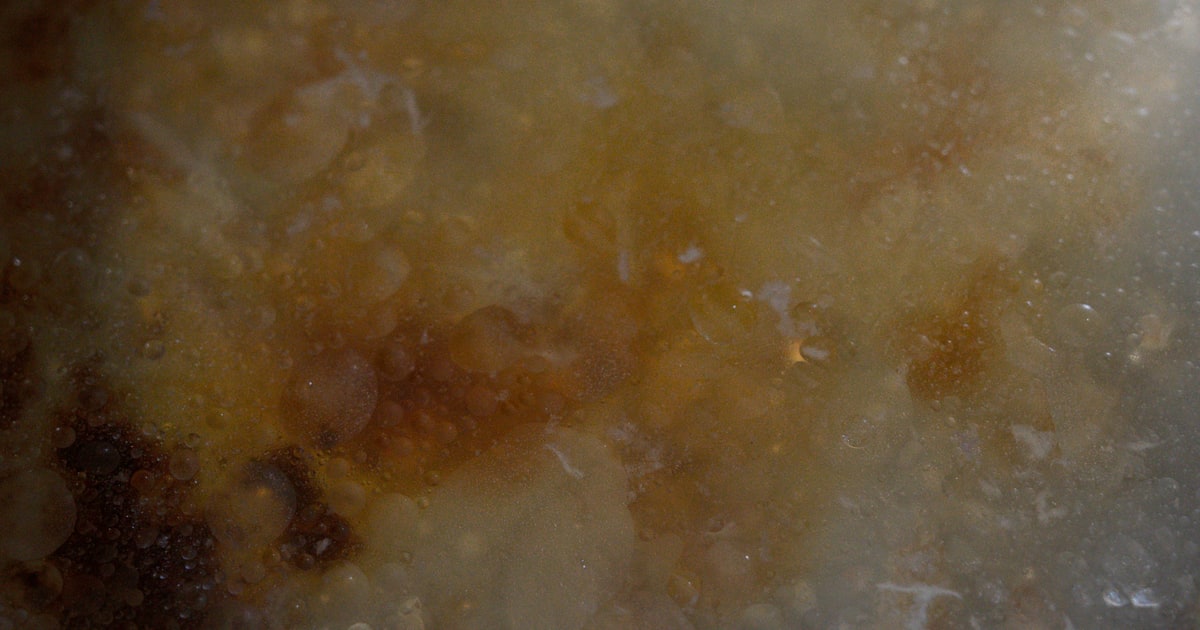
Lard is rendered pork fat. It is haram — without any qualification, without any exception, and without any transformation that could make it permissible. The concern with lard is not only when it appears plainly labelled. The greater risk is when lard is hidden in processed foods — in pastry, biscuits, pie crusts, and some traditional British baked goods — where the label may say “animal fat” or “shortening” without specifying the source.
What Is Lard?
Lard is fat rendered (melted and purified) from pig adipose tissue. The pig’s fat deposits — particularly the visceral fat around the kidneys (leaf lard) and the back fat — are heated to separate the pure fat from connective tissue and water. The result is a white, solid fat with a high smoke point and a distinct flavour.
Historically, lard was the dominant cooking and baking fat in the UK and Europe before the widespread adoption of vegetable oils. Traditional British baking — shortcrust pastry, lard biscuits, dripping — relied heavily on lard for its shortening properties (creating a crumbly, tender texture).
Today, most mainstream UK food manufacturers have moved to vegetable shortening and palm oil for cost and shelf-stability reasons. However, lard remains in use in some traditional products, artisan bakeries, and certain branded goods.
Why Lard Is Absolutely Haram
Pork is prohibited explicitly in the Quran: “He has only forbidden you dead animals, blood, the flesh of swine, and that which has been dedicated to other than Allah” (Baqarah 2:173, Al-Maidah 5:3, An-Nahl 16:115). The prohibition covers all parts of the pig — including fat. There is complete scholarly consensus across all four Sunni madhabs on this point. Lard is pork fat and is haram.
There is no istihalah argument for lard. Unlike alcohol becoming vinegar (a complete chemical transformation into a different substance), lard remains fat — chemically indistinguishable from pig adipose tissue. The chain of identity remains intact.
Where Lard Hides: Packaged Food Risks
Traditional British Pastry and Pies
Shortcrust pastry traditionally uses lard, butter, or a combination. Pork pies, Cornish pasties, sausage rolls, and similar products may use lard-based shortcrust. This is particularly true of:
- Pork pies (self-evidently not halal for multiple reasons, but the pastry is lard-based)
- Traditional Cornish pasties from artisan or regional bakeries
- Ready-made pastry blocks and sheets — check the ingredient list; some (particularly economy ranges and traditional brands) contain lard
- Savoury pie cases — supermarket ready-meal pie crusts may use lard
Jus-Rol, the dominant ready-made pastry brand, uses vegetable fat rather than lard in most products. However, some smaller brands and bakery-counter pastries still use lard. Always check.
Biscuits
Several traditional British biscuits have historically used lard as a shortening agent. Modern industrial biscuit production has largely replaced lard with palm oil and vegetable shortening, but some traditional varieties (particularly from specialty or artisan producers) may still use it.
Check the ingredient list of:
- Digestive biscuits (most now use vegetable fat, but verify)
- Shortbread (traditionally uses butter, not lard, but check other brands)
- Traditional British biscuit varieties from smaller producers
Processed Savoury Products
Some processed savoury foods — sausage rolls, pâtés, stuffing mixes — may contain lard as an ingredient or as part of the “animal fat” catch-all. When a savoury product lists “animal fat” without specifying the species, this is Mushbooh and must be treated with caution.
Identifying Lard on Labels
Lard can appear as:
| Label Term | What It Means |
|---|---|
| Lard | Pork fat — Haram |
| Pork fat | Pork fat — Haram |
| Animal fat (pork) | Pork fat — Haram |
| Animal shortening | Possibly pork — Mushbooh |
| Animal fat | Possibly pork — Mushbooh; ask manufacturer |
| Shortening (without source) | Possibly pork — Mushbooh |
| Vegetable fat / vegetable shortening | Not pork — Halal |
| Palm fat / palm oil | Not pork — Halal |
When you see “animal fat” or “animal shortening” without a specified source, contact the manufacturer or check for a vegetarian/vegan certification (which would confirm no animal fat is used).
E570: Stearic Acid and the Lard Connection
E570 (stearic acid) is a saturated fatty acid used as an anti-caking agent, lubricant, and release agent in food production. It appears in a range of products including:
- Some baked goods
- Chewing gum base
- Confectionery glazes
- Some pharmaceutical coatings
E570 can be derived from:
- Pork lard — Haram
- Beef tallow — Haram if not from halal-slaughtered beef; Halal if certified
- Plant sources (palm, soy, shea, cocoa butter) — Halal
- Synthetic production — Halal
When a product lists E570 without specifying the source:
- If the product is labelled suitable for vegetarians, E570 is plant-derived — Halal
- If the product is labelled suitable for vegans, E570 is plant-derived — Halal
- If no such label is present and the source is undisclosed — Mushbooh
E570 without source disclosure in a product with no vegetarian/vegan label is the lard risk to watch for in processed and packaged foods.
Products Confirmed Free from Lard
The following categories are generally free from lard in mainstream UK production:
- Vegetable margarines and spreads (Flora, Pure, Stork) — plant-based by definition
- Most mainstream biscuit brands (check label — most use palm oil/vegetable fat)
- Most bread and rolls (bread uses yeast, not fat as a primary leavener)
- Plant-based pastry (Jus-Rol standard range — check current label)
- Most supermarket own-brand pastry (most have moved to vegetable fat)
Summary
| Factor | Detail |
|---|---|
| Lard | Rendered pork fat — Haram |
| Verdict | Haram — no exceptions |
| Hidden sources | ”Animal fat”, “animal shortening”, unlabelled E570 |
| E570 (stearic acid) | Mushbooh without source; halal if veg/vegan labelled |
| Pastry risk | Traditional shortcrust, British pies, artisan bakeries |
| Biscuit risk | Artisan and traditional varieties — check label |
| Safe alternatives | Products labelled vegetarian/vegan or with halal certification |
Look up E570 and other fatty acid E-codes in the E-codes database. Scan a full ingredient list with the ingredient scanner.
How we reached this verdict
- Quranic prohibition: Direct text of Baqarah 2:173, Maidah 5:3, and Nahl 16:115 reviewed.
- Scholarly consensus: Confirmed across Hanafi, Maliki, Shafi’i, and Hanbali madhabs — no dissenting position.
- UK food labelling review: Ingredient lists of pastry, pie, and biscuit products reviewed for lard content.
- E570 sourcing analysis: Confirmed that E570 can be pork-derived and is Mushbooh without source disclosure.
Madhab note
All four Sunni madhabs are in complete agreement that pork — including pork fat (lard) — is haram. This is among the most clearly established rulings in Islamic dietary law. On E570 without source disclosure: all madhabs require that animal-derived fats be from permissible species slaughtered according to Islamic rites; the absence of source information triggers the Mushbooh classification across all schools.
Ingredients change. Be first to know.
Brands reformulate without warning. We track every E-code update and halal certification — one short weekly email.
Related Articles
 Ingredient Guides
 The Supplement Capsule Halal Problem: Gelatin vs HPMC vs Pullulan (2026)
Most vitamin capsules use porcine gelatin — the cheapest shell material. Here's how to identify HPMC (vegetable) capsules on any label and which UK supplement brands use halal-safe capsules.
 Ingredient Guides
 Is Pepperami Halal? Unilever UK Ingredients Checked (2026)
Pepperami contains pork salametti — it is haram. Made by Unilever. No halal version is available in the UK. Full ingredient analysis and halal snack alternatives.
 Ingredient Guides
 Malaysia's Gummy Candy Ban and the Halal Gelatin Problem JAKIM Found
Malaysia banned eyeball-shaped gummy candy after a child's death, then JAKIM found pork DNA in most marshmallows tested. Here's how to check gummy candy is halal.